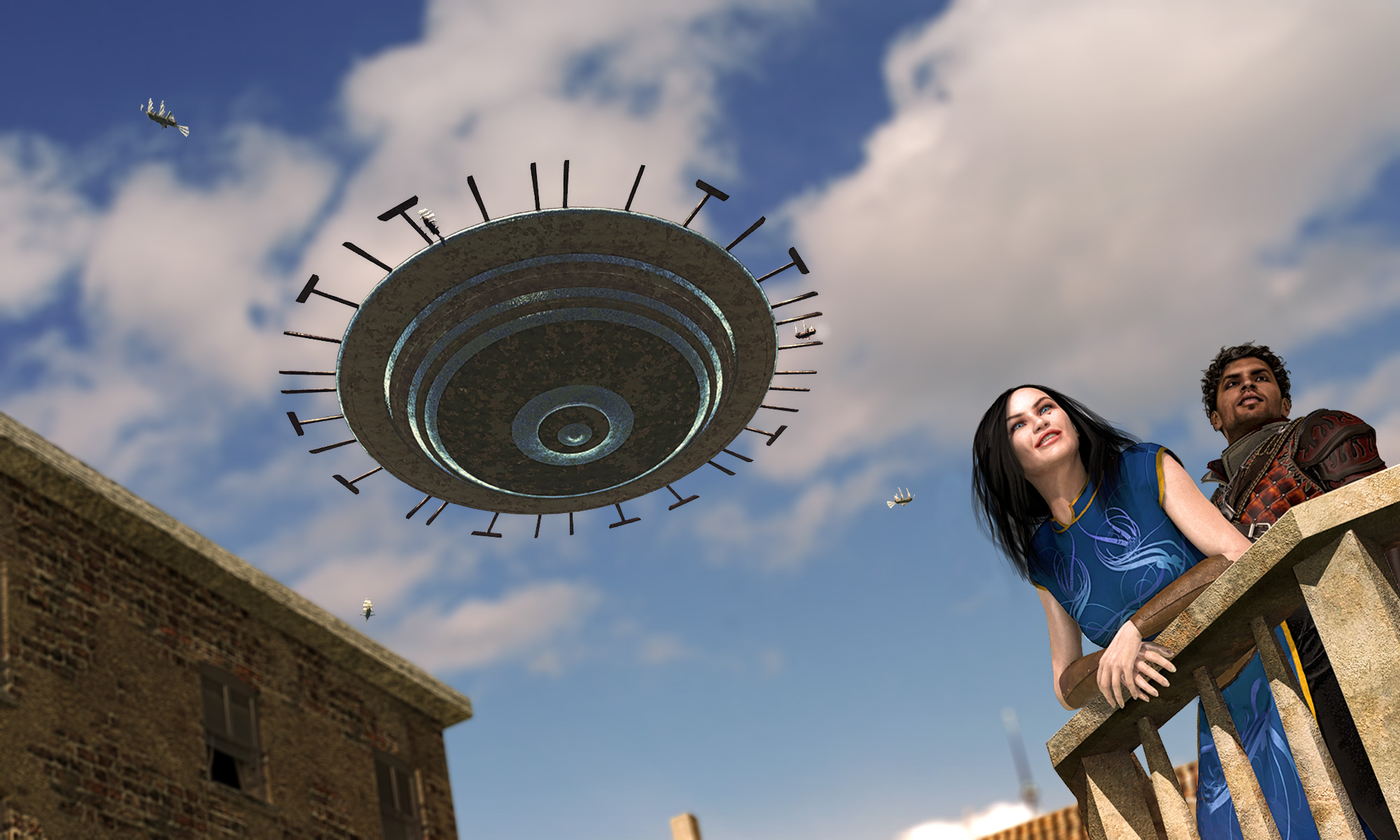
Essaence Barriers in Shadow World

I’ve written a few blogs referencing Essaence Flows and Barriers over the years, but my current writing has me circling back to the subject. I’m not sure what our readership is here now, but I thought I would throw it out.

The issue. Excluding the inception of the Great Barrier, when did Essaence Flows begin to manifest into physical barriers on Kulthea?

While I still suspect that many SW groups don’t use Essaence Flow barriers as originally devised and envisioned by Terry, they are part of the setting and would necessarily direct societal interaction, commerce and trade. So when did they become “a thing”?

Essaence was detected on Kulthea during the 1st Era and was present during the technological evolution of the Althans and the rise of the Essaence Users, the Ka’ta’viir. So while the Essaence permeated Kulthea, it couldn’t have to the extent that it does in the current Era. We know the Essaence interferes with standard tech and the presence of invisible energy walls and even Flow Storms would have had an impact on the Althans. There is no indication of Essaence working like that in the 1st Era. That leaves us with a few basic conclusions:

  1. Essaence energy became more ubiquitous and powerful after the end of the 1st Era.
  2. While this coincides with the placement of the Northern and Southern Eyes, it could also be the result of time. The Interregnum lasted 100,000 years, so perhaps the Essaence was always growing and expanding on Kulthea.
  3. Alternatively, something about the installation of the Eyes and the creation of the Great Barrier created offshoots: smaller, less powerful, and perhaps temporary versions of the Great Barrier that ebb and flow around the hemisphere.
  4. Counter intuitively, weren’t the Eyes meant to stabilize the Essaence? You would think that Essaence would be more consistent and less volatile with the Eyes, but for a many reasons that seems the opposite.
  5. Another theory might be that the wars and cataclysms at the end of the 1st Era, damaged the Essaence permeation into the universe. The Essaence was out of control and the Eyes calmed it down, but not to the degree of pre-interregnum. So all of these could be partially true.

Is this academic? Perhaps not. While I’m working out the ontology of magic using, it’s equally important to define the what/how of the Essaence over time. Simply put, if the Essaence ebbs and flows, so to perhaps the power and scope of spells. That would dictate spell design for early primal magic, arcane magic and the contemporary magic realms.

Anyone have any thoughts?

Winter Thoughts, Random Musings and Updates

First off, Happy New Year to all! Last year was fairly active for ICE and the finalization of the RMU product line. This blog has been fairly slow the last few years as the conversations have shifted to new platforms like Discord, but I still prefer the more deliberative blog format to memorialize work or organize my thoughts.

In that spirit I thought I would post up some random musings!

  1. Where have I been? With all he noise around RMU I decided to step back and let that process run it’s course. Instead I focused on writing AND I’ve been able to reconstitute a playing group to start testing new ideas, adventures and Shadow World in general. Having a semi-regular game creates a fantastic feedback loop that also drives my writing and new content. My players know and understand that their might be significant changes to the game rules, spells and even the adventure path from session to session so I can “move fast and break things” for faster game testing.
  2. Nomikos Library. A longstanding goal was to get Matt’s “Nomikos Library” back up and running. Not only has Matt got it back up and running, it’s now AI enabled to add functionality with more features forthcoming. I think this is a fantastic tool for the setting.
  3. Terms of Art. I’ve written about this before, but I’m constantly thinking about our word usage in Rolemaster. Specifically, whether it makes sense to mechanistically define words for the ruleset or to use them interchangeably. An example would be “illusions”, “glamours” “mirage”, “visions” “phantasm” or “summoning” vs “calling”. FRPG’s will often use these terms loosely, or as just spell name differentiators among casters. To some extent this has been done, and perhaps it’s moved further along with RMU, but it’s not quite there. By defining these terms we also create established guidelines around their use that fits into the setting, the ruleset or as coherent short hand for communicating ideas. This topic requires a lengthier treatment, but it’s been on my mind, especially in terms of written magic: runes, glyphs, sigils, marks, symbols etc.
  4. Re-writing. From a review of my work product so far, everything needs a re-write! I’ve always relied on the 80% rule, with the understanding that no work is every finished and/or that the final polishing could be done if ICE decided to move ahead with an official publication. But final edits are time-consuming and I’d rather push out 100 new pages than final edit an existing work with 10% new material for the same amount of time.
  5. 2026 Goals. My goals for this year are…ambitious. Of course I’m cheating a bit since some of my 2026 product is the result of work I did last year. My goal is 600 pages of material.
    • Chronicles Chapter 1: Kuor. I put out the first section of this a few years back but now I’ve been able to expand upon it with the new gaming group. For me, the Gods are the entry point into Shadow World. Religions create impetus, reasons and conflicts for adventure. That is not to say that I would lean on religions and gods if I were to create my own setting, but I use Shadow World and that’s that! I have a few other Chapters outlined so there is lots of material to plumb!
    • Shadow World: Book of Things. Tech, magic items, materials, trade goods, alchemical stuff, drugs, equipment etc.
    • Nontataku. I’ve been picking away at this for years. Barring maps, it’s almost there.
    • Empire of the Black Dragon. This has always been 80% complete and was expected to go into editing for official publication. Since that’s unlikely to occur it’s time to put it out there to finish off the Agyra Series.
    • Shadow World: Book of Essence. This has been my primary project for the last year. History and chronology of Shadow World magic: arcane, realms, languages, sources and history of lists, and re-writes of the BASiL lists for Shadow World (my version of it anyway). Lots of side info including expanded info on Ka’ta’viir families and merchant houses, Dragon lineages, Orhan/Charon cycles and influences etc.
    • Book of Channeling Addendum. I’ve added some inferred powers to the various Priests based on their aspects. I’ve shied away from level based powers–very D&D but I’ve warmed to it as my views have changed on Channeling.

Final thoughts. I’ve toyed with putting out my SWARM ruleset (Shadow World Alternate RoleMaster). I pullled a 30 page summary together for my players so they could make characters–and yes, they did character creation in 15-20 minutes! But after monitoring the endless rule debates online I’m going to stay away from it. Matt and I want to focus on narrative and setting, regardless of rules. Shadow World needs a d20 version!

The Nomikos Library

Vroomfogle has awoken

After more than a decade in the shadows, Vroomfogle & Company is back.

A Return to Kulthea

More than a decade ago, I stepped away from Rolemaster and Shadow World. Back then, I ran vroomfogle.com and the Nomikos library as resources for our gaming community. Life moved on, domains lapsed, and those sites faded into memory.

Around the same time, I also stepped away from the development of RMU. It was great to see it finally published, and I’m proud of the work I contributed. These days, though, I’m less interested in rules and mechanics and more interested in the setting and stories.

Shadow World never truly left me. Terry Amthor’s creation — with its deep history, powerful magic, and richly detailed cultures — deserves to live on. I’ve always loved Shadow World because it’s detailed, mysterious, and alive and even with all that canon there are still blank spaces that invite you to step in and make something of your own. Every line in the timeline feels like a story waiting to happen.

I still play RM occasionally with old friends — we’ve been playing for years, maybe about once a year on average — and it’s always a good reminder of why the setting mattered more to me than the rules ever did.

Part of this reboot is simply because I like building things. It was a good excuse to learn some new technologies and to explore what it looks like to integrate LLMs with RAG (vector embeddings and semantic search) for a fun hobby application.

Another reason is simple: I want to encourage people to play Shadow World. If this helps existing fans go deeper (and maybe pulls a few new folks in) that’s a win.

This is me rebuilding a small corner of the old internet: a place to preserve canon lore, explore it deeply, and build upon it in ways that respect the source material while enabling new stories.

For me, the Y’kin were one of those places where the story felt unfinished. Rather than leaving them frozen as villains, this campaign gives them a narrative—and lets them matter in one small, consequential part of the Shadow World.

What is Vroomfogle & Company?

Vroomfogle & Company is my interactive archive for Kulthea: AI-powered exploration tools, a growing library index, and campaign notes written as a living chronicle.

On the site you’ll find Nomikos (source-grounded Q&A over an indexed Shadow World library), Ask Andraax (the same underlying retrieval with a more cryptic voice for hooks), and a living campaign archive for Legacy of the Y’kin.

Nomikos is a great tool for reflecting canon, but it’s not a replacement for the books. The canon books have maps, adventures, statistics, and they’re browseable in a way an AI summary isn’t. Nomikos is ultimately a summary and rephrasing of those texts — and it can (and does) get things wrong.

If you’re interested in the retrieval/indexing side of this (RAG, vector embeddings, semantic search), the core library is athenaeum, available on GitHub.

The AI personas and retrieval behavior are very likely to need ongoing tweaking (prompting, guardrails, retrieval parameters, and UI details) as real-world usage reveals edge cases. If something feels off—tone, refusal behavior, citations/context, or missing answers—please file an issue.

I’ll keep adding to the site over time as the library grows and the rough edges get sanded down. 

vroomfogle.com

Questions or feedback? Please file an issue on GitHub.

— Matt

High Level Rolemaster

Another Discord discussion caught my attention and I wanted to provide a few additional thoughts on high level Rolemaster. I’ve blogged about this a few times and the following posts might be worth reviewing:

I’ve now run my “Legends of Shadow World” roughly 11 times. That’s the average of all 5 chapters but I’ve run Chapter 1 twice that and the last chapter only half a dozen times. (although that’s my favorite).

MY overall impression is that Rolemaster holds up VERY well at high levels and its FUN! At the risk of repeating a few notes from previous blogs I’d offer the following:

  1. Melee. Offense v Defense Player Mindset. 1st Edition Rolemaster explicitly built in the OB/DB mechanism as a core mechanic that modelled a combatants defensive posture and added some tactical complexity to simple “roll for results” of D&D. However, my experience is that few players want to dedicate much, if any, OB to parrying and that does lead to a disconnect in the remaining game mechanics: criticals, damage types etc. Simply put, players are looking to maximize their changes of hitting and getting a critical. Every swing is an attempt at a home run. But RM’s famed lethality is meant to temper player aggression and utilize the parrying mechanic. Unlike lower leves with low OB’s, every attack roll result is random with unknown results. However, when using high level characters with OB of 150 to 200, you basically need to roll over the defendants DB to automatically hit and max out the attack table and critical result. The first attack becomes essential to disable, stun or incapacitate the foe. My experience is that players behaviors don’t change, and they still rarely use significant OB allocation to parrying even though at higher levels it’s even more essential to parry to avoid a killing blow directed at them.
  2. Magic. Spell Types. A quick perusal of spells show a considerable bias towards attack and damage spells. I did a deep analysis for BASiL year ago, but I think it was a 6 to 1 ratio of attack vs defense/protection spells. From a player engagement attack spells were more varied, more fun and more engaging than the handful of protection spells. Furthermore, while attack spells allowed for significant damage (tactical importance to gameplay) while defensive spells were generally weak, 1 dimensional, boring or to specific to use effectively in gameplay.

It’s my belief that the weighting of attack importance to defense contributes to problems encountered or perceived in high level play. While player behaviors towards OB/DB split can be trained into players, ell Law has structural issues that can’t be addressed through player choice. That was one of the mandates of BASiL–nuance and complexity in spell use and choice. That’s not to say that I solved all problems, or my solutions are better than anyone else; I constantly tinker with BASiL based on player feedback, game results and playtesting. But I stongly believe that Spell Law design should be weighted towards defensive/protection spells and not the other way around. It might be a subtle difference, but it would impact gameplay and could avoid the Fireball/Fly/Invisible Mage that outperforms Fighters fairly early on the level curve.

Updated 4-5-2025: Shadow World File List

I was recently asked about several of my upload files and thought this would be a good time to update my master Shadow World file list with the working forum links.

Please note that some of these files may be here on the Rolemasterblog, but to access these links to the RM Forums will require a Forum account–otherwise you cannot see or access.

Here we go:

  1. SW Healing Chart. This was a quick reference chart for cinematic healing, but taking into account cultural access to healing skills. I use it between adventures to quickly establish healing times & costs without a lot of more complicated calculations. It was included in my Master Atlas, but probably needs to fleshed out.
  2. RM/RMU Class Comparison. Another chart from my Master Atlas, this was a quick guide to mapping RMU professions to classic RM professions with notes specific to SW.
  3. SW Research Chart. Small chart to generate research results.
  4. Invoke Chart. I’ve blogged and written about invocation quite a bit. This chart allows PCs to call/pray for their gods intervention. This is a common mechanism in my SW campaign and brings the gods into gameplay in a less abstract way.
  5. SW Lore Table. Incomplete, but the start of summarizing skill levels/competence level and knowledge of various skills and lores.
  6. SW Metal Chart. Summary of SW metals and alloys with a unifying “breakage” number that use for material RRs and enchantments/imbedding.
  7. Master Herb Chart. Collated list of all herbs, plants, and poisons found in all RM books. May need some updates to include Terry’s more recent books.
  8. SW Crystal Summary. Crystals play a key role in SW, but Terry never really fleshed out a full system for the. This chart assumes that all “Essence Crystals” are basically the same–even if know as Zirix Crystals, or Essaence Crystals or Jewel Slime etc. It needs some work, but I use crystals as PP storage devices that can be drawn upon or recharged with channeling skill.
  9. Cantrips. Really this is part of BASiL, but in the thread.
  10. God Invocation Summary. This chart is used with the Invocation chart. Summarizes modifiers to SW’s gods responses and specific things they may do.
  11. SW Encounter Chart. This is a comprehensive chart for random encounters by region. Includes weather and Essence effects. Inspired by the encounter tables in the AD&D DM’s guide. Needs a little updating but I think a very useful tool!
  12. Void Knight Base List. Spell list for a organization I use in my SW campaign and features in “Priest-King of Shade”. It needs some touch up.
  13. Soulless. Update Pending. This is my effort to consolidate the concept of the Unlife, traditional fantasy Undead, corruption and possession. In my SW campaign, the Unlife possesses or inhabits creatures to various degrees.
  14. Hierax Guard. Organization dedicated to fighting Demon’s. Uses the Void Knight base list.
  15. Xiosians. My interpretation of the Xio Warriors mentioned in a few places and a way to integrate them into the larger SW story.
  16. History of the Earthwardens. I went through every single SW book and collated all the references to the Earthwardens. This is my conclusions.
  17. Notes on Tech & Languages. Quick excerpt from my Master Atlas.
  18. Elves. Again, this is my fleshing out of Elves: how they came to be and their place in the larger story. Plus a Shadow World explanation of the various types of Elves beyond the Tolkien archetypes.
  19. Alchemy Notes. I use alchemy skill a lot in my game. This is my simplified but flexible rules on alchemy. I plan on expanding on it at some point.
  20. SW Trade Goods. Treasure is more than gems, jewelry and gold!
  21. SW Civilization Summary. Chart from my Master Atlas with overview of the various ancient civilizations.
  22. Cult of Hraask. I wanted a “spider/insect” spell list grounded in SW.
  23. SW Cultural Skills. This is part of SWARM rules (Shadow World Alternate Role Master) and my “build a character in 10 minutes. Includes specific SW cultures rather than the broader types in RMU.
  24. SW Professions. List of vocations and skill packages for quick character generation.
  25. SW Background Table. Random background table, SW specific.
  26. SW Material Strength. Unifying method for breakage, VS RR’s and imbedding, enchanting and weapon runes.
  27. Weapon Modifier Chart. Combat modifiers and stats for specific weapons rather than general modifiers used in RM.
  28. SW Racial Chart. Conversion of bonuses to RMU. Probably will need a re-edit after RMU publication.
  29. Orhanian Base Spells Lists. God specific lists for Clerics and Followers. See “Religions & Channeling Handbook” below in #49
  30. Charon Base Lists. See “Religions & Channeling Handbook” below in #49
  31. Religious Organizations. Orhan. See “Religions & Channeling Handbook” below in #49
  32. Religious Organizations. Charon. See “Religions & Channeling Handbook” below in #49
  33. History of SW in narrative form. My Master Atlas version.
  34. SW Languages. My notes, needs some work.
  35. SW Special Armor. Cool armors.
  36. SW Archaeology. Notes on ancient SW civilizations.
  37. SW Antiquities. Price chart for REALLY ancient, “priceless” stuff!
  38. Jaiman Tradegoods. More trade items specific to Jaiman cities and cultures.
  39. Iron Wind Base Lists. LyakYarthraakGaathAthimurlDansartThargondaak.
  40. SW Notes on Currency. Summary of various coins and currencies.
  41. Shrapnel & Swarm Crit Chart. I use for explosions or insect swarms.
  42. SW Trade Goods: Drugs & Alcohol. Small file that needs more work!
  43. BASIL: Essence Lists.
  44. BASIL: Channeling Lists.
  45. BASIL: Mentalism Lists. Still working on these.
  46. For links to the spell lists above.
  47. Legends of Shadow World. Chapter 1Chapter 2Chapter 3Chapter 4Chapter 5Alternate all Priest PCs.
  48. Priest-King of Shade. Priest King Charts. Small module that takes place in SW Agyra.
  49. The Book of Pales. Summary and overview of the Pales.
  50. SW Religions and Channeling Handbook.
  51. Book of Herbs. White background version. Illustrated guide to all of the herbs found in the Shadow World books.
  52. SW Channeling Canticles. (Adventure Paths). Kuor. Phaon. Teris. Shaal. Updates Pending.
  53. Shadow World Suggested Patrons. Suggestions for patron Gods (Orhan and Charon) based on Professions.
  54. SW Transport Costs.
  55. Earthwarden Base Lists. Updates in Progress. Creations. Essaence Master, Dimension Mastery, Shapechanging & Life Mastery, Time Mastery, Mana Fires, Earthworks, Sound Mastery, Words of Power, Warding.
  56. Matt (Vroomfogle) Hanson Files. Languages of Kulthea, SW Combat Styles, Vroomfogles Magic Treasures, Compass Rules. Legacy of the Y’Kin.
  57. Misc Files & Maps. Esov Inquirer, Esov Inquirer 2, Meluria Map, Rhakhaan South Map
  58. Martin’s “Lethys” file.
  59. Jengada’s Files. Scorpion Attack, Rip/Tear Critical Strikes.
  60. Ultimate Shadow World Trivia Test.
  61. Empire of the Black Dragon. PENDING. Companion supplement to Priest-King covering the realms of Uyla Shek.

Earthwarden Spell Lists

With so many projects going on, some are just gestating while others I pick away at when I get an inspiration or idea. One small project, an intersection between my BASiL lists and Shadow World material was designing 10 proto/Arcane lists that would have been the underpinnings of the original magic system used by the Ka’ta’viir and later Earthwardens. You can read my previous posts on this HERE and HERE. Well, in fact, I actually did the first run through on these lists under the general guidelines:

  1. As archetype lists, they are less singular and specific as the later spells broken into the 3 Realms. That also means the spells are subject to broader interpretation in the application and effects.
  2. These lists are powered by raw unrefined Essaence. I still used the Spell Law level format, but I wouldn’t say that the spell level is analogous to Essence/Channeling/Mentalism spells or the basic power levels in RM or RMU.
  3. These are powerful spells, and I’ve built in the idea that they are physically demanding to focus and cast. It’s unlikely most contemporary mortal races on Shadow World could cast them unless they had some mix of Ka’ta’viir blood, offspring of a Major or Lesser or local Diety or similar.
  4. These were created by several inputs, creative and specific: some BASiL spell lists (Physics & Time Mastery), Companion I Arcane lists, Loremaster and Navigator lists and others. It’s difficult to credit sources (and impossible to remember) when they are so varied, but let’s just say it’s a group effort and not mine alone!

I arbitrarily chose to make 10 lists. This seemed to cover on the various magical aspects I thought best represented the foundation of magic and it was achievable! Here are the final categories:

Creations – Crafting magical artifacts, constructs, and living statues.

Essaence Mastery – Foci, Power Point flows, travel, and arcane energy control.

Dimension Mastery – Gates, teleportation, interdimensional travel.

Shapechanging & Life Mastery – Polymorphing, biological manipulation, and ascension.

Time Mastery – Mastery over time, including dilation, stasis, and time travel.

Mana-Fires – Plasma-based energy manipulation, precursor to Elemental Essence.

Earthworks – Megalithic construction, geoglyphs, stonework, and tectonic forces.

Sound Mastery – Vibration-based effects, levitation, disintegration.

Words of Power – Spoken arcane forces, immediate and reality-altering.

Warding – Protective proto-magic, runes, barriers, and mystical safeguards.

I’ll be posting these lists over at the RMForums for download over the next few days and turn the titles above into hyperlinks. Note that you have to have a RMForums account to see and download files there. Then I’ll be returning to Part II and Part III of my Agyra series: Empire of the Black Dragon and Nontataku: City of Sails. On the off chance that Priest-King actually get’s published I’ll have the rest of the trilogy in edit review mode for queueing up.

Assessing the Rolemaster Community

One of the common subjects that my friends and I discuss is just how large the player base is for Rolemaster (and to a lesser extent Shadow World). One of the ways we can assess the strength of the community is through membership and participation in the various RM channels. Unfortunately there are only a handful. This has become more relevant to me as I continue to roll out new episodes of “In Search of Andraax”, monitor listener rates and try and grow the audience. But the podcast is just one data point. What other Rolemaster channels might be informative about the user base?

FACEBOOK. Recently I started following the Rolemaster Group on Facebook. For a variety of reasons, I minimize my use of FB, noting that the Shadow World page is basically DOA and the ICE page is generally a echo of the Rolemaster Forums. But the Rolemaster Group seems somewhat active with 2.2k members and typically several posts a week. Many of the names on the FB group are unknown to me; usernames tend to be used across platforms, but perhaps it’s the same users with different monikers. It’s not clear what, if any, crossover there is and if it’s possible that FB Rolemaster Group members are unaware or uncurious about the Forums, RMBlog etc.

DRIVETHRURPG. Perhaps the best way to gauge user activity is their economic activity. RMU Core & Spell Law are both “Platinum” level and the recently released Treasure Law is “Gold” level. I forget the sales #’s to reach those levels, but that does provide a bit of context. In terms of Shadow World, the Players Guide is “Platinum” while the Master Atlas is only “Electrum”. That could be a function of the buyers: the Players Guide is a purchase any player would make, while the Master Atlas is theoretically geared towards GMs?

ROLEMASTERBLOG.COM. I think the blog is somewhat active, although I would prefer a broader reader engagement. Various TTRPG gaming polls ranks the RMBlog in the top 50, so that’s encouraging. We are one of the few non-D&D or OSR blogs that are typically ranked.

ICE FORUMS. The Forums has gotten a shot in the arm since RMU was released with new users that engage with questions. There is a also a noticeable increase in online users (unregistered) , but many of them could be bots.

DISCORD SERVERS. Despite my old world curmudgeonly attitude against short form conversation, apparently it’s popular. The Discords are the most active of the various RM/SW channels with a lot more back and forth, discussion, ideas and conversation. That’s fantastic, since that engagement keeps our game alive and relevant.

DOWNLOADS. I’ve uploaded around 280 files to the RM Forums and posted several of them at the RMBlog as well. The most popular files have been downloaded 150-200 times over the last 10 years. So that’s not spectacular but it’s something. Our d100 adventures on RPG have reached Copper, Silver and even a few Electrum which is kind of cool!

PODCASTS. Besides my podcast, there are 2-3 channels of actual RM/SW gameplay that are posted regularly and have around 275 subscribers.

Beyond that, there are the occasional RM reviews, look backs and remembrances among the various RPG blogs and gaming forums. But not much more.

So what can we make of all this? I don’t have the time or energy to play other systems, so I’m siloed in my RM and Shadow World ecosystem. Every game has it’s own vernacular and experiences and I really enjoy reading and hearing about other peoples Rolemaster games, rules and ideas. Do I want the system to grow? Of course. But ultimately if there are only a handful of dedicated players and GM’s that’s good enough for me. I’ve been able to meet a bunch through my podcast and I look forward to meeting more.

To end with a few questions:

  1. Which sites do you visit regularly? Are there channels mentioned above you didn’t know about or just don’t visit? Why?
  2. Do you leave comments?
  3. Have you thought about writing a blog post or participating in a podcast?
  4. Where do you find the most interesting OR engaging environment for RM or SW?
  5. Beside just “more”, is there something ICE, RM or SW should have to engage players that is common in other game systems?

In Search of Andraax. Episode 04. Interview with Derrick Kong.

Derrick was the GM of an epic 10+ year Shadow World campaign that took his players from start to mid 20th level. Derrick was able to incorporate much of Terry’s Shadow World material in his game and is a great example of the breadth and scope of the setting. Derrick’s players kept an adventure log and notes with 428 individual sessions that can be found here. ⁠https://web.mit.edu/mjperson/WWW/Kulthea/⁠.

https://podcasts.apple.com/us/podcast/episode-04-interview-with-derrick-kong-gm-of/id1742613254?i=1000665801660&itsct=podcast_box&itscg=30200&ls=1

The Book of Herbs: An Illustrated Guide to Magical & Medicinal Plants of Kulthea

I’ve finished up my first draft of a game aid I’ve been picking away at for a few years. This is a visual guide and expanded description of the 120+ Shadow World herbs/substances that is found in the Master Atlas.

In my campaign, players learn a new Herb for each skill rank of Herb Lore (they can do additional research of course) and I can just print out the appropriate page so they can add to their own “Lore folder”. There are some rule mechanics and modifiers in some of the text, but I wanted to make it more of a reference book that ideally could be used in RMU or any other setting without a lot of work.

This does not include poisons, but I’ve got notes for an expanded version of poisons, antidotes and nefarious substances from my Alchemy rules that I’ll put in a short primer: Book of Dark Arts. A few of the plants don’t have pictures, and I need to make some changes to those-too many “green leafy” herbs.

Now that I’ve finished this, I want to go back and really expand my “Book of Pales” to include a variety of summoning and protection circles, more creature and Demon pictures and powerful artifacts or cool devices found in the Pales.

There is so much SW material that can be expanded upon–it’s endless! You can download the Book of Herbs over at the Rolemaster Forums, but you need an account to see and access it here:

https://ironcrown.co.uk/ICEforums/index.php?topic=15879.msg247765#msg247765