Zweihänder Read Through – Hazards and the Grimoire

HAZARDS & HEALING

This is a very impressive part of Zweihander. What the writers have done is define eight rather atmosphere, and I would say setting specific, diseases and afflictions. Each has a difficulty factor to resist infection, a description of the symptoms and of the treatment.

That bit isn’t particularly outstanding, but it is cool in its own way. What makes it stand out is that this is followed by some really simple but equally atmospheric rules of treating disorders and diseases and even surgery in the default sort of medieval European setting that is beloved of most fantasy RPGs.

Basic treatments just prevent the disease from progressing on a week by week basis. Some diseases have a natural duration during which time they run their course. Real treatment requires either a magical draft called Panacea or surgery to address them. Of course there is the option of bloodletting to treat infections, just to give you the idea of the sort of medical skill we are dealing with.

I am pretty sure you will not be surprised if I tell you that surgery is not without its risks. A critical failure can kill a character which is not good.

Diseases are not the only hazards. This chapter goes on to describe extreme weather from frostbite to heatstroke. Falls are split into falls on to hard surfaces and those into water. That last one is not something I think I have ever seen rules for before which is odd as I have thrown PCs off cliffs hundreds of times I reckon in the past.

The hazards covered here are diseases, falls, fire, intoxication, poisons, sleep deprivation, starvation and suffocation. Each has details of the effects and treatments if applicable. Resistance Rolls as we know them are called Toughness checks. Each hazard has a the modifiers to the Toughness check for different conditions, the effects of failed Toughness checks and where needed the treatment for the different hazards from dealing with venoms to giving the kiss of life.

Peril

Zwei has a condition called Peril it is pretty much a game mechanic for modelling stress. The way it works is that the greater the level of Peril the more your skill bonuses are cancelled out. The logic being the more stressed you are the more likely you are to make a mistake and that stressed people do not perform at their best. The best analogy to Rolemaster that I can think of is if you stripped out all the minuses from the criticals and the penalties from being at 25% or 50% of hits and put them into a single mechanic rolling them into a single penalty.

In Zwei a skill bonus of +30 is the absolute maximum and that is three ranks at +10 each. Once you are in Peril the five steps of Peril go from no penalty, -10, -20, -30, automatic fail due to mental incapacitation.

Recovery from Peril is rather like Rolemaster’s cinematic healing. Resting in a nice warm safe place removes the Peril penalties, Resting in rough conditions from sleeping in the gutter to on a dungeon can remove most but not all Peril.

Harking back to the surgery rules, you can use smelling salts to recover one step on the Peril scale but at a physical cost to the body.

Wounds

There are no hit points in Zwei. There is a scale, called a track from Unharmed to Slain with lightly, moderately, seriously and grievously wounded in between. Each time you are hit the random damage is converted into ‘levels’ of damage and they knock you further down the track towards death.

The healing skill can be used once per day and will recover you one level up the track. The further down the track you are the bigger the difficulty penalty to the healing roll. A critical failure of the healing skill causes the wound to become infected which circles us right back to the top of the chapter and all those horrible diseases. That is going to make its way into my RM game. I think I have been under playing illness and infection.

Recovery times are slightly faster than in RM but still are enough to keep a seriously hurt character in bed for weeks. Moderate injuries, with medical help recover in 1d10+1 days, serious injuries 2d10+2 days and so on.

The Grimoire

Apart from the professions and a few talents I have read in the early part of the rules, this is first real taste of Zweihander magic.

So just to make it painfully plain how Zwei sees magic I think these four words sum up Zweihander magic.

Magick is cancerously malignant

Magick, with a k of course, comes in two flavour, chocolate and strawberry whoops, Arcane and Divine.

ARCANE MAGICK

Arcane magic is split into twelve different schools, or ‘winds’. Interestingly the Animist who we see as Channeling is not Divine in Zwei but rather an Arcanist. Other Arcanists include the Pyromancer, Necromancer and the Astromancer or Astrologer.

Sanctioned and Unsanctioned Magick

So although Zwei says it is setting neutral it does go on to lay down the rules regarding how magick users are perceived by the public…

“arcanists are most likely in league with demons, and if not, the temptation is there, so why not kill them?”

… and how some magick users are organised into self governing schools and how others are self taught and half mad with the corruption of it all. Now that sounds very much like setting specific colour to me.

DIVINE MAGICK

Zwei then describes divine magic and there are no surprises here but then goes on to describe 10 Gods with descriptions of their churches, priesthood and commandments. There are pages on faith and worship, heresy and fanaticism. This is all setting specific. I have said so many times before that you cannot have magic and setting neutrality as the former has such a huge impact on the world that contains it.

So, rant aside.

We have rules for acquiring spells which is research based, there doesn’t seem to be any form of automatic gaining spells, this isn’t a levelled game after all.

Spell casting has a few of the old clichés, you cannot wear armour or excessively heavy clothing. It inhibits the arm waving and flapping about required for spells apparently. We do have verbal, somantic and material components for spells here, which for me is a blast from the past.

Once you have everything you need for the spell there is a spell casting roll just like any skill. Casting spells takes AP in the combat round. Remember that there are 3 AP in a round.

Petty magick takes 1AP, lesser spells take 2AP and greater 3AP. Durations are generally minutes in length so they will out last most combats. Spells do need to be maintained and this is a 1AP action each turn (rounds are called turns in Zwei).

The first really cool thing is that Zwei uses Counterspell. It is pretty much like parrying that I talked about last time. You use your Incantation skill and spend an AP. Critically failing a Counterspell is not nice! You also cannot Counterspell magic that is more powerful than the magic you can cast yourself.

Every spell causes you to roll chaos dies, these are d6s and rolling a 6 means bad shit happens. I will do an entire post on Chaos and Chaos dice later to wrap up all of these.

Spells!

The spells are really very good. No, that is an understatement, the spells are brilliant. Over the years I have read a great many magic systems and there are a few standouts. The absolute best is the one from 7th Sea. My only complain about 7ths magic was that there was not enough of it. I believe that there are supplements that expand the range of magical effects but I don’t own them so I cannot say. HARP is a wonderfully flexible magic system but lacks colour and excitement. I know that has been expanded in College of Magics but I don’t own CoM so I cannot say. As you all know I have never been really comfortable with RM spell lists and realms

My only complaint about Zwei magic is that there is not enough of it. Here is a spell as an example.

QUOTH THE RAVEN

With a burst of feathers, you turn into one of the most noble of jackdaws.

Distance: Yourself

Reagents: Three feathers of a crow or raven, held aloft (expended)

Duration: 3+[WB] in hours

Effect: After successfully casting this spell, both you and all the trappings upon yourself take shape of a Small Animal, such as a jackdaw, crow or raven. You retain your mental attributes (Intelligence, Perception and Willpower) and Damage Threshold, but cannot communicate nor use Magick while in this form. If you suffer an Injury during this time, the spell ends immediately.

Critical Success: As above, but triple the Duration.

Critical Failure: Your transformation goes terribly awry. Your body covered in feathers, you take on the form of a crow-like amalgamation that resembles a demon from the depths of the Abyss. You maintain this form for the spell’s Duration, unable to communicate or use Magick. Those who witness this transformation must succeed at a Resolve Test or be subjected to Stress.

I find the magic evocative and colourful. I like the use of built in critical successes and failures. There are general spells, just as in HARP or the Open lists in RM and profession specific spells just like our Base lists.

That particular spell comes from the Arcana of Aninism, it is a lesser magick so a 2AP spell. The list of spells for each profession there are three petty, three lesser and three greater magicks. It looks to me like there is one offensive, defensive and one utilitarian spell at each ‘level’. I know magick is intended to be extremely rare but that does seem to be extremely limited in repertoire. I am guessing that several things will happen.

  1. Official supplements will expand the number of available spells.
  2. The Community Content Programme will expand the number of spells.

I think both of these will happen and that the limited number of spells is more a function of limited page count in the print version than a limitation of the magic system.

But there is more…

The next section in the Grimoire is all about creating magic items from healing cure-alls, the Panacea to enchanted items. The world of Zwei, which of course doesn’t exist, says that ever magic items is unique and enchanted items are incredibly rare. The cornerstone of magic item creation is Wytchstone(s) which are parts of an asteroid that hit the planet.

You must have Wytchstone to create anything and it is an extremely rare, out of reach of PCs, commodity.

The creation process, game mechanically, is very simple even if for the characters it is extremely difficult: gather the ingredients, make a skill test and bang! There you go! Fail the test critically and the Bang! There is you go is quite literal.

Next up we have rituals. I am a huge fan of ritual magic and Zwei rituals do not disappoint. The rituals come with a lot of background information and are largely based on knowing the true names of different demons. This is atmospheric stuff. It is also the only magic that is open to all characters regardless of profession and it is the most dangerous of magics to perform. Bad stuff WILL happen to your character it is not and *IF* it is a when if you start playing with rituals.

Talisman

The final part of the Grimoire is about talismans. These are very personal magical items. I get the impression that this is pretty much the most common sort of item that a character will ever encounter and the in game effect of a talisman is a simple +5 to the base chance of a skill test. Each talisman is keyed to a single skill and regardless of how many talisman you own you can only employ one at once.

Conclusions

What is plain from these chapters is that everything in Zwei comes in threes. There are three harder difficulty levels +10 to +30, three easier difficulty levels -10 to -30. There are three levels of magic petty, lesser and greater. There are three levels of screwing things up that do 1d10+1 to 3d10+3. Wounds take 1d10+1 to 3d10+3 days to heal. Even back in character creations you rolled 3d10+25 for your stats.

I am fine with this. The first game I ever wrote was called 3Deep as I recognised that 3 parameters is just about optimal in RPGs. The game had a very different approach using 1d6 to 3d6 but you get why I feel quite tuned in to a lot of Zwei. A lot of it feels a bit déjà vu. Mine you my game was super light and I wrote it in 20 minutes in an email. Zwei is a bit more detailed than that.

What is though is super consistent. I am seeing one mechanic used again and again and virtually without exception. The few exceptions there are happen at a Talent level and so remain consistent for that individual PC or NPC. It is them that is different not the way the world is working.

So far so good.

The next chapter is 110 pages long and is on Game Mastery. I think that this will deserve a post of its own. This is possibly the longest blog post I have ever written at over 2000 words and I am mentally exhausted. Give me a day or two to recover and I will tackle the next chapter!

Is it time to lose another table?

I had sort of made a bit of a commitment to not rules bashing so much this year. I want to concentrate on adventure creation, with an aim of assisting new players and GMs when RMu arrives, and highlighting really cool tweaks that could be learned from other games. That is where my Zwei series is coming from and HARP before that.

It was Hurin talking about 3d10-15 on the superior power level thread, over there, that made me think. Hurin finished one post with “and it gets rid of another chart” or words to that effect.

Now I was thinking about skills a lot in the last couple of weeks. Gabe’s VsD contributed a bit, Spectre has been proofing and editing my Wild West game and that contributed a bit and of course Hurin as contributed a bit.

The standard Absolute Maneuver chart looks like this.

But I cannot think of a single Absolute Maneuver. Perception rolls? Well you will hear it eventually if the thing is getting closer, or not if the sound has passed. If you are looking for something then you will find it eventually if you keep looking or not if you run out of time and give up.

Picking Locks? Well given enough time you will pick that lock it is more just case of can you pick it in the timeframe of the adventure, the approaching guards or before the fighter smacks the hinges in with a mace.

I did think that adrenal moves may be absolute but it makes so much sense that sometimes you may need more than 5 seconds to get in the zone or for things like balance or adrenal landing it could take more than 5 seconds to recover your equilibrium after the event.

The Percentage Maneuver table has the same pass mark and the Absolute but without the grade boundaries of success, partial and failure etc.

But this the real insight. The Percentage Maneuver table makes starting out characters MORE capable.

Think of it this way…. There is a locked door (lock quality Medium +0) at one end of the corridor, the PCs are trapped in front of it and approaching them from the other end are a bunch of Goblins.

The thief sets to work on the lock and has a skill of +17, he is afterall 1st level. He rolls a 50 the first round, total 67. Under the old rules the result is:

You fail the maneuver and must pay the consequences. Hopefully this wasn’t a life or death situation.

Actually it was life or death and the entire party dies. The End.

Under the Percentage Maneuver idea the result becomes 60% complete so the GM tells the player that a couple of tumblers fall into place, keep working. The Goblins arrive and the fighters start a desperate defence.

Round 2 the thief makes a second roll and any roll over a 24 will open the lock. The thief throws open the door and ushers some of the other characters out. The fighters fight on for another round and then in the third round, risking opportunity attacks, turn and flee.

That is a much more dramatic situation. Maybe a character died in the three rounds of combat, maybe they didn’t. Is the thief the hero for getting the door open?

Percentage Maneuvers just mean that everything takes longer if you are not very good at it but you will get there eventually.

If there is an Absolute success/failure skill test that I have not thought of it doesn’t make a difference the pass/fail threshold for Absolute and Percentage are identical 101+.

We do not need the Absolute Maneuver table. Also for most things we don’t need to use the Percentage one either at the actual gaming table. The result is your total roll rounded down to the nearest 10. It is only when you need to over achieve, results over 100%, or critically fail, that the actual roll is important.

I have started a thread on the forums about this table. I also think that the results over 130 should be more in line with Action Points so if you spent 4AP picking a lock but roll phenomenally then the result should leave you with some APs remaining. The table results of 110 or 120 etc do not translate well into APs.

A Murder of Crows

This will be a starting adventure for characters of 1st to 5th level*. The basic premise will be that the party will be travelling in the wilderness. This is not a particularly strong raison d’etre but it does mean that this also could serve as a drop in side quest to another adventure.

The main monster in this adventure will be Gorcrows. Gorcrows, if you are not familiar with them are 1st level, 20hits and AT1 but they have a 55DB. Their attacks are pretty feeble 10 SPi/10 SCl/30 MCl (3). When on the ground their DB is halved and they cannot use their claw attack. The number encountered is 5-50, so we get pretty big flocks of Gorcrows to play with. This is another monster that exists in C&T, C&M and CrL so it is safe to use. What I like about them is that they are both easily imagined and are both monstrous and menacing with their 8′ wingspan.

So the opening scene has the characters travelling when they will see the flock of birds circling, vulture-like, up ahead and diving down at something out of sight on the ground. Whether they choose to hasten and investigate or not as the site in actually on their path they will come across the location anyway.

When the characters reach the site of activity the Gorcrows will still be in a feeding frenzy.

Encounter: I would suggest three Gorcrows per PC but every gorcrow that is wounded will flee. They are feeding only because this is free food. If the Gorcrows have the initiative then they will fight launching into the air to use their superior speed and claw attacks.

Once the flock has fled they will stream away to the south. The sheer number of them should be exaggerated by having them circle the site a couple of times first and describing them as blocking out the sun before streaming south.

Their victims were, past tense, two riding horses and one older gentleman. He was wearing workman style clothes. He is dead and dreadfully mutilated by the flock. There are two horses. The first appears to have been his mount, a great heavy horse better suited to pulling a cart than riding. This animal had no proper saddle just a horse blanket and a rope halter.

The second horse was a smaller and finer animal with proper saddle. What remains shows that its mane was platted and bloodied shreds of ribbon can still be seen.

The only bodies here are the two mounts and the one body.

The characters may use skills such as tracking to learn a bit more of what occured here.

Depending on the success of their skill rolls you may reveal certain facts.

  • There are shreds of blue silk caught on some of the undergrowth beside the road. This is not of the same shade as the ribbon on the horse.
  • There is a crushed area of vegetation near the body of the riding horse where it seems the rider may have fell.
  • There are tracks approaching this site from both left and right off the road.
  • Most of the tracks that can be seen were human and barefoot.
  • One person worn small shoes or boots with a narrow heel.
  • The only tracks leaving the site were the barefoot humans.
  • An exceptional tracking roll may reveal that some of the barefoot humans were heavily laden.
  • A bloody and trampled ladies handkerchief is under the body of the riding horse. It is embroidered with the name Katiya in blue thread.

The fleeing flock of Gorcrows will give the characters a pretty easy sense of direction to follow at first. They should be able to follow the general direction.

As night falls then to the south a beacon or bonfire lights the horizon.

I would like to be elastic with distances here. If the characters are on foot then they are probably only going to manage 2mph on foot and cross country, on horses they would be a little faster. Either way I would suggest the characters arrive at night fall. This gives the characters the advantage that skill tests for stalking and hiding are going to be easier in poor light.

The trail leads the characters to a lonely tower. The roof of the tower aflame with a beacon making it visible for miles in every direction.

The map below is one of Dyson Logo’s maps. I have the commercial rights to use these so I can use these in the published form of this adventure. The only difference will be that the one I publish will have a grid for dimensions on it.

Once the characters are close enough they will hear a mix of god like howls, human shouts and cries, apparently of joy. There is also a great deal of rhythmic drumming.

Inside the drumming is coming from the residents beating on wooden tables and slamming chairs against the floors. There are no actual drums.

The floor is flag stone but driven into the joints between flags are wooden stakes and tied to the stakes is a young woman in a tattered blue silk dress.

Dancing around her are naked humanoids with jackal heads and just two clawed fingers per hand. There are as many creatures here as there are characters in the party.

These creatures are Hothrog, 7′ tall man demons. C&T pg 97/81, C&M pg and CrL pg 611.

In total there are twice as many of these demons as there are characters in total. Each is 2nd level. 60hits, AT11 and 15DB. So these creatures are hitable. The danger is that they are vicious fighters with 50OB with claws and two attacks per round or a 50OB Bash with a 100OB followup bite if they get a critical with the bash.

The half of these demons that are not dancing around the prostrated woman are on the first and second floors. On the first floor the second chamber houses a huge cauldron and a pair of Hothrog are stoking fires and pouring in buckets of water. This is Katiya’s destiny if she isn’t rescued.

The remaining Hothrog are on the third floor feeding the flock of Gorcrows. There is an evil symbiotic relationship going on between the Gorcrows and the demons. The Gorcrows are their scouts and in return the Hothrog, who kill simply for pleasure provide food. Once the Gorcrows are roosting the beacon is lit and this keeps the flock in the tower over night as they are afraid of the fire so will not fly out past it.

So the ground floor holds the most Hothrog and the woman, the middle floor has just two Hothrog and the third floor has the remaining Hothrog and all the Gorcrows that were not killed earlier. The top floor is open to the elements but contains the beacon fire but no living foes.

The challenge is how the characters will attempt to rescue the girl.

Katiya: is a healer of 5th level. She learned her trade providing healing for her local community. The man with her was her father. When they were attacked they were rushing to a nearby village that had been attacked by the Gorcrows. This was a precursor to the village being attacked by the Hothrog.

If she can be rescued she will of course help any injured characters. If any Hothrog survive then there will be a follow up attack on the village with Gorcrows acting as a vanguard and then the surviving Hothrog attacking the village once the villagers are in disarray. The characters can save the village if they can get to it first and warn them of the nearby danger. When the attack comes it will be during the day and if the village is unprepared then the first people killed will be villagers working out in the fields, your shepherds and outlying farmers. The tell tale circling of the crows should serve as a harbinger of the approaching danger.

At the end of the adventure Katiya will want to stay with the villagers to help them recover and eventually return to her own cottage where she lived with her father. So is not intended to join the party as an NPC healer.

So that is my latest ‘cliched’ adventure “Characters wander around and for no reason get attacked by monsters who have holed up on a tower.”

*I used to think 1st to 5th level as designating adventures for not only new characters but also characters that had had a few adventures. It took a lot of exp to get to 5th level. Now of course we have no idea what level people are starting at.

Zweihänder Read Through – Trappings & Combat

Trappings is Zweihänder parlance for equipment. The default non-setting of Zweihänder uses three base coins, each of which reflects a social strata, brass pennies are used by the poorest peasants in society, the low born, including my PC. Silver Schillings are the currency of commerce and the marchant classes and then gold crowns at the top of the economic tree.

This chapter covers four aspects. The first is actually buying stuff and prices. The second is how skills interact with these prices such as haggling for a better price. The third is the game mechanics and how items, particularly weapons interact with the game mechanics. This is a list of ‘qualities’ that equipment may possess and the effect of each quality. Fast is a quality and a weapon with the Fast quality confers a -10% to a foes chance to dodge, Slow is the opposite quality and confers a +10% bonus to dodge and parry. There are dozens of qualities from Adaptable (weapons that can be used one or two handed) to Weak (weapons whose damaged is capped).

Damage from weapons is described as Moderate, Serious or Grievous Injuries.

The final part of this chapter combines the previous parts into detailed textual and mechanical descriptions of all the weapons and equipment.

My character posesses a Mortuary Sword. This is what I now know about it.

MORTUARY SWORD: The most common weapon for explorers, it is useful and evokes little fuss. Not surprisingly, it tends to cleave violently – thus its namesake.

WEAPON: Mortuary sword
LOAD: 0
HANDLING: One-handed
DISTANCE: Engaged
QUALITIES: Vicious
TYPE: Bladed
ENCUMBRANCE: 1
VALUE/PRICE: 10gc

The Vicious quality has this definition:

VICIOUS: Weapons of this Quality grant an additional 1D6 Chaos Die to determine whether you inflict an Injury upon a foe.

We will come back to the Chaos Die.

The overall impression of the trappings chapter is that it is really well designed. It covered a variety of skills such as those for trading but also for repairing damaged equipment. Everything related to gear from superior materials to things that explode to haggling is all covered in one chapter. I cannot help but feel that in RM we would be flipping from chapter to chapter or from Character Law for the prices and then C&T for superior materials and so on.

Chapter 9 Combat

The first thing that stands out in the combat rules is the initiative system. Every character has an Initiative parameter on their character sheet that is derived from their agility and their encumbrance. This is added to a d10 roll and that is their initiative for the entire combat. Nothing exciting there.

Ever character, NPC, foe and event is then added to an Initiative ladder. Events that are not known to the the PCs are marked on the ladder as coded marks. This ladder is open for all to see.

Examples of these unknown events may be when a bomb is due to explode or when a hidden assassin has rolled their initiative.

I am not convinced by this system. It seems to me that the players will have some sort of a priori knowledge if they can see that there will be events that happen before or after their move. So far I have not had an opportunity to run a combat with multiple players to see how they react to this open initiative ladder system.

My other worry about this system is that with my players we do not sit around a table, we are scattered around a living room on sofas. No one is going to see this initiative ladder or it will be a massive disturbance to the flow of play as it gets passed from person to person and inevitably the players worry about a special marks at initiative points 4,5,6 & 7.

So let me put initiative to one side.

When it is your turn you get three Action Points to spend. You may hold APs to later in the same turn (what we call a round Zwei calls a turn and they are 10 seconds long).

There is a pretty good table of available actions and their AP costs. Movement costs AP, walking costs 1, spending a turn running costs all three and a charge costs 2 but that does not include the attack at the end of the charge. Called shots cost 2AP.

Attacks cost 1 AP each except magical attacks that are just listed as VARIES.

There is a menu of special moves like throwing/kicking sand in your opponents eyes to blind them or attempting to stun them. Being stunned robs them of 1AP.

Zwei uses zones of control although it does not use that phrase. Anyone leaving an engagement gives their opponents a chance to perform an opportunity attack against them.

So after the description of Initiative and then the list of AP actions there is a description and example of every available combat action. I found this bit quite interesting:

MULTIPLE ATTACKS?
In ZWEIHÄNDER, combat swings are abstracted to a great degree. Rolling to strike and dealing Damage has been carefully balanced, designed to be swift and merciless. Because of this, multiple attack rolls on the same Turn are not a consideration of the system. However, some Professions and Traits may allow you to take advantage of two weapon fighting in different ways.

So Zwei is a flurry of blows system.

Parrying

There is no self respecting RM player that doesn’t want to know how to parry. Parry in Zwei takes place after you have been hit but before they roll damage. You make a skill roll and on success you take no damage. Parry is a 1AP action.

The basic combat procedure is Roll your attack, defender defends and then you roll any damage. The defender has a choice of actions such as dodge and parry as you saw above and a few others.

Wounds

I had to read the wounds section twice to make sure I was not imagining things! Right at the top of the combat chapter the rules say that Zwei does not use hit points but in the weapon descriptions there was talk of rolling additional dice of damage, called the fury die. I was curious as to how this was going to be reconciled.

What I just read was basically like someone had lifted the entire character damage section out of 7th Sea. Believe me when I say 7th Sea is about as far away from Zwei as you can get.

So here is the basic mechanic. Your combat bonus (one of every characters basic stats) is the basic damage you do plus you roll 1d6 for the Fury die. That is the additional damage. The fury die ‘explodes’ or is open ended. So if you roll a 6 then you roll again and add the new roll to that six. The fury die can keep on exploding if you keep on rolling 6s. So the total damage is you CB value plus the total rolled from the Fury die/dice.

This total value is then converted into levels of damage by taking into a characters damage threshold which is made up of one of their stats plus armour.

So if the total damage is less than the damage threshold then no damage is taken. If you get over the damage threshold then that is one level, if you get 6 over the threshold then that is two levels, 12 is three levels. Any attack that does 3 levels is an instant kill.

So now we have turned points of damage into levels.

The levels push a character along a damage track. The track goes:

  1. Unharmed
  2. Lightly Wounded
  3. Moderately Wounded
  4. Seriously Wounded
  5. Grievously Wounded
  6. Slain!

So if you take two levels in the first round you are lightly wounded. If you take a further two levels the following round then you would seriously wounded. Another two levels and you would be slain.

At certain points you have to roll from 1d6 to 3d6 and try and avoid getting any 6s. Sixes are bad and equate to actual injuries. One of the effects of injuries is bleeding and it is as bad or worse than the bleeding we have in RM.

So the net effect seems to be that if you are being hit then you will die. I haven’t run a combat yet so I haven’t tried it out but it really looks like parrying is really important to avoid being hurt in the first place and then if you are losing then get out of there!

So that is a brief summary of combat.

We are now on page 256 of 692. That is chapter 8 done. Next time it is hazards & healing and more excitingly we get our first look at magic in the Grimoire.

Zweihänder Read Through – Skills & Talents

This is obviously another Zweihänder post. I am trying to rattle through them a bit faster than I did the HARP read through for two reasons. Firstly, if you enjoy them then making you wait is not a good thing. If you don’t enjoy them then keeping them coming back for months is equally not a good thing. Personally I like to get projects over and done with, so I am keen to crack on as well.

I am going to split this post into two. The first part is the read through of chapters 5 & 6 as advertised.

The second part is more about ‘that which is Zweihänder , rather than Zweihänder itself’. By that I mean there are so many points of potential similarity between the Zwei that exists and the RMU I/we wish for that I believe that lessons can be learned. I have a cousin who is very wealthy and his money is entirely sel made (in an enterprising way not home printing sort of way, if you understand what I mean). He once said to me “If you want to earn a million pounds, don’t ask the unemployed bloke in the pub how to do it.” So learning from the example of the fastest selling game of the past three years now (if you include 2019) is probably a good analogy.

So Skills…

Below is a sample of the core skills in Zwei…

So in Zwei we have a base of 36 skills. Each of these have a number of focuses, which I thought would be Foci but I am often wrong. In RM2 many of the focuses would be individual skills in their own right. I am happy with the Zwei way as you all know that I simply do not use all those optional skills from RoCo2. Above I am looking at Athletics and I can see Climb, Row and Swim which were all definitely individual skills in our world.

If each character is getting 10 skills then you do need a party to cover most of these bases.

Where the Zwei system has less detail than the RM world is in levels of ability. A Zwei total skill bonus is made up of the governing stat or attribute on a scale of 28-55 plus your rank bonus. For a starting character that is +10 in your ten professional skills. So typically +52 in our parlance. A +10 is the Apprentice level. At journeyman level you get a further +10 and as a master you a final +10 for a total skill bonus of +30 on top of your attribute.

We are used to big skill bonuses added to small stat bonuses, this is the flip of that methodology.

The focuses can be bought as individual specialisms in addition to the base skill. If you have the particular focus you are using then you can ignore additional penalties when using the skill for that specific use.

So even if you had two characters with the same skills they can still differentiate themselves within their profession. Shockingly Focuses are not rolled randomly and assigned to you, to do get to choose them.

This is the skill listing for Perception. I have pulled this one out for the simple reason that we all know what a perception roll looks like. Just remember that a typical character has a roll under 52 (42 average Attribute and+10 for one rank in the skill) to succeed.


AWARENESS (Perception)
Awareness represents the ability to visually notice minute details and sounds, scents within the air, watch for ambushes, find hidden objects and spot contrivances designed to trap or kill. You’ll use Awareness not only to visually see, also to sense using smell, taste and touch. You may also use Awareness to estimate numbers and distances.

This Skill doesn’t allow you to see through lies, sense motives or innuendo – refer to the Scrutinize Skill in those cases. If you wish to listen in on a conversation or distinctly make something out you heard, refer to the Eavesdrop Skill instead.

SAMPLE DIFFICULTY RATINGS

  • (Trivial +30%): Listen for sounds through a thin door
  • (Easy +20%): Smell a distinct spice in a dish
  • (Routine +10%): Spot an obvious snare
  • (Standard +/-0%): Standing watch at a campfire on a clear night
  • (Challenging -10%): Find someone obscured by mist or darkness
  • (Hard -20%): Count a mound of treasure in under a minute
  • (Arduous -30%): Spot a trap melded almost perfectly into the flagstones

Every skill is laid out the same, description and then clear examples of what falls into each difficulty rating. What I do like is that not one of the skills has a hidden game mechanic built into the skill description. They are all uniform in format and implementation.

Talents

The core book provides 72 talents. Each talent seems to produce one effect and those effects fall into two categories. The first is to give a +20 bonus to a specific skill used in a specific situation and the other is to allow the character to ignore a specific penalty in a specific situation. So ambidextrous means you ignore penalties for using the off hand, Eagle Eyes means you do not suffer range penalties at medium and long range. Housebreaker in the other hand gives a +20 to lockpicking.

Every profession comes with 3 talents and the rules imply that you can buy more but I have yet to read the section where the rules for that are presented. I guess they will be in the Reward Points rules later in the book, or I misinterpreted the part where it implied you could by more talents of course.

There isn’t much more to say about the talents, there are some that relate to magic that at this point are quite intriguing. This one I particularly like…

BLOOD MAGICK
With great practice, you have learned to bend the powers of disorder to your whim. However, every dark gift requires a sacrifice in return.

Effect: After you have made the appropriate sacrifice of an innocent creature (a beloved animal like a kitten or puppy for Petty Magick, a farm animal such as a cow or sheep for Lesser Magick or a living person like an Elf or Dwarf for Greater Magick), you can cause any one foe to automatically fail to Resist one cast Magick spell within the next 24 hours. You can only make a sacrifice like this once per day.

I knew there was a good reason for having elves in the party!

Part II

What inspired this two part blog post idea was an announcement on Zwei’s discord server this evening, and I quote:

Daniel D. Fox – Lead Designer Today at 20:15

Hey gang,

You’re probably noticing a lot of changes on our Facebook and YouTube, formerly named Zweihänder Grim & Perilous RPG. This is being done on purpose across social media, YouTube, Discord and other channels.

For 2019, we are consolidating our brands, while changing ZWEIHÄNDER-only assets to reflect a shift in the company. With MAIN GAUCHE on the horizon, development of TETSŪBO, Queen of Embers and a few other unannounced products, we’re moving towards our new company line:

Grim & Perilous Studios, makers of tabletop games “Powered By ZWEIHÄNDER”.

So what does this mean for you? You’re going to see a D100 ‘free’ engine released later this year, taking the place of the SRD. You’re also going to get a look at some of the new products coming down the line for 2019 and 2020. You’re going to see our books up on Amazon, Barnes & Noble, Simon & Schuster, IndieBound, in your local brick-and-mortar and a whole lot more. We aren’t leaving DriveThruRPG, but our ‘big books’ will be as we reach commercial scale for true distribution across the US, CA and Europe. Plus, we’ll be announcing some new video content initiatives in the coming weeks (as an example, did you know Encounter Roleplay is running ZWEIHÄNDER every Friday on Twitch for the next 18 weeks).

Finally, we’ll be introducing you to some new people from our team. We’re growing, and can’t wait for you to meet all the fine folx who help make Grim & Perilous Studios successful.

So, join us for the ride in 2019 for a truly #GrimAndPerilous year for #ZweihanderRPG!

All the best,

Daniel D. Fox

So what has got me so stirred up?

I have been pushing for an open standard for D100 for a couple of years now including my own open100 and I am also happy to support vsDarkmaster’s OPEN00. I am not necessarily a fan of competing open standards but hey, too much freedom of expression is less of a problem than too little.

I have been trying to push for the “Powered by…” concept for RMu, in fact Intothatdarkness’s post this very week was all about the RMu game engine vs the game itself. That is a spin off of my push for the Powered by tag from that “So…” forum thread.

The other thing I find exciting is the bit about the hardcopy publications. I have been dabbling with this myself. I was using Createspace and Amazon’s KDP before they merged. DTRPG is the ‘safe place’ that is where everyone is and that is where all the experienced GMs buy their games. It is not the rest of the world though. If you want to reach completely new people than you need to be out in the real world. I called Zweihänder a cannibal last time. I take that back. They really are trying to build the industry.

This is something I have also been trying to do, I just haven’t talked about it on this blog but Egdcltd has read about my efforts. By comparison I have been pissing around with small fry but the principle is the same. I don’t really think that my ideas would work nearly so well with Zwei as they would with my wild west game. Different genre, different style, different target audience.

The more I hang around the Zwei world the more stark are the differences between the openness and dynamic nature of G&P Studios and the sullen silence of ICE.

And finally…

This is one of the examples from the beginning of the rules.

Nick’s Character Grover Caldwell has an Order Alignment of Mystery and the Chaos Alignment of Exclusion. During the game session, the GM reveals a dangerous bit of information to Nick in secret. Grover now has the choice to reveal an important plot point to the other PCs or hold onto it. Unfortunately, knowledge of this information could prove potentially
dangerous, putting Grover in a place of mistrust with his comrades. He decides it may be best to hold onto this information, alienating himself from the others while shutting them out from the mysteries that only
he understands. As the story led to this moment, not revealing the information taps into his Chaos Alignment of Exclusion – placing his closest friends’ life in danger. The GM, while satisfied that Nick was doing the right thing for his Character, bestows 1 Corruption.

Is it just me or is seeing Nick and Caldwell in such close proximity in a competitors RPG rules just too much of a coincidence?

Zweihänder Read Through – Character Creation & Profession

We nearly all suffer from something called Unconscious Bias. This is where we are much more likely to believe things that we agree with and disbelieve things that we don’t agree with. In games and especially when you are reviewing a game we tend to think that rules we like are great and rules we don’t like are terrible irrespective of how well they may work at the gaming table.

Reviewers have another dilemma, often reviews are based just upon reading the rulebook and they never get played. That is not something I agree with and try not to do. I have my own solution to that but even that is not perfect.

So, I have learned since last time that Zweihänder is shortened to Zwei, which is possibly more respectful than just Z.

Character Creation

I created my first character last night and I have never made a character like this. Frankly, I never want to make another one either. The entire process was a bit of a rollercoaster ride.

The entire process took 1hr 25 minutes last night but there was a lot of reading seeing as this is a read through. To create a character it could be done a lot faster. In addition it took 27 minutes this afternoon.

It was suggested that I use the random method of creating the character and that is what I did. I would never do that again as it is the source of everything I disliked about the process.

There are four choices to be made in character creation. The GM chooses whether you can be a non human race or not. You have a choice to replace one below average attribute with and average score. I was given the choice between having a pike, a sword or a crossbow. You get to choose your characters name. That is it.

Everything else about your character is randomised, and I mean everything. You roll your attributes of which there are seven. Although this is a d100 system attributes are between 28 and 55. They are generated using 25+3d10. The average is 41 or 42. One low attribute can be replaced with a 42.

You then your gender, background, height, weight, disfiguring scars, socal standing even the season you were born, I apparently was a spring baby. The most ‘shocking’ was that you roll your profession. There may have been a roll to see which hand you wipe your arse with but I think I missed that one.

That was where I got to last night. There was zero player agency in the creation process and it was all rather depressing. The character I had in front of me was not one I would ever choose to play. There were two moments of unconscious bias and I will come to those later.

Professions

At the end of the random process you are given 1000 points to spend on improving your character and customising your profession.

Today I thought I could finish my character and see if I can rescue this character.

When it comes to your character you need to buy a professional trait of which there is a choice of one, ten skills of which there are 10 to choose from and three talents from the selection of three. These are compulsory purchases and they cost exactly 1000 points.

There is no customising to do, you just write the fixed changes to the character on your character record.

The net effect is that every PC is a pregen. If you didn’t stop and read everything you could create a character in about 5 minutes. The character would be just as detailed as a Rolemaster character, you get loads of detail but I was a passenger all through the process.

Automata

Two of my skills are being able to code interactive web pages and being able to write Android apps. If something really grabs me about Zwei in later chapters then I could easily create either an online or an app to create characters in a single click of the mouse or tap of a finger. There would be just a toggle for Humanocentric vs Demihumanity, one button to create the character and a text box for the name. Character creation in 1 to 5 seconds depending on your typing speed. That is how much involvement there is in this process.

How Biased am I?

I dislike fantasy elves as they are portrayed in the vast majority of games. They are just too good or superior. This whole idea of elves who tire of life ‘go west’ is just a cover for a 100% suicide rate amongst elves. It is probably the moment when they realise that they are, at least mostly, to blame for nearly all the evil in fantasy worlds and that they sat on their arses for periods of sometimes up to 10,000 years doing sod all about it and achieved nothing, no technological advancement, no sciences, nothing except a blindness to some future growing existential threat.

Zwei elves are not superior.

All of the non human races are refreshing versions of the standard fantasy fare.

If I were to build the rules for creating elves, these are the sort of elves I would wish I would come up with.

A Clash of Opposites

When I use the word alignment I want you to put your DnD ideas to one side. Zwei alignments are nothing like DnD alignment. I wish in a way that they hadn’t used the word, too much baggage.

Way back in August I wrote about how I create my characters. What I wrote was this:

“I like to define my characters fledgling personality by using two seemingly contradictory thoughts and then see how the character rationalises them. “

That is a Zwei alignment right there. What you do is roll d100 and you get an order/chaos pair. Your alignment is a roleplaying aid, allegedly but it is also quite definitely a lense through which you experience points (Reward Points) are assessed.

Alignment is a big thing in Zwei. The two aspects are not intended to be a good and evil aspect but although a lot of words are spent in trying to get over what they are meant to be has left me no clearer. Thankfully, this paragraph is in there…

“Remember – your Character’s Alignments are merely a guide. They do not strictly bind you to a specific outcome or behavior, but should help to define and reflect your Character’s persona over the course of a campaign.

…and that is what I have been doing since about 1989 so I can just carry on as I have before. It is nice to see that someone else has come up with the same method as me though, I have no not come across anyone else that does this in my gaming circles. I obviously need bigger circles.

About Professions

There is plenty of choice of Profession in Zwei. There are 75 basic professions and a further 46 advanced professions which are accessible later in the game. Zwei doesn’t have strict levels as such but three Tiers. You start at the Basic Tier and as you progress from Basic to Intermediate to Advanced you can change profession. It would be a bit like running an RM an extended campaign but forgoing leveling up and just doing the first section as 4th level characters and then a second chapter as 9th level and a third chapter at 14th. That seems to be about the power level.

About skills

There are 37 skills in the game. That is just about right in my estimation. You get a single rank, giving a +10 bonus, at the apprentice level. You can spend reward points to buy additional ranks. You start the game with 10 skills and one rank in each. To make a skill test you add any skill rank bonus to the governing stat and roll under that number.

This means that you have about a 50-ish% chance at your 10 core skills for your profession and a 40-ish% at most other skills. After a session or two that would become 60% in your favourite couple of skills 50% in other core professional skills and 40% across the board. You can see why I suggest the basic tier is roughly equivalent to 4th level in RM.

Talents

Every profession imbues the character with three talents. Each talent has a single effect such as a bonus to a particular skill or skills checks in a specific situation or a penalty to others acting against you. A talent making your intimidation checks more effective may work by making your victims switch their tens and units dice around (so a 37 becomes a 73) if they are trying to resist you.

There are more than 80 talents and they all seem to be focused on refining the broader professional archetype down to the specific professional roles. My character has Mariner as a Talent and that gives +20 to his navigation rolls when in sight of land.

So What do I think?

The only flaw in the character creation process is that it is entirely random and there is no input from the player. I can see the logic. There seems to be a desire to push players out of their comfort zone and challenge them.

What this deadhead process does do is get you up and running in minutes and there is no min/maxing and there is no worrying about having chosen the wrong skills. The profession side of it is brilliant. If the designer dumped the paragraph where they say you have to spend 1000 reward points and then give you a list of compulsory things that add up to 1000 reward points then I would not have a complaint. Tell me I can customise my profession and then give me a choice of one option is to just piss me off. Don’t give me a choice but tell me that you have prepared a well balanced and rounded character that I can customise later and I would be fine with that. Infact Hurin has been begging for exactly that from the RMU devs for months!

If you gave me choices then this is a great looking system that is detailed any yet simple. It looks like there are lots of things that will have an important bearing on the game later on. You can leave them as random, it makes no odds to me when my character was born but it does matter to me what my characters personality is like. In many respects it does matter to me what my character looks like.

I am prepared to play my random character and I will do so this weekend I hope. If I create a second character I would pick and choose what to roll for and what to decide to get a character I want to play. The character I have, I don’t really care for and I am struggling to get any enthusiasm up for.

And Finally…

I have a player that has a really tough life. His wife as multiple complex medical conditions and they have a couple of children one of whom has an autistic spectrum disorder disorder and can be violent. The child without the AS disorder also deserves time and attention. In addition he has to work two jobs. When he wants to play he has to arrange additional support for his family to get him the time to step away and play. The escapism aspect and the chance to simply play is really important. That need for escapism means that he invariably plays some sort of elven magician / sorcerer / conjuror. Anything that is distinctly magical and highly destructive.

To tell this player “Sorry, but your one dice roll means that you are human hunchbacked beggar, but you do get to choose to have a flintlock pistol or a garot, which would you like?” is not a thing I am prepared to do. Fun is good, escapism is good, deontological ethics is a bit further down my list of gaming priorities.

Next Time

I will look at skills and talents in a bit more detail.

Ghoulish Behaviour

Today I thought I would outline another 1st level adventure and a bit of a cliche of “Go get the cure”. The villains are Ghouls and seeing as Rolemaster undead are not like DnD undead it is not a bad introduction. I have introduced a bit of wilderness travel to increase the variety of encounters and to teach the players that you don’t have to kill everything. There is also opportunities for developing the unique aspects of the setting, I have presumed it is Shadow World.

Opening Scene: The Offer of Employment

In this starting adventure the characters start out in the employ of a the mayor of a small market town. The mayors wife was attacked by the most disgusting of beggars the other night and has been feeling quite unwell ever since. At first the mayor thought it was just her nerves but it is now quite apparent she is quite unwell. They are given a simple enough task. There is a reclusive hermit that is extremely wise in the treatment of disease. He lives a few days journey away. All they need do is take one of the mayors riding horses with them, go to the hermit and ask him to accompany them back to the town. The mayor has provided the horse for the hermits use as he is quite elderly and somewhat frail by all accounts.

This is a private arrangement between the mayor and the characters, they are not employed by the town. The mayor is not going to provide them with any additional resources or equipment, he is employing them as the professionals. They are expected to leave pretty much at once as the mayor is extremely worried about his wife.

Scene Two: The Journey

In this scene we can introduce some of the elements of the caravan guard, such as giving them an idea of the game setting. Essence storms on the horizon, skyships overhead and so on. We can present the characters with a couple of encounters such as when the characters reach a rise in the road and they get a chance to see a potentially dangerous foe camped up ahead, maybe some orcs or goblins who have been sleeping the day through and just waking up as the characters are looking for a camp. Either way the characters have the advantage of being aware. They then have the choice of avoiding the fight, trying to use there advantage to swing the odds further in their favour or charging foolishly into battle. The encounters should be indicative of the setting and region.

Another encounter could be a non-monster encounter such as a washed away bridge that creates a challenge of getting them and a horse over a fast running river.

The point of these challenges are to give each profession a chance to shine. The ranger/druid may be able to lead the party to a different safe crossing, the thief/magent may be able to scout out the possible foes and learn their strength of numbers.

Eventually they will reach the hermit but he is unable to accompany the characters. He is extremely old and tells them that his time is at an end. He will allow them to rest and recover. He is capable of healing magic so can heal them of any wounds. That evening he dreams of the mayors wife and discerns her disease. He then sets about creating a curative with some urgency. He then impresses upon the characters that they must return to the town as fast as possible as the entire town is in danger. The mayors wife was not attacked by any sort of beggar, she was attacked by a ghoul and not only is it still at large around the town but the wife is infected with ghoul rot. If she is not treated soon she too will become a ghoul and an epidemic could spread.

The characters now have a race against time to get back to the town. Ghoul Rot takes a week to turn a healthy person into a Ghoul. The wife, who we will call Dolly, was attacked three nights before the characters were engaged, their journey was two days and they rested over night to this is the third day since they left town. Dolly will be undead by tomorrow or a day before the characters return. Depending on their lore knowledge they may not know this. The curative they are carrying is a mix of healing herbs and holy water and they have instructions that any wounds inflicted by the Ghoul must be washed clean with this mix. They have sufficient to treat 20 such wounds.

We can now throw a few more encounters at the characters which they will hopefully choose to avoid in their haste to get back to the town.

Hi Honey, I’m Home!

The characters are too late to save Dolly. She and the original Ghoul have gone on a killing spree, killing the mayor and their servants before attacking the local tavern. Here they were driven off by the towns folk and they disappeared into the night. There were of course a dozen wounded in the fight.

That night the ghouls return. The original ghoul had not been idle in the week that has passed and has raised more ghouls. That night a force of ghouls attack the town. We can vary the number to provide a suitable challenge for the characters with NPC townsfolk playing an active role. As each character dispatches a ghoul we give them a perception roll and they a chance to see town folk in need of saving. This is a chance to use some classic set scenes such as a child corned by a ghoul where a character gets to attack from behind or flank and save the child. Non-combatant PCs such as 1st level mages or illusionists can fight with burning torches which I would treat as a club but with a secondary A heat critical. Any ghoul that is not finally burnt will of course regenerate a 1hit/minute and rejoin the fight or dawn is approaching slip away into the night.

This then leaves the problem of wounded characters and towns folk. The characters have the healing salve but possibly not enough to wash every wound. This is a great role playing opportunity if they have to make choices over how will get the cure and who doesn’t.

The second level open channeling spell Disease Purification should be sufficient to cure an individual. This is possibly castable by the characters. A lesser Ghoul is only 1st level so it does not seem unreasonable to use a second level spell to purge its disease.

So this is the third outline of a starting adventure and the first use of the undead. Including the one I am writing right now that is four starting adventures that will be available for completely new GMs. The big question mark is the starting level which we will not know until A&CL is actually released.

Anyone have any good additions to this one?

Zweihänder Read Through – Introduction and How To Play

This is the first in a short series of articles on Zweihänder. If you missed the introductory post you can find it here

NOTE: I find that when I start out on these sorts of read throughs I can quite negative. I have preconceptions of how I think things should be and then when I don’t find it it is discomforting. Then as I get through the book and I see how things all hang together and I am more familiar I get more comfortable and consequently more positive. Just bear that in mind if this comes off as a bit negative.

So, a little background… When I was at school the role players in my year fell into two distinct camps. I was in the DnD camp and we played a wide range of games from DnD to Boothill to Bushido, Runequest and Call of Cthulhu, Champions to Rolemaster and in pretty much that order. The other group played Warhammer. I have no idea what happened to them as there was virtually no crossover between the social circles. I don’t know why.

Today I want to look at the Introduction and How to Play chapters. The books proper starts with a monologue from a character called Danziger Eckhardt, who tries to set the scene and this does a fair job of holding up the Grim and Perilous motif.

I have intentionally referred to Zweihänder as Rules Dense rather than rules heavy. The reason for my distinction comes from my first impression of the game. The Table of Contents is five pages long. That isn’t actually true, it is six pages long if you include the abridged version. In the contents you will find two, three and sometimes four entries for every page. The entries are vertiably packed in.

ZWEIHÄNDER is built with modularity baked into the
rules and able to be modified without upsetting the inherent
balance of the system.

as Rules Dense rather than rules heavy. The reason for my distinction comes from my first impression of the game. The Table of Contents is five pages long. That isn’t actually true, it is six pages long if you include the abridged version. In the contents you will find two, three and sometimes four entries for every page. The entries are vertiably packed in.

Now the book really starts. There is a personal bugbear of mine that crops up at the start of many RPG manuals. I have strong opinions on this and it just so happens that Zweihänder is the first game I have written about since I have been looking at since I have tried to address the issue myself. The bugbear is How to Roleplay.

Some games are not intended to be beginner games. If you are not a beginner game then you don’t really need a primer on how to role play and what an RPG is. If on the other hand you are pitching your game at entirely new role players then you do need a decent tutorial section to help people get into and fall in love with our hobby.

I am just going to refer to Zweihänder as Z from now on as I am going to use the games name so often that typing that umlaut on the a is just a pain in the arse.

Z does the usual thing of a couple of paragraphs on what is a GM, what is a Player and what is an RPG. What this tells me is that Z is a cannibal game. It is not really committed to bringing in new players into the hobby but is going to get its audience from existing gamers, most probably the existing Warhammer world.

This is not a criticism of Z specifically, I recently realised this about so many games and how it can be addressed and how incredibly hard work it is to do right. You cannot blame people for not seeing something you have seen.

The opening texts are topped off with some GM advice about keeping play moving and about creating house rules. This is the exact text that completes the section on house rules.

ZWEIHÄNDER is built with modularity baked into the rules and able to be modified without upsetting the inherent balance of the system.

This is of note, as one of the common refrains from the RM community is that RM is modular and one can swap in any of the hundreds of optional rules or alternative methods and the game doesn’t break. I read this as another shot across Rolemaster’s bows.

The real conclusion of this opening chapter is about setting or lack thereof. In my circles the lack of an official setting is seen as a weakness but Z dodges that bullet. The thing is that Z is a retroclone of Warhammer FRP and as such all the previous settings are perfectly in tune. The germanic flavour of Zweihänder is obvious in its very name but look at the names of previous warhammer settings Stromdorf, from The Gathering Storm; Reikland; Marienburg and Middenheim. Z appears to have perfectly aligned itself with the previous Warhammer settings. It will be interesting to see later if the bestiary reflects the denizens of these previous settings. If they do then Z is not without a setting at all, it just doesn’t own the rights to its setting.

Chapter 2 is much more interesting.

How to play Zweihänder

Chapter two is a compact eight pages, less if you strip out the art, that cover how skills tests are made, difficulty factors, types of skill test (unopposed, opposed, secret) and fate points (good and bad). It comes at you thick and fast. At first glance it looks like Z is a d100 roll under system until you get to the opposed tests when suddenly it becomes obvious that it is a blackjack system.

So most of the time you have to roll under your skill on a D100. Skill values seem to be around the 50 to 70 mark so a Z character seems to be about the competency of a 4th to 7th level RM character. If you just added the skill to the d100 then you can use Z characters in RM easily enough or roll under your RM skills to use your favourite RM character in a Z adventure. I will return to this later in a different post to see if I can refine these rules.

So at this point it looks like a basic roll under system. With opposed tests we get a mechanic called Degrees of Success and Degrees of Failure.

You calculate Degrees Of Success by adding together the tens die (a result between 1 to 10) and the relevant Primary Attribute Bonus the Skill is derived from. For example, if your Character has a Primary Attribute of 45%, your Primary Attribute Bonus is ‘4’. Whoever succeeds at their Skill Test and has the highest Degrees Of Success automatically wins the Opposed Test.

So basically you want to roll as high as possible but still under your skill total, with the exception of rolling a 01-09 as the 0 on the tens die counts as 10 not zero. So now we have a blackjack system. The net effect is that being highly but rolling badly is still better than being unskilled but rolling like a demon, most of the time.

I think the degrees of success mechanic shows how Z has evolved from house rules. I could be wrong, maybe there is a continuing theme of blackjack style rolls and checks but in this how to play chapter it sticks out like an oddity.

Fate points or to use the Z parlance pool of fortune are an intrinsic part of Z. This is no reflection on Z but I don’t like having a central physical ‘thing’ that the players have to handle. In Z you put one token into a bowl for ever player and one additional token. When players want to play a fate point then they take a token out of the bowl. In RM of course Fate points are personal to the character and are rare and precious and it seems mainly used to keep them alive when a fatal critical comes up. In Z you refresh the bowl every start of session.

Every fortune point played then goes into the GMs pool to be used to make the characters lives miserable. I am a fan of fate points as I would rather have structured and above board cheating than under the counter cheating. Even as GM I think having fate points or fortune points is better than fudging dice rolls.

Grimly Funny

On the surface Z tries to portray itself as a challenging and gritty rpg. The name suggests, at least to me, a high fatality rate amongst PCs. The opening story is bleak an uninspiring but then the actual examples of skill use are at odds with the feel of the rest of what has gone before. The general feel of them is more positive from seducing ladies in waiting to letting the player make multiple attempts to pick a magistrates pocket.

Maybe ‘funny’ is too strong a word, but still the examples are much more positive than the surrounding narrative texts. I will be interesting to see how the feel of the game proceeds.

Next time I am going to create a character using the random method described in the rules. I have already taken a bit of a sneak peek and the stat generation certainly raised an eyebrow!

Prison Break!

So, I think I have enough of an outline to create the wagon/caravan starting adventure based upon yesterday’s post.

Another cliched starting adventure is starting the party in some sort of jail or prison.

This cliche has the advantage of pretty much forcing the characters to trust each other as if they are on the run then they probably don’t have anyone else to turn to.

I am thinking that the starting point would be the evening before the prison break out. The setting would be a that the characters have been bought as slaves. The remote house, probably in the mountains, is a gladiator style training camp. How the characters end up as slaves can be part of their backstory.

So word goes around that a group of gladiators that have finished their training are due to be sold in the next city and are being shipped out in the morning. The carts that are going to transport them arrived today. These gladiators would rather die fighting for their freedom than die for someone else’s sport. They have a plan and anyone who wants to take their chances has to be ready when the word goes round.

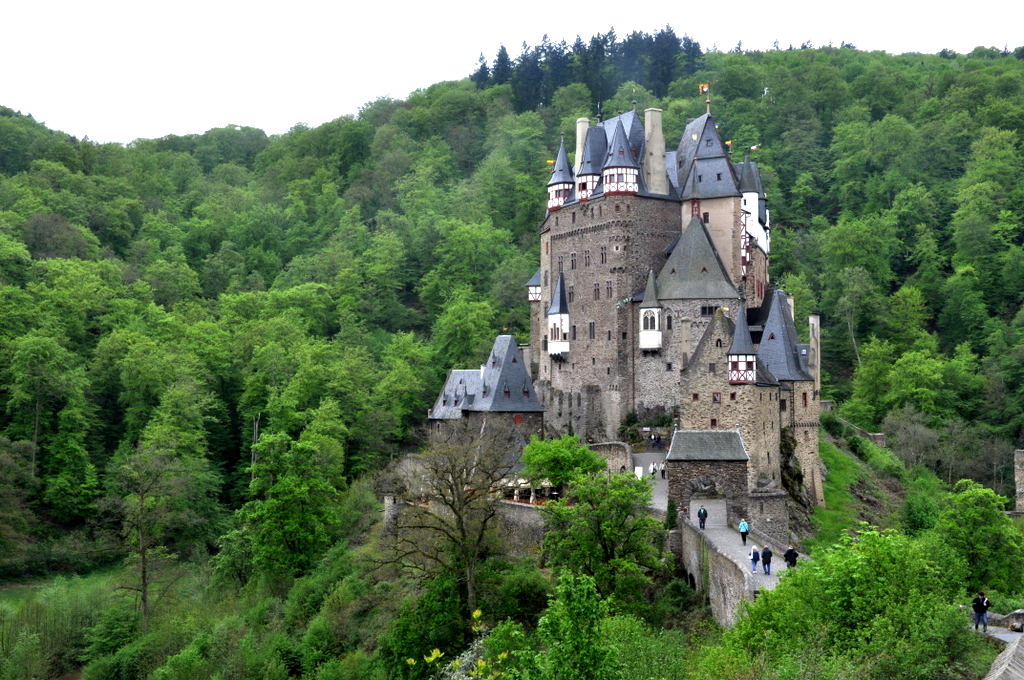
The actual break out is structured so that the players get a limited about of information about the layout of the castle, their characters movements have been severely limited. I am imagining a castle like Eltz in Germany.

So we offer the GM a encounter for every location. These would be things like a fight going on in the main courtyard against three gladiators and three guards, the gladiators are being pushed back. The characters have the option of joining the fight and putting the numerical odds very much in the escapee’s favour or using the fight as cover for their own escape. There could be fights going on in on the walls, the courtyard. We can have physical challenges such as filling a stairwell with fire, collapsing ceilings raining tiles down from a great height. Someone can release the hounds.

The players would have complete freedom as to how they want to approach their escape and there will be plenty of action going on around them at all times. The only part that is contrived is that the characters will be the only escapees to make it.

Once outside we have a chase scene with the characters having to deal with extreme mountainside terrain and being hunted by dogs and men. I can envisage a single road up to the castle and that holds the castle guards, thus baring it to the characters, the guards then send dogs into the woods to hunt down the escapees.

We can use the sound of other escapees being hunted down and caught to keep up the sense of tension. I have checked the Large Dog stats in both RMC and RMFP and they are identical. 4th level, AT3 (40), OB 45 and 65#hits. For a bunch of first level characters more than one dog at once will be a serious challenge unless they cooperate, one on one my money would be on the dog!

I would like to work in a false reprieve into this scene. The characters think that they have succeeded at escaping the dogs and guards but then some new threat confronts them.

So I know that RM2, RMC and RMFRP use identical stats. RMFRP and RMU both have the carnivorous flying monkey as a monster. It is not in the RMC C&T but I can include these stats in the adventure.

So the second part of the escape down the mountain changes the emphasis from hunted by dogs to a threat from the sky as the flying monkeys track them. A flying monkey is 4th level, AT4(30), OB 70MBa/60MGr/60SB« and 65#hits. These will be a serious challenge. These will be encountered as singles or pairs depending on how strong the party is at combat. What weapons and armour they had picked up and so on.

The chase comes to an end with the characters arriving at a cliff edge, a river below them. They have the choice of fighting a gathering group of carnivorous monkeys to jumping off the cliff and into the river.

The final act has the characters being swept down river and into a cave. There are lots of opportunities here for skill tests, swimming is the obvious one, endurance (body development) rolls to keep themselves or each other afloat as they tire.

The river ride takes them into a cave system where we can wash them up onto a shore. They then have to make their way through the caves to escape.

This one is unfortunately populated by Lizardmen (Sohleugir). As it happens these are actually weaker foes than the dogs or the monkeys.

When the characters emerge from the caves they are effectively free, out of reach of the slave owner on the different side of a mountain range so noone is ever going to associate them with any eventual rumours or new of the gladiator escape.

So we have three four foes, human guards (or do they need to be human? I think evil elves would be quite cool). Hunting dogs, flying carnivorous monkeys and lizardmen. We have environmental challenges of the burning and collapsing castle, a mountainside rush through steep forested terrain, whitewater ride down the river and then a cave exploration.

So that is my second suggested starting adventure.

What would you add?

The Cardinal Rule of Adventure Design

The Cardinal Rule of Adventure Design
A good adventure should maximize meaningful player decisions.

Matthew J. Finch

Yesterday I was obviously not that enamoured with the idea of “caravan guard” as an adventure backdrop. I admit that it can be done well. The best example I have ever seen of the caravan guard was the entire Battlestar Galactica franchise, created in 1978 and still going now. It encompassed a line of book adaptations, original novels, comic books, a board game, and video games (according to Wikipedia). At the heart of it Starbuck and allies are just caravan guards. Replace Vipers for horses and Cylons for Orcs and we are back in fantasy land.

The caravan guard vehicle does have a lot of things going for it. To start the characters are unlikely to be commanding the entire security of the caravan so you have a superior officer who can simply tell them to go there, do that, hold them off while we get the wagons away. You also have a stock of disposable NPCs in the form of other guards and the wagon drivers and their families. One can create a body of guards and let the PCs decide who they like and who they don’t. Each NPC can impart a nugget of setting information so you avoid the info dump where you tell the players all about the world and they forget 90% of it even before you finish telling them. They can learn bits and bobs as they go by talking to NPCs.

A big enough caravan is basically a town on wheels.

If the cardinal rules at the top of the page is true then we need ways of separating our PCs who are subordinate to the caravan commander and to some extent the caravan’s owners.

One such adventure could have the characters given some money and told to ride ahead to the next town. They are told to secure food and fodder that the caravan requires and get it all organised before they arrive the following day. A simple enough task. The money the characters have is enough to serve as a deposit on the goods they are securing but not enough to make it worth while absconding with.

The characters ride over the hill and late in the day arrive at the town. Now we can force a meaning for decisions on the players.

Let us look at the town. This is not intended to be a roll a d4 table, I just had four ideas off the top of my head.

  1. The town is a burned out ruin and there is nothing to buy.
  2. The town is already host to a second caravan and there is no spare food to buy.
  3. The town is in the grip of an epidemic or plague and to enter is to risk death or at least infection.
  4. An illegal toll is in place blocking a bridge between the characters and the town. The town folk do not support this as it is killing their trade.

My first thought on looking back at them is that they are a bit static. The first, the characters have to return and tell everyone about the town. It is more likely that the characters will then be sent to a further away town or one on a more dangerous route. It is still not the characters making any meaningful decisions.

The second option could be a source of conflict, you could present the characters with decisions to make, maybe they get offered work with the new caravan, abandoning the original caravan. They could try and trick the other caravan out of their supplies. They could learn of some rivalry between caravan drivers. There is potential for many role played challenges here but it does still feel like a jumping off point for a ‘real’ adventure.

The third option is actually beyond the abilities of most first level characters to help. Elves would be OK as they are immune to normal diseases, anyone else is likely to fail a RR and die. Maybe a mini quest to find some herb or ingredient to formulate a cure?

The last option is, at first thought, more of an encounter than an adventure.

So let’s try a different tack.

The characters are with the caravan, the light is fading, rain lashing down, the river to the side is swollen and threatening to burst its banks. Far off the howl of wolves hangs in the air. Up ahead there is a bridge over the rushing river. The caravan makes to the bridge as fast as it can manage, lightning flashes and horses rear and shy. The wolves howl, closer this time. Everyone is on the ground trying to get the carts and wagons over the bridge and calm the horses, the weight of the water pressing against it is making the bridge shift and creak. The last few wagons are make it across when with a lurch the bridge gives way and crashes into the water. A flash of lightning reveals two wagons on the far bank.

And the characters are ordered to get back across the river and protect those wagons, find another crossing and bring them back. That is the start of their real adventure. We could throw a mix of challenges at them with the wolves for a combat encounter, some skill based ones, driving the wagons over rough terrain, survival skills, maybe someone is injured, which was why one of the wagons was too slow to get over the bridge, so the NPCs are dependent on the characters for aid. Region Lore would be needed to know where to find a different crossing. Maybe this was the safer of the two crossings? Maybe the other lies in goblin territory?

Now that sounds like more of a starting adventure. If the characters survive then they will have earned their first little bit of hero kudos.

Here is another idea…

The caravan, unknown to the characters, is transporting a stolen religious artifact. So during its journey all of the above things happen but in addition the caravan is being pursued by a force of 1st level monks, replete with martial arts, shuriken, halberds, staves and all that sort of stuff. A couple of nights after they leave town the characters are on guard duty when they are forced to fight of a group of these monks. A couple of days later on a long descent down a hill side road a driver is killed by a thrown shuriken, or maybe a poison dart from a blow pipe. The cart builds up speed and then crashes over. In the ensuing chaos the monks attack again.

It turns out that the caravan is carrying a holy item that belongs to these monks and they want it back.

This would now give us an over arching story. It could turn out that the artifact is stolen and the caravan captain is the villain on the piece, the caravan is a cover for a smuggling operation and the characters hired to protect him from the monks. The climax becomes a showdown between the other caravan guards and the caravan captain against the characters and the monks. The victorious characters end up winning the friendship of the monks and learn that the caravan captain is rumoured to be the brother to a notorious pirate than is often seen in and around the town the caravan was originally heading to. Maybe the smuggling operation involved the pirates?

As an introduction we have lots of encounters here.

We can stage a couple of monk attacks. We can separate the characters for a couple of days with the swollen river and bridge incident with wolves and goblin attacks. We can have the second caravan competing for food and supplies from the original list. That would give the characters a chance to try and learn more about the monks. Has the other caravan been attacked? Do they know who they are? Where do they come from? You could give a chance for the characters to see a wanted poster for a notorious pirate and they could mistakenly think that their own caravan captain is the pirate but then have the facts contradict them. The poster is new and says that two days ago the pirate burned and sank a convoy of ships. So the captain cannot be the pirate but the likeness is uncanny. You then get the wagon crash and monk attack. Finally the climax with the big reveal that the characters are working for the villains, maybe provoked by the characters overhearing a conversation about how they are going to be disposed of once they have arrived at the port. If the characters try to escape the caravan they run into the monks and get to talk to them and learn their side of the story. If the characters try and fight their way out of the caravan it could provoke a monk attack and the characters and monks are now on the same side. If the characters suspect nothing (damn that failed perception check) then when the other caravan guards try to do them in that coincides with a monk attack and again the monks and characters are now on the same side.

Actually, I don’t now see this as the climax. This is the penultimate scene. In the confusion the caravan captain has made a break for it on horseback with the artifact. The characters can steal horses and give chase. There is then the final showdown between the characters and the caravan captain. This could take place in the final town and the previous scene in a warehouse when the characters were expecting to get paid. The chase is through the town’s cobbled streets and ends at the dock. There is the final showdown and as a backdrop you keep referring to a tall ship making its way into the harbour. If the fight is over quickly then the ship hoves too, turns are heads back out to sea. If the fight is drawn out then the ship gets close enough to the harbour side for pirates to leap from the rigging and try and rescue the caravan captain and the artifact. They then try to fight a withdrawal and get away.

Now that sounds like a proper first module. It has heroic rescues, kung foo battles, monsters, pirates and dastardly villains.

It also has no magic, which is good because 1st level characters are notoriously bad at magic. All you need is a town about a weeks drive away from a port and a river. That must exist in every home brew world everywhere!