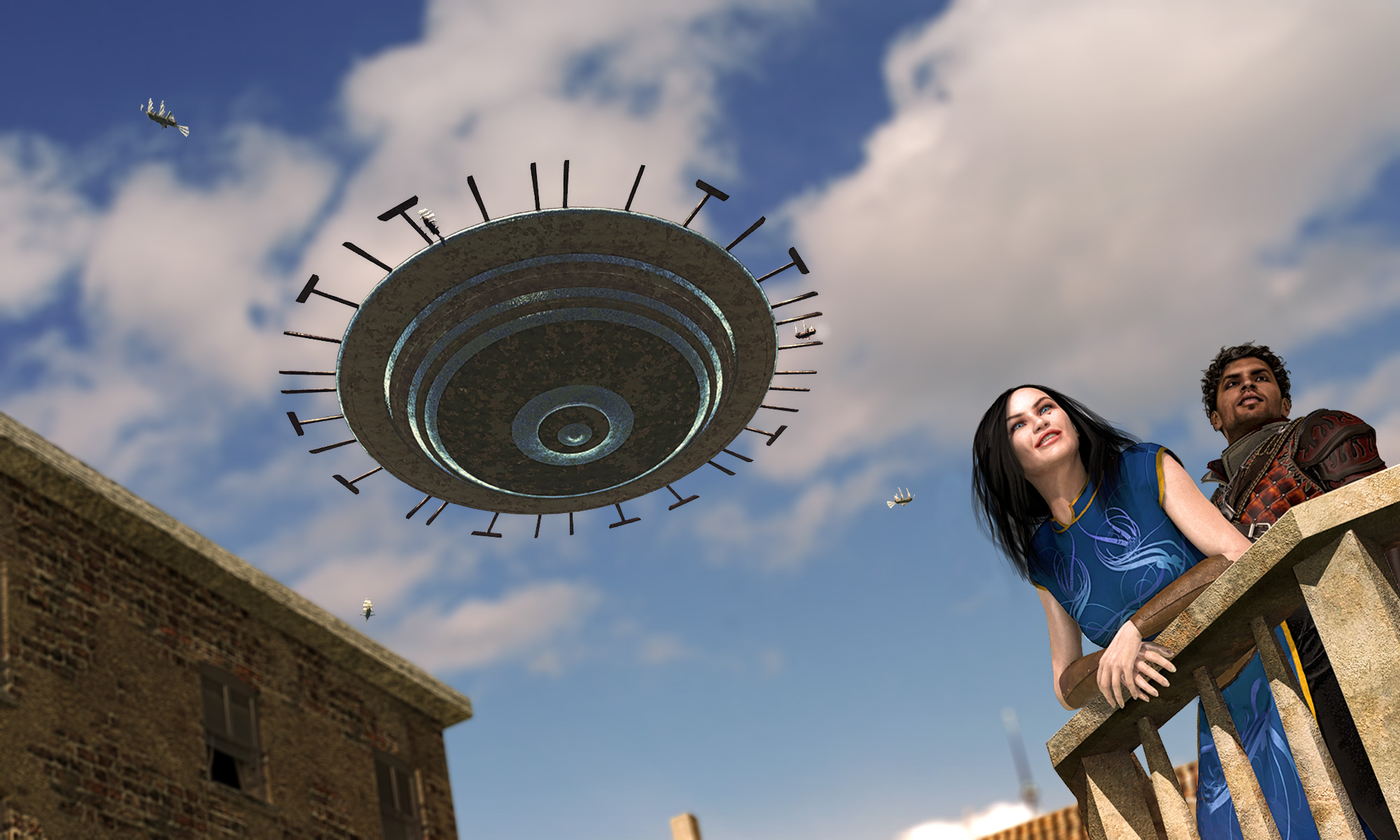
Hacking Darkmaster

I’m guessing that it’s not precisely “news” to readers here that the QuickStart Deluxe of Against the Darkmaster (VsD) has been released as pay what you want on DriveThruRPG. The latest articulation has introduced some changes to my game. Most radical is a reduction of five Armours (None, Soft Leather, Rigid Leather, Chain and Plate) to four (None, Light, Medium, Heavy). Most sneaky is total Success on the maneuver table has been reduced to 100 from 110.

The most radical change, however, (and I’m talking specifically about my home game now) is how I’ve undertaken to transform VsD’s entire d100 system into something that works better for the players at my table. Approaching something like this, I often feel out of place in the company I keep here on this blog. I’m becoming convinced that a “simple,” homebrewed d20 system is most comfortable for my gaming table, though I continue to be enamored with the design possibilities in Rolemaster d100 mechanisms.

And I thought I was going to revert to a d20 system and simply carry on with the campaign characters until I remembered how one player in particular appreciates VsD’s and others’ core percentile principle.

A lot of what I’m going to say here I already have shared with the VsD designers, but I think these comments might be of equal interest to RM gamers. I’m going to structure this discussion by presenting two “problems” that I have been endeavoring to “solve,” each followed by a “solution.”

Combat 

At the beginning of last year I determined to run Middle-Earth Role Playing (MERP). I quickly grew irritated, while trying to track the various weapon “stats” that modified the rolls and results on the attack tables. A “solution” appeared to be to adopt RM2, but then my burden was to track tables for every single weapon.

Interjection

I’m already anticipating a response from the RM community to my complaints, so let me try to provide more context here. When I was young, my friends and I were deeply interested in the simulationist aspects of rpgs. We didn’t care at all how much time—or math—was required of us to resolve a single conflict. It was common for a combat to involve hours of our time. My group now isn’t interested as much in that. Obviously, we’re not plunging fully into story games, but we’re more interested in narrative. We also don’t believe that a lucky shot from a mook necessarily should be able to outright kill a player character.

I have received advice from RM gamers concerning the time management element. Give attack tables to the players, say some gamers. I’m certain this works for some groups, but not mine. One of my players will outright refuse. He says that I’m lucky he “rolls his own dice,” and he’s only partly jesting here. And even if the other players were willing to take on this work, as GM I’d still have to be monitoring their work. These are casual gamers.

So the bottom line is that all this, as it is with any group, is about how my players and I detail the game system that we need for our table. And our struggles and solutions might be of interest to some other groups.

VsD, cleaving more closely to MERP than RM, uses weapon stats and consolidated attack tables. I have consolidated the attack tables into a single one closely modeled on the maneuver table. All weapon types are assigned damage dice, based on 1d10 for one-handed and 2d10 for two-handed. Armours deduct results on the critical tables in increments of 10 per armour type.

Skills 

“I use like three of these,” said a player, referring to a VsD character sheet that, incidentally, is significantly more compressed than any RM sheet. So we reduced Skills into general categories, and each breaks down into two types of uses or applications, and each of these are modified by two discrete character Stats. I enjoy how other versions of RM use multiple and complementary attributes to modify specific Skills. The latest version of RM uses three of its ten for each Skill, sometimes “double dipping,” when there aren’t other clear associations.

So, instead of assigning Ranks to granular Skills, in our hack, at Level advancement PCs gain bonuses in broader Skill categories.

Concluding Thoughts 

My group has made changes, also, to how the GM handles NPCs, and it’s also wrestling with VsD’s use of Drive Points—in fact, we’re considering outright dropping this meta currency. But the largest consideration we have is whether we keep the d100 roll. I think most of us will agree that most bonuses in an RM game reduce neatly from +5 (on a d100) to a +1 (on a d20). So why deal with 100 numbers rather than 20? Honestly, for greater ease of roll resolution, I see no reason outside of the relative Fumble values, though these could be remedied: a second roll could follow any roll of 1 to determine if a particular weapon is fumbled. Incidentally, I see that Chivalry & Sorcery has done something similar, offering a C&S “Essence” rules set in addition to its “Rebirth.” I’m similarly curious about the news of an upcoming “lite” version of RM.

What are your thoughts? Why do we gamers want 100 numbers?

Update

Due to very sudden and unexpected changes in health I would really like it if a couple of other writers could make a posts in the next few weeks.

Thanks

Peter.

Lazy GMing: Inside your NPCs Heads and Hearts

Recently, I played around with random tables for village names, industries, street plans and then a plot hook to give the PCs something to do.

Since then I have been playing with a new web-based toy and I thought you may like it.

Before I introduce it I want to explain the how and why of using it.

What it does is provide you with a couple of little pictures or icons, I use two but you will have an option for one to six at a time. These icons are completely random, sometimes vague and always open to interpretation. The way I have been using it is to grabl two icons for every NPC I am adding to an adventure, at the planning stage not during play. The icons are used as inspiration for what is in the NPCs hearts or minds.

For example. I created a Lady in Waiting for an adventure thinking that the PCs may want to use a charm or suggestion spell to turn an insider on to their side. When I created the NPC I drew a Wheel and a Shield icon. The first thing that came into my head was that a wheel can mean change or revolution and the shield could mean being defensive or hiding something. All of a sudden this lady in waiting is actually very sympathetic to a group of anti royalists but is hiding her sympathies.

The chances of this ever coming out in play is probably under 1% but if it did, if a player decided or overcast Telepathy on her for no reason I suddenly have an answer to what is going on in her head. If you charm her and now she is your friend and you raise the subject of breaking in to the castle then she is actually going to be more open to the idea than another NPC.

I grabbed two more icons for a military type and got an Arrow and Flaming breath, that immediately said typical sergeant major to me, straight to the point and will ball you out for the slightest discretion.

Since I have been using these, they add about 30 seconds to creating an NPC but they add a whole world of potential depth to people your PCs meet and can create endless sub-plots and side quests if you wanted.

So that is what it is for. The tool is called Zero Dice and you can find it at Tangent Zero. Leave the Dice Type to image and then click one of the “roll 1” to “Roll 6” buttons.

As another example I have an NPC who will be sharing a dungeon with the PCs. Let us find out more about him.

So I am seeing a deadly plant and a gift. It could be that our prisoner is a gifted poisoner but I like the idea more that he stupidly send a poisonous plant (poison ivy maybe) to the lord of the castle as a sort of protest.

You do not need to take the icons literally, there are some icons in the set that contain battery charge levels such as these…

I use these often as an indication of energy levels, or stress or even health. Not everyone you meet is going to be on full hits, some people are having a bad day even before they meet the PCs.

You just have to let your imagination be inspired by these visual prompts.

Saying No but Meaning Yes

I play in a RMC game where the GM is the type to look for any excuse to punish the characters. Examples from the last session are when we paid passage with a wagon caravan between cities but the player had never asked about paying for food, just travel so the GM sprung it upon us that on the first night everyone else had food and we didn’t. Another example was that we were caring for an NPC who was in a coma. We were travelling by wagon. I said to the GM “I will tend the patient on the journey”, being a lay healer this seemed a natural thing to do. Five days later the GM comes up with “You never said you were going to give him anything to drink.” What! As far as I am concerned “tending the patient” is a modern contraction of “Attended to the patient’s needs” and I took it as read that food and water are fairly basic needs.

But, that is the GMs style. Every time he tries to trip us up like this I create a little checklist and in all future interactions I run through it. I even upset him last time as I had explicitly written on my character sheet that my tin and copper coins were in a belt pouch, my bronze and silver were in a pouch around my neck but under my shirt and my gold was in a pouch at the bottom of my pack. He told me that I discovered my purse had been stolen and to rub out the coins on my character sheet, to which I replied “Which one?” Two can play at being pedantic.

For the most part it is the GMs job to say “Yes”. We are there to help the story unfold. If the characters have a plan that they have the skills to carry out and they make the skill rolls then the answer to their questions should normally be a “Yes”. Saying “No” to your players too often is a sure fire way to stagnate your game.

In a barroom brawl my players don’t even ask me if there is a bottle they can grab as a weapon, they just tell me that they grab a bottle. How does it advance the story if there is no bottle? On the other hand if the player goes for a bottle against unarmed hooligans they have just escalated the conflict significantly and it could have consequences.

Sometimes I will add in a condition. If you want to swing of the chandelier then I will tell you where they are if they are not in immediate reach. It is then your choice if you want to go ahead.

Sometimes we just need to say “No” because that is the way the world is. “Is the castle gate shut?” is a yes/no question and if the gate is not open it is quite definitely shut. That is simply narrative and you could be starting to build the challenge that the characters need to face, how to get into the castle when it is under lockdown.

Last post I was talking about improve skills. All GMs need decent improv skills to be able to whip up an NPC as needed or to adapt the challenge as the characters make their decisions.

The improve technique I want to talk about here is “No, because…” In improv theatre a flat No is considered ‘blocking’ it prevents the other improvisational actors from taking the scene forward. It is the same in rpgs. Just saying No to your players does not normally move the story forward but even if you keep it to yourself, as will frequently be the case, the ‘because’ creates a route by which the players can turn the No into a Yes of sorts.

Take the example of trying to question a villains lackey. The player wants to cast Charm Kind on the lackey and the as best friends want the lackey to help him sneak into the villains tower. You know that this will completely defeat the point of the adventure. The villain is a red herring and it is what the characters will discover on the way to him that will reveal the next stage of their quest.

So we are faced with a charmed lackey. Will he sneak the character into the tower? No, because his life would be forfeit if it was discovered that he had breached the security.

That seems fairly normal but in fact it gives the characters something they can work with. If all the inhabitants are in fear of their lives for disobeying an order that could be used in duping a different npc, who they can put in a position of believing that if they do not do what they characters demand that the villain will be so angry they will probably not survive.

During the GM prep time or when you are plotting you keep in mind ‘No, because’ you can apply it whenever you block a route or close of a course of action. The reasons are part of the story and should help make the world more coherent.

Navigator RPG

So I have been thinking about my Spacemaster idea from last week. There are a few threads I want to pull together today.

Cepheus vs Whitebox

There are two potential ‘original sources’. The first, as pointed out by Egdcltd was Cepheus. This is basically Traveller with the serial numbers filed off. So the core mechanic is 2d6 + skill and roll over target number.

The Cepheus Light rules are a complete set of Sci Fi rules and cover everything from character create to starship combat and planet building. Those rule weigh in at just under 170 pages.

Whitestar by Whitebox on the other hand is a D&D in space game OSR build. It is closer to the original sources as Rolemaster was D&D house rules so this would be Spacemaster as Whitestar house rules. As a d20 system the conversion to d100 is simple and logical. The rules as sold are 134 pages all in including setting, starting adventures and the game rules.

In terms of popularity Cepheus is a Pay What You Want game that has achieved Silver metal status. Whitestar is also PWYW but is a Gold metal product. The PWYW is important as you only get metal ratings if you actually pay for the PDF/book and most people don’t pay when they can have the PDF for free. If only 1% paid then the actual number of downloads would be in excess of 10,000 and 50,000 respectively. Whatever way you cut it Whitestar appears to be four or five times as popular as Cepheus.

Collaboration

Over in Zweihander-land I have been running some collaborative projects. In principle it works like this. I suggest a title, I set up simple shared project management board where people can list the content they are working on and can then list when it is all completed. I then do the page layout and put the book on sale. Profits are shared on a pro-rata basis using page count as the unit of measure.

It works, and works well with that group of developers because there is a real sense of helping each other out. It is very non-competitive. I would go so far as to say it is very supportive.

The most important thing is to leave your ego at the door.

I am not entirely sure if the Rolemaster community could pull off the same level of collaboration. To be fair Brian, Egdcltd and I managed it with the 50in50 adventures so it is possible. Creating an entire game system is a little harder as there will always be the tug of war between simplicity and complexity. That question has never been suitably answered. That is in part why I mentioned right from the start RM2 rather than Rolemaster in general. I find RM2 fans are more open to simpler games because at the start RM2 was a rather simple game.

What’s in a name?

Finally, I have been tossing names around recently and I have rather grown to like Navigator RPG. It is a bit of a nod to Shadow World. If you use a Sci Fi type font it looks quite cool. Also, just as important there is no Navigator RPG at the moment. I say at the moment as there used to a game a Gamma World retro clone but the last update on their blog/site was eight years ago and the game never made it onto Drivethru or RPGnow.

Thinking About Square One

Unless you have been living in a monastic cell for the last decade you cannot have failed to be aware of the OSR movement. You can be forgiven for not knowing what the R in OSR stands for but that is par for the course. It could be Old School Revival or it could be Renaissance or quite simply Old School Rules, who knows and frankly who cares.

The OSR movement is about trying to capture that feeling of simpler times from the 1980s RPGs but that is a pretty fuzzy idea and as such it encompasses a lot of vagaries. For example Zweihander is a thoroughly modern game but also considers itself a Warhammer retro clone and markets itself as OSR game. Curiously the DrivethruRPG categories it puts itself in are “d100 / d100 Lite”, “Old-School Revival (OSR)” and “Other OSR Games”. I don’t really know when something becomes ‘Lite’ but Zwei is a 700 core rulebook and already has multiple supplements of additional rules and is growing.

OSR often means D&D Basic/Expert set clones or AD&D 1st Ed. clones. We have seen above that Warhammer retro clones also qualify.

By every measure RM2 should qualify as an OSR game, but that is not where I am going with this.

Square one in Rolemaster terms was as a set of house rules for D&D. If there is one thing that the readers of this blog are good at is House Rules, we propose them by the bucket-load.

In my opinion RMu is moving ever further away from its D&D roots. This is not a bad thing. If you try to be too D&D then you may was well play D&D. There are enough previous editions of varying complexity to satisfy most tastes.

What I was thinking was more along the lines of a “gateway drug”. An original set of house rules for OSR D&D/clones that fix what we know to be the original flaws in the system like the implied DB associated with different armours.

I don’t want to stomp on ICE’s toes but how about a Sci-Fi OSR game. SMu is so far in the future I find it hard to envision it ever existing. Anyone with a RM2 Creatures and Treasure has all the conversion rules they need (these are also in the download vault over on the forums if you don’t have the original C&T).

Furthermore, I would quite like to put all the rules under the OGL license or even better a CC license so it will be perpetually free. I don’t have time to write it all right now but I think I could set up a shared development infrastructure (I know that sounds complex but it really isn’t). What it would entail would be a Trello shared board which would be used to control the project management and documents stored on the cloud, probably google docs so anyone can dip in and work on the project.

I will cogitate a bit more on this idea and blog again on it next week. I think it has legs. I also think that between us we could create a perpetually free RM2 retro clone that will keep Rolemaster alive forever regardless of what happens to ICE in the future.

This week I am reading…

Sagas of Midgard!

Sagas of Midgard is another d100 system. They [Drinking Horn Games] refer to it as a Roll Over system. The core mechanic is nice and simple. The GM sets the target number taking into account any difficulty factors and the players roll the dice and add any bonuses they can muster. Roll over the target number for success, roll under for failure.

In combat they have a 01-05 critical failure and a 96-00 critical success, although this does not apply to skills.

I suspect that Sagas grew out of a set of simplified house rules for a d20 system, but this is not a D&D retro clone by any standards.

What I like about the system is the ‘sources of competency’. In Rolemaster we have Racial bonuses and DPs, culture ranks and then multiple levels worth of development. I would like to see changes but in principle I like the onion skin of race, culture, training.

Sagas of Midgard uses lots of cultural references to build the onion skin of your character. You start with your family name, each family comes with a long tradition or culture. If you are Erik Battleborn you get a bonus to melee combat. Erik Gunnarsson would get a bonus to strength based skill tests. For each bonus there is a related downside that we would recognise as a Flaw in Rolemaster speak.

Once you have your family name you get to choose a title. Each title confirs skill bonuses or special abilities that we would recognise as Talents. In the core rules there is a fair selection but I imagine that future supplements will add plenty of new titles.

The bonuses conferred from your family and title will typically add up to two or three +10 to +15 bonuses which can stack if you are trying to build a one trick pony or a PC.

Now you get to choose your god. Your god confers more bonuses and special abilities. These increase as your character improves over time. There are no levels, you are awarded skill points for heroic play and a running total of all the skill points earned by a character is used as a measure of your gods favour.

The next step is to spend your skill points. Starting characters get 15 skill points. It is the god you follow that sets your skill point costs. A follow of Thor gets cheaper combat skill costs as well as unique abilities they can by with axe and hammer.

A follower of Loki gains bonuses to dodging and a range of poison related skills.

Each god has a range of combat and magical skills available and they typically cost 5, 10 or 15 skill points so you get to choose either three minor abilities, one powerful ability or a 10 and a 5 point ability.

You now equip your character, give it a description and you are ready to play. You will note that there are no stats in all of this. My first character took 8 minutes to create if you exclude the reading time as it was the first time I had seen the rules.

As it is a player choice and point buy system you are guaranteed to get the character you want.

Criticals and Failures

Sagas of Midgard has some rather simple critical hit and failure tables. There are only half a dozen entries on each one but a nice touch is that at each level you have options such as dealing more damage OR knocking your foe prone. So although there are not many entries on the table they can play out differently and they increase player agency.

Monsters, foes and potential allies are also dealt with in a clean and simple way. Each entry in the bestiary has a base rollover number for its attacks, a total number of hits and then a short list of special actions or attacks. A Beorn for example has a base rollover to attack of 60, 20 hit points and can use either two claw attacks, a bite attack, a bear hug or go berserk. Each attack is fully described in terms of game mechanics.

Cool Adventures

All in all Sagas of Midgard is a single 178 page rulebook. You get character generation, a couple of magical traditions, bestiary and a really strong setting. What you also get are four fully developed adventures. Fully 20% of the entire rule book is devoted to starting adventures.

Each adventure is designed to least two sessions. As most groups of players seem to struggle to meet even once a week the starting adventures are going to keep you playing for a couple of months without any fleshing out or expansion.

I think that is a lesson that RMu could learn. Of course RMu wants to be a generic system for any fantasy world but lots of playable content from day one is a good thing. Sagas is heavily tied to the one setting, one world, one culture. That makes life easier for the developers. Having said that, their single mechanic could easily be turned to any setting. I think they are trading off the cool culture of the Vikings but a Dynasty of Pharaohs game would work just as easily or even a Gods of Olympus.

If you wanted to play RMu in a Viking setting then converting from Sagas to RMu would be a breeze. It seems like multiply everything by 1.5 and you are in the ballpark of RMu’s OBs and #hits. As these are both d100 systems a +10 or +20 just carries right across. If you wanted viking traditions, culture, the gods and their magic then Sagas of Midgard would be quite fun to play. If you just want a detailed drop in viking culture then I guess the HARN Jarin supplement would also serve, but wouldn’t be as much fun.

More Lazy GMing: Destination Spaces in My Against the Darkmaster Campaign

So now I have nudged the trajectory of my PCs wholly into an overland journey to the enemy-occupied Dwarven mountain city of Angrothrond, wherein the PCs expect to find armies of Orcs and Trolls, caverns of partially mined angril (a homebrewed substance similar to mithril) and perhaps a massive, inert stone golem and a slumbering Iron Dragon of Morgoth from the First Age of Middle-earth. Since starting this coming avalanche—the trickle of adventuring steps that should result in armies at war—I have been anxious to envision specifically what the PCs should encounter at this destination.

I’m not content to rest with the near-zero prep that unpredictable gamers have required of me for our discrete sessions. This is because I’m reasonably assured that the PCs will come to Angrothrond, and I should be adequately prepared to meet them there. And yet I’m still not sure how to build the location—or if I should construct it at all, even considering the new circumstances.

A game’s official materials often telegraph the intended experience. VsD’s Level 1 adventure contains what essentially is a “5-Room Dungeon”—always a quick and satisfying structure.

The first thing I chose to do was randomly generate half a dozen qualities for just as many areas in the surrounding countryside. This adheres to lazy GMing. But I have been wrestling, since then, with how detailed to make Angrothrond itself. I began to map it out. I sketched a side-view of the mountain with a rough estimation of levels, then I sketched a couple “overhead maps” of some components of the individual levels.

In my youth I never, ever did much with maps. Most of my GMing was “winging it.” My friends and I would be at someone’s house for the night, giddy on Pepsi cola and Reese’s Pieces. In between consuming VHS movies, my friends would insist I run MERP. I’d sit in a corner for a few minutes, dreaming and maybe jotting a few notes, then, when ready, I’d announce the beginning of the scenario.

When I did need maps—and almost always they were overland maps—I had Karen Wynn Fonstad’s The Atlas of Middle-Earth, a 1987 birthday gift to me from two neighborhood friends. I still have it, and I still use it, as you shall see in this discussion.

Fonstad’s Lonely Mountain

While playtesting Against the Darkmaster, I have been thinking a lot about GNS theory. For those who might not know, GNS stands for Gamist Narrativist Simulationist. These three qualities comprise all rpgs (at least, I have yet to find an exception), and individual rpgs might be described by where they fall among these poles or within a Venn diagram. Right now, I haven’t determined where VsD lands in a graph.

I do know that OSR games tend to land heavily in the Gamist portion of the diagram, and I believe that two evidences for this are the ease and speed of character creation—roll one up and try to survive!—and its preponderance of detailed maps—this is the space; interact with it. When a game moves into Narrativism, rules concerning improv acting enter play: Is there any kind of lever on the wall? (Whether the GM had intended it or not) Yes, and you notice a rusty iron grate directly below it; perhaps the lever operates it in some way? I think that VsD is supposed to bleed into Narrativism in an appreciable way—its intent is to emulate exciting high fantasy, after all, not necessarily the Simulationism of dungeon exploration—and player questions and Skill rolls, therefore, are likely to directly affect the game space.

How detailed should Angrothrond be, therefore? At first I tried to map it extensively. By the time I reached some lower levels, though, I felt like it was a useless task—who cares how many independent Dwarf homes are on this level! I wondered if I might save myself some time by borrowing a map. I have plenty of OSR dungeon maps, but using those for VsD simply would highlight the mundanity of Gamist play. Well, what about some true Middle-earth precedents? I don’t own any early MERP modules that might have the Dwarf structures. I looked up what Cubicle 7’s One Ring might be offering these days: some reviewers of Erebor: The Lonely Mountain were disappointed with the lack of significant maps, so that seemed like a hefty price for a mere curiosity of a PDF.

Fonstad’s Moria

But didn’t I have maps already? Turning to Fonstad I found not only maps but a Narrativist precedent. Tolkien’s Dwarven caverns are better described as immense underground cities rather than dungeons. Who cares about the placement of every single municipal feature in a town or village? Same with these places. In fact, Tolkien’s prose concerning underground exploration often involves hours—even days—of journey through a single passage, sometimes with just a few choices concerning passageways. It wasn’t until Tolkien’s characters encountered adventure features that he described the space with any tactical clarity.

So I think I shall do the same. Angrothrond will be defined by rough levels, and each of these will contain some major features to be more fully detailed as the Narrative requires. Thank you, Tolkien and Fonstad, for clearing this up for me!

Race as Class in Rolemaster Games

The other day I was looking up something in Middle-Earth Role Playing (MERP), and I came across a passage I don’t recall reading before—ever before, even when I aspired to run MERP just last year!

Elves have certain advantages over the “mortal” races … , and in terms of a fantasy role playing game this is reflected by a restriction on how they assign their stats. Each Noldor Elf must assign his highest stat to his Presence, each Sindar Elf must assign one of his two highest stats to his Presence, and each Silvan Elf must assign one of his three highest stats to his Presence.

The rationale for this appears to be twofold. In Middle-earth, Elves are awe-inspiring, and the rules should reflect this. Also, Elves are inherently powerful. Later generations of gamers would begin to characterize Elven character features as “unbalanced” or “overpowered” (“OP”). MERP appears to make up for this perceived unfairness by necessitating that Elven characters need to boost what is usually regarded as a dump stat. This can be seen as a kind of “tax” or handicap for playing such a capable player. I instantly see the appeal in this stipulation and am looking for a way to adopt it into my Against the Darkmaster (VsD) campaign. 

In MERP—and now in VsD—nonhuman characters are further restricted by receiving, at the start of the game, fewer Background Points to spend on goodies. They also have class restrictions. For example, Dwarves can’t be Wizards. We see some of these tendencies in Rolemaster’s current d20 siblings, as well. But some of the first versions of D&D did something that always has struck me as quite elegant: when it came to nonhuman PCs, Basic editions decided that, in these cases, character “race” was its most important distinction. In fact, the character race was character “class.”

Class, of course, is what RM calls Professions, what VsD calls Vocations. Basically, Class is a character archetype or a description of the kinds of skills in which a character specializes. D&D character Classes seem to derive from early gamist considerations and the vaguely medieval milieu—which emphasizes a strict social structure—that D&D emulates. In this case, classes might be considered the hereditary training in which characters should specialize. RM should receive credit for being an early system to push against the rigid restrictions resulting from class. But the game did so by innovating a complex skill system ultimately adopted by D&D 3e.* In this conception, a Fighter might choose to be skilled at Picking Locks but at significantly higher cost than were she simply to improve a Weapon Skill. In other words, the Fighter was best built for fighting. He developed other interests at expense to his primary vocation.

Now, D&D and its progeny have come a long way from its sources in early fantasy literature to become its own thing. In a typical fantasy setting for D&D now, it’s perfectly acceptable to find nations of Elves, Dwarves, Halflings and more, all with guilds and specializations largely indistinguishable from their usually-more-numerous Human neighbors. But when I consider the literary inspirations for the genre, classed races don’t make much sense to me.

When it comes to high fantasy racial cultures, Tolkien’s Middle-earth must be the best referent. In considering that property, what character Class was Legolas? A Rogue? Well, he didn’t seem particularly thiefy. A sneaky and agile Fighter? Certainly, but how about a Ranger?

And Elrond? In The Hobbit he is presented as a kind of sage, but he also has survived many wars and battles. The point is that, in Tolkien, all Elves are free and all Elves are awesome. They live forever, with ample time to master any pursuit. Elves are essentially their own thing, not Rogues, Fighters, Rangers or even sages.

So what about Dwarves? Well, they’re Fighters, obviously. But shouldn’t they know something about locks? Okay, give them a bonus on those skills. Might they also be Rangers, though? Many are in a diaspora. They have to explore the mountains, too, prospecting for new mines and homelands.

Modern conceptions of Halflings have moved far from Tolkien’s Hobbits, but I think we’re still apt to class the diminutive folk as Scouts or Thieves. This probably is because Hobbits are inherently sneaky, and for this reason Bilbo was unfairly branded as Master Burglar. But the kinds of classes that the little people most likely are to produce are modern vocations—gardeners, millers, postmasters and, yes, Bounders, to name but a few. As a racial feature, I would give these guys a bonus Secondary Skill in a mundane profession.

For the precedent set by my fantasy literature, therefore, I’m attracted to “race as class,” and I have devised a chart for VsD. VsD seems to “balance” its Vocations by distributing 15 Rank Points among 5 different categories. For versatility, it also distributes as many as 150 points in bonuses among the individual Skills.

I must confess that I can’t find “balance” or structure in the latest RM race rules. Anyone have an idea how to construct race as class in that rules set? Might such a project be undesirable in that context?

*For the purposes of this discussion, I’m ignoring the “No Profession” Profession.

Using the ‘wrong’ skill

I was writing an adventure the other night and one of the challenges requires some combination of navigation, survival, region law, tracking or at the very least general perception.

The characters have an option of paddling up a jungle river with its inherent risks of crocodiles, water snakes and possibly hippopotami.

The could of course use the well worn track that edges the jungle. Then they face the threats of solitary big cats, snakes and wild boar.

Additional threats are also impoverished humanoids who have been outcast from their communities.

The point is that there is a lot that the characters may want to avoid or at the very least be aware off and not stumble into. The adventure is expected to be a second adventure for relatively new characters so they will have an additional level under them or if not then this journey will be enough to level them up. Just reaching their destination will be a story point for experience purposes.

I had always assumed that Perception was about THE most basic of skills. I saw on a discord server recently a discussion about leveling up and the advice was not to bother with Perception unless you were a Rogue or such. In my games Perception is probably the most used skill.

Something else I have always done is shift the difficulty factor if the character doesn’t have the ‘right’ skill. So an Easy tracking roll would be a Light Perception. A Medium Navigation test would be Hard Region Lore. If you don’t have Navigation or Region Lore and you are just relying on Perception to keep sight of the track or spot the right tributaries then that would go from Medium Navigation to a Very Hard Perception test.

Using this graceful downgrading it both rewards characters that have build a broad skill base while not making tasks impossible to beginning characters who may not have all the skills they would want.

I know this breaks the RMu similar skills rules. That uses a 0/-25/-50/-75 progression and combines two penalties so that the penalties mount up really quickly. Look at this example from A&CL.

Example: Perception and tracking are in the same
category, but different skills, giving a -50. They share
virtually the same techniques, as well as a similar
subject (the environment). The total penalty to use
Tracking in place of Perception, or Perception in place of
Tracking, would be -50.

A&C Law page 47

My method is much kinder on low level characters and a two step penalty often means just a -20 penalty. For higher level characters the risks tend to be higher and the challenges harder so that -20 turns into a more likely -40 as your more likely to hit Sheer Folly and harder.

It is also easier to work out on the fly. The greater the degrees of separation between the skill the character has and the ideal skill for the challenge then the more steps in difficulty. This eliminates another table lookup to boot.

It also makes it easier to write adventures where to do not know the level or composition of the party.