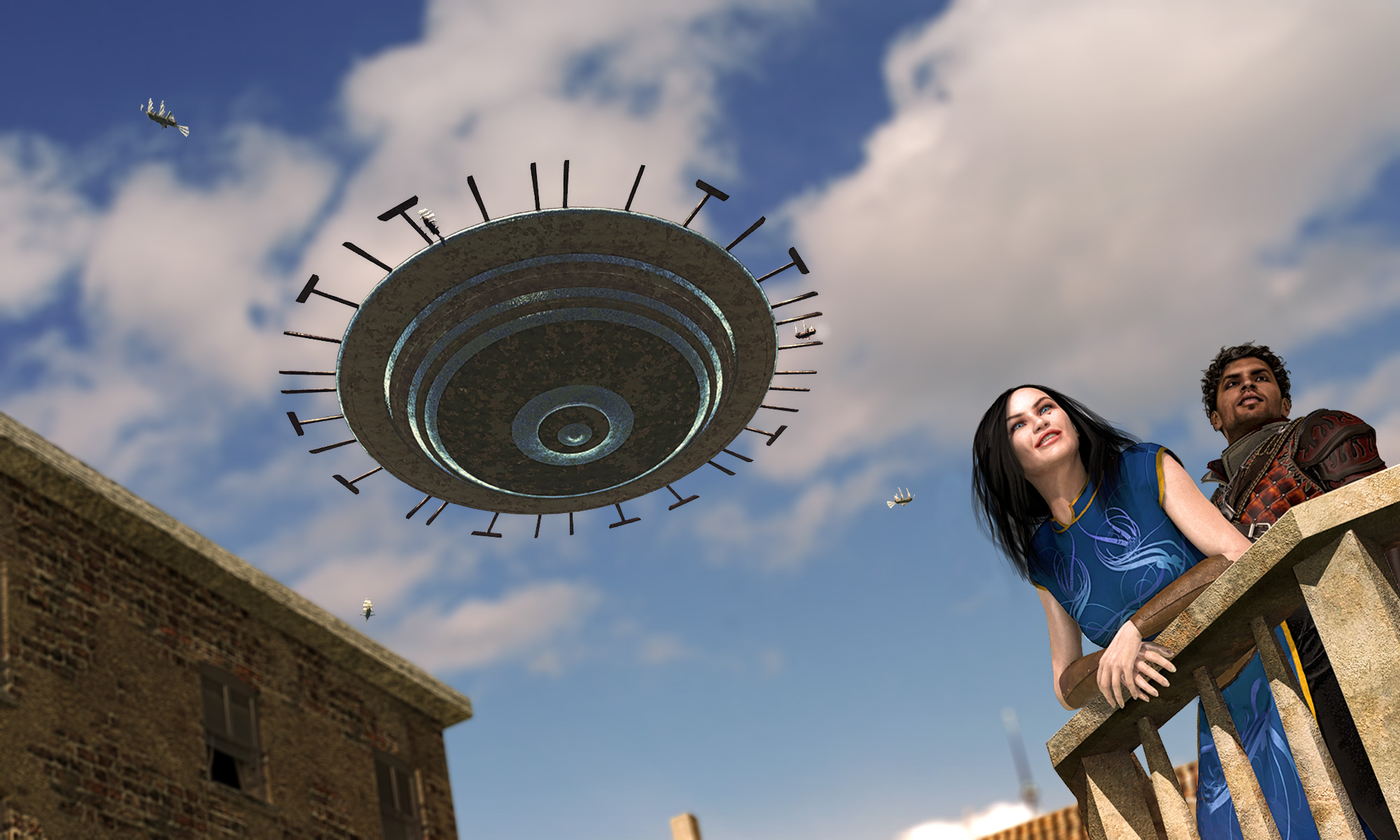
What Does a Roleamster Dungeon Crawl Look Like?

This is part of my looking at first adventures. The most clichéd of all clichés must be the basic dungeon.

The challenge for rolemaster GMs and players alike is wound management in a dungeon. You may survive your first fight but you could carry a lot of penalties into the next fight.

Traditionally, or should I say instinctively, I think of dungeons starting with weak foes and then as you progress in they get tougher and tougher until you meet the final challenge, the end of level boss to borrow from video gaming.

In Rolemaster that really is a death sentence. None of your players characters will be functioning by the time they met the big bad evil guy.

Wounds are not the only consideration.

Magic

I am trying to write these for all version of Rolemaster and here another big difference becomes apparent.

A RM2/RMC spell caster is going to have 1 to 10 power points. I know 10 seems a lot but that is how many my Lay Healer had at first level. I used one background option on Skill at Magic and rolled an extra Power Point per level, a second BGO got me a boost to my presence bonus and I used a background option to boost my Presence. The GM uses the optional rule that your Power Points are based on your Total Stat Bonus, not your stat. So I am wandering around with 5PP.

There are other BGO that serve as spell adders and spell multipliers and you can of course roll of a special item. So with naturally boosted stats, bonus PP and special items you can get as high as double figures but that is extremely unlikely.

A RMu pure spell caster is going to have double, triple or more the power points of a RM2/RMC spell caster. They also are likely to have a greater number of lists and a greater number of spells available on those lists. Using RM2/RMC RAW it is possible to have 5 spell lists if you roll like a devil.

0th level spend 20 ranks learning one list automatically and a few ranks in a second which you then fluke the roll for. Then repeat for 1st level and then again when prespending 2nd level DPs. This gives you 4 learned lists and you automatically get the 1st level spell on the list you have 20 ranks in.

So RM2/RMC characters will have less spells and less power points than RMu spell casters.

Martial characters in RMC are more competent than RM2 and both are more competent than RMu. I don’t want to discuss this point as it is ongoing on the forums right now. I believe that this will be fixed.

So is a dungeon crawl viable?

I think it is but only if we think beyond combat. As a starting adventure we want to challenge all members of the party. Throwing monsters are the party will certainly give fighters and the healers plenty to do but the rest are more limited.

I detest the Sleep V spell. I know that putting everything to sleep and then cutting their throats is very pragmatic. Keeping one or two alive to interrogate is also a perfectly valid option. It is also kind of boring.

It is when you see the players of the fighters and rogues just roll their eyes and put their dice down when the magician announcing that they are prepping Sleep V that you realise that the spell just robs three quarters of the party of their reason for existence.

By the time you are sending foes sufficiently tough to not be affected by Sleep V then all the essence casters are throwing Sleep X around just as easily.

In my ongoing campaign I had two characters that used Sleep V as their go to spell. They ended up with so many mass combats, not because they were particularly heroic, but because I factored in enough foes to still have the number I wanted active after the spells went off. I also used waves of foes so that they could only put the foes to sleep that they could see, not the ones arriving a round later.

So combats are not good for starting level dungeon crawls. Too easy to put starting monsters to sleep and with the lack of places and time to rest the attrition is likely to prove fatal to a starting party.

RMu To The Rescue

In all the adventures I have written this year I have picked monsters that existed in all versions of RM. This time is no exception. I am going to build a dungeon using Daedhel. These are perfect. What makes them perfect is that they come fitted with a Fear Aura as standard. They also come in pairs. I would suggest that one is presented as a false end of level boss and then mid way through the final battle the second one arrives and joins the fight as a fresh foe.

I am seeing a throne room type location with two thrones, one Daedhel the dias. Battle ensues and then Daedhel number two arrives. The players then think, oh yeah, he said there were two thrones, D’oh!.

Daedhel also come with 14PP (Chan/Ess) according to the RMu CrL. So there is no reason for these guys not to animating skeletons or fallen PC/NPCs as zombies. There is nothing wrong with them making good use of things that they find lying around their lair.

Completely new players are likely to assume that demons are not going to be effected by Sleep spells. Also if the main defenders they have fought so far have been undead, who are also not effected by mental attacks by the time they reach the BBEGs they are unlikely to use it as their ‘go to’ attack.

Skeletons and Demons don’t eat so that whole thing of what do people eat in this dungeon is a non-question. The skeletons are explained by the presence of undead creating demons so that is coherent. The Demons can actually serve as an edventure hook in their own right. In truth the real BBEG is not in this dungeon, the two Daedhel are simply higher up minions. They were put in the dungeon and told to start building an undead army. To do that they needed bodies and that is why they are in an out of the way place, peace to work, and have been killing people, for the undead and as an adventure hook.

The characters in clearing the dungeon derail the plans of the BBEG and save the nearest villages, Hurray!, and make an enemy of the BBEG, Boo!

Dungeons are more than monsters in a house

The secret to a really good low level dungeon crawl is the environment. The undead do not need to see so there is no light, they do not eat or feel cold but the characters do. The Daedhel do eat, they are carnivores, but I do not see them as either house proud or tidy eaters. Add on top two more factors. The place is used for storing dead bodies and has a number of animated corpses in it. Daedhel have the Distinct Odour talent/flaw.

As a GM we can use the senses of the characters against them. How about a failed or partially successful perception check combined with some dead bodies and flickering torch light? The question is “Are they moving?” or did the character only think they twitched or flinched?

Opening doors should be accompanied with waves of putrid air but places where the Daedhel have recently been should have the taint of something altogether ungodly.

That smell can be used to warn inexperienced characters that the Daedhel are coming or at least nearby. A Daedhel covered by an unseen spell may choose to simply observe the invading characters. They would certainly have enough time to have created some mindless undead to serve as their undead army.

The fear aura is about more than a resistance roll. Whether that is passed or failed will of course change the capabilities of the party but there are loads of role play opportunities that go with it that we can use as GMs. Things like hairs standing up on the backs of you neck. You can just describe those for the atmospheric effect.

In my next post I will write this up as an adventure. I also have something really cool to add to it that I have not touched up here. I think you are going to love it.

Combat in Against the Darkmaster

I think I should have the Against the Darkmaster (VsD) QuickStart introduce this topic:

Combat is a serious thing in Against the Darkmaster.

While characters are assumed to be heroic, even the most skillful fighter must take combat seriously because of the high chance of being wounded or killed with a single blow.

p. 37

Right. Well. Hm.

I don’t disagree that combat should be serious, even for (perhaps even especially for) heroes, but I’m not sure that the type of combat presented in VsD properly emulates the fantasy fictions that inspire VsD. Perhaps I’m off track here. I’ve already admitted that I don’t relate to the Heavy Metal ethos of the 80s, and VsD specifically points to this element as inspiration for its combat.

The combat system in VsD, with some alterations, is that of Middle-Earth Role Playing and various Rolemasters: roll d100, add Skill bonus, subtract Defensive Bonus, compare the result to the appropriate armor on a chart. The armors are the MERP armors—None, Soft Leather, Rigid Leather, Chain and Plate. Results on this table range from a miss to one of the five Criticals, renamed in VsD as Superficial, Light, Moderate, Grievous and Lethal. Okay, simple enough.

An Attack Table. The colors are neat and useful!

But, as with MERP, as with Rolemaster, conditions and qualifiers soon heap on. Does the opponent have Cover? Wait, isn’t she also on Higher Ground? Are you attacking from the Flank? Do you have to Move to get there? Are you at half Hit Points? Is that above the Max Result for your Weapon? Hey, doesn’t that do -10 against Chain?

Ugh. I know that some gamers don’t mind this kind of play at all. In fact, many prefer it. But I think that my table doesn’t like its rules to interfere with its fiction. Don’t get me wrong, these rules do make good fiction. Of course I love granularity and realism. But not when those features become a grind, not when they become fiddly. And not when they so easily can kill my PCs with one blow.

What are you saying, Gabe? Are you forgetting that this also is a game, and no challenge is entertaining if there are no stakes involved? (The voice in my head here, specifically, is Aspire2Hope’s, one that always keeps me honest.) I know, so perhaps I’m saying that the stakes are too high… Or I’m saying that the stakes are too high depending on the situation.

In the fictions inspiring VsD, main characters (our PCs) do die, but they don’t expire because of a stray shot from a Goblin. They perish plunging with the Balrog into the Abyss, they drop while defending Little People against hordes of Uruk-hai, they fail on the Field of Battle, thrown from horseback because of the malevolent terror exuding from a Nazgûl.

Outside of the basic conditions such as Stunning and Bleeding, the VsD combat rules as presented in the QS do not emulate the fictions. Again, they might reflect a Heavy Metal vibe, but arbitrary death does not signify heroic fiction. If this latter is not what VsD is after, there are ways to fix this. VsD already has given players one “character shield”: they can spend a Drive Point to lower a suffered Critical by one severity (but must abide by the new results). Here is another possibility, one admittedly inspired by other games: the character somehow survives death, but she is now Doomed (or Fey, in the Old Norse sense of the word), destined for a truly heroic death. The GM then introduces, as soon as possible, an awesomely terrifying Big Bad and tells the character that this is how he dies; how she goes about doing it is up to him, and usually she should be saving others from a seemingly invincible Presence. The player might choose to die before the GM can roll this out, determining on his own what is a fitting demise for her hero. Or—or in addition to this—most NPCs can be designated a kind of “mook” that has a max damage rating vs a PC. Or NPCs should just be easier to kill. I’m doing this already with my simplified NPC Stats that were slightly revealed last post, and most of my mookish NPCs don’t have DBs.

The easiest way to describe VsD combat as written is to share The Tactical Round Sequence.

I’m not sure how much of this is standard to most iterations of Rolemaster, so forgive me if I go on about anything obvious. I’m going to detail the features that are a bit new to me.

From the top, Assessment Phase. Basically, if the GM determines that any PC might be disoriented—due to being Stunned, taking a fall, getting ambushed, etc.—then this character must succeed at a Perception Roll to take any action without penalty. Other than this, the only thing that is new to me are the order of actions according to weapon size in the Melee Phase. I don’t think anything else should be puzzling to an RM gamer.

The same can be said for what are the three types of Actions—Full, Half and Free—and modifiers to combat that result from taking some of them. It takes time to Load weapons. Characters may use all or half of their Offensive Bonuses to Parry. A low roll could result in a Weapon Fumble. There is a long list of combat modifiers, though this is given as a separate table in the Appendix of the QS.

By now, readers won’t be surprised that I prefer to keep that list in the Appendix. I might memorize the conditions the QS specifies in its text—combat modifiers for characters who are Prone, Surprised, Stunned, Incapacitated, Held, Flanking and at the Rear. None of these are unfamiliar for RM gamers. For the rest, I would rather use the inspiration of the moment and my own “increment” method.

I’m not sure what to do about Weapon Stats, likewise in the Appendix. I think I have to use them for now. It’s important for weapons to be different from one another. I think I’ll try to push the burden of knowing these qualities onto my players.

A corresponding Critical Strike Table

Skill and Save Rolls in Against the Darkmaster

And now it’s time to play!

No surprises for Rolemaster gamers, in the QuickStart of Against the Darkmaster (VsD), Skill tests are resolved against an easily-memorizable Action Resolution Table (above). For comparisons between this table and others—and how they might be used for narrative purposes—I direct you to Peter R’s recent discussion about Maneuvers in RM games. All that remains to be explained here is that, in VsD, actions are resolved through the character rolling an Open-Ended d100; adding modifiers for Skill, situation and Difficulty; and referring to the GM for the result. VsD gives some rough characterizations for levels of Difficulty, and the mechanical components attached to the descriptions are essentially in increments of ten with a jump from Heroic (-50) to Insane (-70).

I prefer to set my own Difficulties by “increment.” For Level 1 characters, the table is punishing enough—the probability for success is just north of 25%, and, even then, “success” usually means a Partial Success, which almost never allows the character a clean resolution. If one thing is complicating the Action Resolution, I give the roll -10, if two, -20, and so on. Of course, some dangers might qualify singly as -20 or more, and I take these into consideration. My point here is that I don’t necessarily trust myself nor want to take up too much time fussing over what might be an appropriate level of difficulty, so this is my method.

The same is true for any test which involves an NPC. Unsurprisingly, the QS contains rules for Conflicting Actions, which amount to “opposed rolls.” I do use these, sometimes, but it’s more economical to use the NPC Level to set a Difficulty. Is a PC attempting to Deceive a Level 5 con-artist? Well, it’s hard to Deceive a deceiver, isn’t it! The Difficulty modifier is -50. Anyone who remembers my discussion of Skills in VsD will recognize that this value equates to two Ranks per Level in the corresponding “skill” (for any more than this, I’m going to have to multiply Ranks over 10 by 2, then Ranks over 20 by 1). Let’s say that the NPC has been unlikely to develop this specific quality. Fine, perhaps 1 Rank per Level, then, Level x 5. Unskilled? Well, then obviously nothing. But what about Stat bonuses? Yeah, well, what about them? I don’t care; this is an NPC. But, sure, if it isn’t much trouble for you, as a GM, go ahead and toss them in. My point remains: I don’t need to take time, even if it’s just a moment, to make this determination at the gaming table.

The VsD Helping rules, in my own game, have a much wider application than what at first might be expected. I don’t prefer to have my PCs “piling on” rolls for Perception and Lore Skills (for an elaboration of this and “passive” Perception, see my comments in this post), but everyone can Help, even, usually, belatedly. To Help, every aiding character must describe how that person is Helping and succeed at a relevant test. Every success in this way awards a cumulative +10 to the activity roll for the main character attempting the test.

I like to use Helping to simulate other narrative aspects as well. In my play-by-post format, two PCs were passengers on a river ship suddenly beset by a storm. One PC used his Charisma to motivate his followers to help the shipmen steer the boat away from the riverbanks; the other PC did something more direct by seizing a spar and attempting to physically press the hull away from the rocky river edge. If either succeeded, that character would contribute a cumulative +10 to the GM’s roll for the sailors of the ship to keep from crashing. (What happened, you say? The ship smashed and sank.)

Save Rolls are pretty straightforward. An OE Roll is added to the character’s SR bonus in an attempt to beat a Difficulty which is 50 + Level of the effect x 5.

A shorter entry this time. This is because next is Combat! Unsurprisingly, this might be the most involving analysis yet.


Zweihänder Read Through – Hazards and the Grimoire

HAZARDS & HEALING

This is a very impressive part of Zweihander. What the writers have done is define eight rather atmosphere, and I would say setting specific, diseases and afflictions. Each has a difficulty factor to resist infection, a description of the symptoms and of the treatment.

That bit isn’t particularly outstanding, but it is cool in its own way. What makes it stand out is that this is followed by some really simple but equally atmospheric rules of treating disorders and diseases and even surgery in the default sort of medieval European setting that is beloved of most fantasy RPGs.

Basic treatments just prevent the disease from progressing on a week by week basis. Some diseases have a natural duration during which time they run their course. Real treatment requires either a magical draft called Panacea or surgery to address them. Of course there is the option of bloodletting to treat infections, just to give you the idea of the sort of medical skill we are dealing with.

I am pretty sure you will not be surprised if I tell you that surgery is not without its risks. A critical failure can kill a character which is not good.

Diseases are not the only hazards. This chapter goes on to describe extreme weather from frostbite to heatstroke. Falls are split into falls on to hard surfaces and those into water. That last one is not something I think I have ever seen rules for before which is odd as I have thrown PCs off cliffs hundreds of times I reckon in the past.

The hazards covered here are diseases, falls, fire, intoxication, poisons, sleep deprivation, starvation and suffocation. Each has details of the effects and treatments if applicable. Resistance Rolls as we know them are called Toughness checks. Each hazard has a the modifiers to the Toughness check for different conditions, the effects of failed Toughness checks and where needed the treatment for the different hazards from dealing with venoms to giving the kiss of life.

Peril

Zwei has a condition called Peril it is pretty much a game mechanic for modelling stress. The way it works is that the greater the level of Peril the more your skill bonuses are cancelled out. The logic being the more stressed you are the more likely you are to make a mistake and that stressed people do not perform at their best. The best analogy to Rolemaster that I can think of is if you stripped out all the minuses from the criticals and the penalties from being at 25% or 50% of hits and put them into a single mechanic rolling them into a single penalty.

In Zwei a skill bonus of +30 is the absolute maximum and that is three ranks at +10 each. Once you are in Peril the five steps of Peril go from no penalty, -10, -20, -30, automatic fail due to mental incapacitation.

Recovery from Peril is rather like Rolemaster’s cinematic healing. Resting in a nice warm safe place removes the Peril penalties, Resting in rough conditions from sleeping in the gutter to on a dungeon can remove most but not all Peril.

Harking back to the surgery rules, you can use smelling salts to recover one step on the Peril scale but at a physical cost to the body.

Wounds

There are no hit points in Zwei. There is a scale, called a track from Unharmed to Slain with lightly, moderately, seriously and grievously wounded in between. Each time you are hit the random damage is converted into ‘levels’ of damage and they knock you further down the track towards death.

The healing skill can be used once per day and will recover you one level up the track. The further down the track you are the bigger the difficulty penalty to the healing roll. A critical failure of the healing skill causes the wound to become infected which circles us right back to the top of the chapter and all those horrible diseases. That is going to make its way into my RM game. I think I have been under playing illness and infection.

Recovery times are slightly faster than in RM but still are enough to keep a seriously hurt character in bed for weeks. Moderate injuries, with medical help recover in 1d10+1 days, serious injuries 2d10+2 days and so on.

The Grimoire

Apart from the professions and a few talents I have read in the early part of the rules, this is first real taste of Zweihander magic.

So just to make it painfully plain how Zwei sees magic I think these four words sum up Zweihander magic.

Magick is cancerously malignant

Magick, with a k of course, comes in two flavour, chocolate and strawberry whoops, Arcane and Divine.

ARCANE MAGICK

Arcane magic is split into twelve different schools, or ‘winds’. Interestingly the Animist who we see as Channeling is not Divine in Zwei but rather an Arcanist. Other Arcanists include the Pyromancer, Necromancer and the Astromancer or Astrologer.

Sanctioned and Unsanctioned Magick

So although Zwei says it is setting neutral it does go on to lay down the rules regarding how magick users are perceived by the public…

“arcanists are most likely in league with demons, and if not, the temptation is there, so why not kill them?”

… and how some magick users are organised into self governing schools and how others are self taught and half mad with the corruption of it all. Now that sounds very much like setting specific colour to me.

DIVINE MAGICK

Zwei then describes divine magic and there are no surprises here but then goes on to describe 10 Gods with descriptions of their churches, priesthood and commandments. There are pages on faith and worship, heresy and fanaticism. This is all setting specific. I have said so many times before that you cannot have magic and setting neutrality as the former has such a huge impact on the world that contains it.

So, rant aside.

We have rules for acquiring spells which is research based, there doesn’t seem to be any form of automatic gaining spells, this isn’t a levelled game after all.

Spell casting has a few of the old clichés, you cannot wear armour or excessively heavy clothing. It inhibits the arm waving and flapping about required for spells apparently. We do have verbal, somantic and material components for spells here, which for me is a blast from the past.

Once you have everything you need for the spell there is a spell casting roll just like any skill. Casting spells takes AP in the combat round. Remember that there are 3 AP in a round.

Petty magick takes 1AP, lesser spells take 2AP and greater 3AP. Durations are generally minutes in length so they will out last most combats. Spells do need to be maintained and this is a 1AP action each turn (rounds are called turns in Zwei).

The first really cool thing is that Zwei uses Counterspell. It is pretty much like parrying that I talked about last time. You use your Incantation skill and spend an AP. Critically failing a Counterspell is not nice! You also cannot Counterspell magic that is more powerful than the magic you can cast yourself.

Every spell causes you to roll chaos dies, these are d6s and rolling a 6 means bad shit happens. I will do an entire post on Chaos and Chaos dice later to wrap up all of these.

Spells!

The spells are really very good. No, that is an understatement, the spells are brilliant. Over the years I have read a great many magic systems and there are a few standouts. The absolute best is the one from 7th Sea. My only complain about 7ths magic was that there was not enough of it. I believe that there are supplements that expand the range of magical effects but I don’t own them so I cannot say. HARP is a wonderfully flexible magic system but lacks colour and excitement. I know that has been expanded in College of Magics but I don’t own CoM so I cannot say. As you all know I have never been really comfortable with RM spell lists and realms

My only complaint about Zwei magic is that there is not enough of it. Here is a spell as an example.

QUOTH THE RAVEN

With a burst of feathers, you turn into one of the most noble of jackdaws.

Distance: Yourself

Reagents: Three feathers of a crow or raven, held aloft (expended)

Duration: 3+[WB] in hours

Effect: After successfully casting this spell, both you and all the trappings upon yourself take shape of a Small Animal, such as a jackdaw, crow or raven. You retain your mental attributes (Intelligence, Perception and Willpower) and Damage Threshold, but cannot communicate nor use Magick while in this form. If you suffer an Injury during this time, the spell ends immediately.

Critical Success: As above, but triple the Duration.

Critical Failure: Your transformation goes terribly awry. Your body covered in feathers, you take on the form of a crow-like amalgamation that resembles a demon from the depths of the Abyss. You maintain this form for the spell’s Duration, unable to communicate or use Magick. Those who witness this transformation must succeed at a Resolve Test or be subjected to Stress.

I find the magic evocative and colourful. I like the use of built in critical successes and failures. There are general spells, just as in HARP or the Open lists in RM and profession specific spells just like our Base lists.

That particular spell comes from the Arcana of Aninism, it is a lesser magick so a 2AP spell. The list of spells for each profession there are three petty, three lesser and three greater magicks. It looks to me like there is one offensive, defensive and one utilitarian spell at each ‘level’. I know magick is intended to be extremely rare but that does seem to be extremely limited in repertoire. I am guessing that several things will happen.

  1. Official supplements will expand the number of available spells.
  2. The Community Content Programme will expand the number of spells.

I think both of these will happen and that the limited number of spells is more a function of limited page count in the print version than a limitation of the magic system.

But there is more…

The next section in the Grimoire is all about creating magic items from healing cure-alls, the Panacea to enchanted items. The world of Zwei, which of course doesn’t exist, says that ever magic items is unique and enchanted items are incredibly rare. The cornerstone of magic item creation is Wytchstone(s) which are parts of an asteroid that hit the planet.

You must have Wytchstone to create anything and it is an extremely rare, out of reach of PCs, commodity.

The creation process, game mechanically, is very simple even if for the characters it is extremely difficult: gather the ingredients, make a skill test and bang! There you go! Fail the test critically and the Bang! There is you go is quite literal.

Next up we have rituals. I am a huge fan of ritual magic and Zwei rituals do not disappoint. The rituals come with a lot of background information and are largely based on knowing the true names of different demons. This is atmospheric stuff. It is also the only magic that is open to all characters regardless of profession and it is the most dangerous of magics to perform. Bad stuff WILL happen to your character it is not and *IF* it is a when if you start playing with rituals.

Talisman

The final part of the Grimoire is about talismans. These are very personal magical items. I get the impression that this is pretty much the most common sort of item that a character will ever encounter and the in game effect of a talisman is a simple +5 to the base chance of a skill test. Each talisman is keyed to a single skill and regardless of how many talisman you own you can only employ one at once.

Conclusions

What is plain from these chapters is that everything in Zwei comes in threes. There are three harder difficulty levels +10 to +30, three easier difficulty levels -10 to -30. There are three levels of magic petty, lesser and greater. There are three levels of screwing things up that do 1d10+1 to 3d10+3. Wounds take 1d10+1 to 3d10+3 days to heal. Even back in character creations you rolled 3d10+25 for your stats.

I am fine with this. The first game I ever wrote was called 3Deep as I recognised that 3 parameters is just about optimal in RPGs. The game had a very different approach using 1d6 to 3d6 but you get why I feel quite tuned in to a lot of Zwei. A lot of it feels a bit déjà vu. Mine you my game was super light and I wrote it in 20 minutes in an email. Zwei is a bit more detailed than that.

What is though is super consistent. I am seeing one mechanic used again and again and virtually without exception. The few exceptions there are happen at a Talent level and so remain consistent for that individual PC or NPC. It is them that is different not the way the world is working.

So far so good.

The next chapter is 110 pages long and is on Game Mastery. I think that this will deserve a post of its own. This is possibly the longest blog post I have ever written at over 2000 words and I am mentally exhausted. Give me a day or two to recover and I will tackle the next chapter!

Background, Passions and Drive in Against the Darkmaster

One of my favorite features of Middle-Earth Role Playing is its Background Options Table. Oh, man, how fun it is to put those points into rolls on the Special Abilities and the Special Items charts. I allow my player-characters to roll only once each on these tables, but how disappointing if the player rolls something mundane like +5 to a primary skill or +15 to a secondary skill or something just weird or out of concept such as “Infravision”? Anyway, I soon learned that the real mini-game was to maximize stat increases to higher Bonus thresholds. If this process left any points left over (in other words, if the next stat bonus was out of reach), then one could drop a point into the Special Items table.

Against the Darkmaster (VsD) provides Background Options, at first glance, in a manner similar to MERP. As in MERP, the number of Background Points to be spent is determined by the character’s Kin, and they are spent according to a menu of options. Unlike MERP, however, there are no random rolls on these Background tables. In fact, they almost can’t be described as tables. At least according to the QuickStart, each option has two “Tiers.” The first Tier always costs a single point. The cost of the second Tier varies according to its in-game “power” but seems to average 3 points. A player need not spend points on both Tiers of a single option but gains the benefits of both options if he spends points on the second Tier. Here is an example of a Background Option:

I chose to share this option because it’s easy to photograph and because it’s a good example of how Background Options can inform the narrative elements of a character’s backstory. Most of the Background Options contain a narrative element that is conducive for emulating the heroic aspect of VsD’s source material, and all of these features are tied to a mechanical benefit.

I think this is where the design choices in VsD become most compelling. I love these options! They work very well in my games, both by adding “character” to the PCs and by awarding them cool toys. I could do with pages and pages of these things, and who knows, maybe I’ll get them with the full game. The QS contains just two pages of Options, more like a page and a half, really—eight Options total. But they’re very well-chosen! My players haven’t had any problems finding something attractive for them. Our only difficulty had been how the description of an important feature has been inadvertently left out of Elven Training, but the designers quickly and willingly supplied us with that missing information.

VsD’s mechanic tying Passions to Drive likewise encourages more detailed character backgrounds and character-driven campaign play, something that pleases me. I’ve already pointed out how, at this stage in VsD’s development, the guidelines for players developing Passions are inadequate, particularly if Passions are tied to stereotypical features regarding Kin. But, when carefully chosen, Passions work well, and, so far, they have been working for all of my players.

I have been thinking of Passions as composed of three parts, but, looking again, I see that the designers describe Passions as three distinct elements: Motivation, Nature, and Allegiance. Motivation is, essentially, what the character wants to do; Nature is her demeanor or personality; Allegiance is his faction. In my games, the only Passion that has been driving the campaign is Motivation. Nature, in time, might become more important, but I tend to see character personalities emerge throughout gameplay, and my current games still are in their “Adolescence.” Finally, as a gamer said at my first tabletop session, “Allegiance might change from session to session.” I’ll explain the mechanical implications of Passions after I cover Drive.

Every PC begins play with 1 Drive Point. This, essentially, is a heroic resource with a menu of applications. Rather than going through all of them, I’ll give arguably the most common use: a Drive Point can be spent to immediately re-roll any failed roll with an automatic +10. There are explanations for how multiple spends might “stack.” A character can’t possess more than 5 Drive Points, and, if a character is fortunate enough ever to have 5 Drive Points, all 5 might be spent at once for some truly sensational effects.

At first glance, to me, it looks like just another thing to track, but I’ve seen these points get used twice already, and I think the mechanic will be an enjoyable feature. I’ve even had occasion to award a Drive Point, and now is the time to show how Passions interact with Drive Points. The QS says,

Whenever a character willingly puts himself into a dangerous situation, in a challenge, puts himself in a bad light because of one of their Passions, or makes the story change in a new and interesting direction following their Passion, they then gets to increase their Drive score by one – to a maximum of five.

p. 30

I can provide an example from my first session. A PC’s Motivation is to recover an abducted sibling. A member of a rival desert tribe, claiming to have information regarding the PC’s sister’s capture, met with the PC. Trying to determine if the NPC was trustworthy, the PC Critically Failed a roll, which caused the NPC to withdraw from the interaction. Later, desperate to learn more about his family member, the PC stepped in front of this new antagonist (who was quite dangerous, a third Level Assassin), gave him a gift, and with fancy words implored his help.

“Take a Drive Point,” I said. And, of course, the PC received his information.

A last observation is that the designers of VsD seem to hope that the Passions mechanics will knit together the PC group, writing,

Creating interesting Passions is a collective process that really must involve all the players at the table, since it’s vital for a VsD game to come alive with vibrant and interesting characters, and it’s also an excellent opportunity to tie characters to each other and to NPCs and root them to the story.

p. 29

Perhaps some groups will have the collective conversation that the QS describes, but I found myself working individually with each player to define, for that PC, a Motivation. Then, multiple PC Motivations in mind, I endeavored to give the group a shared goal, a reason to be together, that at least hinted at the possibility of everyone in the group attaining his Motivations separately. I can see new GMs having difficulty with this—weaving together the strands of individual character narratives. It’s possible that either the new GM will push the players towards one shared goal, a direction that could be intuited from the QS’s words about collective world building, or risk the PCs venturing forth in separate directions. I expect the full rules will contain thorough directions about this aspect of VsD.

Next will be Adventuring! So I will “mop up” with some final observations on Character Creation. Finishing Touches and Derived Attributes are as follows: every character has a Base Move Rate of 15m; Defense is the character’s Swiftness or 0, whichever is higher; Save Rolls are calculated from the relevant Stat, Kin and other bonuses and # character level x 5; total HP are starting HP and total Body Skill (the QS appears to erroneously leave out starting HP); and total Magic Points are the relevant Stat/10 (round down) per level + bonus MPs for Kin, Vocation and Items (such as Spell Adders). Our characters are done!

Vocations and Skills in Against the Darkmaster

Now, in this ongoing series exploring the QuickStart rules for Against the Darkmaster (VsD), we cover Vocations and Skills.

The QS is but a portion of everything the designers have written for the game, and often the tables in the QS give some hint of what else is out there, since, I suspect, to avoid having to make all new tables specific to the playtest, the QS charts have been repurposed from master documents. The Vocation Development Points and Vocational Bonuses table contains listings for Warrior, Rogue, Strider, Wizard, Animist and Dabbler. These essentially are the six Professions from Middle-Earth Role Playing with a difference: recently the designers decided to axe the Strider from their game. Their reasons why are long and interesting, and I agree with them, but I won’t give them here. Also, though everything needed to play a Dabbler (MERP’s Bard) is on the table, the QS gives no deeper description of the Vocation, and it becomes uncertain what boundaries—if any—there are to a Dabbler’s access to Spell Lores (Spell Lists). And again we see an unstated assumption that gamers will playtest certain characters.

Moreover, as a reflection of the total game, in this case the Vocation options on the table are misleading for a reason besides the recent deletion of the Strider: I hear there are other Vocations in development, and one of them is something called the Champion. Anyway, this table, as expected, provides per-Level Development Points (DPs) to be spent on Skill Ranks. As the title of the table indicates, this chart also identifies one-time Vocation bonuses that players add to Skills at Level 1. The DPs specified are distributed at every Level. There are eight categories of Skills for which various Vocations receive DPs. Four of these categories—Combat, Adventuring, Roguery and Lore—neatly contain five Skills each.

Converting DPs into Ranks is fairly simple. It costs 1 DP to raise a Skill by 1 Rank (in its appropriate category). No one Skill can be raised by more than 2 Ranks by this method every Level. DPs may be transferred from one category to another with a cost of 2:1. While I’m on the topic of transferring DPs, an additional Magic Point (the table provides Vocational Magic Points per Level) can be purchased at a cost of 3:1 once per Level.

There are some observations about this table that should be of interest to Rolemaster gamers. Armor is a single Skill category and consists of a single Skill, Armor. The same is to be said for Body and (to a degree) Spell Lores. Basically the Armor Skill is used to erode any Armor penalties. The penalty for any Armor never can become positive from 0, so I imagine that those Vocations comfortable with lighter Armors will be looking at transferring these DPs at later levels. Only Wizards and Animists don’t receive DPs in this category. The Body Skill results in 5 HPs per Rank (added to a Kin’s starting HP and possibly bolstered by a character’s Fortitude Stat). But as one of the designers, ToM, recently shared with me in a comment last post, the Body Skill sometimes has applications outside of calculating HPs and, yes, if a character’s Body ever is reduced to 0, then that character dies instantly. Wizards and Animists (unlike the way in which they are treated in the rules for MERP) are not awarded any DPs in the Body category. After a first read, this concerned me. I asked the designers if they had not created a “tax” on magic-users because I couldn’t imagine any player being comfortable with not increasing HPs at every Level. The developers disagreed. They said that, in their play experiences, magic-users tended to be comfortable with their starting HPs. I have yet to see if magic-users will be similarly comfortable with this arrangement in my own games.

Spell Lores, technically its own Skill category, I’m discussing separately from the above, and the way Spell Lores are handled in VsD I think should have a similar application to the Cultures Skill, which is contained within the Lore category of Skills.

To begin with Spell Lores, these are developed in a manner that BriH has told me is how the BASiL spell system works. In VsD, DPs buy Ranks in particular Spell Lores. These lists follow MERP in going as high as ten (though, considering all I’ve been learning recently about the “full game,” I would not be surprised if in manuscript form they reach higher than this). For example, a character with 4 Ranks in a Spell Lore would be able to cast spells up to Level 4. At the same time, the total bonus resulting from Ranks and other considerations in the Spell Lore would be applied to the Spell Roll. Each Spell Lore is attributed to a variable Stat—sometimes a different Stat even within a specific “realm of magic.” For example, in the Wizard Lores, the Stat associated with Eldritch Fire is Wits, whereas with Detections it is Wisdom.

Since the QS is a “living document,” in one area the Skill Cultures is erroneously identified as Languages, and this suggested to me that the Cultures Skill should be handled similarly to Spell Lores. Also, here is the Cultures Skill description:

This skill represent the general knowledge that the character has of a specific culture. This skill can be also used to try to establish communication with another culture by using specific knowledge of that culture which includes spoken, written or signed language.

p. 26

Cognitive dissonance here results from two uses of the word “specific” for a Skill which appears to be generalizable. Even though such a discussion isn’t in the QS, we all can assume that (to continue with my favorite example) our Deep Dwarf understands his Dwarven language and everything but, perhaps, the most particular specifics of his Culture (in my own American culture we might not all understand the lore behind certain Christmas traditions). Now the Deep Dwarf encounters a Fey Halfling (that’s a startling combination of Kin and Culture!). The Deep Dwarf has 4 Ranks and +5 in Wits. The player rolls and succeeds with, let’s say, a 125 for her Dwarf to understand this puckish little creature’s chirps and whistles. What now? Are we to believe that the Dwarf simply understands the Fey Halfling? Can that make sense? And what’s to be done going forward? Does this Dwarf now permanently understand the Fey Halfling language? Should the player write this down on his sheet? What strange, good luck!

Instead I propose that (borrowing from MERP) some Kin and all Cultures should begin play with Ranks in specific Cultures. The player can develop these Skills and others through the expense of DPs. In a manner similar to how Spell Lores operate, Ranks in a Culture should give a measure both of how well the character speaks that Culture’s primary language and a bonus on any Skill attempts to understand/remember something specific about that Culture’s heritage. To hew close to the Spell Lores precedent, 10 Ranks should be absolute fluency in a language.

To get back to the Skills as written, every Skill, of course, is associated with a Stat, but some—if not all—can be associated with more than one. I know that this isn’t a problem unique to VsD, so at my table I prefer for my players to keep Stat bonuses out of their total Skill calculations. Instead we add them at the time the Skill is being used, and the Stat used is determined through how or with what application the Skill is being employed. In tactical combat, of course, this allows Swiftness, rather than the default Brawn, to be applied to small, fast weapons. The designers have said that the possibilities for this kind of play shall be made explicit in the full rules.

In the Skills section is a table with a short list of Secondary Skills. These are given without elaboration, and descriptions for these are highly desirable, particularly for such Skills as Battle Frenzy—how does that work?

Finally, the section on Vocations states that Vocations enjoy special abilities specific to the Vocations. Unless these are the one-time bonuses on Skills, though, these are not described in the QS.

I had more to say about Vocations and Skills than I thought I would! Next up: Backgrounds, Passions and Drive.

Is it time to lose another table?

I had sort of made a bit of a commitment to not rules bashing so much this year. I want to concentrate on adventure creation, with an aim of assisting new players and GMs when RMu arrives, and highlighting really cool tweaks that could be learned from other games. That is where my Zwei series is coming from and HARP before that.

It was Hurin talking about 3d10-15 on the superior power level thread, over there, that made me think. Hurin finished one post with “and it gets rid of another chart” or words to that effect.

Now I was thinking about skills a lot in the last couple of weeks. Gabe’s VsD contributed a bit, Spectre has been proofing and editing my Wild West game and that contributed a bit and of course Hurin as contributed a bit.

The standard Absolute Maneuver chart looks like this.

But I cannot think of a single Absolute Maneuver. Perception rolls? Well you will hear it eventually if the thing is getting closer, or not if the sound has passed. If you are looking for something then you will find it eventually if you keep looking or not if you run out of time and give up.

Picking Locks? Well given enough time you will pick that lock it is more just case of can you pick it in the timeframe of the adventure, the approaching guards or before the fighter smacks the hinges in with a mace.

I did think that adrenal moves may be absolute but it makes so much sense that sometimes you may need more than 5 seconds to get in the zone or for things like balance or adrenal landing it could take more than 5 seconds to recover your equilibrium after the event.

The Percentage Maneuver table has the same pass mark and the Absolute but without the grade boundaries of success, partial and failure etc.

But this the real insight. The Percentage Maneuver table makes starting out characters MORE capable.

Think of it this way…. There is a locked door (lock quality Medium +0) at one end of the corridor, the PCs are trapped in front of it and approaching them from the other end are a bunch of Goblins.

The thief sets to work on the lock and has a skill of +17, he is afterall 1st level. He rolls a 50 the first round, total 67. Under the old rules the result is:

You fail the maneuver and must pay the consequences. Hopefully this wasn’t a life or death situation.

Actually it was life or death and the entire party dies. The End.

Under the Percentage Maneuver idea the result becomes 60% complete so the GM tells the player that a couple of tumblers fall into place, keep working. The Goblins arrive and the fighters start a desperate defence.

Round 2 the thief makes a second roll and any roll over a 24 will open the lock. The thief throws open the door and ushers some of the other characters out. The fighters fight on for another round and then in the third round, risking opportunity attacks, turn and flee.

That is a much more dramatic situation. Maybe a character died in the three rounds of combat, maybe they didn’t. Is the thief the hero for getting the door open?

Percentage Maneuvers just mean that everything takes longer if you are not very good at it but you will get there eventually.

If there is an Absolute success/failure skill test that I have not thought of it doesn’t make a difference the pass/fail threshold for Absolute and Percentage are identical 101+.

We do not need the Absolute Maneuver table. Also for most things we don’t need to use the Percentage one either at the actual gaming table. The result is your total roll rounded down to the nearest 10. It is only when you need to over achieve, results over 100%, or critically fail, that the actual roll is important.

I have started a thread on the forums about this table. I also think that the results over 130 should be more in line with Action Points so if you spent 4AP picking a lock but roll phenomenally then the result should leave you with some APs remaining. The table results of 110 or 120 etc do not translate well into APs.

The Stats, Kin and Cultures of Against the Darkmaster

For this article, part of an ongoing series, we begin to examine Against the Darkmaster’s (VsD’s) Character Creation as detailed in its QuickStart rules.

VsD uses the six Stats associated with Middle-Earth Role Playing (six Stats, that is, as long as we ignore the always-fun Appearance) and most d20 systems. Honestly, I prefer this to the ten associated with Rolemaster. I recognize the RM impulse towards specificity, but, when gamers find themselves with the trouble of applying multiple Stats towards individual Skill bonuses, then you know you have more tools than you need. VsD’s Stats depart from Rolemaster in another way: they are not rolled (so it’s a “point-buy” system), and they are not percentages. Players are given bonuses totaling 50, to be divided among the six Stats VsD terms Brawn, Swiftness, Fortitude, Wits, Wisdom and Bearing. The points must be divided into increments of 5. No starting value may be lower than 0 or greater than 25.

I think getting right to the bonuses makes a lot of sense.* What is lost is the mini-game, the random rolls that can represent the fickle nature of genetic influence and predisposition. But player freedom to rearrange these rolls moderates this simulation, anyway, and many gamers (as suggested above) might prefer a point-buy system. Something else that is potentially lost is a GM tool: I haven’t known anyone to do this, but the percentile stats can function as a neat assessment of how likely a character is to succeed at a test using the raw attribute alone. The only true mechanical process perhaps problematically missing, now, is a convenient measure of when, actually, a character should die through loss of hit points. The QS places this at a standard -50 Fortitude, which I don’t feel recognizes the variation that should result from characters with more or less Fortitude.** Of course, the GM can adjust the point of death up or down this measure, depending on a character’s Fortitude score, so problem solved!

Another possible problem for the RM gamer who (for whatever reason) is running VsD and not RM are the absence of Stat potentials, but again this is a problem that can be solved through the players making rolls either on a pre-existing table or one of the GM’s own devising to see if a character might qualify for a Stat increase at character creation or later (which in this case would be a straight bonus, probably—unless the gamer was getting really creative!—in an increment of 5).

Next the player chooses his or her Kin, and this decision, unsurprisingly, might alter the value of some of the Stats and now might result in some of them dipping below 0 or breaking 25. I already have said, in previous correspondence, that my familiarity with Rolemaster ends with its second edition, but I see consonance between at least some of the ideas in the latest iteration of RM still in playtest and VsD. Nevertheless, I will confine the following observations to VsD alone.

The player’s chosen Kin provides, in addition to Stat alterations, starting figures for Hit Points, the Max Hit Points the Kin is allowed, bonus Magic Points (if any—and Magic Points are RM Power Points), bonuses to Toughness Save Rolls and Willpower Save Rolls, available Background Points and starting Wealth. These last two values will be discussed with some detail in later articles. The starting HP values based on Kin range from 20 (Halflings and some Elves) to 75 (Dark Troll). A Man starts with 30. RM gamers might recognize that VsD uses just two types of Save Rolls (known in RM as Resistance Rolls). In addition to these modifications, various Kin enjoy certain abilities and/or bonuses to specific Skills and/or Saves. No surprises here.

Paired with every character’s Kin is a Culture. Again the latest, nascent RM might come to mind. Though many Kin have Cultures recommended—such as the ever-classic Dwarf from a Deep culture—the player, in most cases and without GM interference—is free to select the character’s Culture. This Culture serves in three ways: it provides “free Ranks” in certain Skills much in the manner of MERP’s Adolescence Skill Table; it provides a menu of “starting gear” from which the player selects; and it potentially increases the character’s starting Wealth score (the greater detail of which I’m still saving for later). Any Ranks given for Spell Lores have to be spent in Lores (RM Lists) specific to the Culture. The only Cultures listed with Ranks in Spell Lores are Fey and Noble.

Although the QS contains a chart giving Stat modifications for fourteen Kins and Skill Ranks and Wealth and Outfit Tables for thirteen Cultures, it provides deeper explanatory text for merely five Kins and six Cultures. This indicates the fractal nature of the playtest and suggests either that gamers are expected to experiment, at this time, with only these options or that these choices are the most common or the most likely to appeal to players.

There are two more aspects regarding Kins that I’m tempted to ignore completely. In fact, in my games so far, I have ignored them. But to give a fair read-through of the VsD experience as it is intended, I’ll wrestle with them here. In the QS, the deeper descriptions of the five Kins contain guides for character Passions and Worldview. Both of these features are tied to mechanics to be discussed later, but, at this time, something can be said about their problematic natures. Here is the QS:

Each Culture description will also include some of the beliefs, opinions and prejudices commonly held by members of that Culture, as well as some suggestions on how they could influence a character’s Passions. Obviously, these guidelines are only general assumptions made to help players bring their characters to life, and are in no way prescriptive. Players are free to interpret their characters as they wish, either playing along with these concepts or creating an atypical member of their character’s Culture.

p. 14

Okay, so these are stereotypes or archetypes, and the gamer can play to these if she or he wishes or… not. I’m going to try not to dismiss these out of hand. I know that not all gamers are creative enough to come up with even a modicum of a character background, and something—anything—to work with can be of value. So let’s see what the first Culture, Deep, has to offer here:

A player wishing to underline their character’s Culture could write a Motivation about protecting their home or clan from the forces of the Darkmaster. Alternatively, they could link their Nature to a code of honor, or maybe to their character’s lust for gold and precious stones. Finally, they could write about their unlikely or unstable Allegiance with one of their companions from another Culture.

p. 15

I recognize two things here. First, the three specifics Motivation, Nature and Allegiance appear, which demonstrate how difficult it is to discretely and systematically present a rpg rules system which is, because of its nature, interconnected. These three aspects of character creation, tied to a mechanic, come up later in the QS and therefore later in this series. Second, it’s not clear why these descriptions are specific to a Deep Culture. These features might describe anyone, anywhere. This remains helpful for the player who is devoid of ideas… sort of. But so might the descriptions of any other Culture. In fact, I’m guessing that the descriptions of all of the Cultures might be interchangeable.

What might be more useful for the gamer short on imagination are tables providing one hundred possibilities for each of these three features. But perhaps something even larger is going on here.

VsD does not intend to have an official setting. I think this is fine, probably my preference. But it therefore becomes difficult, not knowing what any particular game world might look and feel like, to design mechanics dependent on setting. Much might be assumed about the generic high fantasy milieu, but, as I believe I have demonstrated here, such generalizations might apply to anything. It is preferable, perhaps, to direct these discussions towards individual GMs, even better, as is my first inclination, to provide random Motivation, Nature and Allegiance tables to inspire collaboration between the GM and his or her players.

Our characters aren’t done yet! We still have to develop Vocations and Backgrounds. We also have to return to Passions. But we’ll cover these next time.

*This article is going to assume a shared knowledge concerning the major features of the Rolemaster game system.

**Elsewhere in the QuickStart, in a description of the “Body” Skill, the designers state, “If the Body value is reduced to 0, the character dies instantly.” This, to me, is evidence of how this work is a “living document.”

Inspiration and Sources for Against the Darkmaster

This is the first in a series closely modeled after Peter R’s read-throughs of such games as Zweihander (sorry for the missing umlaut, all) and HARP. I’ve recently adopted the playtest of Against the Darkmaster (abbreviated as VsD) for my tabletop home game, and I’m also running VsD via play-by-post for a few folks on the official VsD Discord server. I have a number of thoughts about the system—at least the system as it is portrayed in the QuickStart—and I’ve been sharing these with the designers and now you, the readers of this blog, if you care to receive them.

I feel that it’s appropriate to establish my relationship with VsD. My first rpg was Middle-Earth Role Playing. I believe I was twelve years old at the time, so the game must have been just published. Later, I discovered other games, notably Champions and West End Games’s Star Wars, but I never got into D&D until years later when 3e was released and a local group needed someone to DM for them. Last year, nostalgic, I began a MERP campaign. I quickly “evolved” it to RM2, then, dissatisfied with some of RM’s mechanics, I “devolved” it to Original D&D. Naturally, I was interested in what the designers of VsD had done with the game for which they likewise had fond feelings.

When I talk about games, I prefer to differentiate “emulationist” from “simulationist.” In my definitions, an emulationist game seeks to imitate a very specific intellectual property or (sub)genre. A simulationist game seeks to be “realistic.” Now, I understand that games that I consider simulationist—and this includes Rolemaster—often contain magic and the supernatural, but I argue that, even while exhibiting those unreal elements, such rules seek to mechanize the content according to the “laws” of actual physics as best as we can understand them. This is not to argue that these systems can’t (in my definition) be used to emulate specific genres and properties, but this is not the purpose for which they have been created, and, in such situations, for a certain play experience the GM must be relied on entirely. With emulationist designs, in contrast, the intended experience is built into the rules (though a GM always could mess this up).

I don’t believe VsD seeks to “compete” with any other d100 system. Instead, I think VsD hopes to rewrite MERP to emulate a very specific experience, and the milieu for this interaction is epic, “heartbreaker” high fantasy. In the introduction to the QuickStart, the designers cite novels, movies and music as their inspirations.

I am most familiar with the novels, though I have puzzled over a hierarchy that the designers seem to be suggesting: VsD “draws its main inspiration from the classic works of the masters of the genre, from J.R.R. Tolkien to Ursula K. Le Guin, passing through the two Terrys (Brooks and Goodkind) and their followers, Weis & Hickman, Jordan, and Williams.” This appears to rank Tolkien and Le Guin (though both are fantasists, to me they are qualitatively very different writers from each other) as the “masters.” The two “Terrys” appear to be grouped simply because of their names. Though I am told Brooks’s later books get better, his 1977 novel The Sword of Shannara is a very bad, almost note-for-note imitation of The Lord of the Rings. In contrast, Goodkind (I’m only familiar with Legend of the Seeker, a two-season television series based upon his work) crafts a truly unique secondary world. If Margaret Weis and Tracy Hickman, Robert Jordan and Tad Williams are supposed to be followers of the Terrys (and not all of them together of Tolkien and Le Guin), then it’s puzzling that the Weis and Hickman and Williams publications predate Goodkind.

My confusion here almost certainly results from a simple error in phrasing. It’s no big deal (right now), and the point is understood. Possibly with the exception of Le Guin’s, all these works feature Iron Age Western and Northern lands of myth and magic in which a diverse group of usually-reluctant heroes band together on a long overland quest to defeat an Evil Dark Lord usually through the use of some legendary item. I don’t think it’s too much to say that there’s usually an even more specific element in these works: major characters around which an adventuring party soon forms begin their journey innocent and naive in a secluded pastoral community, usually in the West of the land. Into this intrudes an Evil Force that is seeking these very characters. During the course of the heroes’ quest, armies will be mobilized against the forces of the Evil One, and the principal characters either will be involved in the military campaign or in the final mission to find/destroy/use the relic of power that actually can defeat the Dark Lord.

That’s it. That should be the VsD experience, not just because the GM sets such a course but because the rules impel it. I will say right now that I’m not entirely convinced that VsD, at this point in the playtest, achieves specifically the form that I have described. In some aspects it greatly delivers. To preview some later articles for this series, it provides Encounter recommendations for overland travel that are highly evocative of this genre. It has rules for PCs to find Safe Havens (not in the QuickStart but detailed in the blog) that are likewise emulationist. It’s certain that the degree of correspondence should not be judged by the QuickStart alone: the texts and tables provide many evidences that the QuickStart is a living document and a fractal portion of all that the designers have written. But the developers have told me that (right now) mass combat is outside their designs. I understand. The final product is expected to be over 300 pages already, and, really, it won’t hurt to reserve some aspects for “support” purposes. But my point remains: in these sources there always is some space for a great big war.

I have had my say and completed my introduction, but still there are two more inspirations forming VsD. And, looking at them now, I’m realizing I might have had the wrong idea about VsD’s object of emulation. VsD is inspired by the “great fantasy movies” of the 70s, 80s and 90s. I’m not sure there were any “great” ones. They were all we had, so we made the most of them. If we still like them (and I do), it’s because they are a part of us now. The writers term some of these films “sword and sorcery”, and if this subgenre also is an inspiration, then some of the design choices seem at odds. Most likely the authors aren’t using these terms with the same specificity with which I understand them, so I’ll depart from this observation for now.

I’ll have to do the same for the final inspiration: metal music. Specifically, VsD combat is inspired by metal. I didn’t have any older siblings to introduce me to roleplaying or music. Roleplaying I managed to find all alone, but music didn’t mean anything to me until 1991 when the American Top 40 began playing tracks from U2’s Achtung Baby, Nirvana’s Nevermind, and R.E.M.’s Out of Time. I’m afraid I won’t be able to comment on how bands like Malmsteen, Dio and Black Sabbath inform VsD combat.

Well, that was more than anyone wanted! Next we’ll get into the rules themselves, and I’ll be keeping my mind on how well they emulate the fictions. First up, Character Creation, and I’ll probably have to tackle it in a few parts.

A Murder of Crows

This will be a starting adventure for characters of 1st to 5th level*. The basic premise will be that the party will be travelling in the wilderness. This is not a particularly strong raison d’etre but it does mean that this also could serve as a drop in side quest to another adventure.

The main monster in this adventure will be Gorcrows. Gorcrows, if you are not familiar with them are 1st level, 20hits and AT1 but they have a 55DB. Their attacks are pretty feeble 10 SPi/10 SCl/30 MCl (3). When on the ground their DB is halved and they cannot use their claw attack. The number encountered is 5-50, so we get pretty big flocks of Gorcrows to play with. This is another monster that exists in C&T, C&M and CrL so it is safe to use. What I like about them is that they are both easily imagined and are both monstrous and menacing with their 8′ wingspan.

So the opening scene has the characters travelling when they will see the flock of birds circling, vulture-like, up ahead and diving down at something out of sight on the ground. Whether they choose to hasten and investigate or not as the site in actually on their path they will come across the location anyway.

When the characters reach the site of activity the Gorcrows will still be in a feeding frenzy.

Encounter: I would suggest three Gorcrows per PC but every gorcrow that is wounded will flee. They are feeding only because this is free food. If the Gorcrows have the initiative then they will fight launching into the air to use their superior speed and claw attacks.

Once the flock has fled they will stream away to the south. The sheer number of them should be exaggerated by having them circle the site a couple of times first and describing them as blocking out the sun before streaming south.

Their victims were, past tense, two riding horses and one older gentleman. He was wearing workman style clothes. He is dead and dreadfully mutilated by the flock. There are two horses. The first appears to have been his mount, a great heavy horse better suited to pulling a cart than riding. This animal had no proper saddle just a horse blanket and a rope halter.

The second horse was a smaller and finer animal with proper saddle. What remains shows that its mane was platted and bloodied shreds of ribbon can still be seen.

The only bodies here are the two mounts and the one body.

The characters may use skills such as tracking to learn a bit more of what occured here.

Depending on the success of their skill rolls you may reveal certain facts.

  • There are shreds of blue silk caught on some of the undergrowth beside the road. This is not of the same shade as the ribbon on the horse.
  • There is a crushed area of vegetation near the body of the riding horse where it seems the rider may have fell.
  • There are tracks approaching this site from both left and right off the road.
  • Most of the tracks that can be seen were human and barefoot.
  • One person worn small shoes or boots with a narrow heel.
  • The only tracks leaving the site were the barefoot humans.
  • An exceptional tracking roll may reveal that some of the barefoot humans were heavily laden.
  • A bloody and trampled ladies handkerchief is under the body of the riding horse. It is embroidered with the name Katiya in blue thread.

The fleeing flock of Gorcrows will give the characters a pretty easy sense of direction to follow at first. They should be able to follow the general direction.

As night falls then to the south a beacon or bonfire lights the horizon.

I would like to be elastic with distances here. If the characters are on foot then they are probably only going to manage 2mph on foot and cross country, on horses they would be a little faster. Either way I would suggest the characters arrive at night fall. This gives the characters the advantage that skill tests for stalking and hiding are going to be easier in poor light.

The trail leads the characters to a lonely tower. The roof of the tower aflame with a beacon making it visible for miles in every direction.

The map below is one of Dyson Logo’s maps. I have the commercial rights to use these so I can use these in the published form of this adventure. The only difference will be that the one I publish will have a grid for dimensions on it.

Once the characters are close enough they will hear a mix of god like howls, human shouts and cries, apparently of joy. There is also a great deal of rhythmic drumming.

Inside the drumming is coming from the residents beating on wooden tables and slamming chairs against the floors. There are no actual drums.

The floor is flag stone but driven into the joints between flags are wooden stakes and tied to the stakes is a young woman in a tattered blue silk dress.

Dancing around her are naked humanoids with jackal heads and just two clawed fingers per hand. There are as many creatures here as there are characters in the party.

These creatures are Hothrog, 7′ tall man demons. C&T pg 97/81, C&M pg and CrL pg 611.

In total there are twice as many of these demons as there are characters in total. Each is 2nd level. 60hits, AT11 and 15DB. So these creatures are hitable. The danger is that they are vicious fighters with 50OB with claws and two attacks per round or a 50OB Bash with a 100OB followup bite if they get a critical with the bash.

The half of these demons that are not dancing around the prostrated woman are on the first and second floors. On the first floor the second chamber houses a huge cauldron and a pair of Hothrog are stoking fires and pouring in buckets of water. This is Katiya’s destiny if she isn’t rescued.

The remaining Hothrog are on the third floor feeding the flock of Gorcrows. There is an evil symbiotic relationship going on between the Gorcrows and the demons. The Gorcrows are their scouts and in return the Hothrog, who kill simply for pleasure provide food. Once the Gorcrows are roosting the beacon is lit and this keeps the flock in the tower over night as they are afraid of the fire so will not fly out past it.

So the ground floor holds the most Hothrog and the woman, the middle floor has just two Hothrog and the third floor has the remaining Hothrog and all the Gorcrows that were not killed earlier. The top floor is open to the elements but contains the beacon fire but no living foes.

The challenge is how the characters will attempt to rescue the girl.

Katiya: is a healer of 5th level. She learned her trade providing healing for her local community. The man with her was her father. When they were attacked they were rushing to a nearby village that had been attacked by the Gorcrows. This was a precursor to the village being attacked by the Hothrog.

If she can be rescued she will of course help any injured characters. If any Hothrog survive then there will be a follow up attack on the village with Gorcrows acting as a vanguard and then the surviving Hothrog attacking the village once the villagers are in disarray. The characters can save the village if they can get to it first and warn them of the nearby danger. When the attack comes it will be during the day and if the village is unprepared then the first people killed will be villagers working out in the fields, your shepherds and outlying farmers. The tell tale circling of the crows should serve as a harbinger of the approaching danger.

At the end of the adventure Katiya will want to stay with the villagers to help them recover and eventually return to her own cottage where she lived with her father. So is not intended to join the party as an NPC healer.

So that is my latest ‘cliched’ adventure “Characters wander around and for no reason get attacked by monsters who have holed up on a tower.”

*I used to think 1st to 5th level as designating adventures for not only new characters but also characters that had had a few adventures. It took a lot of exp to get to 5th level. Now of course we have no idea what level people are starting at.