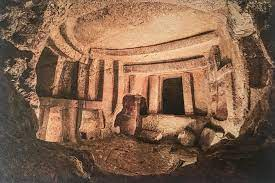

Now that I’m back from Malta I’ve had time to ponder the issues of time, civilizations and “ruins” from a RPG perspective. It feels like most of our RPG experience is based on some quasi-medieval concepts: dank tombs, cobwebs, giant spiders and the mandatory undead all dating back to a medieval period; perhaps 500-1000 years past.. But what if those ruins and labyrinths were thousands, or tens of thousands years old? What about 100,000 years old?
In a previous blog post, I suggested modifying the immense Shadow World timeline by shortening the Interregnum period from approximately a 100,000 year span down to perhaps 10,000 or 20,000 years. Why? Shadow World features a number of ancient Althan, Worim, Jentini and Taranian structures and artifacts that need to be 50,000 to over 100,000 years old. Kulthea is not an inert planet and features tectonic activity and cataclysmic events (like comets) that wreak havoc on the surface. It beggars belief that any structure could survive 100,000 years or more, and yet we have just that with these ancient civilizations. We can certainly hand wave this away, or lean on “magical” explanations for the longevity and functionality of these structures. I’ll throw my ideas out that might account for that a bit later, but I wanted to toss a few real life examples to put things in perspective:
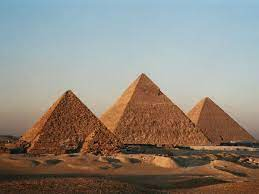
2500BC The Great Pyramids of Giza. The only surviving of the “Seven Wonders of the Ancient World” the Pyramids are perhaps the best example of an ancient structure that still retains most of it’s form factor (excluding the polished casing stones). But these are only 4500 years old–they would be “recent” history in Shadow World and only centuries into the Third Era!
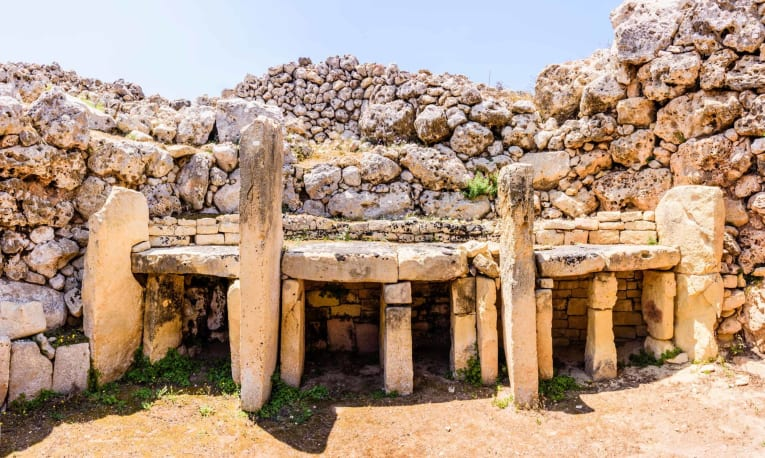
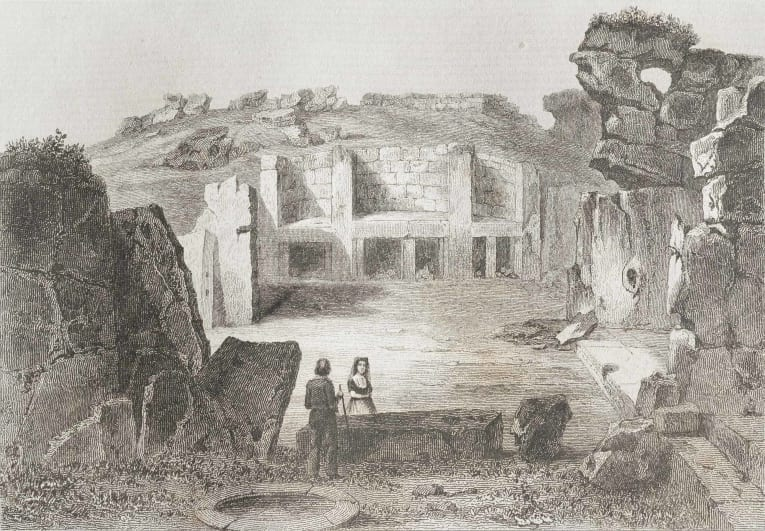
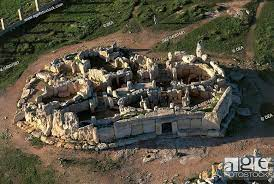
3600BC Hagar Qim. This is Hagar Qim in Malta. The first picture gives the impression that while still impressive, the rock walls are somewhat primitive in fit and quality. However, if you look at the second sketch, just hundreds years ago, the walls were in much better shape and appear to be tightly fitted dressed stone. Sketches of the site from even further back make the temple even more impressive and enigmatic given it’s purported age! One take away is the impact of weathering on those limestone blocks–the temples were buried for thousands of years and once uncovered, much of the stone deteriorated rapidly–in just a few hundred years! Without considerable conservation efforts most of these temples will be a pile of unimpressive stone in just decades or a few centuries.
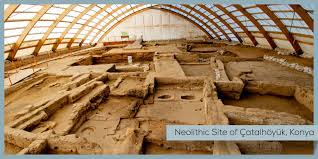
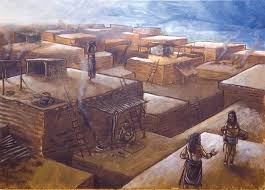
7500BC. About 1/2 way through the Second Era. Çatalhöyük, Turkey. This ancient village is estimated to have a population of 5,000 to 7,000 people; all the buildings seem to be residential with no apparent “public” buildings. Overall, the construction seems fairly crude and simple and most of the site is destroyed or eroded with foundations and little left after 9,000 years.
7500 BC. (Second Era) Nabta Playa. Located in Egypt this site is believed to be of astronomical site similar to Stonehenge or the Goseck Circle in Germany. While incredibly old, it is clearly eroded and generally not “impressive” in the way that one might expect of a 2nd Era Shadow World complex.

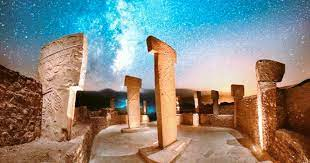
9000BC or the early part of the 2nd Era of Shadow World. Gobekli Tepe. Pushing up against the Younger Dryas boundary at 12,000 years old, Gobekli Tepe predates humanity’s oldest known civilizations! And as impressive and enigmatic the site it, compared to Shadow World it’s almost new!

Certainly, most gamers might care little for this level of archeological realism, but this is just one aspect of Shadow Worlds timeline that might be considered problematic. Why might ancient Shadow Structures fare better than earthly counterparts?
- Advanced materials. Certainly the Althans were a technological society and developed material sciences to at least tech level 10+. It can be assumed that these construction materials and techniques would last far beyond what we could comprehend.
- Magical Materials. Laen, Eog and other enchanted metals and alloys are immune to rust, degradation or aging.
- Restoration. Long lived races like the Elves will have retained advanced building skills and continual rebuilt or restored ancient structures.
- Magic. That solves everything!
- Burying. Gobekli Tepe, the Malta temples and many other surviving ancient structures have lasted because they have been preserved underground. So it’s conceivable that subterranean structures (like the Taranian subshuttle system) would have considerable longevity without the deleterious effects of surface erosion and exposure.
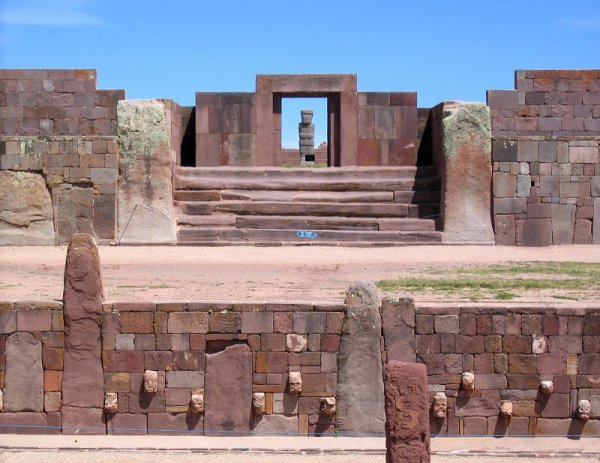
So even pushing into speculative or fringe science, sites like Tiahuanaco, Bolivia which are argued to be 17,000 years old, are still relatively recent compared to Althan and Ka’ta’viir structures.
In my own campaign and found in Priest-King, the only surviving Althan city on Kulthea is Auraax-Centra. Over 100,000 years old and lying is shallow waters, it is has survived due to construction materials and repair “nanobots”. But it’s still mostly rubble and debris! But Terry’s SW also features a number of operational Ka’ta’viir structures and installations with working tech. It’s all great material for the setting, but does the timeline need to be that long? Can we snip a few thousand years here and there to make it more accessible?
What are your thoughts and does it matter? Unless your players have some in depth knowledge of SW’s history, “Ancient Pre-history” can just be “very old” in practical game terms.