Precious little darlings

I appear to have launched myself into something along a 12 days of Christmas run of daily blog posts. It was not intentional, it just sort of happened.

Today I would like your help.

What I want to do, over the next 12 months is produce at least ten 1st to 3rd level adventures. I would like to avoid the cliches of “You are guards on a wagon train”. I have the inspiration for two.

The first has the characters start as passengers on a ship carrying food. The town they land and disembark at is in the grip of a harsh winter and the people are starving. The ship they were on is full of food stuffs and that is loaded into wagons and carted out of the town. All the while there is an angry and starving mob being held back by soldiers. The town is quite obviously on the verge of food riots. A fellow passenger who is obviously quite affluent joins the characters on the gang plank and casually says that the characters had better join him in his carriage as that mob looks like it could turn ugly. From there the characters get invited to stay with the local land owner, who is quite obviously not starving and is really quite obnoxious and make jokes about the peasants being revolting and how he would drown the ring leaders in the harbour if he didn’t need them to work the fields in the spring. From there I can offer the characters several adventure hooks around the rebels trying to overthrow the unjust land owner, the cause for the unexplained harsh winter (defiling a sacred place), the town erupting into riots and the characters having to rescue an innocent.

The second one involves the heroes arriving at a village where they learn that rogues are blocking the road ahead and demanding tolls. That is their opening encounter but along the way they meet a druidic type woman that has her own mission to find a unicorn that has been sighted in this area. There is a back story to the lady who is trying to find an antidote to a magical poison, thus the need for the unicorn. She wants to ask the unicorn to allow her to wash its horn with purified water and use the water as the base of her antidote. This figure serves as patron to the characters and a source of healing.

So the reason I want to create all these starter adventures is all Ken Wickham’s ‘fault’. If we are going to get RMU in 2019 then Ken is quite right in that we need starter adventures. I want to include a 1st to 3rd level adventure in the fanzine each month. The longer that RMU takes to arrive means that there will be a greater stock of starting adventures. We can even offer new GMs a choice of adventures, imagine that!

It is a long time since I have had to write beginner adventures but anything that helps make RMU a success is a good thing as far as I am concerned!

As per normal the statting of these adventures will be to the limit of what I can get away with. It does mean that they will be playable in any version of RM but the finer details of NPCs, for example, will fall upon the GM to create.

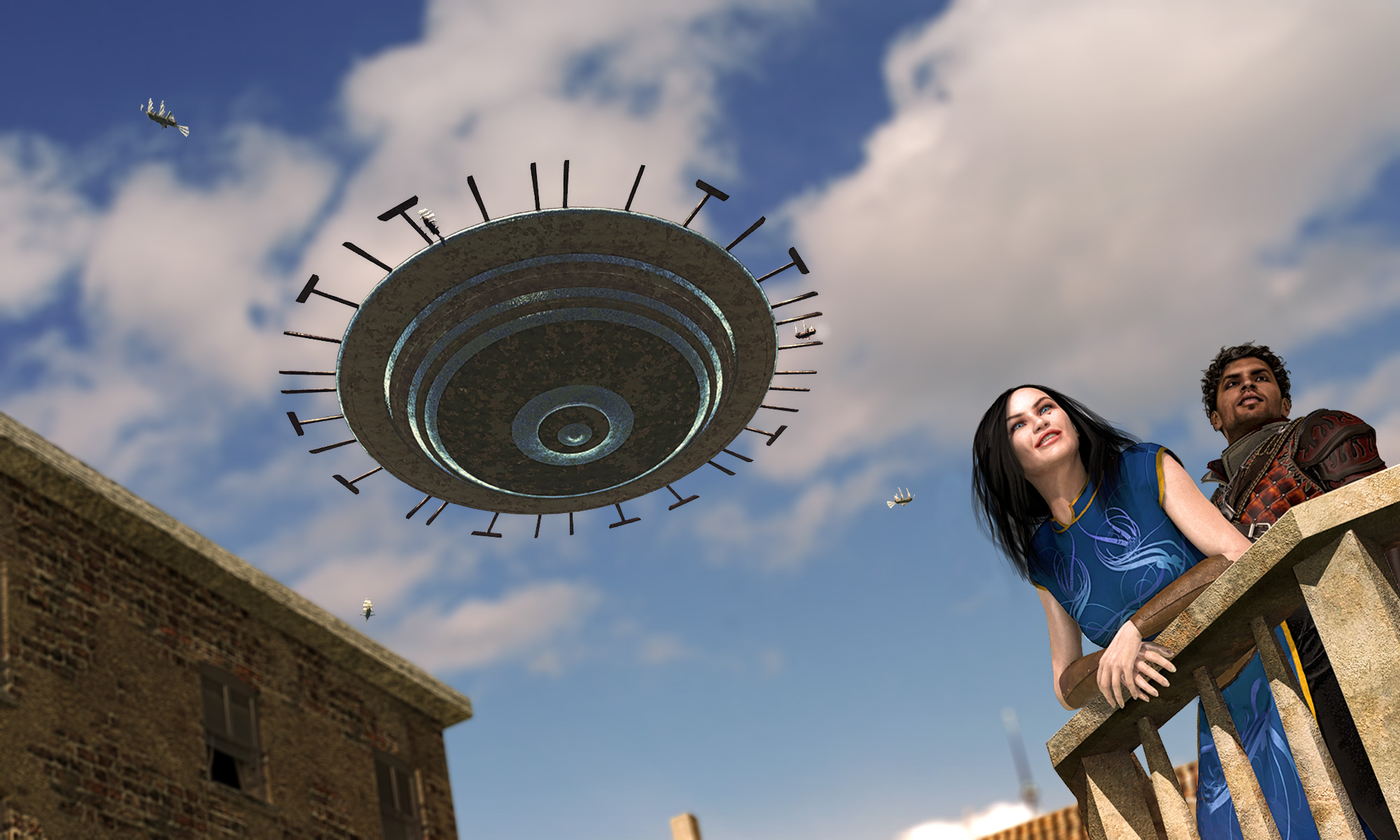
p.s. There are bonus brownie points if you can work the top image into an adventure. It is entitles “I will protect you!”, it actually has three exclamation marks but I thought that was excessive.

ZWEIHÄNDER Grim and Perilous RPG?

I know that Zweihänder is not Rolemaster and not directly Rolemaster related but…

Zweihänder is one of the best selling games of 2017 and 2018. It is a D100 based game. It is also detailed, gritty and simulationist. A typical character sheet/record runs to 8 pages. That all sounds rather familiar doesn’t it?

It comes as a single volume core book of nearly 700 pages so this is not a light weight game, one could fit all of RMU A&CL, most of SL and get started with CL into 700 pages!

When I looked at HARP I found that there were some really nice ideas that could cross over to Rolemaster. It would be interesting to see if the same is true of Zweihänder.

How Zweihänder got to its No.1 position is a matter of record. I don’t know anyone who has paid full price for the game. It has been in every sale it was eligible for and in between it has been Deal of the Day on DTRPG again and again.

While the success of Zweihänder as a gritty, “rules dense”, simulationist game in this age of ever simpler games is a really good thing for ICE and Rolemaster but there is another side to that. The two biggest concerns should be that Zweihänder has already occupied RMUs prime spot in the gaming landscape, I’ll come back to that one later. The other concern is Zweihänder’s price.

The standard price for the core book is just $9.99. In addition there are a great many free supporting supplements. There are 41 free or PWYW supplements as of this morning including translations, new monsters and card decks and game art collections. On top of that there are 9 supplements at under $2. As a GM or player the prices are not a barrier to getting the game or having new things pretty much as and when you want them.

What Zweihänder lacks, so far is really meaty companion style supplements. What appears to be the house style is to create more tightly focused supplements so imagine if RoCo 1 had been split into a group of small cheap supplements one with the new professions, one with arcane magic, one with the new monsters and one just for GMs with the very high level spells, and rules variations etc. That is how Grim and Perilous Studios appears to be working things. There is a GM’s Notebook supplement at $5.99 and a players folio at $5.99.

The worry for ICE and RMU, I imagine, is if Zweihänder is RMUs biggest competitor then Zweihänder has to some extent sucked the money out of the market. It is hard to sell a game of four $20 books when your competition is selling a single volume for $9.99.

The mini supplement model makes a lot of sense. If you imagine the product life cycle of write, test, release and earn income from. Working on a GM’s supplement of 40 pages, releasing it, working on an arcane magic supplement, then releasing it, then a players folio and releasing it; this cycle means you are giving fans something new much more frequently. The net cost is probably similar to a full RoCo once you take all the parts into consideration. The difference is that people can cherry pick what they want or need at that time. New books come out more frequently and if the take up is good then your titles will fill the top selling slots on DTRPG which is a great marketing ploy.

The low price points though, I think are a big threat to ICE and RMU, if they have to revise their projected earnings down by a factor of eight or more!

What is coming up?

I am planning a few posts about Zweihänder, just like I did with HARP, but I will pick out the bits that I think are the most relevant to Rolemaster fans and to RMU. It is going to take me a while to read all 692 pages of the core book so this will be the edited highlights of each chapter.

This will definitely take me well into 2019, but I promise to try and not bore your with it!

HARP Read Through – Gamemaster Guide

I have decided to get this HARP read through finished. I have skipped the chapter on treasure generation. Not because there is nothing of real value in it, it is just as competent as the generation in C&T but in a more condensed package, as one has come to expect from HARP.

The final chapter is the Gamemaster’s Guide.

This chapter starts with a few pages of basic GM tips. The stand out tips are probably these two:

Don’t let the dice rule the game: This issue is more one of style than anything else. Some GMs make all dice rolls in front of the players while others do not. This applies mostly to those GMs who do not make every roll in front of the players. Part of a role playing game is telling a story, and sometimes a roll of the dice can have an adverse effect upon the story. If this happens, then feel free to change the result to one more suited to the situation.
Don’t fudge dice rolls and get caught: If you fudge dice rolls, don’t do it often, or let the players catch you doing it. This provides you with the ability to make things interesting without killing characters by accident. Fudging dice rolls should always be done sparingly.

I picked these two out as I know that GMs definitely fall into those that fudge and those that don’t. All Rolemaster games are deadly and HARP is no different. The idea that fudging dice is actually introduced as a GM tip in the core rules, to me, makes it look like an officially sanctioned technique. Other tips include not killing characters, such as:

Don’t kill characters needlessly: If a character does something stupid that will get him killed, especially if you ask the player “are you sure?” before letting him go ahead, then let the dice fall where they may. But in other situations where random chance would kill the character, you might want to provide a way out for the character. Include a secret door where
there wasn’t one originally, or have back-ups fail to show up on time.

It feels to me as if the way that HARP gets around the lethality of the RM-style combat system is by putting the onus on the GM to moderate the results. Maybe I am being too mean. It is a built in flaw of the all the RM variant combat systems that there is a death spiral that isn’t found in D&D or Pathfinder.

Wounds in both HARP and RM frequently come with penalties to actions, stun results and additional hits. When you hit certain break points of lost hits you get more penalties. In HARP you get a -25 when you have lost more than 50% of your hits. The more penalties you get the harder it is to hurt your opponent and the harder it is to parry them to protect yourself. Once you start to lose you are relying on a lucky strike and open ended roll to turn the tide in your favour. DnD or PF don’t have this, you can fight just as well with 1HP as you can with 60HP, no accumulating penalties and no death spiral.

It feels to me that the HARP solution to the death spiral is to cheat.

So what other tips are there?

I really like the profession and culture customisation tips. These include customising clerics to reflect their gods’ aspects and custom magicians. It then goes on to discuss setting and cultural customisations.

Next we get a section on using language and lore skills and relating ranks to level of knowledge.

The final part is all about experience points. The experience system is the same system as is currently used in RMU. The experience system is based around goals rather than kill points and criticals. What we get here is three pages of advice and examples of exactly what makes a particular goal worth a particular level of experience. And that is it. The last pages are the character sheet, skill sheets and a full index.

So what do I think of HARP?

I think there is a lot that is very good in HARP. I also think that if HARP had existed back in the 1980s I probably would have picked HARP over RM2. I have always said that I prefer lighter rules. I have also said that I wished there was a setting and HARP had a setting, Cyradon. I don’t own Cyradon so I cannot comment on it.

Incidentally, I bought into HARP because I have lost my SpaceMaster rules and campaign notes. I wanted to run something Sci Fi so I bought HARP SF as an alternative. Having looked at HARP SF, I wanted to see what HARP Fantasy was like.

HARP’s weakest feature is its combat rules. They lack the variety of critical of RM and fights turn into fairly repetitive turns of the same critical after same critical.

HARP’s strongest suit is its scalable magic system which has features that RM lacks despite it being a more condensed system.

I have found something that stood out and was noteworthy in every chapter. It is a good game and I can see how and why lots of elements made its way into RMU. I wish that Cascading RRs had made their way into those rules as well but maybe it was too much of a simplification for RMU.

If I were to run a convention game or game night at a store then I think I would probably choose HARP over RMC or even RMU right now. The reason being that it is an easier system to pick up and get going with but I can also see a clear upgrade route from one to the other once RMU has been released. HARP would keep new players going until RMU is released be it 2019/2020 or surely before 2030?

Merry Christmas

Not a real post this morning, just wishing you all a Merry Christmas.

I am about to spend the first hour stood in a field feeding horses. Friends of ours have young children who are likely to have been up several hours ago excited at Father Christmas having left gifts. We are feeding their horses so they don’t have to haul all the kids up to the barn.

As a consequence I have every pocket in my jacket stuffed with apple’s and carrots to treat the horses. So I am doing my own little Santa delivery round feeding treat to the horses that have been good this year.

I cannot imagine I will be doing anything RPG related today, although one never knows, I may bash out a quick blog post while Queenie is droning on.

Have a great day everyone.

Spell List thought

I will start by saying I haven’t thought this through but it could be interesting.

There are two ideas that have come up this week and sort of clashed in my imagination. The first was about spell lists, spell failures and such inspired by Brian’s last article and the other was from Ken’s RMU setting thread. In that thread I said that a generic game should be able to be used with any fictional world/setting in its genre.

I have read a lot of fantasy fiction where the core idea of magic is that people either have it or not and magical instruction is more about control than learning spells.

The idea of learning spells and learning more powerful spells, to me, comes across as a very DnD thing.

So the idea I had was about turning spell lists, or just the first 20 levels upside down.

In my first thoughts I was only really thinking about magicians base lists and possibly a world in which magicians and clerics are about the only casters. So there is an implied setting here!

So I am think that the first level caster say with Earth Law as a list would only have Unearth, basically every time they try to cast a spell they vapourise a 100 cubic feet of earth.

It also takes a massive chunk of their power points, so this may be more suited to RMU than RMC if your first spell takes 20PP!

As a character levels up and gets more practiced with their list there spells get ever more controlled and subtle.

Fireballs would start with things like triad of fire but with a terrible OB and over time they would be able to control that to create a single fireball and eventually a single firebolt.

As I said, I have only thought about this as a twist for magicians, not sure it would work for illusionists or others but it was an interesting idea.

2d8 Zombies

I had not realised that an entire week had gone by with not new posts to the blog!

This blog is inspired by Hurin’s experience with 5e.

So right now Randomisers are really popular. I have blogged recently about one of mine with the catchy name of Normal People, JDale is developing his Random NPC script. Egdcltd is looking at creating random generators as apps. Incidentally I have created all the core functionality of my first android app this weekend and I am now just writing the fluff like instructions and help.

There is an entire MeWe group dedicated to RPG randomisers from random dungeons to encounters to towns and cities.

The oldest randomiser of them all is the wandering monster. It is random at the top level as we roll every x hours to see if a random encounter occurs. We then roll on a table to see what the encounter should be and then there is the No enc., number, the dreaded 2d8 zombies.

I have been thinking a lot about random encounters. In a recent adventure I published rather than specifying who or what was in each location I used a 1d6 table. This is the table from one location:

Random Location Events

Location 1

  1. An Idiyva archer is instructing young warriors in caring for their bows.
  2. A pair of lookouts are suddenly alert, they think they have seen something unusual outside.
  3. A female Idiyva arrives hauling a great bundle of firewood. She replenishes the stock of kindling before moving on.
  4. An Idiyva lookout on duty is being replaced by a change of guard.
  5. An Idiyva guard has a shoulder basket of arrows. He visits each guard and offers them replacement arrows. He visits each guard in turn then moves on.
  6. Two Idiyva guards are playing a game of dice rather than paying attention to their watch post. The game is good natured at the moment.

The intention is that the random events should tell the GM what is happening. I actually never explicitly say roll a d6 and you could just as easily have most of them happen sequentially or in parallel.

At no point do I ever state how many are encountered in terms of a die roll. It is simply natural that two guards would play a game to pass the time. Beyond that these are really just ones and twos.

Some of the encounters are intentionally repeated, the female with the kindling turns up repeatedly as she is walking the entire settlement restocking firewood.

The adventure this is from is not intended to be a hackfest, but rather one where the characters are either lead through as guests or are sneaking through as thieves in the night. In both of these cases having guards and civilians moving around make planning an incursion or trying to avoid guards much more challenging. That is the point of course, avoiding a fight and increasing the tension makes for good roleplaying. Sometimes you want a challenge that does not involve putting everyone to the sword.

Brian posted some themed Shadow World encounters and in that situation I think random encounters can really reinforce the setting and bring the world to life.

The only think I don’t like about wandering encounters is the number encountered. This is doubly true in Rolemaster where it is not necessarily the creature that is the deciding factor in how dangerous an encounter is but the number encountered. Lets take the cliche of 2d8 Zombies.

For most heroes or party’s 2 Zombies is not really a challenge. They are slow and not exactly the greatest of tacticians. On the other hand 16 zombies is a potential death sentence for most party’s who would be facing two, three or even four against one and everyone would be outflanked, they could not parry everyone and still attack effectively. In my world magical armour is not common, in fact no PC has any kind of DB boosting magic or superior quality items at all and they are now 6th level. The point is that the Zombies can and will hit them and can and will deliver criticals even without open ended rolls. If you are taking criticals then you WILL get stunned at some point. Once you are stunned, outnumbered and surrounded you will die!

The problem is that we have a habit of slavishly following the number encountered die roll.

For the past few years I have eschewed random encounters. The thought process I went through was to ask myself “What purpose does this encounter serve?” If it was just to grind the party down or to use up party resources then was a random encounter the best mechanism to achieve that?

My solution to that question or dilemma was to start being more fuzzy with my numbers encountered in my scripted encounters. By this I mean if I wanted the characters to fight, defeat or outwit the guards in the barracks then I would have an idea of how many guards I needed. If the fight was going too easily for the characters then I would do something like have a fresh guard rush into the barracks from the latrines still doing up his britches. Despite his comic entrance he is still a fresh combatant that could look at where he was most needed and join the fight. I could introduce a few more guards from here or there as needed to increase the threat level as long as I did not over power the encounter from the start.

This approach made encounters more fluid. They were not railroaded. I never hinged the plot on a fight being lost and the characters captured. If they won the fight then fair play to players. On the other hand I could put the party under more pressure especially their resource management including power points.

To me this doesn’t feel like ‘fudging’. If there is a castle full of guards then it is entirely consistent that someone should at some point be in the latrines or had been sent from the barracks to deliver a message and is now returning. Castle guards are not rooted to the spot, they should move around so I can have as many as I want. The same is true of orcs in an orc hold or lizardmen in a swamp. Once I introduce a guard then it is all above board and legitimate and he fights are full ability.

That was then, this is now.

I have swung back the other way and I am more a fan of random encounters but I am making them much more hand crafted and their function is the colour in the setting, not just at a world level but at a very local level.

In that Idiyva settlement I wanted to make a coherent settlement and by observing the Idiyva going about their daily business you could figure out how they lived, worked, and how the family unit operated. The random encounters were each a little window into their world, or that was the thinking behind them.

Does this create more work? Yes it certainly needs more prep to hand craft random encounter tables. It does mean that I could create a near infinite settlement and populate it with threats and challenges as a backdrop to the characters mission and the whole thing would be coherent and cohesive.

I keep coming back to the thought that the only thing that is bad about random encounters is the number appearing. That is the challenge in building these ‘wandering monster’ type tables. That is the thing that needs fixing.
HARP Read through – Encounters & Monsters

The first page of this chapter I had to read twice just to check I hadn’t missed something.

The opening topic is a four step, three page and multi-table process on how to make wandering monster checks. This flows into encounters by terrain tables and then a key to the the monster stat tables. There are just two sentences on the idea of the GM actually planning encounters and that they may be used to advance a story. Maybe, I certainly hope so, there will more on that side of things in the GMing chapters?

So, that gripe aside, the actual content is quite a nice random encounter process. The first table has modifiers for terrain types cross referenced with movement types and conditions. So being in a hostile area makes encounters more likely as does traveling fast, being slow and careful makes an encounter less likely. There are a nice range of situations and conditions covered by the table.

The mechanism is roll d100 OE add the modifiers from the table and if the result is 101+ then there will be a random encounter.

The next section is determining the encounter. Here HARP is better placed than off the shelf Rolemaster as it is assumed that HARP will be being played in Cyradon so the mix of people and monsters are presumably right for that setting. They are also pretty generic enough to be used just about anywhere.

We then get into a basic starter bestiary. There are 35 included monsters, they are presented as a single table of stats. Do you remember the original Arms Law Claw Law where there was one page of monster stats at the back? If you do then this is almost identical. Following this are monster descriptions. I have included one of them here. You can see how the DB is broken down into its individual sources, remember that armour is represented as DB in HARP. You also get all the ‘talents’ that build up the creatures.

I mention the DB because of the ongoing RMU passive bonuses debate. If DB was listed in this way with all the sources then GMs would be able to tell what applies and what doesn’t.

All the monsters from Ant, Giant to Zombie take 8 pages and then you get all the talents used to build the monsters fully explained in two and a half pages and the creature stats, as if they were playable races in a page.

The final page deals with mounts and domesticated animals. These get basic stats should you want to kill one but also a basic set of skills so you can roll the tracking skill for your bloodhound or let your horse lead you to water.

I think the HARP treatment of creatures is another one of its strengths. The orc shown above is detailed in that you get the skills side of it, the monsters are sophisticated because of the talents used to build them but at the same time they are nice and simple. You do not have to ‘build an orc’ because you run every simple encounter.

For a one volume core book I think the monsters are adequate and you could probably run a wide range of adventures with just these. I can also see why people would be desperate for the new bestiary that Nicholas keeps hinting at. There have been quite a few monsters published via the guild companion so far which would widen the range available.

I cannot help but make comparisons with RMU. The monsters are built in the same way, starting with a playable race, they all have skills and they all have a raft of talents to represent their unique features.

HARP gets 35 monsters in 8 pages, so about 4 per page. If a RMU Creature Law had a similar density then a 200 page book would showcase something like 800 creatures with basically the same overhead of having to define the creature talents. There is clearly the same design logic going on in both games. So is the 600 page Creature Law, and that is without art whereas HARP has art included in the page count, just trying to do too much? Does it need 52 pages of small print to fit all the talents in?

So that is HARPs core set of monsters.

GM may I…?

You know that moment when you ask the GM if your character can do some thing which even to you sounds decidedly iffy?

Such as

Player: May I hold my spear in my bow hand while I shoot the goblins?

GM: No, you are on a horse!

Player: In that case can I hold it in the other hand and draw the string and hold the spear?

GM: No!

I think this came up recently in the RMU beta forums about could you swap a two handed weapon into one hand while you cast a spell. I think the idea was that a sword and shield user could probably hold their sword in the shield hand to cast a spell but the two handed weapon user possibly couldn’t.

Take a look at these photos from a horse combat competition in Iran recently. As with all horseback archery they are doing all of this at a canter, actually most of these arabian horses were doing a flat out gallop!

Here we have a spear being held in one hand while the rider is shooting a bow and the reverse of that of using the spear with the bow in the off hand.

This may not look that impressive but can you see the arrows sticking out of the ground? The archer is expected to reach down and pull an arrow out of the ground, traditionally it would have been a corpse but health and safety these days…, nock and shoot. They then swap to the spear to do some targets.

It is hard not to be impressed isn’t it?

HARP Herbs & Poisons

I thought I would get back on to my HARP read through. I don’t want it to completely lose moment and there are plenty of good things in here. My initial thoughts when I saw the chapter on herbs and poisons was that I would wrap this up with another chapter to skip forward a little.

I was wrong.

OK, the herbs are fairly straight forward, they have different names to the ones we know from Character Law and the companions but everything you would expect is here. You get the name, price, description of effect and those terrible arcane codes that tell you it can only be found in your left nostril on a moonless Thursday.

You can tell I love those 2-m-P and 3-c-M codes!

The impression I get from the HARP herbs is that they are slightly more heroic than RM herbs. There are more that seem to give bigger and better magical effects such as haste for 6 rounds or make your eyes glow red but you can see enchantments or being able to see invisible things. I know that similar effects were available in RM but they just seem a little more common and a little stronger in HARP. That is no surprise really as this is High Adventure after all.

Poisons

It was when I reached poisons that the fun started.

HARP has something called the Cascading Resistance Roll. The mechanism is simple, roll d100 and add your resistance bonus to it. Bonuses come from stats, possibly racial and possibly magical.

Not every poison has a cascading resistance roll (CRR). Some have a simple target number, roll over the RR target number and you resisted and the poison has no effect.

It is the poisons with CRR lists that are the fun ones. Here are the first three listed poisons. I will explain IPCT and EPCT afterwards.

Amaric 300 gp * Flower/Paste 7-f-M Black paste destroys nervous system, killing instantly. RR(100)
Arbarin 38 gp * Flower/Paste 4-h-P Pinkish paste delivers 1-100 Hits. RR(85)
Aren 150gp 1-10 rounds Dragon/varies 6-f-U Grey/Black blood rapidly dissolves affected area. Affects metals and organic material. Does not affect glass, sand, or pottery.
If Ingested:
CRR (150) – No Effect
CRR (130) – 1d100-20 on IPCT
CRR (110) – 1d100-10 on IPCT
CRR (90) – 1d100 on IPCT
CRR (70) – 1d100+10 on IPCT
CRR (50) – 1d100+20 on IPCT
Failure – Instant death as entire body dissolves into gooey puddle
If splashed on object or victim:
CRR (140) – No Effect
CRR (120) – 1d100-10 on EPCT
CRR (100) – 1d100 on EPCT
CRR (80) – 1d100+10 on EPCT
Failure – 1d100+20 on EPCT

IPCT & EPCT

In Character Law poisons are described by there different types such as Reduction or Nerve etc. You then get written descriptions of possible effects at each severity. As GM you can then roleplay the poison effect as each bad thing happens to the character.

HARP has a different approach.

The IPCT and EPCT are the Internal Poison Critical Table and External Poison Critical Table. How well, or badly you did on your resistance roll gives a modifier to the critical roll from -20 (safer) to +20 (not so good for the PC) 

The External Poison Critical Table is used for things like holy water vs undead and acid attacks.

I am not going to show you the critical table but here is an external result:

Foe loses a large patch of skin and flesh. Foe takes 27 Hits, is
stunned 4 rounds, bleeds 1 per round, and is at -25.

and an internal result for the same roll.

Foe stumbles in agony. Foe takes 24 Hits, is stunned 6
rounds, bleeds 1 per round, and is at -30.

These CRR and poison criticals do not just apply to applied poisons and poisonous plants. When you get to the monster descriptions also come with the CRR stack and critical modifiers.

I think they are really cool. I am not normally an advocate for more tables but these I like. There is also a complaint that comes up occasionally in RM that there are not really any viable poisons for using on weapons. I think a secondary poison critical would be a brilliant idea even if it was just for the first critical of the combat. It would make poison arrows and blowpipes more fun, that is for sure!

Randomisers

It seems to be a thing this winter that random rpg tools are becoming really popular. JDale has his brilliant RMU NPC Generator, I cannot link to the thread directly as you need to be signed in as a play tester but I am pretty sure if you are into RMU then you know about this already.

On MeWe there is an entire group dedicated to random tools. I have used random maps and random dungeons in the past. I personally highly rate Grozzys not just for random dungeons, but also terrain and cave systems. I am no artist so getting great looking maps is a real boon. The other standout feature at Grozzys is the gallery of precreated maps. People have uploaded images you can download and print off if they hit the mark for you.

I like random name generators and if I am running an adventure in an elven culture I tend to keep a sheet of random elven names, printed off double line spaced so I an spirit up an NPC on the fly and add a few notes to them as I go.

I was thinking last night that the mother of all randomisers in RPGs had to be the wandering monster table. What brought this on was that I am laying out a settlement of sorts, half way between a village and a fort. When the characters go there it ‘should’ be all peaceful, sweetness and light. When they leave chances are that there will be black smoke rolling from windows and widows wailing over their fallen men folk, but that is just my PCs for you.

What I wanted was essentially a wandering monster table but of normal things, normal people doing normal jobs. The point being that as the characters will almost certainly want to get in and out of areas without being seen. A maid cleaning a room is as big a problem as a patrolling guard.

So I wanted a wandering monster table for in the common areas, one for the more secure areas and one for the more affluent areas. The point of the random nature of this is that when the characters pass through an area once there could be someone going one way carrying laundry, the next time there could be a guard trying to sweet talk a lady in waiting, the next time a child playing a cup and ball game and so on. A charming PC may try to bluff the maid with the laundry. The child could be bribed with sweet money but the guard and his beau are a harder challenge. He has responsibilities and a resentment of being disturbed in the first place.

You could say that I could create all this on the fly as I go but what if I am having an off day? Or I get tired?

You also need a surprising number of random events before they start to repeat.

So I started thinking about just kitchen staff random events, just guard random events, just ‘upstairs’ (footmen, ladies in waiting, butlers and such) staff. Then guard movements, hunters, groundsmen, gardeners. Then the trades.

You may think that this is a lot of hard work but my adventure map has something like 60 locations and a simple 1d6 possibles would 360 random events. 1d6 is probably  the minimum. A 1d10 becomes 600 possibles entries.

Most of these will be throw away descriptions, the characters look around a corner and there is a girl playing with a length of ribbon so they go a different way.

So how to approach the random events? 

My first plan was to hand write these all long hand and create the random tables. Now I see how many entries I probably need it could easier to write either a spreadsheet or a javascript, in a previous incarnation I was a web developer, that will spit out loads of random encounters. The thing just spits out a sentence made of random parts that should fit together and make sense. I could then just copy and paste these into my notes.

I am now going to spend ay free time this weekend trying to build these urban random encounter generators. I will let you know next week how I get on.