Recently I have spent quite a lot of time hanging out on the Castles & Crusades discord server. The C&C crowd are really nice people and many of them have a strong affection for Rolemaster. I was chatting yesterday about virtual Gen Con and the sentiment was that they would jump into a Rolemaster game at the first time of asking if they could find one.
But what does this have to do with our 50in50 ‘take 2’ adventures?
What I would like to do is dual stat the adventures. We cannot go publishing very detailed RM stats, as they would break ICE’s copyrights but we can point people to book and page.
I would like to dual stat as many of these as I can to Rolemaster and C&C. Troll Lord Games, the publisher of C&C recently created 3rd Party Publisher guidelines, logos and badges.
If there is already goodwill between the C&C following and the much smaller RM following, they would seem to be natural bedfellows.
I can easily add the stats to Brian’s 25 as I know the system and I have already published for it.
Brian has an organised plan for his 25 and five of them are already written or outlined. I have done nothing!
At least some of these adventures will be ‘low magic’ or ‘no magic’. Adventures where playing a good old plain fighter, thief or rogue will be more than adequate.
It is possible that these will be low low level or entry-level, probably 1st to 5th. Even if you have a caster in the party, they will not be throwing people through walls or razing the battlefield at those levels.
I remember writing the first set of 25 and how much fun it was. I am quite looking forward to getting started with this again.
For those of you that are enjoying a holiday and long weekend despite the pandemic and social distancing, we wish you the best in these trying times! Due to the out of service status of the Rolemaster Forums, ICE is a bit of a “black box” right now, but nonetheless things still seem to be happening.
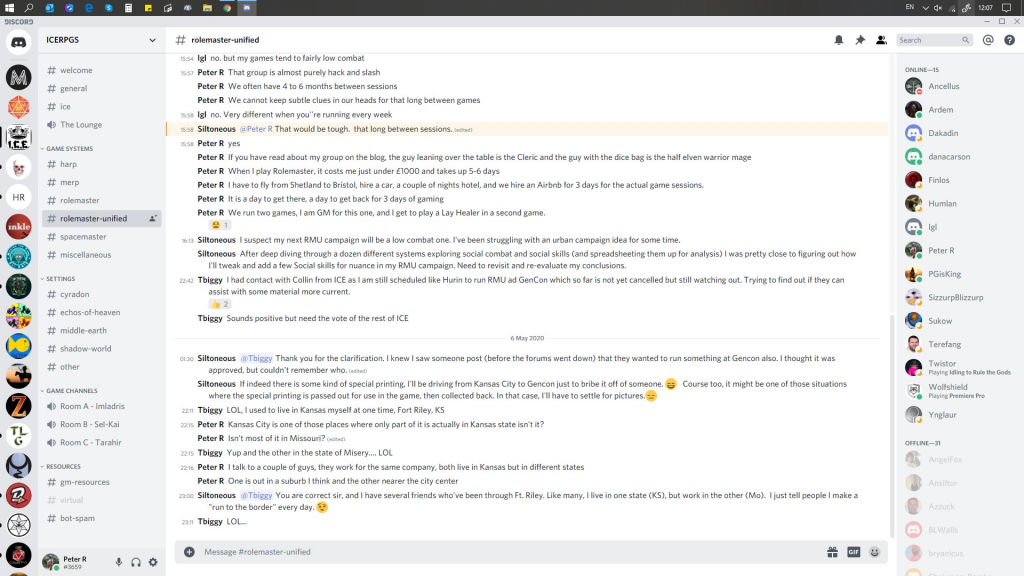
Conversation over at the Discord Servers covering ICE, RM and all their products and games. There seems to be 50 active members so that’s something.
Navigator RPG. Peter has published his Navigator game system and will be expanding into fantasy and other genres at some point. (correct me if I’m wrong Peter)
New “50 in 50”! So, while I still owe #50 from the last challenge, we are moving ahead with another 50 small adventures, game hooks, plot devices etc. I have mine already fleshed out, I’ll discuss in a sec.
Emer IV. The last redesign that will complete the continent seems to be moving forward with artwork. As I have mentioned before, while we all like new Amthor material, there is already a lifetime of content between Jaiman and Emer modules already published!
Belatedly, I finally got “The Lair of Ozymandius” out as part of my 50in50 contribution. I think it was only 2 years late!
Although I’ve had to shut down my businesses, staying at home didn’t end up being very productive for writing. Fortunately, now that things are loosening up I’ve been able to get a lot of material written that I’ll be releasing over the rest of the year. Not sure what I’m going to do about BASiL Mentalism with the forums down. My queue looks like this:
Edit of Priest-King. Just completed the first pass through with notes by Nicholas and now have to feel in a few areas that I left out.
#50 of the 50in50: The Tower of the Elephant, which is my own interpretation of the famous Conan story.
New 50in50. For this new challenge, I’ve decided to do 5 adventure hooks for 5 different categories: The Weapons, The Tombs, The Towers, The Heists and The Magicians. I’ve got 5 mostly fleshed out, so once we start publishing these won’t fall behind (hopefully)
Chapters 3-5 of Legends of Shadow World. #3 is mostly complete and I have to polish up #4 and #5 which are more basic battle arenas.
SW Players Channeling Guide. I consolidated all of my various Shadow World religions, spell lists and errata into a book with a focus on player use.
Book of the Pales. I’ve been picking away at this, but got a burst of work done so I can see the end of it. sort of.
If you want to see any of my product, you can see it here: https://www.drivethrurpg.com/browse.php?author=Brian%20Hanson
If you like something, rate it! Thanks to everyone who emails or messages me.
It was sad news this week, that GenCon has been cancelled. I saw someone on Discord (Marc maybe?) saying that it should be pushed back to October rather than cancelled but that isn’t so easy. These convention halls do not lie empty all year. Every week there is someone running something, and right now I guess everyone with something booked is worrying about whether their event will go ahead. I only looked as far ahead as mid-November but there was no space for a GenCon 2020 in the list.
The real concern about GenCon was that it was going to be the first outing for RMu, in the wild. There is going to be a virtual GenCon but that will not have the same impact as teh in-person event.
It is encouraging that RMu is far enough along to be able to play it as an organised play. For that we are thankful.
Adventures!
Brian has suggested that we write another set of 50-in-50 adventures this year. I think the three of us are up for it and this time we want to expand on last time and build in more game stats, maps and battle mats.
I am quite excited about this. They are a lot of work, coming up with an adventure for every week, for 25 weeks, but they are also great fun to do.
One of the best bits is of course that it keeps Rolemaster on the front page of DriveThruRPG for the best part of a year, even if it is just on the “Newest” list.
I have a hankering to write some viking-esque adventures. You may well see them cropping up in the next round of 50-in-50.
Back in 2016 I wrote this BLOG that I want to revisit a bit due to some recent work. I wanted to start a discussion on combat in 3D environments with a focus on 3 “terrains”: underwater, aerial. and zero g. While there are specific challenges to each of these, they all share 1 specific trait–the ability of characters to maneuver and fight in 3 dimensions. Before I delve into this, a small disclaimer. There is probably rules for each of these in one of the dozens of RM supplements. I don’t have any of them and I’ve read even fewer. I might be going over “old ground”, but for purposes of this blog, we can also discuss how this might work in RMU. I’m not aware of any rules in the new version for 3 dimensional interaction.
Rolemaster combat assumes combat will occur on a hard surface and attacks will come from front, flank and rear (and maybe overhead on occasion). When you add in a third level of coordinates AND the ability of a players to rotate, turn and pivot simultaneously then things can get more interesting. How should this be handled? There might need to be a separate set of rules for each situation, but conceptually they are similar enough that a shared mechanic might be possible.
Underwater. For anyone experienced with snorkeling and/or diving knows that it can take time to feel comfortable with varying degrees of orientation underwater. But with some skill it’s easier to swim upside down, inverted or rotate comfortable and maintain perspective. But non-native swimmers don’t move through liquid easily or quickly. The resistance of water, lack of fins or flippers and encumbrances of clothing and equipment make movement slow, fast weapon attacks extremely difficult and thrown weapons entirely useless. From a pure movement mechanic perspective, perhaps a simple approach is to set a underwater movement rate/rnd and then establish a % of activity from normal baseline. Other rules could be developed around increased damage from vacuum spells, decreased damage from heat/fire etc.
Zero G. In some respects, Zero gravity is the opposite of underwater: inertia, momentum and mass over enhance basic movements and there is no real force except hard objects or force to offset momentum. Not having real life experience in zero gravity it’s hard for me to intuitively model game mechanics. One idea I have is to leave movement rate the same, but require MM roles to maintain orientation, change or stop an action and orientation roles anytime a change occurs.
Aerial. It’s easy to think of aerial combat in terms of our own experience with lift and thrust. Assuming a magical flying mechanism does not require momentum to generate lift, than aerial combat is a combination of underwater and zero g. A bit of limitless rotation and orientation but with two resistance forces: gravity and inertia.
There are really two overarching issues to tackle: environment specific mechanics that effect movement, combat, spells, breathing etc and the resolution of player orientation, attack vector, environmental awareness and perceptual capacity. This last piece feels like it could be dealt with using a simple unifying mechanic.
In my own adventures, Priest-King has a significant amount of underwater adventures, Empire of the Black Dragon has both underwater and zero g and Legends of Shadow World has some zero gravity as well. I generally GM it with a loose hand and the players tend to find fixed “anchors” to launch from, provide protection from some directions and minimize disorientation.
This month’s Director’s Briefing suggested that there could be special printed materials for the organised play games at GenCon, should the con go ahead.
I have been lurking on the fringes of many discord servers and the feeling is probably 50/50 that it won’t happen and equally 50/50 as to whether people will attend even if it does run.
I saw the build up to GaryCon and right now the build up to Con of Champions [CoC].
CoC is significant, Tabletop.events who is organising it provides all the software and support for many smaller cons and they are in trouble. CoC is a fund raising initiative to keep the company alive.
GenCon, is 80 days away. Is that a long time in pandemic terms? It is my guess that Americans will be free to go to a mass gathering in 80 day’s time, but there will be no exhibitors or visitors from Europe.
Indiana’s roadmap for reopening the state economy only extends to July 4th but it doesn’t seem to me that you could run a con under those guidelines.
The very idea that there could be something of RMu that is ready to ‘show and tell’ at a major con is great news. We have all been wildly speculating and my bet was for an RMu GMs screen. It would give the Con GMs all the updated tables in one place, and the outside is a great place to show off branding and art.
You can get a GM four-fold GM screen with full-colour inserts printed and under $30, including a profit margin if you put them on sale!
My mind is ever commercial. If I am right and the screen is the ‘special thing’ then I can see diehard RMu fans clamouring to get them. That on its own could start the RMu product line and feed funds into finishing the books.
Another interesting bit of positive news is that there have been so many posts on this blog since the lockdown has been going on that I have struggled to find a day when someone else hasn’t already posted something.
A thriving and active community is a good thing!
Last week I highlighted the ICE RPG discord server. At the time of writing it had 51 users. It now has 64. I am in the UK and I am used to discord being all tumbleweed and silence before midday and America wakes up. Even now there are 20 people online.
Yesterday, Terry Amthor joined the server!
If you have any time to kill, get on to discord and give it a try.
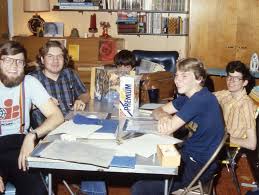
I’m not sure that’s a good title for this blog post, but I’m writing this “on the run” but look at that picture. To me, that could have been my roleplaying group back in the early 80’s. How about you? If that seems familiar it’s because A LOT of Rolemaster players are in their 40’s and 50’s now.
First, I should say it’s fantastic that we can enjoy the same game we have played for 30+ years or have rediscovered RPG’s later in life with friends and family. However, my second thought is that everyone I’m seeing on the RM Forums (out of commission right now), RolemasterBlog.com and the new Discord server are all around my age. Where are the new young Rolemaster players–like in that photo? We know that RPG market is growing…
Before this starts off like a lot of our blog posts with critiques of ICE let me say this. I.C.E. is a “virtual company” with no real employees or hard assets. They are leveraging their existing IP and putting out a few new products through a mostly volunteer basis. I have no expectation that they ramp up into another serious production/print/gaming company.
The issue that I want to raise is about authorship. Who will be writing new products for I.C.E. in the future? My brother Matt developed the SW Players Guide, built the Nomikos Library resource, contributed to most of the ICE material published in the early 2000’s and was on the ground floor for RMU development, but he’s mostly moved on to other endeavors. It seems like Nicholas and perhaps one other person does the bulk of the writing for HARP. RMU is being shepherded by a small volunteer group of 2-3 people and Terry is the sole author for Shadow World. While I’m not a published ICE author, I do write quite a bit of content–but I’m 50. I can see myself writing stuff for another 10 years, but that’s not that long. RMU and Priest-King have both been in development for 10 years and that doesn’t seem that long ago. Terry is 60. He has a impressive publishing resume, but how long will he be inspired to write? Nicholas has a busy and demanding career; how much work can he realistically do?
Let’s tie the two together. I.C.E. was founded by young people in college, most in their early 20’s. The growth in RPG players is: overseas, youth and females. Does I.C.E. now need to recruit new, relevant writers to appeal to today’s player demographics? What happens in just the next decade as we all enter our 60’s and even 70’s? Will our writing be relevant or we just existing for the small core of die hards our own age? Who takes over after that? Does ICE sell it’s catalog to a young upstart company or established gaming entity?
If you want to get your daily dose of Rolemaster, HARP, or RMu, there is now a well supported discord server.
Follow this link https://discord.gg/YBrepAB And it will take you straight there. If you haven’t used discord it is pretty much the IRC, Internet Relay Chat, of the 90s brought up to date.
There are even voice chat games going on.
When I checked this morning, there were 50+ members and even in my timezone there were 15 online.
We cannot magic the forums back up, but between the blog and the discord we can keep the community together and active!
Another cloudy day of stay-at-home quarantining, so I thought I would throw this out to our faithful blog readers! Please respond in comments by #, answer as few or many as you would like.
Favorite magic item. Do you have a favorite item found in a RM book or module or something you made up yourself?
Best 1-5th lvl spell for a non-spelluser to have. What single low level RM spell would be the most useful to a non-spell user?
Favorite spell. What is your favorite RM spell. Why?
Favorite weapon. Most of my players seem to make weapon choices based on the attack chart and/or how common it might be as a magical item. However, weapons can be a great component of a character build. Putting aside efficacy, what RM weapon is the coolest?
What is the best adventure module you’ve played using the RM rules. It doesn’t have to be a ICE product.
Favorite profession. Why?
Favorite setting. Do you have one or do you just run adventures without a setting?
Favorite Shadow World NPC. If you are familiar with SW, do you have a favorite?
Coolest skill. Yes, perception might be the overall utility skill, but what skill (from any RM edition) do you think is the coolest?
Best non-cover artwork. We’ve discussed cover art quite a bit in this blog and elsewhere, but interior art is also important in providing tone and atmosphere. Do you have a favorite piece of interior art found in an ICE product?
While the purpose of by “spin cycle” blog articles is to re-purpose MERP and other modules for use in Shadow World, Assassins of Dol Amroth (AoDA) is an excellent module for quick, easy to run adventures in any setting.
Cover Art. First, the cover is another great Angus McBride piece, showing a female assassin ready to ambush a shadowy mounted figure. Is she the hunter or the prey? There are small details like the soft boot covers for stealth, the gargoyle broach and the color patterns on the inner cloak (is it reversible?) that add a lot of depth to the scene.
Scope. Rather than a hybrid regional overview with adventures, “AoDA” is a simple product comprised of 3 adventures: Murder on the Docks, A Home be the Sea and The Hill of Shades. There are 18 pre-set PC’s; 6 for each adventure with stats and descriptions. The professions are basic MERP: Warrior, Scout, Thief, Ranger, Animist, Bard and Mage that could easily be adapted back to RoleMaster.
Adventure 1: Murder on the Docks. This is a short, simple adventure, pitting the group against a formidable assassin in a run down warehouse. Reading it through the first time, some things weren’t made clear and there wasn’t a clear segue into the next adventure, but it did keep the theme of “Assassins”! Total of 6 pages with artwork, most of it dealing withe warehouse layout. I think it’s good for a short gaming session.
Adventure 2: A Home by the Sea. In a run down manor, the PC’s will encounter another group of Assassins. Again, this is really a self contained adventure that could be played in a single session. Of the eight pages, most of it are lengthy room descriptions for the manor layout. This was true for Adventure 1’s warehouse descriptions. Kudos to the author–many MERP modules had only the briefest descriptions for rooms.
Adventure 3: The Hill of Shades. The denouement of the module is the players confrontation with the Assassins guild in their secret hideout. Again, these are straight foward single session adventures, but easy to use and great drop in for a campaign to build player experience.
Overall, this product is more a generalized adventure series than a true Middle Earth product, but it’s fun and basic. Artwork is generic and most has little to do with the content and the layouts and maps are about as weak as you’ll see in any ICE product. However, if you need some filler material or want some challenges regarding assassins then this could easily work. For Shadow World, this is a great drop for virtually any city.
If you hadn’t seen the headline already, D&D was the best year in the game’s 46 years. You can read more about it HERE. Some interesting takeaways: 39% of players are female and sales of the introductory boxed edition increased by 300%.
Now, we can all comment once again on “what if’s” and marketing and product strategies that I.C.E. could employ with RMU, but I’d would rather focus on the broader issues:
The rising tide raises all boats. Rolemaster and other systems all road D&D’s coattails and benefited from D&D’s popularity and market growth.
Back in the 80’s I vaguely recall that the female RPG player market was not even 10%: 39% AND GROWING is fantastic and shows how much popular culture has embraced, and been embraced by women.
In general, this is a positive trend for RPG’s–15 years ago, it felt like the industry was dying.
D&D has it’s share of famous people players–what about Rolemaster? I think Joe Abercrombie (famous for a fantasy writer) mentioned playing Rolemaster on a blog post. Anyone else know of a famous RM shout-out?
Finally, not being familiar with D&D since the early 80’s (although I did play Pathfinder with Matt a few years ago), is RM/RMU that much different than 5e? I’ve read that D&D has embraced skill systems and other attributes that were novel 40 years ago. RMU aside, what makes d100 RM worth exploring by some of these D&D players.
Europe. Sales increased by 65%. That’s a good fact.
It’s nice to see a hobby that I’ve enjoyed for 40 years still popular, growing and well represented in mainstream pop culture!




![MERP 8106 Assassins of Dol Amroth - [PDF Document]](https://www.rolemasterblog.com/wp-content/uploads/2020/05/image.jpeg)