There was a comment to my last post that read:
Is Rolemaster Worth Saving?

This is a bit of a gloomy post but if you don’t like it skim down to the ‘…and finally’ which hopefully is a bit more fun!
Over the decades I have bought a great many role playing games. Many of them, or most of them, got played once and are now just on top of a wardrobe. The death blow for all of these games was either I didn’t enjoy running it or my players didn’t want to play it.
It doesn’t matter which side doesn’t want to play, if either withdraws their support the game is dead.
My first RMU play test ended when my players didn’t want to play it anymore. These are all players that have played RM2 and RMC since the early 1980s.
My second play test is going a bit better especially since I have adopted JDales new tables.
Now what happens if the RPG community treats RMU as so many of us have treated other games, that it is condemned to the top of the wardrobe? What if the existing RM community condemn RMU to the wardrobe of oblivion?
The first reaction is to say “stick to RM2/RMC/RMSS/RMFRP (delete as applicable)” but that is not going to work. If ICE is committed to RMU then there will be no more legacy publications. All the new Shadow World material will be HARP or RMU compatible. There will be no more companions and no more guild companion articles. I guestimate that 95% of all the forum discussion is about RMU in the beta boards. If you are not playing RMU then the ICE community will wither away for you.
The second option is to house rule just about everything you don’t like in RMU so you get a working system that your players will play. That fixes it for you but not for the RPG community.
This is a rather gloomy look into the future but it is a real possibility. The RM community is not big. RMSS did not convert all the RM2 players. RMFRP did not convert all the RMSS players. RMC is the most recent version of RM that you can buy and none of the RMSS and RMFRP players will have converted. Very few RM2 players have converted to RMC. It was recently revealed that the core books have only just achieved Silver status on RPGnow. What that means is that 250 copies of the core rules have been sold up until 2 weeks ago. 250 copies in 4 years is not a lot of sales!
Given the really negative impression touted online about chartmaster, rulesmaster and rollmaster any new version of RM has to overcome these prejudices and misconceptions and go on to enthuse a new generation of players. That is not going to be easy in this world of thousands of free or almost free games and in a time when OSR and simplified games are rising in popularity.
I suspect that ICE have a massive marketing challenge ahead if RMU is to be a success. Given the effort so far in getting RMU as far as beta two and the current ‘behind closed doors’ changes, I think that the greatest effort is yet to start for the RMU team.
…and finally
My adventures regardless of whether I write them for my own game or for publication always have a title. I frequently take a film title or a song title or lyric. I was on a long journey recently and one song stuck stuck in my mind. The song was Here Goes Norman by The Undertones.
My gut reaction was when hearing the song was a sort of Bates Motel style of adventure but then I thought what if Norman was the victim in the story? Think along the lines of The Hunchback of Notre Dame with the outsider vilified by the public. So with the title of There Goes Norman what adventure hook does that inspire with you?
Rolemaster Settings Shadow World?
I am in a peculiar situation of putting together a ‘Shadow World special’ for the Rolemaster Fanzine and yet I know almost nothing about Shadow World. I know what I have read in the Players Guide and I know what I learned in the last campaign we played set in SW but I cannot trust what I learned in the game for two reasons. Firstly, the GM could have changed anything. Secondly we were playing The Curse of Kabis and it is my understanding that that particular adventure is non-cannon.
This post is not actually about the fanzine but this issue got me thinking about Rolemaster and its relationship with setting.
To my mind when I look at RM I see MERP. I think the reason is twofold. I first played RM in Middle Earth in a game that lasted for nearly 20 years. First impressions last! The second reason is that the races as laid down in Character Law were obviously written with Middle Earth in mind and they have never changed. It has been decades now since the lost of the ME license but those foundations still lay at the bottom of RM.
If I had to say what was the default system for Rolemaster I would have to say it was Shadow World. It alone really attempts to unify Rolemaster and Spacemaster into a single universe.
(There is a rumbling issue over sizes of combatants in the RMU beta that I think will cause problems, if it isn’t resolved now, when they try and create a SMU. Right now the rules are skewed in favour of smaller combatants taking on larger foes e.g. heroes fighting dragons. In a future SMU tiny robots will be ripping human sized player characters to bits under the same rules.)
Ignoring any possible SMU for now, there are far more RM players than there are SW users. I for one base my games mostly in Forgotten Realms. I would guess that most games are set in a home brew setting.
Some will be set on our own Earth with or without magic. I am running a RMU play test set on our Earth, medieval China, with only a single realm of magic, mentalism, and that is extremely rare.
So here is the issue. If as a complete newbie you pick up RM, you get no setting. To use an existing setting you may have such as Greyhawk or Forgotten Realms, assuming a lot of new to RM GMs may have D&D experience, you have a lot of conversion to do and the races, particularly elves are not a neat fit. Not every D&D monster has a RM equivalent either.
To create your own setting and adventures right from day one is a big demand. A new GM can easily wipe out a party just by under estimating the danger of the RM combat system. It is often a case of not what you are fighting but how many you fight at once.
Another issue is that the Rolemaster books do not ‘up sell’ Shadow World. At no point have I been urged and encouraged to buy into the Shadow World setting. I honestly have no idea what I would need to buy as an absolute minimum to start playing in that setting.
When I run my RAW game I am a pure RMC GM. Are the Shadow World books statted up for RMC? Will I have all the right professions? I know Shadow World predates RMC and if I had to make a guess I would say that RM2 is Shadow Worlds natural mate. RMC is close but a hell of a lot smaller than RM2, less professions, less skills, less spell lists.
I think the lack of a tied up setting is a significant weakness. To fix it I would urge the RMU Devs to start to make direct and explicit references to Shadow World in the core rules text. I would set all the extended examples in that setting. Most core systems also include a starting adventure to kick new groups off and I would suggest setting this in Shadow World as well.
As soon as the rules are fixed for RMU I would call on Terry to revise at least one book/continent so that all the NPCs, monsters, magic items, spells are RMU compatible. This would be the same continent that all the books’ examples were set in and the starting adventure took place in.
Just because the core books are SW flavoured will never stop a GM from rolling their own setting, so there is no loss there. If you want to set a game in China or Rome then you could just as easily. GMs do that everyday with just about every system and so they will RMU.
I think the first house rule I ever made was to allow a chain saw in Spacemaster use the Battle Axe table in Arms Law because I was running a weekend game of Doom inspired Rolemaster.
Can you think of any explicit down side to tying RMU to Shadow World?
Player Combat Charts
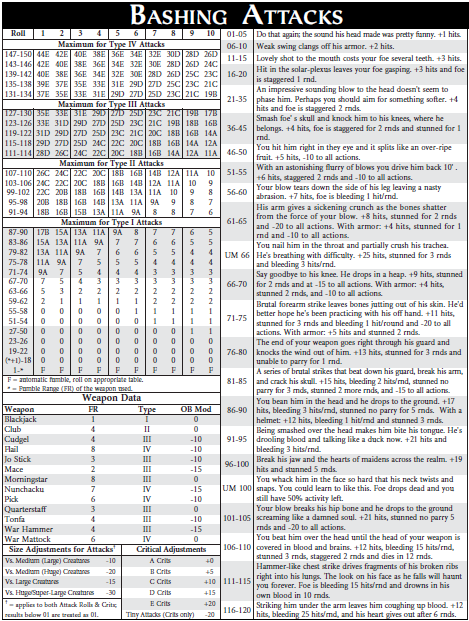
Do you give your players a copy of their combat chart for rolling their own attack?
I know lots of people do this but I am not one of them. I believe the objective is to speed up combat. Everyone has one copy of every chart they use so there is no page flipping back and forth through Arms Law. The GM only then has to manage the NPCs attacks.
I do something similar with Spell Law so everyone has a copy of their spell lists so the spell casters are not queuing up to get their hands on spell law to see what spell to cast.
I think combat tables are different. Here is my thinking.
Now imagine this. The players had discussed their plan. They were going to take out any patrols on the castle wall, dumping the bodies over the wall into the marshy ground beside the moat.
The players attack a knight with surprise, from behind. They make their roll, add their OB and I then have to tell them the knights AT and DB.
The knight has a DB of 90! Yes, that is right a DB not dependent on shields or being aware of the attack. Telling that to the player is certain to raise an eyebrow at least. Do you honestly think that the characters are still going to throw the knight, armour and all over the wall and into the moat?
Or how about the poor knight is wearing cursed armour? It looks like AT17 but protects as AT2. What will the players think then?
I think giving the combat table to the players, for me, is giving away too many spoilers. Those situations do not come up every day or every session but they do come up.
I have ‘cured’ my players from excessive meta gaming. We had a situation where all the players fell into a detailed and somewhat heated discussion about their plans while they were in easy earshot of an informer. There was no possible way for the characters to share the information that the players were sharing without vocalising it so I rolled a perception roll for the informer and he heard it all. Several crimes were part of their plans and one of the bad guys was the local sheriff. Things got hot for the characters pretty quickly and one of the players said that his character would never have said all that out loud in the middle of the market. The obvious answer was to ask well how did you think the characters were having this discussion? Other players were still interacting with people in the market while the discussion was going on. I was still describing the evolving scene as more stalls opened and more towns folk filtered into the market and so on.
From that point on the players all accepted that all their communications are their characters communications unless they have explicitly said they are passing a note or using some kind of magical method.
Bandying around the foes AT and DB to me seems to be too much information to be giving the players. I think it has the potential to change the characters tactical thinking based upon things the character simply cannot know. If there are two enemy in from of you and you don’t have a very good OB, you are going to pick the one with a poor DB, it is simple self preservation surely?
Which Version of Rolemaster Do You Normally Play
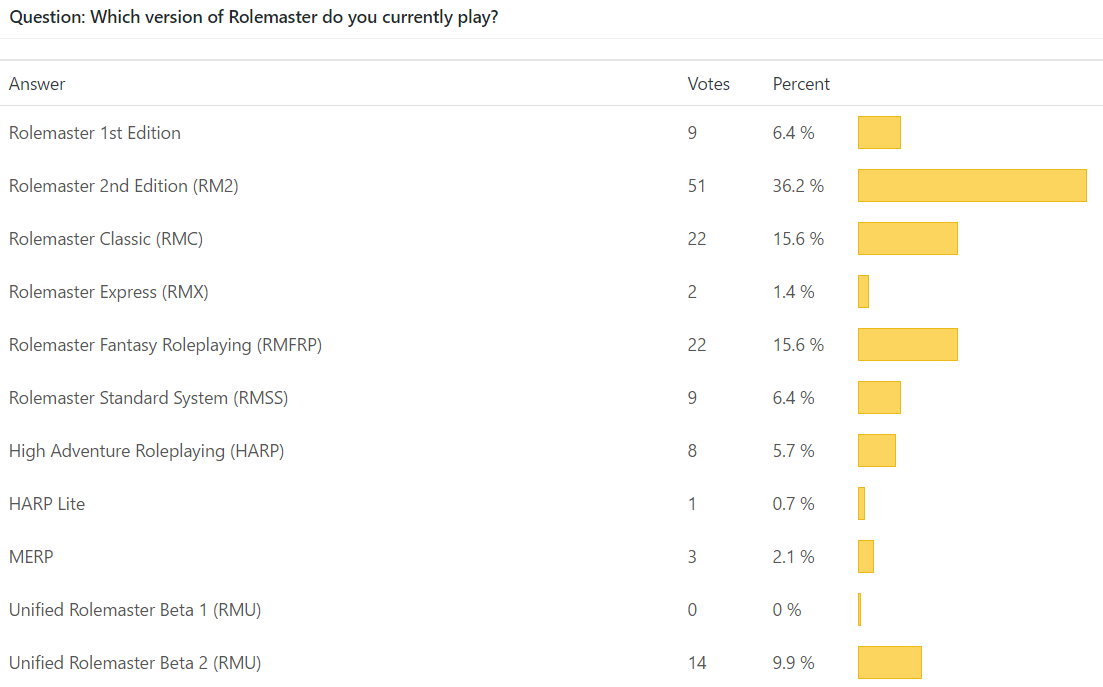
For the past eternity, or so it seems, there have been small polls running here that ask a random question.
I recently did a reshuffle and so we have a whole new set of questions going on now but I thought I would share some of the results.
Today it is the results of the Which Version question.
I am not that familiar RMX (by which I mean I have never even seen the rules) so I don’t know which family it falls into but even without RMX the RM2/RMC camp is by far the largest segment.
It is nice to see that we have 14 RMU playtesters here.
I suspect that because just about everyone who writes on here is in the RM2 and RMU camps it is not unsurprising that RMSS & RMFRP are less well represented. On the other hand it could be that RMSS and RMFRP are less popular systems.
I don’t really know.
Any thoughts?
Rolemaster Fanzine Issue #3 is here!
I am really pleased to announce that the third edition of the Fanzine is now on sale on RPGnow.

You will notice that I have skipped a month in the dates. We have an April, May and July. It just takes too long to get a print publication approved.
I cannot select the articles to include, write the additional fanzine content, page layout and submit the newsletter fast enough when RPGNow take up to 18 days to approve, print and mail out the first proof.
By jumping a month I have bought myself another 30 days, taken off some of the pressure and everything feels much more relaxed.
I think the highlight is the adventure outline Alchemical Zombies but you will have to get a copy if you want to check it out. 🙂
Play Test Session #2
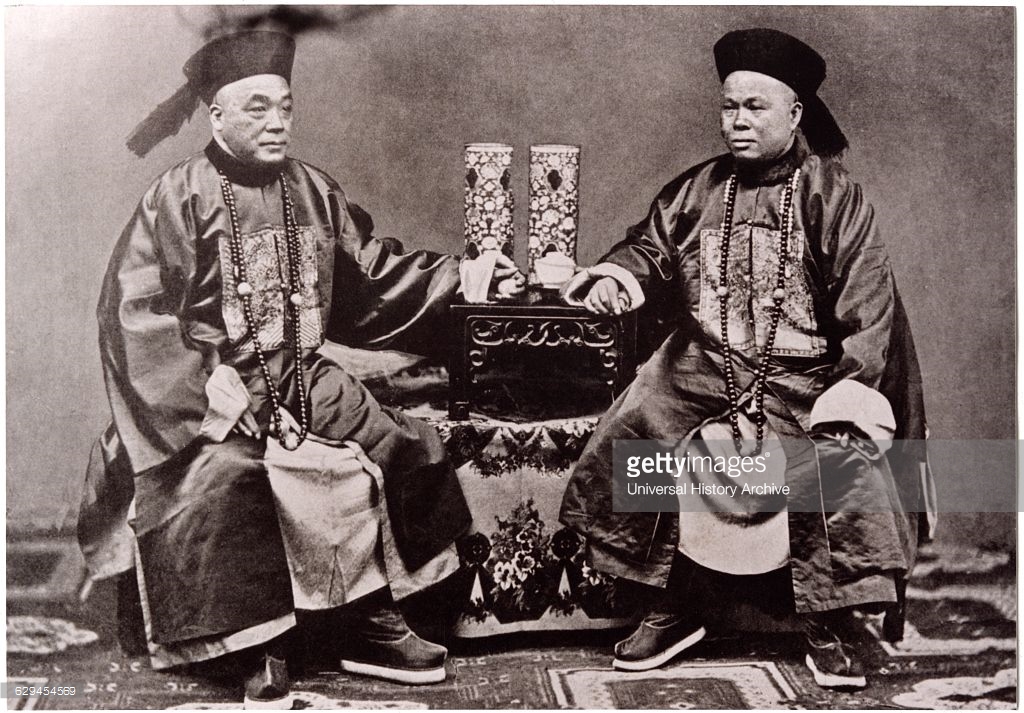
This actually took place a while ago now but what with Christmas and the #12daysofRolemaster this post got pushed back somewhat. My playtest player is back from university soon and it suddenly dawned on me that I never posted this write up. It was also useful to me to come back up to speed with where Gao is.
We left Gao out cold after losing a sword fight with a couple of assassins. Unbeknownst to Gao the assassins had left him for dead. The Emperor had used the body of the assassin that Gao had disabled to cover himself with fresh blood and had played dead. Eventually the assassins had been discovered by the palace guards, the alarm raised and a running battle ensued as the assassins attempted to flee though the Forbidden City.
The Emperor had been recovering in bed when the assassins had attacked having been magically healed by a court healer (lay healer). The Emperor’s wounds and Gao’s had me go over the healing rules in Arms & Character Law. I did really want to use the rules as written but there is no way on earth I am ever going to apply those healing rules. The rules would have had Gao laid up in bed for 10 days given the Injuries and Recovery roll and by chance there would have been a permanent injury because of an even double roll! In my RMC game we use cinematic healing and the same will apply here. The issue is not just with, possibly, realistic healing times but also the plot was supposed to follow this thread. The Emperor has witnessed first hand that Gao saved his life on the night of the first attack and saved it again on the second when someone had obviously arranged for the guards to be elsewhere. When no one can be trusted at court Gao is the shining exception. Thus the Emperor can entrust Gao with the task of finding who the assassins are working for. If Gao is laid up for 10 days then this is ridiculous and any trail would be stone cold by then and even the Emperor would not sit on his hands for nearly two weeks doing nothing when assassins could strike at any time. One option would be to massively up the level of the Lay Healer. The way the spell acquisition works in RMU a 25th level Lay Healer would be more than capable of solving the whole conspiracy anyway without Gao so the whole adventure is moot. Option ‘B’ is to go back to Cinematic healing. This heals Gao’s broken bones in 10 hours rather than 10 days and giving him his #hits back is not a problem.
So on with the adventure!
Gao wakes up in a comfortable bed overlooking a tranquil palace garden being attended by many servants. His aches and pains have gone but he has no memory of anything since being in the fight with the assassins. Soon after he is awake an official brings him the Emperors gratitude and a request to attend the Emperor in his chambers. What happens is the Emperor explains that no one can be trusted except just a few of his closest advisors, including the court healer who could easily have declared the Emperors original chest wound fatal and allowed him to die though inaction. Simply by healing the Emperor he has proven his loyalty. As no one else can be trusted it falls on Gao to find the traitor that is plotting against the Emperor. There are some clues to start off with. The assassins’ weapons all bear the makers mark of an honoured sword smith here in the Forbidden City. Furthermore, three of the assassins that were killed have been identified as men sentenced to months in a cangue (punishment cage) for violent crimes. It is possible that these men had bought their freedom in agreeing to slay the Emperor. Gao gets a set of documents that give him freedom of movement around the city and a rank equivalent to an auditor or tax collector that means he had great authority. This comes complete with an over robe bearing a square badge displaying a Peacock known as a Mandarin Square.
The audience ends with Gao being given a fine quality Qi Jian. I am not normally in favour of giving out free bonus items but the combat last time was so disappointing and the fact that with only one PC the chances of him being out numbered is great I think he needs a bit of added fire power.
Gao leaves the palace and decides to investigate the sword smith first. What follows is three failed perception rolls cumulating in an open ended downwards which leaves him completely miss informed. The emperor had sent a couple of trusted guards individually to shadow Gao with two ideas in mind. If they are loyal then should be able to lend him some assistance if he gets into trouble. If one is loyal and the other is not, then chances are the traitorous one will try and kill Gao and the second will still be able to assist him. If both are traitorous then Gao will die but two more traitors have been exposed.
The player had been trying to see if anyone was following him through the narrow streets of the city or looking suspicious. The failed rolls had meant that the guards were not spotted but at this point I made a mistake. I thought that with the open ended roll leaving Gao completely miss informed I would tell him that one of the stall holders was paying a bit too much attention to him. This send the player into a spin of paranoia and and at one point the player was considering doubling back to kill the stall holder. I think in retrospect I should have ignored the OE downwards and just treated it as a normal failure. That cost us a great deal of the game session, we live and learn.
Eventually we arrived at the weapon smiths abode. It is a double storey building with sloping red tiled roof and a central courtyard. Dragon shaped ‘gargoyles’ project from under the roof tiles carry rain water away from the walls and ornate iron gates, again with the dragon motif give access to the courtyard.
Gao has the vocational skill for Oriental Administration so he knows how to act as a tax collector and his plan was to inspect the weapon smith’s order books to see who bought the weapons. Gao decided to go in heavy handed and try an intimidate the weapon smith. Seeing as he is dressed in official mandarin garb and has all the right credentials I gave Gao a +20 to his intimidation attempt but as it happens he didn’t need it, he succeeded with his natural skill. Furthermore, Gao makes a Vocational skill roll to understand the order books and the abbreviations and marks. This is only partially successful but he gets the weapon smith to explain what he doesn’t understand. It turns out that weapons were ordered and paid for by a Magistrate here inside the Forbidden City. The only address is for the palace and the weapons were collected in person so he does not have a delivery address. These blades stuck in the weapon smith’s memory because he made 4 sets of 8 blades. 8 is the luckiest of numbers representing fortune but 4 is the number of death. Most of his orders are for pairs of blades as these are both lucky and bring peace.
Gao decided that he was probably dealing with an innocent here and commanding the weapon smith to report any more orders by the magistrate directly to the palace for approval in future he left the workshop.
Leaving the shop Gao again totally failed to spot anyone following him or acting suspiciously.
Before the session started I had not decided if one, both or neither of the guards following Gao were actually traitors. I try and have one combat per session but with all the faffing about with fake spies earlier I decided to just roll and see if either of these guards had it in for Gao. As it happens the first I rolled for turned out to be a traitor. I also habitually roll the Empathy, Reasoning and Self Discipline of my casual NPCs so I can get an idea of how to play them. This first guard has a 12 Empathy, 92 for Reasoning and 19 for SD. It is not a great leap to guess that he has worked out that Gao is now heading to the guard house and this is not good for the traitors. Gao is heading straight towards him when Guard 1 draws his Qi Jian and attacks. This fight turned into another grind it out, chipping away at #hits. Neither combatant moved much, the first guard caught Gao flat footed etc. but the attack roll was abysmal and after that they stood in the street and parried and counter attacked at each other. Gao slowly increased the percentage of his OB to attack once he realised the person fighting him was not getting through. The worst critical inflicted in 6 rounds was 5AK. Previously I had not read up on the changes to stun so this time rather than having Dazed, staggered and so on we just had the different levels of stun (-25/-50/-75). This didn’t make much difference but the important thing in this fight was the fact that the traitor guard is alive despite being unconscious.
That is where we left this session. Gao is down to 12#hits and is standing over the knocked out guard.
Next time…
I am hoping next week to be able to continue this game using RMU Beta 2. I am using the Beta RAW with the exception of the changes listed in JDales New Tables thread on the forums and next time I will be using double the #hits damage as discussed on the forum.
Big Beasts and Big Hits
There is an ongoing discussion on the RMU beta test forum over weapon sizes. How do you handle a halfling wielding a trolls dagger? Is the dagger a shortsword or a broadsword to the halfling. Does the fact that it was made for different hands make a difference to how you wield the weapon? There were complications where using an under or oversized weapon such as a undersized two handed weapon may be more effective than using a one handed weapon specifically made for you race. So all your human warriors are using halfling two handed swords rather than broadswords.
This is a long rambling debate and you can check the ICE forums if you want to get involved. One of the things I find frustrating is that one never really knows what the devs have taken on board, what their solution is, if any, and is just being ignored because that part of the rules is are already written.
I will say I am not a fan of the RMU size rules. I think they sound fine in principle but they just didn’t work for my play test group so much so that the group didn’t want to play any more. The play test lasted two sessions!
So how do I handle size variation between different size combatants? I totally agree that all things being equal a giant hitting hitting a halfling should do more damage than the halfling hitting the giant. There is just more kinetic energy in the attack!
The big monster hitting the little character requires no modification. The big monster has its size and mass figured into its OB. So that was easy, just play the RAW.
The smaller combatant hitting a larger one though does need a slight adjustment. It doesn’t need the multiplied hits or stepping up and down for criticals. The very largest creatures have this built in in C&T anyway. So what I do is for every relative size smaller than Medium incurs a -10 OB, every relative step above Medium gives a +10 OB. That results in smaller creatures doing less damage and maybe a lesser crit. Larger combatants tend towards harder hits.
Breaking 150
In another closely related rule is my ‘breaking 150’. For me I use a +1 on your critical roll for every 10 more than 150 rolled. So an attack roll total of +175 would give a +2 to your critical. This also tends to mean that massive attacks tend to do better criticals. My critical tables have an UM66 and a second 66 result. Obviously you cannot shift your critical up to the UM66 result.
Wrong Size Weapons
So how do I handle wrong sized weapons. Well the weapon uses the table for what the weapon actually is. So a halfling using a human broadsword as a two handed sword still uses the broadsword table. But for every one step in size difference gives a -10 OB. This reflects the fact that the weapon was just not designed for that size hand.
It also takes into account that a dagger is a stabbing weapon designed for pushing into the gaps between armoured plates. A broadsword is a swinging weapon designed to use speed and mass to inflict damage. A human picking up a halfling breadsword does not change the shape and design of the weapon and turn it into a dagger.
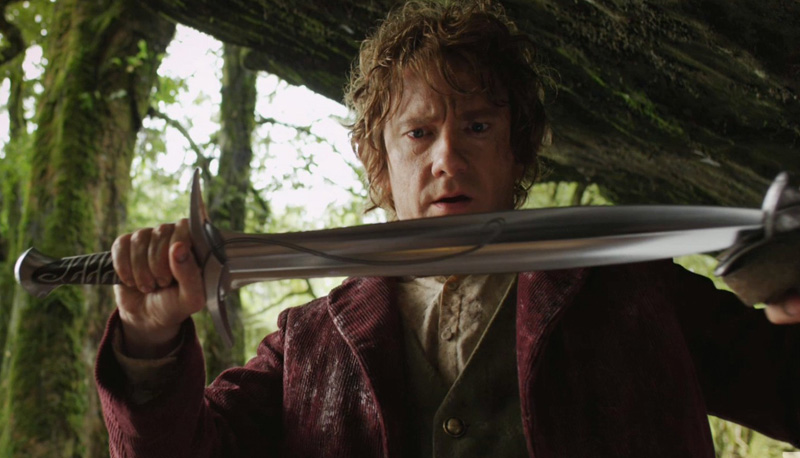
So the example of Sting. Could Bilbo wield Sting? Sting is regarded as a Elven shortsword in RM terms. So Bilbo would be using it as a shortsword but at -10 OB. Chances are that Sting has a greater than +10 magical OB anyway so even with my penalty it is still worth using Sting in combat and its orc sensing powers make it even more useful.
So in conclusion I would say whilst it may not be the idea engineers solution my rules are very quick and easy to use, easy to understand and cope with all the combinations I have ever had to adjudicate on.
Monster Weekend
I have spent the weekend thinking about monsters. I have said many times before that I am a monster snob. I think Gelatinous Cubes and Black Puddings are better suited to nouveau cuisine than for battling player characters. I just cannot buy into them.
I think I put my finger on what it is that a monster needs to have for me to want to use them and it comes down to two factors.
Really?
I like my monsters to feel real, like they could actually exist. If you tell me that Orcs are an evil corruption of Elves then I can kind of get that. The reason they exist is that someone made them. They are evil because they were intentionally made that way.
I can buy into Dragons. Technically, I have seen just as many living dragons as I have dinosaurs. I have no problem in believing dinosaurs were real so why not have fantasy dragons in a fantasy world?
Puddings, cubes, cloakers and mimics just do not reach my credibility threshold when it comes to monsters.
No Fear!
My second criteria is the fear factor. I like my monsters to induce a sense of fear in my player characters. I don’t mean necessary the Resistance Roll inducing game mechanic sort of fear but the ‘Are we going to get out of this alive?’ sort of fear. In a recent game session the characters slowly retreated from ground floor to first floor to the attic as the monsters surrounded and closed in on them.
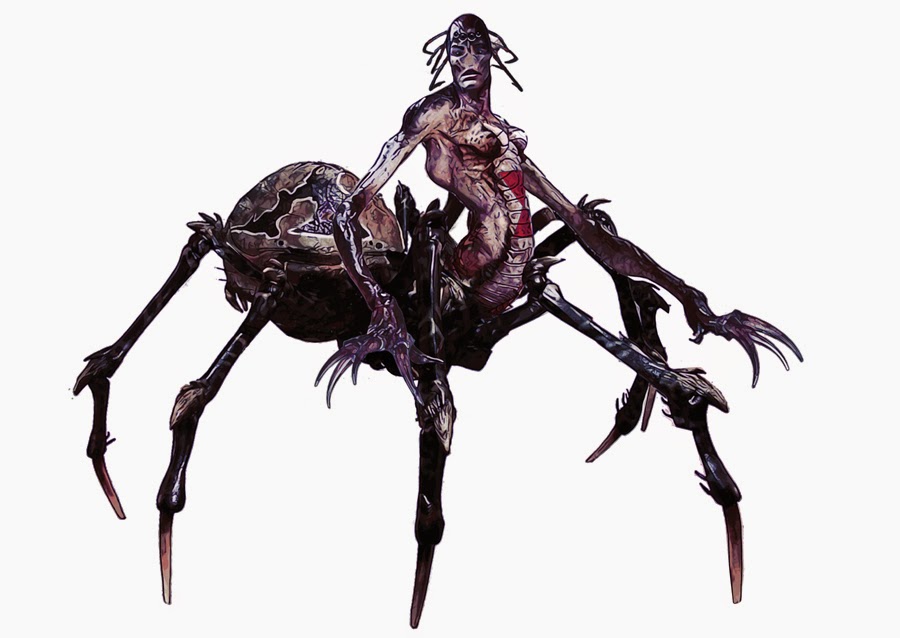
One of my favourite monsters is the Drider. Think spider centaur. The top half is a dark elf failed priestess of an evil spider goddess and the bottom half is giant spider. the reason for their existence is a punishment for failing to meet the goddesses standards. My players characters nearly met one once. They looked up at her nest and retreated. With a Drider you have to think an plan in three dimensions. They would throw amazing shadows down cave passages as they advanced. Retreating may not be an option either if you are being hemmed in by web filled passage ways. All you can hear is up ahead is the scuttle of spider legs on stone while silently above you another drifts down on a single strand of web out of the dark.
I have written something like 27 adventures in the last two months and one of the recurring themes is that of trying to scare the characters. I don’t think a straight, in your face, battle is that scary. Players know that most of the time the odds are in their favour as they are the heroes of the story. The GM is not out to kill them. At least I am not out to kill my players characters.
Give them a foe they cannot see, or cannot count, or do not understand and all of a sudden this is a not only a battle but it is a puzzle or trap on two legs (if you know what I mean).
These monsters are easily killable if you can catch them or split them up into manageable groups and that is the challenge. En mass the heroes may die, if they cannot control the fight the heroes may die.
So this brings me back to my thinking this weekend about monsters. A Kobold is not scary because you know it is weak. When you reach a certain level a giant is not that scary once you have killed eight of them. So I have been planning monster variations. Twists on existing monsters. These are subtly different from their brethren, just enough so that when they meet the heroes it makes the players think ‘That is not right!’.
After all, I do think there should ever be a ‘comfort zone’ in a dungeon, should there?
Which Witch?
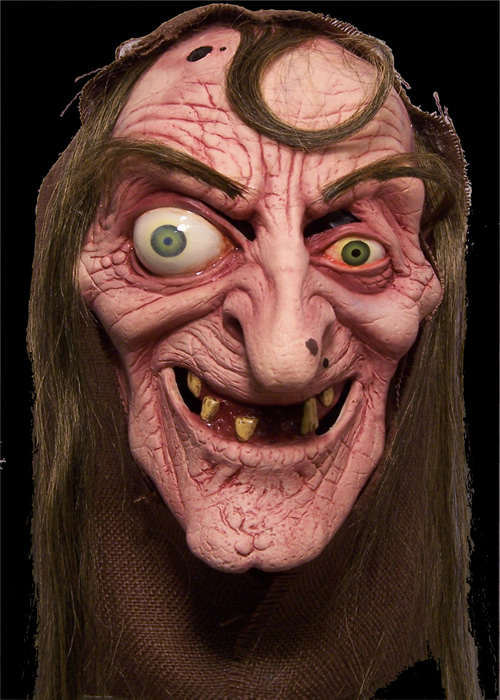
In my game most villages will have access to a spell caster. These spell casters will often be the local witch or wiseman/woman.
I know there is a Witch RM2 profession that works with RMC but for me I have found that the Sorcerer hybrid is the perfect fit for this role.
The sorcerer has access to the closed healing lists which fits with the idea of turning to the wise woman when there little hope of normal healing.
The sorcerer also has access to their own base lists which are great for putting ‘curses’ on people in the form of inducing neuroses.
Demon summoning and control is also great for requests for real revenge.
All in all the sorcerer is a great all rounder for the local villagers to rely on.
The point of this is to suggest to you to try creating an NPC sorcerer, dump the professional name and stick them in a hovel on the edge of a village.
There have been a few references this year about healers. How simply using them as a bolt on to the PC party is a cliche, how one can do more with them. What I am suggesting here is how about making the only healer available to the party a hag or a crazy old man in a hovel in the centre of the woods?

Not making the healer an attached part of the party means that the party now have to think strategically about their health and their healing.
The challenge I see with RMU as opposed to RM2 is the apparent lack of willingness to look beyond fantasy (and even then it’s their definition of fantasy). RM has always suffered (IMO) from the lack of a solid, accessible setting, and RMU just seems to accelerate that trend. They also took steps (especially in the combat system) to render it almost useless for non-magic settings if you leave it RAW. The flexibility that came with RM2 (and even RMSS in its own way) seems to be disappearing.
In addition in a recent comment Hurin had noted the amount of HARP that seems to have found its way into RMU. There is nothing wrong with HARP but HARP is not Rolemaster and definitely not RM2!
That got me thinking. Last year I bought HARP Fantasy and HARP SF. I bought them because I want to run a SF game soon and as I have said many times before I have lost my Spacemaster books.
So HARP is certainly not locked into a fantasy setting and not into one single fantasy setting. Shadow World is statted out for HARP and HARP has its own core setting of Cyradon. HARP SF plays out in Tintamar but by default it also shares the same setting as Kulthea and Spacemaster because of the Shadow World connection.
One of the things I like about HARP is that the last release was to truly unify the fantasy and sf rules and make them interchangeable. I only needed the fantasy rules as monsters make great aliens.
There is a massive gulf between RM2 and HARP and I agree there is a lot of HARP in RMU. The skill system is the same, character creation is very similar. The move in RMU to less combat tables is almost a single step towards the HARP way of thinking and that I think is the problem with RMU. The only weakness as I see it with HARP, looking from a RM background point of view, is the combat system and the criticals in particular. The same old critical comes around again and again way too often and even in the same fight. The rest of the combat system works really nicely as far as I can tell.
Another interesting thing is that the HARP forums are far busier than the RM forums if you exclude the BETA test forums. If you include them then you also need to include the HARP development forums as well. I see a far greater variety of voices in the HARP debates than in the RM ones these days. There is an active HARP community around the game and new HARP books are eagerly awaited,even if most of them are just re-releases to bring them in line with the unified Fantasy/SF rules.
Whether HARP’s firearms are as good as intothatdarkness’s firearms is a completely different question but the fact remains that HARP does have viable settings and it does have modern day and SF elements that make it go well beyond the fantasy genre.
I think RMU is trying to learn from HARP but is struggling to take the old guard with it to some extent. Which is a pity as we are the old guard.