Ship bound adventures

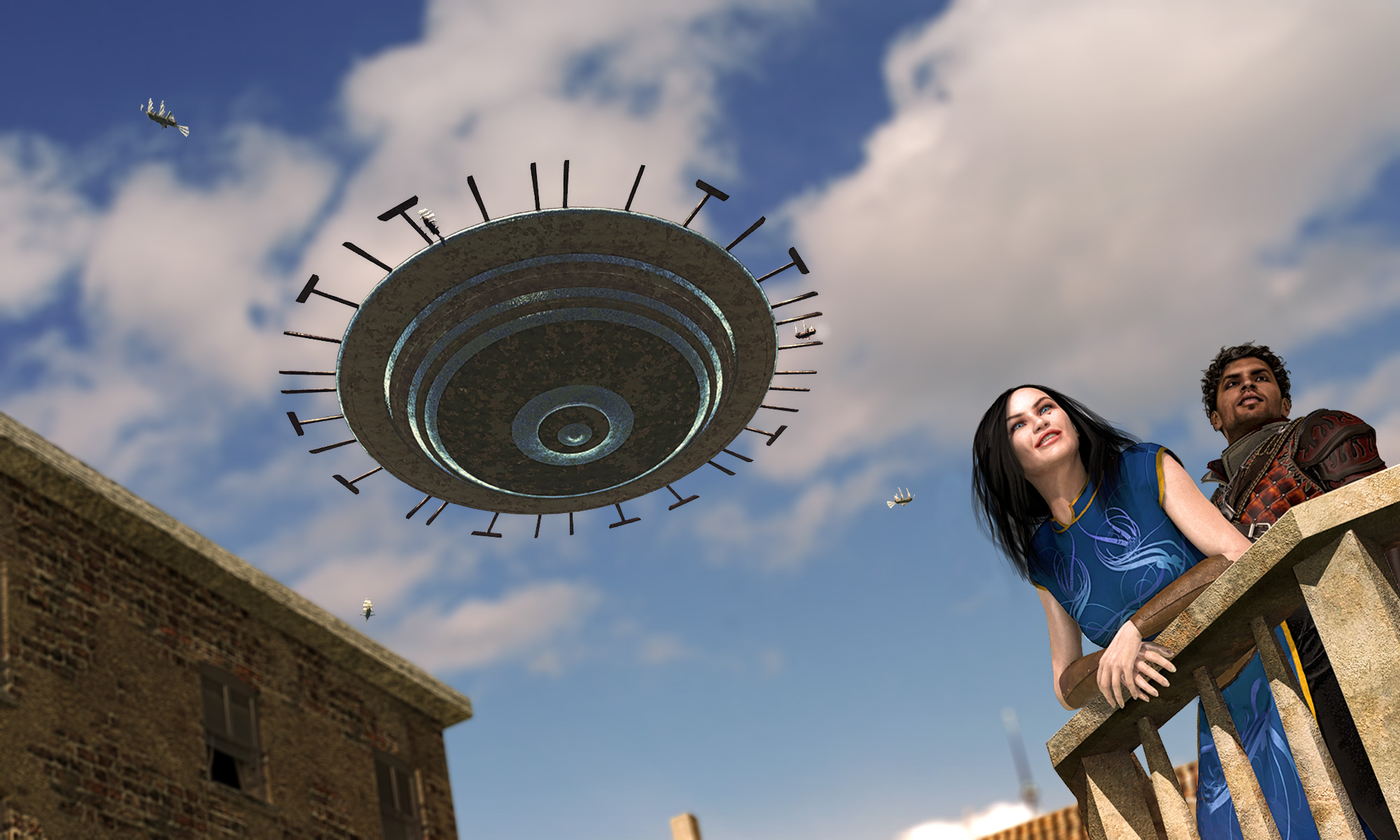
I have always thought this is the single hardest enviornment in which to run an adventure. The issue I have with ship bound adventures is how to deal with the long hours, days and weeks of plain sailing? It always feels to me that as soon as you mention a sail on the horizon the party leap into battle readiness because as a GM ou would not have mentioned it otherwise and besides they are adventurers and these things happen to adventurers.

How many times can you attack a ship with pirates, sea monsters, flying monsters and hurl it into natural storms, maelstroms and so on before the crew will be throwing the party overboard?

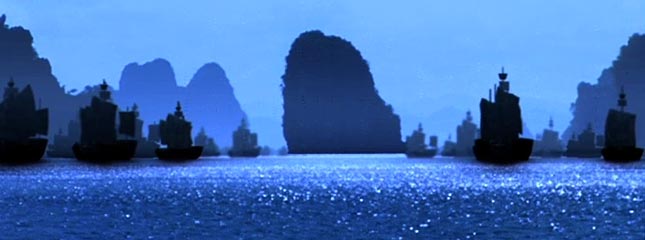
Twice before I have used ships successfully and both times the ship only featured in the very first session. In an introductory sessions for completely new roleplayers I had them start out on the deck of a ship hugging the coast. The players knew that was where they were going to start and so it was worked up into their character backgrounds as to why they were on the ship. This opening scene gave me an opportunity to show how the story telling element of RPGs work describing the landscape gliding by and letting the players talk to the crew and to each other in character. The captain explained the danger on this part of their journey were coastal pirates that paddled out to ships who were forced in tight to he coast because of the tides and currents. As night fell on their first day the lookout gave the call that canoes had set out from the shore. As so the adventure began with the players being lost overboard and making for a hostile coast where they knew they would be made slaves if they were captured while their ship sailed off into the night.

The second use was in a campaign I ran that shadowed the life of Thomas Pellow. He was a Cornishman that was captured by pirates and spent 23 years as a slave to a sultan. Her served in the army and had several adventures. In this campaign the party were bought and sold as a unit because of their curiosity value and used for many suicide missions because they had no choice but tot do as ordered. Again the ship was just a jumping off point and not really a part of the adventure.

There has to be a way of having epic voyages become part of the narrative without it just becoming a case of “20 days later you hear the lookout cry ‘Land ahoy'”, “Ten days after setting sail you see sails nick the horizon to the east” and so on; completely bypassing the entire life at sea element.

Has anyone ran successful ship bound adventures?
How Many Adventures Can You Have In A Tavern?

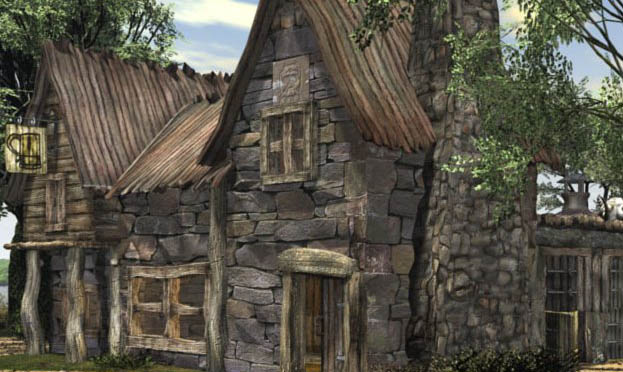
When I build anything from towns to taverns I always start with the people. Once I have created the people who provide the essential services to make the location work and then add their families I have a rough working population. That then tells me how large a place it is. In a tavern you need the landlord or barkeep, a chef/cook, a server or two. In a small out of the way place that could be a husband and wife with their own children or they could be staff and unrelated. What makes taverns though is the client base.

My first thought, inspired by the news that they are going to start filming the next series of Poldark this month was to have a couple of smugglers conspiring at one end of the bar. Whether any of the drinks being sold are contraband or not depends on the landlord I suppose but smugglers are a good way of introducing a sub plot.

Taverns are resting stops, the motorway services of their time so you are highly likely to encounter a royal/imperial dispatch rider or messenger or even two going in different directions. These two would have a natural affinity and are likely to be sharing what new and gossip they personally know regarding their missions even if they do not know the contents of the messages they carry. If something were to happen to one or more of these and the message simply had to get through…

Merchants are not that likely to sleep under the stars and depending on the nature of the world are likely to have a few guards or men at arms with them. Now whether they mix well and get on with their men at arms or not is a different matter. It may be that with those men at arms it has been nigh on impossible to rob any of these merchants on the road but now they are sleeping inside while their wagons are secured outside opportunity knocks.

I can also imagine a foolish young man showing off some valuable item for too many people to see. Maybe a jilted lover drowning his sorrows and showing off a betrothal ring to anyone who can answer why she won’t defy her father?

I think all of these are run of the mill and happening in every tavern in every game more or less. So what about some other less obvious adventure hooks?

So all of the above are happening in the tap room most likely but what about some fugitives hiding in the cellar? Why are they hiding? Probably because there is a gang of ruffians holding a dog or cock fight in the centre of the cellar. the ruffians are part of the smugglers crew who are too well know by the local law to drink in the tap room. There is of course also a secret passage from the cellar to either out on the road or down to a cove depending if the tavern is by the coast.

If any weapon is banned in the realm chances are there is a crate full of them down here somewhere. In my world swords carry a 1sp tax for any blade over 12″ long to try and discourage people carrying too many weapons. All it has achieved is to make 11″ daggers popular, made thieves conceal their weapons and created a black market for untaxed blades.

So that is the basement pretty full what about upstairs? The roof is where the homeless would often choose to sleep. They are out of the way of the law who may try and move them on. Heat rises so it is warmer than a doorway.

The attic is a really good place to have a secret meeting, hide bodies, store your deceased mother and her rocking chair and perform ritual magic and summonings. This would means that there is probably a dodge spell caster staying in the tavern. We may have met him or her in the tap room earlier or they could be keeping themselves to themselves in their room.

And so to the private rooms…

The best place to meet a thief or cut throat has to be when they are coming out of *your* room. At least at that point you can be pretty sure they are not just accidentally carrying off your saddlebags.

If the walls are pretty thin and you can hear everything then having someone performing an incantation or ritual all night and keeping the players awake is always interesting. If the party can identify it as some kind of ward against evil it is hard to complain about someone trying to keep you safe!

On the other side of the players room you can have two guys arguing, one plotting to murder a tyrant and the other against violence. This works well if at breakfast the next morning it turns out that the two people from that room are twins. Which one is the potential regicide and which is against it?

There are so many ways of offering your players adventures that this is just a selection of ideas I have had today. Any of these could spin off into a evenings diversion or a major adventure. It is up to them and you.

Too Much Treasure?

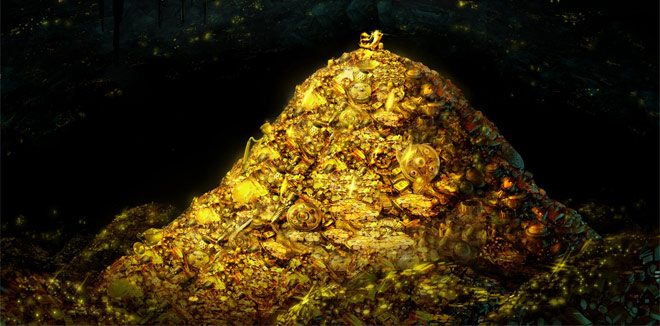
In a recent game I was in the party was walking around with something like 70,000gp in Diamond Notes (the Shadow World solution to mass currency transport). Depending on how you value a Gold Piece* that is the modern equivelant of between £8.3M and £350M ($13M – $539M) in cash. That was the cash surplus after four months of adventuring and treasure hoarding.

The first question is how much money do adventurers actualy need? They could retire quite happily and live out a life of luxury on that sort of money but then they would not be adventurers if they did that sort of thing. As a GM it sometimes becomes necessary to drain money from the players economy. One way is the herbalism method.

Imagine the scene, the party approach the doors of a remote monastry towards the end of their day firsst day in the foot hills. They ask for rest for the night which is given as well as food for their horses. While they are walking the grounds in the evening the players notice that there is an extensive herb garden. Furthermore they notice that the monks are growing some of the rarest herbs. Remembering the golden rule of “What the GM giveth the GM can taketh away” you let the party buy a quantity of otherwise rare herbs. Things like Ul-Naza. It is leaf that you eat and it is a natural antidote to any poison. The book price is 430gp a dose but what the monks charge is up to you. Other useful herbs that are expensive are things like Baalak that repairs shattered bones and Hugburtun that stops all bleeding. One dose of each of those is about 1,000gp. Vulcurax is a life giving herb and costs 1,000gp on its own.

So the party top up on some herbs before setting out to find the mountain pass. The next morning they somehow manage to upset a manticore and take a right kicking but luckily enough they had the means to cure the shattered bones, severed arteries and treat the poison barbs. It is just as well they had those herbs! If the party didn’t want to buy the herbs then of course they are now in deep trouble and may well have to turn back to the monastry to recover at which point you are not ony buying the herbs but also paying for the expertise in applying them.

At the end of the exchange I would always leave the party up on the exchange and having a dose of a life giving herb in the parties supplies is always useful but it also helps drain away some of that excess money. You could of course tell the party that they will be traversing Manticore Pass and the party may well choose to stock up on antidote before they even set out.

I like robust parties that I can give a real kicking to but they survive and win through. Herbs that are only really useful after the fight mean that you can really let rip during the combat knowing that you are not going to ruin the chances of completing the overall quest. When the party do win in the end, defeat the villain, rescue the damsel and so on they know it was because of their planning and ability and not because the GM spoon fed them. I used to play under a GM who would beat you down to 1hp and then suddenly no one could hit you and you would eventually win. It was obvious that the dice rolls were being skewed and it took the fun away from the game so some degree.

You don’t have to leave the party paupers and in fact most will not spend themselves down to the last tin piece but consumeables like herbs are a good way of lightening the purse of some of that excess treasure.

tres

*I read somewhere in one of the RM sourcebooks that a typical peasant has an annual income of about 2gp a year. If you consider the National Minimum wage as ‘peasant income’ then 1gp equal £5000 and dividing down then a 1 Tin Piece is just 50p. On the other hand if you see a peasant income as those people surviving on a dollar a day then one Gold Piece would be worth £118 ($183) and a Tin Piece would be a Penny (nearly 2¢).

Dealing with player failure

Rolemaster Logo

I don’t normally see death as a player failure. When you start waving swords around then people are going to get hurt. One lucky strike can take someones’ head off and occaisionally it wll be yours. That is just the nature of combat and random dice rolls.

It is not looking good for him

I am also not a fan of skewing dice rolls in the players favour or rerolling unfortuneate results. Earlier this week in my post on player death I was saying how my face to face group have a sponsor capable of life giving and it may be necessary to give out a rune of life giving in the future. If there was not sponsor then it is still possible to give out a prepared vial of a life giving herb. That gives the GM the option for the vial to ‘spoil’ if he or she wants to remove it from the game later. I would rather kill and raise a character so they know they are mortal then to make them invulnerable because no one hits them once they are down to their last five hit points.

So despite all the signs that it is not a good idea, the party charge into the mess hall and are suddenly out numbered five to one by off duty knights. The party have a round or twos grace while people trip over benches as they jump to their feet and try and draw swords and others rush to weapons racks and start handing out the spears. By round three the guards are getting organised and the party have taken down two or three of them but there are now twenty armed and angry guards encircling them.

This is an epic player failure but what do you do?

  1. kill the party
  2. all the knights fumble every attacl for the next five rounds taking half of themselves out of the combat
  3. Capture the party and throw them in the cells.

I would be tempted to go for 3 above.  Beat them to a pulp, take the kit and throw them in the cells. Any amount of time you want can have passed between the end of the beating and the party waking up which allows you to update the situation and reset the objectives. Maybe the party has now alerted the villain that the authorities are on the him, maybe the party has been missed and a rescue has been mounted, who knows.

I always develop just enough to a plot line to cover what happens if the party are captured for just such a situation. In the last adventure I ran the party were invading a Drow outpost. The Drow were using slave labour and if the party were captured then they would have been thrown in with the slaves. As the party are all spell users they would not have been completely helpless but also would have had willing allies prepared to assist in an escape and tools such as picks and shovels to use as improvised weapons. There was even a priest amongst the slaves who could have helped heal more serious wounds.

Success was not a foregone conclusion.

As it was the party pulled off their plan and rescued the slaves themselves but the point is that I was perfectly prepared to let the party fail but the story continue. Success was not a foregone conclusion.

I am certain that successes that have been hard fought and well earned are sweeter and more meaningful than those handed to you on a plate. I also hope my players feel the same way.

For those about to die (Player Character Death)

Rolemaster Logo

As you know I just finished rereading The Crystal Shard which is the fourth book in the legend of Drizzt. There are twenty eight books in the entire legend series so you can be fairly certain that if you are reading book four that the main character is not going to die despite how dire his circumstances may get. As GMs as opposed to authors though it seems that without the existential threat of player character death then there is no stick and if you only us the carrot of treasure all the time the game soon become too over powered or rich.

If you give great wealth away but then take it back by robbery, trickery or other nefarious means then the players will soon stop being motivated by money as they know they will not be able to spend it. There is also the problem of can the players even carry it all or if they have a base to operate from why bother adventuring if you are as rich as Croesus? Using items of great wealth has similar issues or even worse if you start giving away items that can be used in adventuring such as magical kit. Non adventuing kit is often not really valued by the players because it doesn’t really add to their enjoyment of the game right here and now.

So carrots on their own are not very good motivators for player characters. You need the stick some times.

If you are never going to kill the player characters then the players will start to throw their characters around knowing they are invulnerable. I saw this happening in the last game I played in. Once the players got seriously wounded the GM was obviously fudging the dice rolls to keep the players alive.

Killing player characters does seem at first glance to be a bit drastic but player character death does not have to be final and irreversable.

In my current face to face game the party is sponsored by a priest from a local church. This means that as long as the party can get a dead character back to the church then there is a chance of being raised. At least while the party remain in and around Shadowdale. Once they move away then things will get more difficult for them. The party is between first and third level so the chances of a character death is probably higher now than it will be later*. I do have the option of packing the party off with a rune of life giving if I want to make a player character death a setback not a disaster.

In the game I mentioned earlier the party had a potion of life giving which they had been carrying around for quite a while. If I was the GM I would have been very tempted to kill a player to make they aware they are mortal just because I knew the party could bring them back. As it was I think the GM forgot the party had the potion so was not inclined to kill anyone.

I don’t think players should be dying left right and centre, if they are then probably the encounters are over powered for them. I think though that knowing that the GM will not save you make the party more risk averse and consequently heroic actions more heroic. Stupid actions though will cost the party and have consequences.

There is of course the player that just deserves to be killed but that is another story…

So do you kill players or not? Do you think that the risk of death adds anything to the game or does it detract?

*At low levels the spell casters are so limited that a fight that takes down the principle fighters leaves the spell casters exposed. Higher level spell casters on the other hand can fly, go invisible or teleport to get themselves out of deadly situations making a total party wipeout less likely.

The Crystal Shard: Bk. 4 (The Legend of Drizzt)

This may be book book four in the legend of Drizzt but this was the first Drizzt book written by R A Salvatore. It is also the first book in the Icewind Dale Trilogy.

The interesting thing about this book is that Salvatore says himself that he was inspired to write having read Lord of the Rings and this book really chronicles the coming together of a fellowship before embarking on their quest just like The Fellowship of the Ring. That though is where the similarities ends.

The thing about Forgotten Realms novels is that they are written, I believe, with a target audience of 14 to 6 year old boys in mind. Reading them now you should not be looking for great literature, all the Drizzt novels are just a damn good read and great fun but they are not deep, meaningful or challenging. If you have read the novels in order then the fact that this was written first is really quite amazing, It really does feel like part of a continuum from the end of Sojourn rather than the first three books being an extended bolt on prequel.

If you are a roleplayer then the thing about these books is the combat, we all like killing things, wading through orcs, goblins, ogres and all the rest of the goblinkind. The combat portrayed in these books is not DnD combat where you are grinding down the hitpoints and D8 of damage at a time. These books are Rolemaster combats where your strike to the back of the knee slashes tendons and muscle and drops your opponent or you slash severs the trolls arm.

Back to the book though, it is a good read, on Amazon amazon there are second hand copies sellig for 70p and it makes you feel like a 14yr old again. It is almost a guilty pleasure. What more reason do you need to give it a go?

My three Favourite Weapons

Most professions in Rolemaster can only afford to develop one class or weapon. It just gets too expensive and too slow to learn more than one unless you are a pure fighter type.  Over the years I have come down to three favourite weapons that I seem to go back to again and again.

In order of preference I think they must be…

  1. Spear
    There are two really cool things about spears. The sheer number of ‘similar weapons’ that you can apply the skill to and its versatiity in its own right. You can use it one handed with shield, two handed and if needed you can throw it. It is similar to staves, polearms, javalins, pilums and the ultimately cool weapon the mounted lance. You can poke suspicious objects with it from a distance and even polevault with it.

    Looking cool with spear and shield
    Looking cool with spear and shield
  2.  Hand Axe
    This is another ‘swiss army knife’ of a weapon. Not only is it a useful tool, you can climb with it, throw it, fight with one in each hand and it is similar to the shortsword. The hand axe is also relatively easy to conceal within a backpack unlike a broadsword by comparison.

    Now here is a girl who likes her axe.
  3. Shortsword
    What did the romans ever do for us? It appears the answer is quite a long list but shortsword and shield is a classic combination that worked well enough for the roman empire. This is another in hand or thrown weapon, concealable and comes in a variety of sizes? Why is that important? Because some are no bigger than a lot of daggers so you can use it at full skill in that roll. A lot of town guard object to people hauling swords around town on a night out but a dagger for personal protection is accepted. With your trusty shortsword you get to have both AND you get to do that Crocodile Dundee scene “That’s not a knife, now that’s a knife”.

    Thats not a knive, this is a knife

I can imagine a lot of Rolemaster old hands will say that none of these weapons do a huge about of damage. That is true but in RM it is rarely the ‘hits’ that take you down. It is the criticals that kill you and give or take 5-10 points on your attack roll most weapons are pretty similar in that respect. For those characters that want to get into hand to hand then their OB (offensive bonus) massively outstrip most people DB (defensive bonus) and maxing out the attack tables is a common thing by the time you reach 5th level or so.

So those are my top three. What is your favourite weapon(s)?

My First User Poll

I have been writing this blog now for about nine months and I am curious about who is reading the blog. I know from the website stats that about 800 unique humans visit the blog each month.

What I would quite like to do is write content that is of interest to both me and the you. To do that I need to know more about what eho is reading the blog, and what is of most interest to you all.

To that end I have decided to start creating some quick single question, multiple choice polls. You can comment below once you have voted (and please do!) but that is not necessary. I also intend to chop and change a bit and ask some questions about your playing, some about the actual blog, about professions, skills, spells and so on.

So to kick it all off here is the first Poll!
[yop_poll id=”3″]

More On Pre-Gens

I have been thinking about how to best handle pre-gen characters and my conclusion is that there are two ways of making this work.

You either create maybe 30 characters, several of every profession (if you are a full blown RM2 GM then several of every kind semi’s, pures, arms users etc) and then give every player a choice from the full spectrum of characters or you hold a Q&A with each player in advance and then develop the character they described to you for them.

Either way the player gets the character they want, the GM gets the characters at the level they want to start the game at, with the skills the party need to complete any specialised tasks and with the GMs prepared for the mix of characters in the party so the adventure can be tweeked to best challenge the players.

I would always give the player the final choice of weaponry and if possible the spell lists. As a GM you can determine how many lists the character has learned but the choice of which specific lists they are should really fall to the player at least in part if not totally.

There is another consideration that can make the difference between whether a player enjoys their character or not and that can be how many skills the character has. I like characters with a wide skill base and I am happy to accept that each skill will be weaker as a trade off. Most of my players prefer few skills but all of them developed to the maximum possible. That choise generally means that you know only one third as many skills. The average skill cost is something like 2/5 so buying 2 ranks costs 7DPs. With 7DPs spent just buying single ranks you can get up to 7 really cheap skills to 3 typical skills.

Characters how have fewer fully developed skills also ed up with less skills that round a character out, less languages and less flexibility outside of combat. I say that as it is normally the combat related skills that suck up all the development points.

I have recently had to create two pre-gen characters and I used the Q&A method both times and I hope that both players got what they wanted. I have taken copies of their character sheets at 1st level and I will be interested to see how many of the skills I bought for them they carry forward and continue buying as they level up and how many new skills I hadn’t thought of buying they pick up.

I will feed back.

If you use pre-gens what do you do to make them as good as they can be for your players?

Do Pre-gens need a strong GM Hand?

Rolemaster Logo

This is the first of two posts about pre generated characters or pre-gens. I have been thinking about them a lot recently and thought I would get some ideas down.

In a recent game it started out as being intended at a one off session and set at about 10th level. The GM then took four characters from Heroes and Rogues and modified them slightly to fit his idea for the party. He stripped out skills, changed weapons and armour skills and other modifications. He like me feels there are too many skills in RM2 but that is a different can of worms.

When we came to play he was going to dish out the characters and the impression he gave was that he was going to put characters to players in such a way that the person who never plays a spell caster was the magician, the one who always wants to be the elven mage would be the human fighter. The most agressive in your face player would be given the subtle thief and so on. This was met with horror by most of the players.

The one who never plays a magic users did so because he didn’t like magic users, had never read spell law, never intends to read spell law. The one who loves mages has always hated fighters and only realy roleplays because of his love of magical fantasy and so it went on. Most of the players only play in the single group whereas I play with several groups. The GM thought that I and a dyed in the wool fighter because with him I played a very successful fighter for may years. In reality one of my favourite characters was a Lay Healer but I never played it with him.

Anyway the GM gave in and everyone took the character they most wanted to play of those on offer. The sessionn got under way and everyone had a great time. When we next got together everyone wanted to carry on the game and the GM said yes, fine. At this point it became apparent that some of the skills that the GM had stripped out to make the characters really easy to get to grips with in session one were actually really important to an ongoing campaign.

So we started to add skills back in. Some skills the characters had in the original book really didn’t exist in the GMs version of Shadow World and so we asked could we reallocate those development points into skills that the GM does use and the character/player wanted. “Yes, fine” said the GM. When I say ‘we asked’ I mean two of the four players had thought of this. The other two either didn’t have the rules or never read their copy of the rules. So at this point the characters started to form into two tiers. Those that had full use of their development points and those that had lost out on abut a quarter of all their development points because they had been stripped out and not reallocated.

The other change the GM had made was in creating the pre-gens was to choose their weapons and armour to suit his vision. Some of the combinations were far from practical. The rangers prime weapon was a bow and he only used a soft leather jacket for protection. The thief was given thrown Dagger as his main weapon, again just with soft leather. The Fighter was given greatsword as his prime weapon and Frenzy as a skill to go with it. Put the party in confined quarters for a fight and they were as likely to kill each other as any of the enemy.

Because of the way the skills system works in Rolemaster it is really really difficult to learn a new weapon at 10th level so you are kind of stuck with what you have. Also your weapon really defines everything about your character in combat. An archer is not going to charge into battle, a frenzied greatsword wielder is not going to go for subtle sword play and stealth and if you only have a dagger you are not going to live very long.

I think leaving the actual specific choice of weapon down to the player would be been a better option. That is not the same as having to roll up a character. I also think that reallocating the development points should have been all or nothing. Either the GM says to all the players you can have X points to spend on any skills to personalise your characters or he says ‘No’ across the board and you start learning those missing skills from the minute play starts.

I don’t know which would have been best but what happened in the end was that the mage was one of those that got the extra development points and ended up about 8 levels higher than those that didn’t and the thief who likewise got the extra DPs spent them on learning two weapon combo and adrenal move speed and was the walking, talking Shadow World gattling gun. He ended up the highest level character in the party.

At the start of the game none of these problems were foreseen but with hindsight they are glaring but would we still have had problems if the GM had insisted on no character changes and a level playing field?