An exciting long and fruitless search

One of the requirements of my unfolding story is that the party have a long and fruitless search for Randall Mourn in the Spiderhaunt Forest.

The challenge is how to make that exciting to play?

The adventure as written says that the party are pretty much looking for someone who cannot be found until the villain of the piece wants to draw the party in.

I am inclined to really draw this out with entire side plots and adventures rather than trying to emulate such a long search and then resolve it in a single weekend of gaming.

So here is a question for you all. If you were on a quest to find Randall Mourn would a period of side quests none of which actually find Randall be off putting?

This post currently has 7 responses


“Long Skulls” and the Worim of Shadow World.

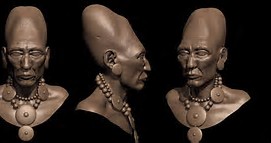
I just got back from Mexico and had the opportunity to visit some Mayan ruins. Seeing various ancient sites (Coba, Tulum, Chitzen Itza) is great creative inspiration for roleplaying! It’s also a reminder of an unusual and curious phenomena found not only in Central and South America, but all across the world: Elongated Skulls.

Accepted thinking is that skull elongation was the result of various types of head-binding practices adopted by primitive cultures. The application of clothes, boards and ropes on an infant’s skull to deform and stretch the soft craniums in children. Unfortunately, attributing ALL elongated skulls to this theory is challenged by 3 basic issues:

  1. Pre-natal skull elongation. There are documented cases of in-utero and very young infants with skull elongation.
  2. Cranial Volume. While purposeful elongation can change the shape of a skull, it does not alter the volume of the skull. There are many examples of elongated skulls with 20-25% higher cranial volume. (see Paracas skulls).
  3. Differences in skull suturing. Certain elongated skulls have only one parietal plate rather than two as in normal skulls.

Skull deformation, aberrations in volume and suturing are often ascribed to dolichocephaly, hydrocephaly, craniosynostosis or Antley-Bixler syndrome, but there is not enough evidence to support these medical theories. Elongated skulls have been found in Egypt, Malta, Russia, Peru, Bolivia and Mexico and head-binding was performed in the Congo, Vanuata and Malasia. Notable rulers in both America and Egypt are known to have elongated skulls: Tutankhaten (King Tut), his father Akhenaten, Nefertiti, and the Mayan Lord Pakal.

I’m not suggesting “Ancient Aliens”, but there is an argument to made for elongation via genetics verus elongation via binding. A distinct race of people, with elongated skulls, that also held positions of power is depicted in history and through the archeological record. Is it possible that the wide-spread practice of head-binding by many cultures around the world was “emulative”?

So what does this have to do with Shadow World? Terry has sprinkled bit and pieces of information throughout his books including this one:

“The tall, slender Lydians are most populous in Mythenis and some regions of Gaalt, thought they are found on other cool climes—especially in the southern hemisphere. This race has a somewhat elongated skull and large, bright, amber-colored eyes. They have fair skin, pale blond hair and are more slender than the Laan or Talath and tend to be hirsute……Some Loremasters believe that the, or perhaps the Talath, are descendants of the Worim.

And this:

“Some Loremasters hold that the Trogli are a race descended from the Worim: those who chose to hide underground at the end of the Interregnum.

So what do we know about the Worim? Only what we can piece together from various obscure mentions: they are non-native to Kulthea, had a high level of technology and built machines (tunnelers and war-machines). They may be precursors to the Laan (or Talath, or Lydians) or Trogli.

Until Terry expands upon the Worim, we’ve had to come up with some of our own material. First and foremost, the Worim had elongated skulls. This genetic trait was passed down to a lesser degree to both the Lydians and the Trogli. We’ve also generated some additional summary info in our SW Civilization Summary here (btw you need a Forum membership to see and download files).

This helps differentiate the Worim from some of the other Interregnum civilizations, Taranian & Jinteni, and adds a unique physical marker to the race. For some great ideas and SW campaign flavor, google elongated skulls, Paracas and especially Lord Pakal’s tomb.
This post currently has 2 responses


Firearms in Rolemaster – The Mechanics

In my last entry I talked a bit about how I revised the attack tables for firearms in Rolemaster. That’s not the only change you need to make if you plan on adding realistic firearms to a game using any flavor of the Rolemaster rules. I’m a firm believer in using a two second, phased round for firearms, but you also need to make some core mechanics adjustments. That’s what I’m talking about today.

Continue reading “Firearms in Rolemaster – The Mechanics”
This post currently has 2 responses


Happy to bite the bullet

I have been thinking about game design a bit recently, triggered by the comments about realism vs abstraction. All game systems are inherently compromises between realism vs abstraction, complexity vs simplicity or rules ligth vs rules heavy.

I have seen a lot of articles that imply that simple rules and rules light go had in hand whereas the reality has in my experience been the opposite. If you have a very simple rule for each situation then you can easily end up with tens of hundreds of simple rules, one for just about every situation. AD&D is a prime example of this with just about everything being handled in its own unique way.

I have complained in the past that RM2 was totally inconsistent with the way it handled skills with different pricing structures for musical instruments and weapons to the way you buy martial arts to the way you buy most other skills. Some skills give +1 per rank and others +5/+2/+1/. Some skills cancel out penalties while others have built in failure penalties such as failing your quickdraw roll. The whole skill system is a hodge podge of different mechanics.

Intothatdarkness’s firearms rules sound the opposite of that in that they are based upon one core metric, the energy of the prjectile based upon muzzle velocity and mass which should mean that any and every possible firearm should be able to be modelled with just one mechanism. The firearms tables I have seen before worked on the idea of one table per ‘type’ and a mk 1 would be a very light version, mk2 would be a pistol, mk3 a carbine, m4 a rifle and mk5 some kind of support weapon. I think the idea of a table for pistols, one for rifles and so on makes more sense and most combats could be carried out with just one or two tables. so very little page flicking between combat charts.

Into is also using a 2 second combat round which is my preferred interval. Cutting a round down into such small chunks makes what is possible in a round more limited so and so player declarations become simpler. I like this as trying to protect someone while they spend 5 rounds trying to pick a lock can be quite intense under fire.

It sounds like Into has also solved the critical issue with firearms. Under bought and paid fore Spacemaster or modern day RM all projectiles were doing puncture criticals and soon enough every possible critical has been delivered and recieved and the excitement of ‘what will the critical say?’ is lost. By having a critical table by location rather than by weapon that should give loads of possibles.

I am not a fan of adding in additional rules but these sound right up my street.

Also relating to comments made this week Brian said that he had rolled all magic into essence and I am defintely heading in that direction myself the more I tinker with spell law. I definitely agree that magic is magic and the false barriers between the realms do not seem to add more than they detract.

Well, that is about the sum of my musings this week. It has been one of those weeks with no gaming on my part and the next planned session is so far away that it in itself is not stoking the fires of the imagination.

This post currently has 2 responses


Miscellaneous Musings

Heading off to vacation so I probably won’t get new posts up for the next 10 days or so, but I thought I’d put up some random thoughts.

  1. It’s great to see new contributors to the Rolemasterblog! People who don’t sign up for the RM Forums don’t see the various RMU development threads and may not realize there is ongoing discussion and activity. I think this blog helps spread the word about RM and perhaps reaches other RPGers who might not go the forums.
  2. I got a few more messages re: BASiL mentalism spells. Right now I’m making real progress on finalizing my next submission: Empire of the Black Dragon and I’m very focused on that. Writing is HARD, but I find that it’s easier to write following your creative impulses. I’m having a great time writing adventures–its just flowing so I’m going to go with it. Part of it is the “unique’ nature of the material which is more fortresses and layouts than regional & cultural overview. Reformatting mentalism spells is more work than creative but I will get around to it!
  3. I started another great book, The Twelve Kings of Sharakhai. I’ve always loved a good desert setting and we really haven’t had one with Shadow World yet. Terry? With that said, I wonder if someone could come up with a unique desert culture that isn’t the standard middle eastern/Arabian tropes? I’ve always been intrigued by the Synshari race.
  4. I’ve been reading a lot of other blogs (and linking to good posts I find here). Not many Rolemaster blogs and almost no Shadow World blogs. BAD!!! The ones that I do find haven’t had any recent posts–some have been inactive for years.
  5. Armor makes a difference! My PC’s generally go light on the armor due to our simplified rules and the inherent trade off between encumbrance and protection but a couple of them are reconsidering…. The had a “run-in” with an Alliance Jenaara and Kal-chah warriors and got their butts kicked!
  6. Peter, the banner pic you put up is much better than the word jumble that was up before.
  7. I have a great artist interested in doing the layouts for my next project–hopefully he signs on!!
  8. I’m loading up my kindle for my trip–any good book recommendations?
This post currently has 6 responses


This post currently has 12 responses


Special skills, special spells. Gods in roleplaying.

As part of the ongoing discussion of Clerics and Channeling in Rolemaster and Shadow World I thought I would call attention to a great blog and commentary over at Grognardia.

Peter has talked about rolling Channeling into the Essence Realm and I have basically rolled all of the Realms together–only organizing them by casting mechanism.

But this blog raises some earlier thoughts I had about Clerics and Channeling in general. Before Shadow World I was running a “diety-lite” setting where Gods were mere abstracts providing the homogenous powers provided by Spell Law Channeling. Now with Shadow World, I’ve fully embraced the use of active, involved Gods and built the Orhan/Charon spells lists and organizations to better define Clerics “special skills”.

However, were I to start from scratch I might do something different. Probably further consolidate all spells into the single realm of “Essaence”, and when and if applicable utilize “Channeling” as gifted benefits or powers from Gods or Higher beings when applicable. That’s basically what I’m doing now, but in the context of controlled spell acquisition and DP expenditure.

Interesting to read D&D design theory from 1984 and similarities between providing special Diety specific skills/spells and our own discussions on Diety specific spells lists.


This post currently has one response


Combat realism in Rolemaster & RMU. Good, bad, neither?

Interesting writing over on “Takeonrules

By this time, I had been playing Rolemaster and Dungeons & Dragons, games that placed a tremendous amount of rules explanation on combat and fighting.  And I maintain that by placing emphasis on combat, combat is more likely to occur.

Blog Post worth a read. Thoughts? I haven’t spent much time on 5th Ed., but I get the impression that the focus has deliberately changed to support role-playing and narrative rather than combat. Other new games like Monte Cooks Cypher System are paving the way for new role-playing narrative forms.

Is RM and RMU chasing down the rabbit hole for ever greater combat realism?

This post currently has 9 responses


Pulling at loose threads

How many loose ends does your campaign have trailing behind the PCs? I have only been running my face to face game for a few years now, playing maybe 40 hrs a year or so and yet already there is a trail of loose ends, uncompleted quests and unsolved mysteries.

I have intentionally set up two concurrent story arcs. The point of having two is that I don’t want the campaign to feel linear or railroaded. One plot often interferes with progress in the other and the inter-weaved stories are richer and more complicated than a single story.

On the other hand too many loose ends do not add to the overall story, in my opinion. I think that too many loose ends can leave the players feeling frustrated and for the GM more balls to keep in the air if he is to keep tabs on every loose end.

Something I learned from solo rpgs is to keep a log of plot lines or more accurately loose ends. This simple technique first of all made it blatantly obvious how many loose ends there were. It also made it pretty easy to plot in mopping up these loose ends as I prepped future sessions. I am not saying that you have to nicely clean up every loose end in the very next session but when an opportunity presents itself it can be very fulfilling for the players to finally track down  loose end.

For the GM it can also mean less work. Why create a new assassin when there is one in the characters’ history already? My player characters are hanging around a 50 mile radius area and bringing people back into the story is pretty easy right now.

It isn’t just me that says keep the total story lines count down. Look at classic sci fi and fantasy TV series and although you may get a different adventure every week you rarely ever get more than one over arching story arc that spans from episode to episode.

I have no idea if there is an optimal number of story arcs to have in a game but I bet it is more than one would expect. When I started thinking about this I thought the right answer is two but that I think is way too low a number.

Firstly one needs the main campaign plot. I also think you should have a side plot to stop it all becoming to linear as I mentioned above. Each PC should probably have a story arc that comes from their character background and I would say that each character should be able to spawn their own story arcs, most PCs do not start out wanting to become a lich lord or whatever but the GM should be be able to accommodate those that are compatible with the game.

I make that two story arcs for each player and the campaign. That also fits with that is happening in my campaign now.  Or to be more exact, I have more than the twelve (five PCs and the campaign times two) story lines  and loose ends and that is why things seem somewhat crowded and my players often forget who did what to whom and why.

The forgetfulness could be middle age but having too many plots, NPCs and clues floating around certainly doesn’t help.

This post currently has 3 responses


This post currently has 2 responses