Over on the Shadow World thread at FM Forums I posted up dozens of files on Diety specific spell lists and new SW religions plus an “Invocation” chart for any player that wants to call to their God for help. I’ve bundled all of that into 2 files below and you can read my blog on SW Religions HERE.
Project BASiL: Channeling & Essence
I’m starting the process of consolidating all of my uploaded files on the RM Forums over here to the Rolemasterblog.com. I’ve uploaded over 200 docs scattered throughout the Rolemaster and Shadow World threads, but to see them or download them requires a user account.
These are just the lists and not the associated notes that accompany each. For info on our Channeling mechanics, I blogged about it HERE and for Essence mechanics HERE.
and an extra Channeling List “Channeling”
And Cantrips we use is our SW campaign.
An explosive situation…
Imagine this set up.
It is a small walled town or more accurately a settlement. To the east of the market square is the manor house, to north at ground level are a few shops to cater for trade caravans and above them a hostel or flop house for itinerants. The west has the gate house and the south facing on to the market place is a taverna with seats spilling out into the square.
Our characters should ideally be sat at the taverna, outside. Maybe they are waiting to meet a patron or even waiting to get paid? We will come back to the characters later.
The sun is just coming up over the town walls and it is going to be a fine day.
Let us take a look behind the closed doors and behind the shutters.
In the manor house we find a home is shock and disarray. During the night the master of the house has been assassinated and the only living heir is missing. Guards were killed at their posts and often without any sign of struggle. The women folk are in shock and the men are split between the hawks who want to turn the town upside down to find and kill the assassins and the doves who are only concerned with the safe return of the missing heir. A runner was sent to the gate house before dawn to tell them there were assassins in the town and to not let anyone in or out.
Across the square the gatehouse is filled with pent up energy. The gate will not open today. Eyes are scanning the horizon outside the town looking for any trace that armed men and a hostage may have escaped during the night while others scan the town looking for suspicious foreigners.
At the flop house on the top floor we find a group of eastern looking assassins. Maybe they are of some ancient holy order dedicated to refining death to an art maybe they are masters of infiltration. right now they have look outs watching the market place looking for the first signs that their work has been discovered and of the heir who is still to die. Three storeys below them one of the shops is that of a weaponsmith and pawnbroker. The owner was wakened not too long ago by the missing heir who was looking for a safe place to hide. The last thing his dying father had said was run and protect yourself, you must survive. Our young heir has no experience of weapons, more adept with a pen than with a sword. As it is easy to use the young heir is shown how to load a heavy crossbow. The weapon is heavy and awkward for the young man and whoops! A loosed bolt shatters a pane of glass in the shop front and flies across the empty square towards the taverna.
So our characters are sitting their minding their own business, just waiting to get paid when the crack of breaking glass grabs their attention. Does the bolt hit anyone? Who knows?
So what happens next? The party draw weapons and head across the square? Do the assassins see the heavily armed players charging their hiding place? I have the assassins suddenly rappelling down to the square on silken ropes, a blur of scimitars and curved daggers.
What do the guards do when they are suddenly faced with a market square filled and erupting battle? Out into it all rushes an embarrassed and somewhat ashamed young heir who can only stammer “I am so terribly sorry, it was an accident…” knowing he may have hurt someone with his errant crossbow bolt.
All of this attracts the attention of those in the manor and the first sight of the young heir is enough to bring the remaining household guards from the manor charging out to save the son.
So how do your players react to this? Obviously the entire powder keg situation here is contrived and the trigger is applied by you the GM.
Even if the party does not charge into the attack the second the young heir steps out into the square to apologise the assassins are going to leap into the attack.
So can the party work out who are the good guys, who are the bad guys and who is completely innocent? Can they resist letting off fireballs in a now rather crowded market square?
Will the heir survive?
There is no real point to this post other than that I was reminded this week that the original reason for starting this blog was to provide playable material so there you go, a little town encounter for you.
I’m curious. Magic item ubiquity in your Rolemaster or Shadow World game.
I’ve followed several forum threads on the “commonness” of magic and magic items and thought I would ask people what they would consider as an average magic item kit for various professions at 5th lvl.
In general, in your game, what would the following have for magic or bonus items (but be specific on item and bonus, power or ability):
5th lvl Fighter
5th lvl Magician
I’m on the rarity end of the spectrum, plus I use a lot of single use magic items and roll for breakage on items. If I were starting players at 5th lvl I would do something like this:
Fighter. +10 non magic superior armor. +15 weapon. 2-5 single charge items (a mixture of protection or healing). maybe a Daily II item (offensive spell) if the group is small or it needs some skill diversity.
Magician: x2 PP multiplier. 2-4 Daily I-IV items (around 5th level spells for protection and attack). 2 Charged Items. 50 pp’s in storage (essence crystal)
My spell users have far fewer spells than traditional RM, so I add basic capabilities through daily items and charges. I generally provide a good level of PP’s, but I use unpredictable Essaence effects (in our encounter tables) so casters face gain/loss of PP’s or increase in casting failure.
RM Forum Revisited: The Argument Against Character Classes in Rolemaster. PT 1.
Reaching into the archives! One of my first forum posts in the RM forums was way back in 2011. I posted an initial post and then several responses and subsequently have touched upon this in several RolemasterBlog.com posts. Looking back, I see my forum post suffered from push back on profession/class belief and an unrealistic acceptance of my rule proposals! Either way, I think this in a topic worth exploring and I’ve posted a slightly revised version below.
Since its introduction, Rolemaster’s appeal was as a versatile system add-on integrated into traditional Dungeons & Dragons. In RM there are supposedly no class limitations: a fighter could learn spells, and a magic user could wield a sword. At the time (c. 1982) this was a revolutionary feature in fantasy role-playing compared to the strict restrictions imposed in DnD and other gaming systems. The wide adoption of a class based systems was driven by fantasy literature but ultimately led to a creative dead end for the following reasons:
1. Character classes reinforce fantasy tropes. By continuing to use class titles, RM has ultimately embraced a model it was attempting to challenge. Over time, it made it harder to differentiate RM from other established gaming systems as they in turn have adopted some of RM’s ideas.
2. Character classes tend to reinforce the need for the balanced party. While the adventure group is a foundation of traditional fantasy role-playing, it may also pigeon holes players into class defined roles. Furthermore the game balance then breaks down when there are less than 4 players or there is an odd mixture of player classes in the group.
3. Character classes should be driven by the setting, not the other way around. RPG classes have become solid memes: each profession carrying fixed conceptions of its abilities, behavior, appearance or power. The term wizard or magician may conjure up personal fantasy motifs that can overwhelm a GMs unique campaign setting or dispose us to specific actions based on our understanding of that class.
Rolemaster has always identified itself as a skill based system but it didn’t take the concept far enough. The fantasy RPG genre is now a mature industry and new game systems and literature are trying to innovate. Now may be the time for Rolemaster to fully embrace its original mandate: to become a system where a character is truly defined by the sum of his skills and not by accepted class restrictions and aptitudes. By doing so, RMs system can be more easily adapted to any fantasy setting, regardless of its similarities (or lack thereof) to Middle Earth, Greyhawk or any other high fantasy setting.
Discarding character classes does not make the dozens of professions already defined in the original rule set or companions obsolescent: these professions can always be used as Templates. The question of what character class fits into any given world setting never need be asked; instead GMs can create or choose skill cost sets that fit the society, guild, group or organization rather than trying to shoehorn RM character class into their setting
Do you really need different professions for a fighter and barbarian? Are not those differences more defined by racial type, dress, armament and behavior than skill costs? Do you need 3 different classes for magician, alchemist and illusionist? All are Essence users, defined by the family of spells they specialize in rather than a few arbitrary differences in skill costs.
A basic examination shows that skill development costs are still driven by the very tropes that RM should avoid: thieves are weak fighters that rely on stealth; clerics are good and heal; magic users can’ t wear armor etc. If the goal is to eliminate class limitations, then why reinforce fantasy stereotypes or channel character development into these stereotypes?
Problems with my approach.
Moving to a classless system would alienate current RM players. There are already several versions of RM on the market that players can continue to use. Personally, I’ve always used the original RM system and never chose to adopt the new versions. However in terms of changing markets and ultimately RM as a commercial product; does it make sense to undergo a system evolution rather than just another iteration? The development discussion around Arms Law is more than a polishing so why not take a new approach to Character Law?
There is some comfort is settling into traditional gaming roles.
We are currently playing through an Expert D&D module using Castles & Crusades rules. While it feels like putting on a comfortable pair of slippers, its lack of flexibility is already apparent to our group of experienced players. It may just be that if you played a long time, eliminating these stereotypes and expectations can lead to a novel gaming experience. Certainly the latest fantasy literature is moving away from these traditional memes: Erickson, Lynch, Rothfuss are all good examples and it is popular literature that can drive contemporary game design.
There is a strong argument for classes, predispositions etc.
Eliminating classes would homogenize characters and/or create the optimized (min/max) profession. While I haven’t gotten to some suggested solutions yet, I see a place for both a classless system and classes as templates. And no, I’m not suggesting the No Profession option already included in the rule set. There seems to be a belief that an open skill system would lead to player optimization: maximizing key spells, weapons and a few other skills to produce the ideal character. While new rules can still account for that, I would argue that this already occurs under the current system. A quick review of the new character classes, optional rules, talents and background options all point towards the trend to balance individual classes out and then expand their abilities beyond their designed skill cost assignments. In the end you have an exhausting list of optional rules and exceptions that complicates the system and perhaps leads to game imbalance. And all of it really driven by one base motivation: more character flexibility.
A few last thoughts: Is there any really guidance, rules or balance to the current character class generation process? Besides an arbitrary assignment of perceived primary abilities is there a really way to balance classes? Does anyone believe that character classes are equal in balance and playability?
So let’s move on to few ideas.
Step 1. Skill Bonuses.
Before we tackle a skill driven based system we need to look at both skill progression and costs. Perceived character balance is created by the careful structuring of skill costs but may not take into account player motivations. These decision points can be simplified as the sum of three components
1. Additional benefit = (skill bonus increase)
2. Cost of additional benefit = (development point cost)
3. Opportunity Cost = (decision to forego a different skill)
The three of these act as a measure of Marginal Utility, a common economic measurement of consumption and decision making. In simple terms, players look at the cost of a skill, the additional bonus against other skills they may need or want when making their skill picks. Even with high DP costs, most players can afford a versatile selection of skills. That’s because the first 10 ranks offer the highest marginal utility per DP cost AND most skills are limited by a maximum gain of 2 ranks per level. By capping skill rank increases per level you force players to choose the skills that provides them better cost/benefit than CORE skills. In effect this system has an unintended consequence of reinforcing character classes/tropes. So the marketing effort is ‘no limitations’ but is really ‘play by the common rules’.
One way to address this is to modify the skill rank bonus progression. The current system is simple: +5 for ranks 1-10, +2 for ranks 11-20. I would suggest a different approach, starting with Rank 1 a bonus of: +1, +2, +3, +4…..+8, +7, +6, +5, +4 down to +1/2 after Rank 20. Ultimately this gives you the same bonus at Rank 20 you have under the current system. Not only would this change players skill picks since buying 1 rank of a new skill has less utility, but the progression has a more intuitive curve.
As discussed previously, a change to the skill bonus chart will have an affect on player skill picks. This would then be combined with a change to the skill DP costs: basically making skill acquisition limitless at each level with a marginal cost increase per rank per character level.
So while this system can allow a player to increase a skill at a much faster pace than the current system it comes with a much greater DP and opportunity cost. If Caylis had chosen to gain 1 rank per experience level his total DP cost for 8 ranks of that skill would be 16. Instead he used 29. The combined effect of this change to the skill rank bonus and DP cost adds a third dimension to decision making. A player that wants to excel at a particular skill early will be able to do so, but at a substantial opportunity cost of other skills.
The added benefit to this system is that it can not only standardizes character class creation but also allows for a classless system as well. The best of both worlds.
In response to forum feedback:
Despite the thread title, which was meant to be evocative, I’ve carefully stated that this system works for both a skill driven system or applied to the current RM classes. I did skill cost allocations for all of the original 18 classes in about 45 minutes. If players/GM’s want to use the existing classes then it’s easy and quick to adapt. If a GM wants to generate a new class based on his campaign setting then he has a toolkit that allows for an efficient and flexible method. If a player wants to tweak the skill costs on his character than there is baseline for doing so(in this case 162 pts to allocate as skill costs assignments).
I was never arguing removing professions. “Argument against Professions” was meant to strip away preconceptions and then rebuild the class/skill/cost framework consistent with the rules and spirit of the original RM.
‘Appy Inspiration
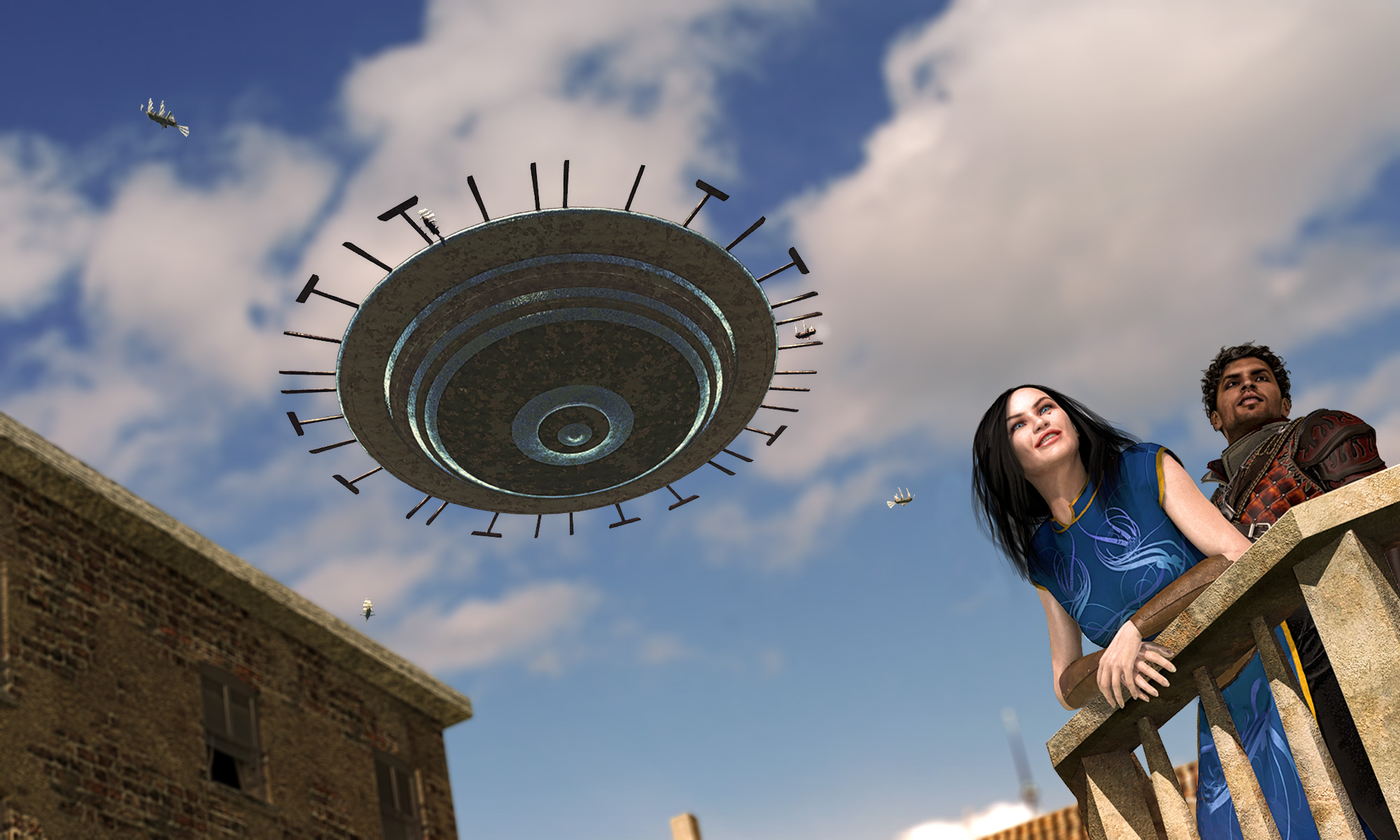
I have been gallivanting around Iceland for the past week or so and being surrounded by reminders of elves, known locally as the hidden people, trolls and giants is quite good for gaming inspiration.
Ironically possibly the best bit of inspiration that came to me was nothing to do with the fantasy rich local culture but from my mobile phone.
We all recognise that magic items are not just about +15 weapons, daily spell items and multipliers. It is the more colourful items that can give a campaign its flavour.
I installed a Aurora Borealis forecasting app on my phone as soon as I arrived and it was pretty good and we did indeed see the lights display when forecast. When you see the northern lights it begs the question of what on earth must the first people to see it have thought. No wonder so many cultures have myths and legends of magic. Without our scientific understanding of ionisation and solar winds magic would probably be the next most logical rationalisation.
So if these displays of lights are created by magic then surely you could either tap into that source of essence or read from them some heavenly enlightenment or foreknowledge. Knowing when they were going to appear and where would be really useful and I am sure many a seer or astrologer would want a magical device that could predict the northern lights. A sort of ‘orb of the heavens’ sort of thing.
So this set off a train of thought. In our culture ‘there’s an app for that’ is a bit of a joke but what if for every app there was a magical item?
Looking in the itunes store at the most popular apps I see that a QR reader is one of the most popular apps. I can easily see that materialising as a crystal of attunement (runes).
Spirit level apps seem popular and in magical terms imagine an item that combined the low level spells of mannish scale and the lay healer diagnosis spells that could tell you so much about the target. What form it would take is open to interpretation. I am personally envisioning a set of lenses and crystals through which the user peers.
There are countless musical instrument tuning apps and they would make great magical items that any bard would love.
Voice changer apps can be reimagined as Sound Mirage based items.
The more I look at the range of apps available the more I possibilities I can see and for the most part based upon first through third level spells. Not that everything has to be tied directly to a spell in spell law but items that are simply useful whilst not being exceptionally powerful are easier for the alchemists of the world to create and are more likely to be created if they do not cost the earth or take forever.
I think the take away from this is that if you are looking for ideas to perk up a treasure horde or to make an NPC a bit more interesting then you can get some interesting ideas from either itunes or Googles app store.
Retrospective: the genesis of the Rolemasterblog.com.
So, this is my 3rd blog of the day! Since I have some renovations this weekend and I’m feeling like writing, I thought I would post up a few posts now and not worry if I can’t post this weekend!
This one is short, but worth the review. A few years ago, a discussion was stared on the RM Forums about blogging–specifically about Rolemaster. I happened to read it again and found it interesting to see Peter’s first thoughts and ideas, and now, a few years later how the actual RM Blog has developed in terms of those early thoughts and actual performance.
Read that original blog linked above and share your thoughts. Inez…where did you go? I’m going to blog about your blog in the next few days or weeks. Come to the light and blog here occasionally! Peter, what are your thoughts, reflections or feedback on your blog?
Rolemaster Combat Maneuvers: Fighting Naked.
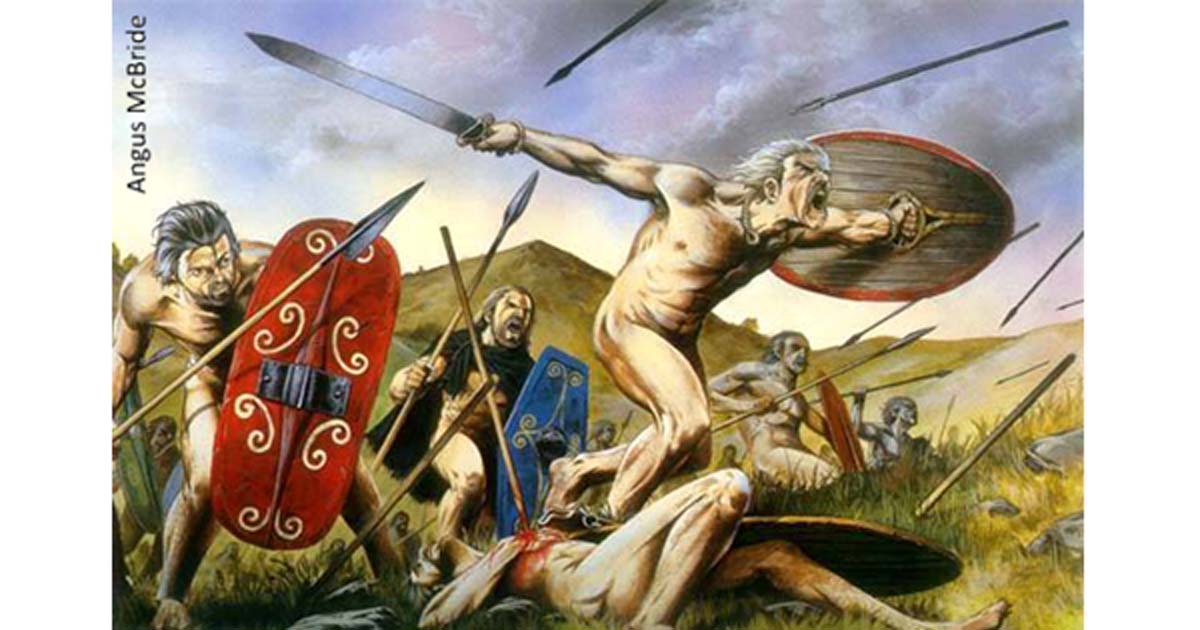
So RM & RMU has introduced a variety of combat maneuvers and combat penalties: blind fighting, close quarters, protect, mounted combat etc. How about a new one: Naked Fighting.
Sure you might not have the advantage of armor, but you would, or could, have the advantage of “shock & awe”. Maybe an extra “stress” or “depression” critical is dealt when the naked fighter crits?
How about a whole cadre or group of warriors that went into battle naked?
So, I did have one naked NPC attack the group once years ago. But I like the theatrics of a group of naked beserkers rushing the group. Thoughts?
btw: look who did that picture!!!
Shadow World Spin Cycle: Court of Ardor pt. 3
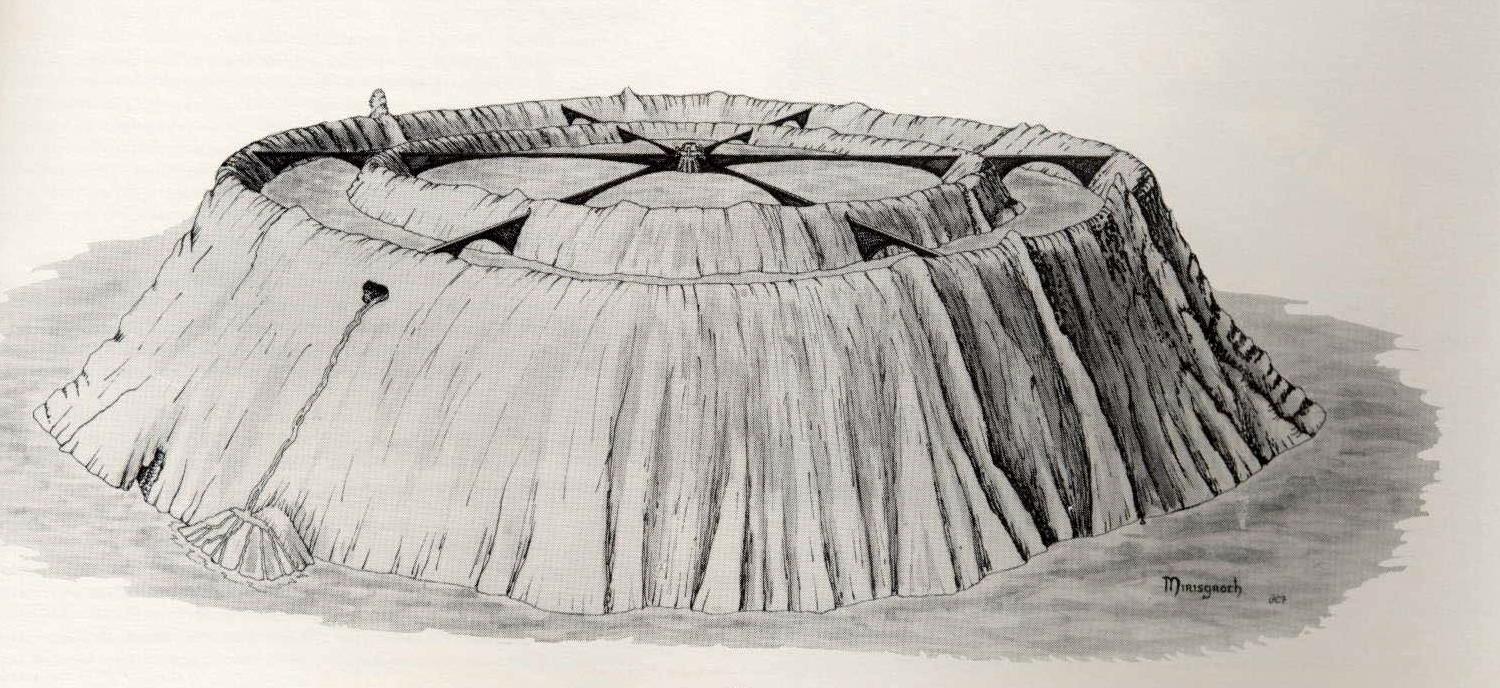
I started SW Spin Cycle almost a year ago and wanted to get back to it again. Today I want to discuss one of the cooler and larger fortresses found in the Court of Ardor: Mirisgroth. I remember when I first saw the drawing, the size and scope of the MERP/ICE products really struck home. This was something more than simple dungeon layouts on graph paper…it felt MONUMENTAL. Not only is Mirisgroth just cool (supposedly Fenlon used a similar fortress in one of his projects later?) but it can substitute for one of the Secrets of the Jerak Ahrenrath: the Ahrenraax in Thuul. I’ll admit that it might not be as good a match as some of the other Ardor fortresses to Shadow World, but to me it just feels right.
Here are the descriptions:
Mirisgroth from Court of Ardor:
Mirisgroth (S: “Mine of Jewels”)
A vast mining complex, Mirisgroth is basically a natural formation , a volcano which collapsed in upon itself not once. but twice in the distant past. Now dormant. it is two concentric rings of steep, jagged volcanic stone in the center of which, built upon a rocky spur, is a small hexagonal hold. Radiating out from the castle are six iron bridges which connect to the inner ring, and resume to join the inner ring to the outer. The rings of slag proper are laced with interconnecting tunnels and chambers, and deep mine shafts. For details of this area, see the plan diagram. The outer circle holds a garrison Of 1000 Orc miner/guards. In the inner circle resides a mixed population of 500 Human and Dwarven miner/guards. The entire facility is administered and supervised by Cambragol, ‘The Monk”, or Persuvious in his absence.
Ahrenraax from Powers of Light & Darkness:
The citadel of Ahrenraax (Ir.: “Secret Claw”) was located in the cool waters southwest of Emer. Stewardship of this volcanic island fortress was given to the Lord Ordainer Morloch (once known as Shúraax the Fire Claw, bodyguard of Kadæna).
In but a few decades Morloch had built Ahrenraax into an unsubtle palace of crude splendor. He marshaled forces and subjugated the northeast regions of Thuul by TEI 1204.
I think very little needs to be changed to utilize this fortress in your Shadow World campaign—assuming your players would even want to mess with the Secret Circle! I’ve utilized Morloch in my “Priest-King” module so I had some interest in fleshing this out on the off-chance my players actually wanted to infiltrate the fortress. A few items to consider:
- Althan Teleport System. Some of the Secrets built on Althan installations were connected via a Portal system (Bakuul Portals) that might be a convenient way to get the players into the fortress.
- The Fortress is overseen by Morloch—a powerful Ordainer Demon who was once bodyguard to Kaedena! As powerful as he is, he might also be a better arch-villian for the group than one of the members of the Circle. Morloch’s power is greatly reduced as his empire around Thuul has been absorbed by the encroaching Alliance.
- Crystal Shard. Each Secret has a splinter of the Crystal. Looking at the layout, this could be placed in # 36 in Court of Ardor:
Shrine. There is a 8′ long slab of granite set on a pedestal on a small altar at the far end of the room,. flanked by ever-burning fire-pits. The granite slab has a shallow trough running along the perimeter, and a slot at the foot of it for runoff to flow into a golden cup which sits just below. There are many dark stains on the slab. There are also four iron manacles, set into stone to hold wrists and ankles, On a narrow pedestal to one side lies a long dagger made of red laen. It, too, has stains on it . although laen does not usually stain. This is Cambragol’s altar to Morgoth, and he comes here secretly at times, bearing a sacrifice: usually a young Elven man or woman. Here he enacts a grisly ritual, and as a result is able to commune as a Cleric for the night. He can do this but once per month.
That sounds like it would work!
- This is a large fortress with a huge population of Lugroki (outer ring) and Thesian soldiers (inner ring). Like any large facility, it requires a constant stream of supplies and its mining operations continually export mined valuables. There are a lot of moving parts that should make it easy for the PC’s to gain access (if they disguise themselves) to the fortress proper but exceedingly more difficult to enter the inner parts. (I think of these fortresses as a James Bond villain fortress)
Overall, I think Mirisgroth works well here and with other Secrets described in Emer Boxed Set and Emer III, that makes at least 4 Secrets that players can explore!
Random Reading: Red Sister
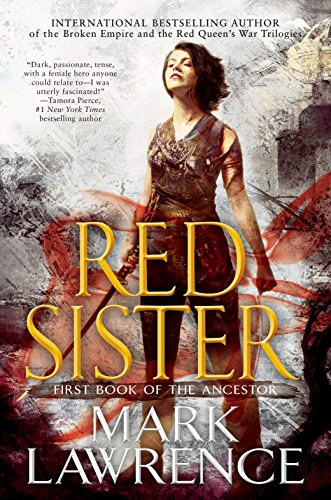
This is not a book review…I recently started reading a great book, Red Sister by Mark Lawrence. Mark is the author of 2 other series: The Broken Empire and the Red Queens War. Like his other series, Red Sister takes place in a fantasy world with a lost high tech heritage—a bit like Shadow World!
When I’m reading a new fantasy series with a magic system I try to figure out if the portrayed system can be based on Spell Law/Rolemaster or if there are any cool spell ideas I can incorporate into Project BASiL. Having read quite a bit, I can say that many of favorite spells and lists were inspired by fantasy fiction.
Red Sister offers up several ideas that feed into recent discussion and posts here on Rolemasterblog. First is the idea that setting drives the rules and second, that Channeling could be rolled into Esssence (or eliminate realms entirely).
Of particular note in the book (no spoilers)
Races. The population was descended from 4 races. One that had great size and strength; one that had incredible speed, one that could tap into lesser magics and one that could tap greater magics. While this is a common trope, sometimes I do miss more differentiation between the races in RM and SW. Barring some stat bonuses (whose impact are minimized at higher levels) most races are defined by physical characterization than special abilities or extremes of nature.
Religion. The story focuses on a convent, one that trains young women in the esoteric arts. Holy Sisters, the most common are focused on maintaining the faith. Grey Sisters focus on stealth and poisons and have a talent for “Shadow Work” (mentalism?). Mystic Sisters manipulate threads (magic) and Red Sisters excel on armed and unarmed combat (warrior monks). What I like, and what’s been discussed here on this blog, is the idea of “agnostic magic”—magic defined by aspect, focus or effect rather than Essence, Mentalism and Channeling. Religions and churches train in magic and have access to this special knowledge, but magic use isn’t tied to or dependent on a diety.
So far it’s been a good read. If you like “Monk” stories I would also recommend Witches Blood.
Any books you’ve read that could fit the Rolemaster/Spell Law system?