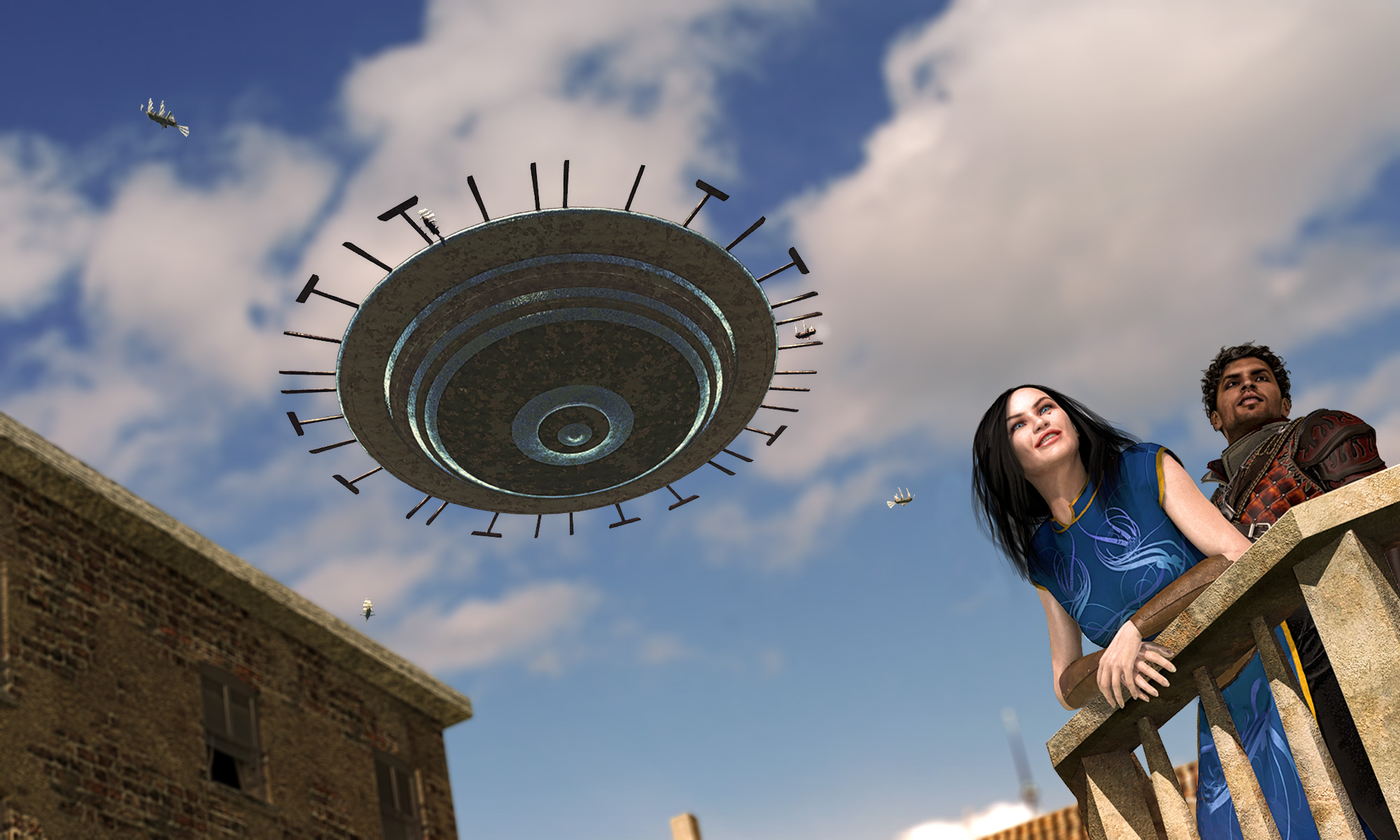
First chapter of our 50th level Rolemaster adventure series that takes place in Shadow World. This is updated v3.1 with more material, edits, pre-gen characters, NPC and creature stats.
RMU and Kickstarter

I’ve mentioned Kickstarter, and Patreon, a few times in the past. For those who aren’t that familiar with them, what both of those, and others like Indiegogo, do is reduce the risk for making products. Essentially, you are getting a guaranteed income rather than a potential one. The guaranteed income may be lower – but if a product doesn’t work out it will actually be higher. So, lower risk.
Now, I don’t actually think that it would be a good idea running a Kickstarter to complete RMU. The process is simply taking too long, and depends too much on freelancers with variable time, that running a Kickstarter would have a very high risk of simply annoying the backers due to how long it takes. There’s a great article on running regular Kickstarters by a very successful one man band in The Sandbox #1.
OneBookShelf and Print on Demand
What I do think Kickstarter could help with is getting RMU out there. Sure, OneBookShelf is a great network for electronic and print on demand books, but it doesn’t really work for getting the books in bricks and mortar shops. OBS does offer a discount for bulk purchases, up to 20% for 250+, but that’s a lot of books, a lot of investment and the margins aren’t really that great. 50-99 books only gives a 5% discount and 100-249 10%. The smaller amounts will work for conventions and similar, but not really for distributing to shops.
Making Money
In such a case you need a margin that’s high enough that both retailer and publisher makes money. Supposedly TSR was losing money on its boxes in the 90s; no matter what you think, if every product loses you money, you cannot make it back on volume. All that does is simply cost more money.
To really get into bricks and mortar means dealing with traditional printing and distributors, and that has problems itself – especially as, for books, the U.S. has an appalling concept whereby retailers can get back everything they paid for books even though they haven’t returned the product but destroyed it. I can’t think of anywhere else where you would be given a full refund for a product you’d chucked away. RPGs might not be classed as books, but as games, but it’s still a potential problem. Again, with TSR and, I think, the old ICE, both wound up with problems due to traditional distribution.
 How Kickstarter Could Help

So, you want to get into bricks and mortar shops but you can’t afford the risk – which could easily destroy the company – of paying for up front printing and distribution of books, which may never make the money back. That’s where I think that Kickstarter could help. If a successful campaign was run that could pay for this, the risk would be greatly reduced. It would also be possible to reduce the risk for retailers, by offering books on sale or return – they may well not want to risk money on inventory that they have no definite interest in.
Setting up such a campaign would need some careful planning to make sure the numbers work, and might not get a huge amount of support to begin with, but, if done successfully, it could get RMU out there in front of a wider audience – and, by having physical books for sale in shops, make the system look like it’s here to stay.
How many Spells is enough?
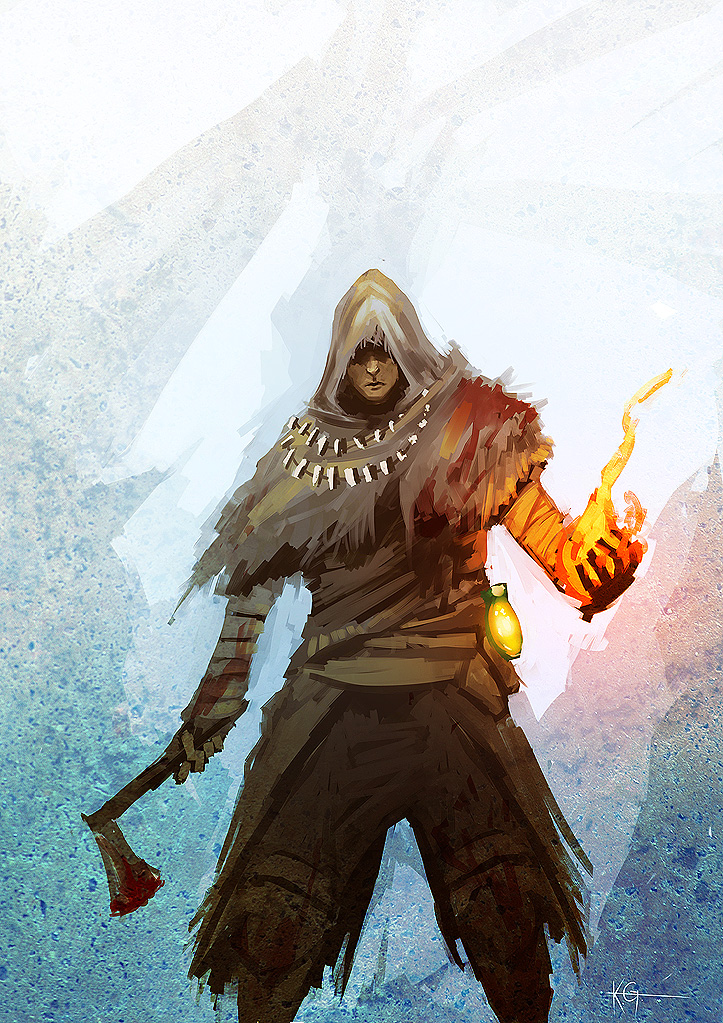
BriH touched on this with his high level adventures but a very high level spell caster is highly likely to have every open and closed list and every base list to the max. Obviously the rules in play can affect that. I am playing my lay healer in a game where almost everyone in the world has at least some kind of magic and every family has a spell caster.
In that game 10 ranks in learning a spell list is enough for automatic success and you can learn lists in parallel. You can learn one list for every powerpoint/level you gain. The GM also allows you to add your stat bonus to the spell gain roll if the chance is not automatic.
To put that in perspective due to background options I have 4 power points per level and a total stat bonus in PR of +50. At 1st level I had 7 spell lists and I am learning 4 more for next level.
If that sets the tone for the character going forward then by the time I am 6th level I could have every open, closed and base lists to 10th level. By the time I am 12th level I will have all lists to 20th. By 21st level I would have my 10 base lists to 50th level.
My character is exceptional. I pushed my PR to 100 with a background option and then rolled the skill at magic and got a further +25 bonus. Even without those extreme odds any pure caster should have nearly all the lists to 10th level long before they get to that level themselves.
In the game I run I am stricter on spell list acquisitions. You get +5 per rank and there are no bonuses to the roll. That is the RAW with no options in play. The intention was that a 10th level caster should have in the region of 8 lists. I wanted magicians to have fire law OR light law OR wind law not everything right across the board.
The problem with too many lists is that it gives you too many spells. Just from a playing perspective if you have 400 spells to choose from and many of them are stackable to create new effects then very few players or GMs will know all the options. I have always loved low level spells. Many of them have the effect based upon RR failure, like sudden light. So even though it may be a low level spell it can be devastating in the hands of a higher level caster.
Another objective of limiting the number of lists being learned is that a party with two magicians now do not necessarily have two of everything. The casters have very different lists and what lists you buy is an important strategic choice.
In my game it also promotes spell research as adding spells to your existing lists does not cost DPs in the RAW game.
I am finally zeroing in on the house rules I would like to fomalise for an alternative for Spell Law. I have touched on this many times in the past.
I am most definitely getting rid of all three realms. There is now simply just ‘magic’.
My lists are no longer linear progressions. Lists are now more like three dimensional cubes. In one dimension they still go from 1st to 50th. But I am bringing in HARP scalability so each spell can have a depth. I also allow multiple spells at the same level so lists can have a thickness to them.
A first level character starts with a couple of sentences to describe the list of their own devising.
The next step is that the player chooses a first level spell from a pool of all the first level spell to fill the first slot. Every slot may hold a spell of that level or lower. So in theory if there were two first level spells you wanted but no second level spell then you can take one as your first level spell and one as your second. Spells do not have names anymore, just effects. When the player adds a spell to their list they create a name for that spell. The names and the spells must fit the description at the top of the list. The GM can veto any spell on any list.
The point is to avoid a single list with fly, invisibility, fireball, lightning bolt and regenerate on it. Essentially characters could recreate fire law as a list or lofty bridge but slot in a few of the other related spells such as Sunfires into Fire Law or some of the channeling movement spells. More interesting though is mixing some of the barrier law spells with the other ‘wall’ spells from base lists all over Spell Law.
All the lists created by a single character should have a single theme of concept to them. So if you are “Pyromancer” then any fly spell would have you carried on fiery wings, teleport would have you leave in a column of flame and so on.
So far this is all untested at the game table. I hope I have given enough detail of how this would work.
My question is… If you really could pick all the spells on every list, now many lists do you think you would want as a spell caster?
P.S. My warhorse and I are travelling today and competing all weekend so you may have to wait for replies to comments as I could be a bit busy.
…and another Happy Halloween!
Brian got in there first with his Happy Halloween From BriH post. He signs off by saying that “I know all of us at Rolemasterblog have a lot of work in store for the coming year.” This was timely as on Saturday we released our first mini supplement. I say mini as it is a single page adventure hook. This one was written by BriH and edited by Edgcltd, published by Azukail Games and sold on RPGnow. Now it only costs 50¢ but that is not the point.
Spires Reach is the first of 50. All 50 are already written and cued up. If we were allowed to give you NPCs in all their detail, Monster stats for the encounters and so on then these would not be just a couple of pages of adventure hooks, or locations or outlines of adventures. These would be much more substantial adventures.
You may ask who is going to pay even 50¢ for an adventure hook like Spires Reach? I don’t know the answer to that but they are selling as I can see the royalty reports.
I spent yesterday evening writing the next edition of the fanzine which looks like it is going to be the biggest issue yet. I am full steam ahead on converting monsters. These free to use monsters will mean that anyone can start to create adventure modules for any version of RM.
I am convinced that if there were a 3rd party industry for producing adventures and supplements for Rolemaster then the system would be more attractive to the gaming community. Right now RM is just a game people used to play in 80s. If anything Rolemaster is a bit like Latin, yes, sure a small number of people can still speak it but to most they think of it as a dead language. Rolemaster is not dead but it is going take a small band of plucky adventurers to take on the quest to save Rolemaster, especially if RMU is not going to be on the shelves until the 2020s!
If the RPG year starts now then the next year is going to be really exciting.
The Ecology of the Vampire Bunny

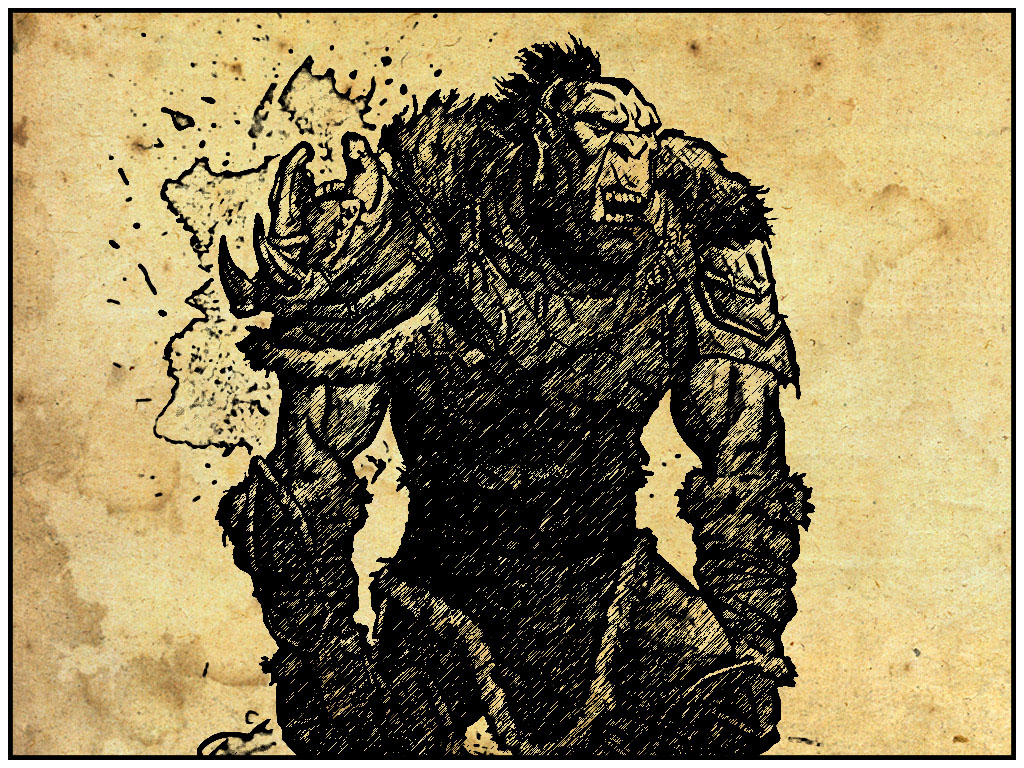
 The vampire bunny is a monster that appears in the Rolemaster Creatures & Treasures supplement, which is available as a PDF and print on demand book from RPGNow in the updated version, Rolemaster Classic: Creatures & Treasures, or as the original print edition from Amazon. This creature is not described in the Vampires section of the original book, and only its stats are listed.
Here is an ecology article on the vampire bunny, presented in the manner of the original ones found in older issues of Dragon Magazine.
The Vampire Bunny
The following is from a lecture given by the visiting Laan lecturer, the noted Blais Rongen, at the University of Kalingen in Sel-kai, in the year 6021 TEI.
“To this day it is not known for certain how the creature given the incongruously cute name ‘vampire bunny’ came about. Whether this creation was an accident or deliberate, or a combination of both is still open for debate, and there are different theories that have been put forward.
“One theory is that a vampire may have fed on a rabbit, for whatever reason – rabbits are not a vampire’s normal prey, so perhaps the creature was starving or otherwise desperate, or maybe it was just experimenting with new types of food, as a human or other intelligent being would.
“It is proposed that, for some reason, this feeding caused an unusual reaction in the rabbit – perhaps the vampiric disease combined with another disease which the rabbit was suffering from – and resulted in the first vampire bunny being created.
“Another theory is that the vampire bunny was a deliberate creation, whether this was done by a vampire or by a necromancer, or one who was both, who deliberately experimented on rabbits to create one that was vampiric in nature, using vampiric blood, magic, feeding or a combination to create a new type of vampire.
“Whatever the original origin, the vampiric strain has since been spread amongst the rabbit population at large, as the vampire bunny is capable of spreading vampirism.
“Rabbits are normally social animals that can be found in large groups. The vampire bunny is, by comparison, a solitary creature, although it will normally be found at least reasonably close to a rabbit warren, for the rabbit is the vampiric type’s normal prey. Two vampire bunnies in the same hunting region will attack each other, until one is either driven off or killed.
“The vampire bunny suffers the usual weaknesses of other vampires, and avoids sunlight and running water, resting underground during daylight hours. The vampiric rabbit also has many of the advantages of a normal vampire, too, which is what makes it dangerous. To harm a vampire bunny requires weapons that are silver, magical or wooden, such as the archetypal stake. They are also vulnerable to water and electrical spells.
“Just as there are different breeds of rabbits, there are different breeds of vampire bunnies. This difference would appear to be purely cosmetic, reflecting the appearance the rabbit had in life, as the vampires are willing to feed on, and able to convert, other breeds of rabbits, there are no reports of creatures other than rabbits being turned into vampires by the bit of a vampire bunny, nor do they seem to feed on other creatures, instead simply killing them.
“The differences between a vampire bunny and a normal rabbit are quite subtle and not immediately obvious. The rabbit’s incisors, which are already quite long, become much more pointed with the transformation. The hair colour of the rabbit also seems to alter, becoming paler. Some witnesses have claimed that a vampire bunny’s eyes “glow” in the dark, but this may simply be the normal reflection seen in an animal’s eyes when a light is hone in them which has been misinterpreted by the witnesses. Rabbits are normally active at dawn and dusk; the vampire bunny is completely nocturnal. The primary difference is, of course, that the rabbit no longer feeds on vegetation, but on living beings.
“The vampiric rabbit is more intelligent, or at least more cunning, than a normal rabbit, but it cannot change shape or transform into a cloud of mist, nor can it cast spells. One suggestion posits that the reason a vampire bunny lacks these normal vampiric abilities is that their intelligence is not raised enough to be able to use further abilities, and there is a theory that, if imbued with human intelligence, a vampire bunny would gain these abilities. Fortunately, no one has been foolish enough to attempt this as yet.
“The vampire bunny is a lot more dangerous than it sounds from its almost-cute name. Predators who normally feed on rabbits have had a nasty surprise when they tried to feed on the vampire bunny, and they are dangerous to larger creatures too, especially as the typical predator lacks the means to actually damage the rabbit. Warrens of rabbits that have a vampire bunny residing near and feeding off them tend to be larger than normal, as the vampire will not tolerate other predators hunting its food source, and will kill them when they are discovered, luring the predator in by pretending to be a normal rabbit, and then attacking.
“The vampire bunny is much faster than a normal rabbit, making it easily able to hunt them. It employs its bite as its primary attack, but it will also butt other creatures, especially those larger than it, often doing so in an attempt to knock them off their feet and thereby make them much more vulnerable to a bite attack. This butt has been known to knock full-grown men off their feet, in no small part due to the surprise incurred by being attacked by a rabbit.
“The vampire bunny does not generally seek out people to kill, unlike its larger kin, because it feeds off its own kind. However, any that blunder into its hunting range are in definite danger, a danger that is increased by it coming from what initially appears to be a small, defenceless prey animal. In conclusion, the vampire bunny’s lethality should not be underestimated; this creature is hard to kill, and impossible to harm for those lacking suitable equipment.”
Thought Experiment Update
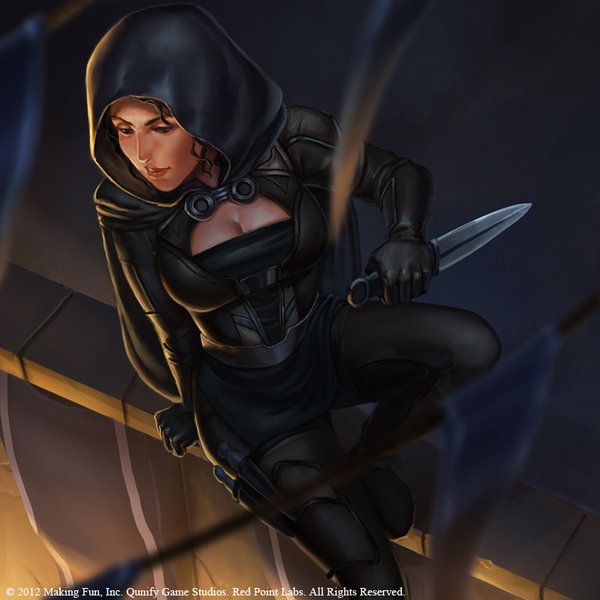
I huge thank you to everyone that sent me character sheets!
The brief was intentionally vague to give everyone creative freedom. Most people produced a non spell using rogue or thief which is what I has sort of expected. My Xan is exactly in that vein.
Things that really stood out were that I got three RMU characters. Seeing as RMU is still in play test and the experiment was for people who had house ruled character creation I had only expected one RMU character and that was Hurin’s who uses individual skill costs.
An interesting aside here but RMU is not yet published and the developers are pretty determined to stick with category skill costs. On the other hand there is already one ‘officially sanctioned’ optional rule in the form of Hurin’s individual skill costs published in the Guild Companion completely undoing the developers work. Only in Rolemaster eh?
The fact that RMU character creation is being house ruled while still in play test make one wonder about what is being tested? My personal intermittent play test is still RAW but with JDales new tables applied.
Back to Xan
I have distilled the character down to just a few really basic numbers. If you were reading a module or adventure and she was an incidental NPC then you may just get a one liner.
The ‘average’ Xan taking every sheet I received looked something like this.
#Hits 64, OB (shortsword) +59, DB +14, Perception +28
She typically has 18 additional skill including primary and secondary skills.
If you compare that to the off the peg NPCs in Character Law (RMC version) you get
#Hits 20, OB (shortsword) +30, DB +0, Perception +15.
The house ruled characters are far more functional than the off the peg NPC. In addition nearly every Xan has a secondary attack and either multiple attack or two weapon combo and many have given her a thrown dagger as well.
Interestingly, one came back with a single spell list.
I do want to look at the characters in more detail later but I thought I should really do something immediately as you all took the time to send them to me.
So the immediate take away is that all these Xans are more functional than RAW characters. I make my starting characters more functional as it is more fun to be capable than not. There is more fun in being able to survive more than one hit with a sword, all baring the critical, than not. These heroes are more heroic than RAW player characters.
The impression I have got so far is that house rules in general are making RM more survivable for starting characters than the rules a written.
More to follow…
Why kill a PC out right?
What advantage does killing a PC actually bring to a game?
Does it add to the drama? Probably not. Does it add to the story? Again, probably not.
Imagine that a PC party is fighting a gang of orcs and the main fighter is knocked out cold and the fight goes badly. In the end the magician grabs the cleric and using long door they escape.
So what happen next?
The GM has two options. The fighter is dead and the game session pretty much ends for that player has they have to create a new character*. The rest of the party head back to town and try and recruit a new muscle man for the adventure to continue. The other option is that the character is a captive of the orcs and the remaining PCs now need to mount a rescue. The fighter is master of his own destiny to some extent and can try and engineer their own escape.
I am not suggesting for a minute that the PCs should never die. Without that threat it robs the game of some of the sense of danger. A one hit death on the other hand adds nothing. An unconscious character is maybe capable of being revived if the party have the right healing. An unconscious character is still an active part of the story. Even if they cannot talk then are a burden that needs to be carried, slowing the party and changing their tactical choices.
Sure, the orcs can kill the character, maybe even eat them, but does a random roll of 66 on the critical table need to be so fatal?
There will be times when the characters death is inevitable or even desirable and a heroic death can top off a campaign perfectly.
This is an off the peg critical:
Neck strike shatters bone and severs an artery. Foe cannot breath and is inactive for 12 rnds. The poor fool then expires.
What are the chances that the foe will live for 12 rounds? I am guessing that if it is an orc then the PCs will finish it off just to make sure of the exp. If it is a PC that has taken the critical then either some kind of Fate point will be spent which reduces the fatal result to unconscious or causes a complete re-roll or the party healer averts the death or the GM fudges the result to keep the PC alive or the PC dies.
The Fate point option just reinforces what I am thinking, that the death doesn’t add anything to the game so additional optional rules are required to fix the broken rule.
The Healer healing the wound is the perfect outcome, even more so if the healer is another PC and not a rent a medic NPC. The rent a medic is really just a walking, talking GM fudge.
If the GM fudges the result then it is just pointing to the death being ‘not fun’ and so why is it in a game?
If the critical read Neck strike shatters bone and severs an artery. Foe cannot breath and is inactive for 12 rnds the passes out. The victim will die eventually unless help arrives.
The effect during the combat is identical but the death is no longer certain. It is down to the narrator to decide what is best for the heroes story.
What I think I would love to see is a critical that reads:
Crush foe’s skull. +30 hits. Opponent dies immediately or if they are a PC then they are unconscious. Add +20 to your next swing. You have a half rnd left to act.
Yes, an entire two-tier system with the odds inevitably stacked in the heroes’ favour. Surely, we are sat around the table to tell the heroes’ story and have fun doing it?
*not all new characters are 1st level so creating an 8th level character, for example, can take a damn sight longer than just a 1st level one to re-join the party with.
Thought Experiment part one of two

I would like to do an experiment.
What I would like is for everyone who has house ruled character creation to look at the pen portrait of an NPC, or PC, below and create the character using your own house rules.
What I would like is a starting character, not necessarily 1st level as I know full well that an RMU level 1 is a whole different thing to a RM2 or RMSS level 1.
Once you have created the character could you email a PDF of the character sheet to weareallawesome AT rolemasterblog DOT com.
If the character has spell lists please only give the name of the list, no actual spells. This is just because of ICE’s IP rights.
I will not use your email address for anything. I only want you to email the pdfs so I do not have to open the server up to anonymous uploads, god knows that we would get if all the spam bots thought they could upload files to our site!
If you don’t mind I would also like your permission to share these characters. I will not need your name, and I wouldn’t publish your name if you give it to me.
I don’t need to know what your house rules were, unless you are really proud of them and want to share them!
So here is the pen portrait.
Xan
Xan was born on the streets down in dockside. She never knew either parent but her reflection tells her that there is some oriental blood in her. The first few years of her life she was someones prop to get a few more coppers when begging. Once she was too big to be cute she was left to fend for herself amongst the street kids. By the time she was twelve she was leading the guard a merry dance and was more than capable of looking after herself through petty crime, stealing food when she was penniless, which was more often than not.
Where she learned to fight or got her swords is not known but now she commands her fair share of respect on the streets. If anyone makes the mistake of treating her as a street walker it is not a mistake they will make twice. She is fast and uses a pair of slim short swords, almost as oriental looking as her own eyes. More than one inebriated sailor has felt one of those pressed against his neck and the other pressed against his groin for making the wrong kind of suggestion! These days she does not beg but earns a passable living as an enforcer for anyone with coin and a need to get a message across.
The second half of this experiment I will post on Friday. I hope you can find the time to create an NPC between now and then!
Your help will be greatly appreciated!
‘Well sir, if I were you, I wouldn’t start from here’

This is my reply to Brian’s http://www.rolemasterblog.com/rmu-mission-accomplished/
Well here is a real bunch of thoughts for you…
Firstly, I don’t think the RMU devs have any intention of attracting new players. Through their inaction they have proved their intention. If they had reached out to any one of the other games systems communities and looked for play testers they would have got fresh eyes on the rules. They would have found out if the rules as written are enough to engage those new to RM. They would have started the discussion about the new version of RM with the wider gaming community. They would have raised ICE’s profile all over the world and the on going conversation would have drawn in more people.
They didn’t do that.
There was never any hope that RMU would really unite the RM2 cohort and the RMSS cohort. There are things in each version that do not appeal. None of us ‘need’ RMU as we all have bought and paid for games that fit us like a glove. We have nations of NPCs that would all need recreating and ploughing thousands of hours of work just to get back to where we are now. On top of that there are bound to be parts of RMU you don’t like compared to the version you play now. I don’t like the size rules but the experimental tables on the forum get rid of most of the problems, the complete rewrite of creature law to get rid of normalised stats get rid of more. I have never liked talents and flaws and that is for the most part the last bastion of the size rules. That is just my perspective. Hurin, not to put words in his mouth, will not be using the skill category system. He wants individual skill costs and the RM2 professions. I like his 5AP variant of the combat round as well.
The point is that the existing community are so used to house ruling and the modular design strength of RM that none of us are going to play RMU, we are going to play a personalised variation of the rules. As you say above, you have already decided what will make it into your game and what won’t.
RMU has been designed for people who want a new RM but they want it to be just like the old one but better. The problem is that those people already have a game that is just like the published RM but better, that is their own house ruled version.
Look at us… Brian has his own character law (SWARM), his own spell law (BASiL) and working on his own arms law (that I think should be called BAAL Brian’s Alternative Arms Law).
Intothatdarkness has the modern weaponry rules and unique variation of character law.
Hurin is the most dedicated to RMU but will also the biggest issues with Character & Arms Law.
Edgltd doesn’t even play RM.
We haven’t seen Warl on the forums for a while but I have played in his game and it is very heavily house ruled when it came to Character creation, combat and magic. What else is there?
RMU cannot and will not meet all these peoples’ needs. It cannot be a unifying force.
So here is a hypothetical question for you.
If you sat down at the gaming table and your character has the right stats in the right range (1-100). They had the right magnitude of stat bonuses the right number of skills and those skill to the right level of competency do the rules that creating the character matter?
We all have our own hybridised versions of Character Law and yet all our characters fight the same monsters in Creatures and Treasures in the same numbers, deliver the same criticals and take the same wounds. Do the character creation rules actually matter?
Brian has SWARM, it sounds like OLF on the forums and I are going down the same road with Spell Law and the open and closed lists. Spectre711 on the forums does not even use spell law, they exclusively use Elemental Companion, then does it matter what the source of the characters spells are (from a rule book perspective) as long as they are all on the same power level regarding ranges, durations and effects?
I am creating a new monster book based upon creating all the D&D 5e SRD monsters into Rolemaster compatible monsters. This will mean that I can produce completely statted out adventures without using any ICE intellectual property. I can also share that document so other adventure writers will be able to do the same. The book will be published under the WotC license as I am using their intellectual property. Edgltd said himself in a comment only this week that RM could go back to its roots and engage with the 5e and Pathfinder community.
Long ago I used to write this blog completely on my own, producing two posts a week, week in week out. In 2015 I produced this post http://www.rolemasterblog.com/roleplaying-games-do-not-exist/ and I still hold to that idea. The problem for RMU and ICE is that if the experienced players do not need Character & Arms Law, Spell Law and Creature Law and none of these have been designed to be attractive to new players nor to draw in players of other same genre games then who is going to buy into RMU?
I think ICE are going to have to do the most outstanding marketing task I have ever encountered and I am a lover of marketing, both in my professional life and privately. I would love to be in charge of marketing RMU. The problem is that I would have wanted to start 5 years go. There’s a well known joke about a tourist in Ireland who asks one of the locals for directions to Dublin. The Irishman replies: ‘Well sir, if I were you, I wouldn’t start from here’.
Things I would have done…
I would have posted invitations to the first beta on every major gaming community. To give you an idea scale I rarely ever see more than 7 names and as many as 15 guests as being active on the ICE forums. Right now there are 3 registered users and 11 guests the best ever was 276 back in 2006. On the first D&D forum I look at there were 191 members and 398 guests right now and the best ever was in March this year 18344. The first War Hammer forum I looked at had 600 users online at that time.
I would have bundled up a play test set into a single zip file and put it on RPG now as a public play test. By letting people download it that way you can automatically send out updated version and you are immediately building a marketing contact list for when you want to sell them the finished rules (at a hefty discount but everyone appreciates a thank you).
I would not have produced multiple hundred page PDFs for each book. Each chapter would be a separate document so they are easy for the tester to read and digest. You can then hold a separate discussion on a chapter by chapter basis with your testers. That sounds like a Dev action but it is actually marketing. The more people you engage with the more good will you will engage.
There should be a playtest adventure and playtest pregen characters as a single download. This will get people actually play testing your game without having to read and understand 1200 pages of text. Play first and look under the hood second. You can commission some great evocative art for that first adventure and the characters to fire the imaginations of these first play testers. Art does not have a short shelf life. You can reuse it in the final paid product so nothing is lost.
That art is the only expense in everything I have just outlined. You can pick up some great art on Deviant for $20 a piece so there is no real need to spend more than $200 in total. I would set myself the aim of getting 300 active play test groups. That then would show up the flaws in the system but also bring in 300 advocates for the new game. That isn’t a limit either 300 would be my failure test. Any less than that and I would have considered my efforts a failure. There is no real maximum limit for the number of testers you could reach. Over time that community is likely to grow as more people discover the game. The more testers you get at the beginning the bigger their online footprint becomes.
With a large testing community the flaws will be found faster, the rules refined faster and the game would have been brought to market faster. I would have expected it to be on the shelves back in 2013. By now we should have SMU and some companions out!
I don’t think that is overly optimistic. I do recognise that this is a rambling mess of a post. I think the nub is that RMU isn’t really for us, it is for the next generation. That is its mission. Whether it is accomplished or not remains to be seen.
Community Created Content
Following on from Brian’s post about the 80/20 rule I have been thinking about Rolemaster’s attitude to community created content.
Right now, community created content is the ‘big thing’ in games publishing. The big names are shown below but OneBookShelf hosts 18 community content schemes.


The way they work is this…
The rights owner, the publisher, makes available some or all of their intellectual property and with it a set of guidelines about what can and cannot be done with it. In return anyone can take that IP and their own ideas and publish their own adventures, addons and supplements. The whole thing is managed through a single portal so the publisher has the final say over what is published and what isn’t and they control the revenue split between themselves and the content creators.
The granddaddy of them all in this is WotC. They have made available the core rules of D&D 5e, a selection of the most common monsters and the Forgotten Realms setting. Furthermore if you create something amazing then there is an option for WotC to adopt it as official and put their resources behind it and your content can end up in the WotC licensed games.
So now WotC have an army of content creators working purely on commission so it costs them nothing. They can cherry pick the best to include in future books and the gaming community gets a regular free flow of new content. On average there are 7 new products released for D&D 5e each day. Many of them are free or Pay What You Want. In the past week 20 of the 49 new releases had prices ranging from $0.50 to $14.95.
For Traveller, the TAS programme, there have been 20 community releases this year so this is not just a WotC and the OGL phenomena.
ICE maintain two avenues for community created content. The forum and the Guild Companion. You can publish your ideas on either but with different restrictions applying to both. On the forum you cannot lists spells, but list names are OK. You cannot quote substantial parts of the rules and the like. What ICE do not want to happen is for people to be able to play RM by collecting the rules piecemeal from posts on the forum.
The Guild Companion on the other hand will allow you to post entire spell lists of your own creation and most recently Nicholas has been posting excerpts of forthcoming books presumably to whet your appetite.
You can publish adventures, new professions, monsters and so on but everything has to go through Peter Mork and his team of editors.
None of these options give the creator an opportunity to get any compensation for their efforts. The Guild Companion has been limping along for a couple of years now with no or just a single community created article per month.
There is a misconception amongst many people that see things like the OGL (open game license) as taking revenue away from publishers. Community Created Content Programmes do not require games to be published under the OGL or anything similar. There is just a simple agreement between the rights holder and the community about what can and cannot be released. The publisher in return is earning probably 30%-40% of the revenue from all the sales for virtually no effort. The community gets a steady stream of new content and as the prices can be so low that they can buy things for less than a Dollar just to use it for ideas.
ICE struggle to put a single new book out each year, mainly because of the bottle neck created by RMU. A new system is a massive undertaking for a small company of part timers. That is one of the reasons why community content should, in my opinion, be embraced. Just how long will it take for Kevin to update all the Shadow World books to RMU? Years? A decade?
I think most of us think that there should be a ‘lite’ or ‘quick start’ edition of RMU to encourage people to give it a try.
I think Shadow World should be made open to a Rolemaster Community Created Content programme along with a core RMU reference. Let the gamers contribute and get something in return.