Relative Adventuring

This is not my idea but one I have borrowed from the Conan game by Modiphius.

Imagine you are reading an adventure module for Rolemaster. The adventure describes an ambush by goblins at a river ford. In the details it says ‘There will be two goblins for every character’. In the next encounter, in an outer chamber of the goblin lair the numbers are ‘There will be three more goblins than characters.’

Every encounter describes the strength of the encounter relative to the strength of the adventuring party.

We all know in RM superior numbers can be the critical factor in a battle. Even a first level character can open ended and kill anything in the first round if they are lucky enough.

My party of 5th level characters got into serious trouble against a raiding party of kobolds. The same raid against D&D characters would have been a non-event.

So the idea is that the level that the adventure is pitched at is highly flexible. If you write an adventure and the main bad guy is a 70th level drake then that is not a starting adventure but more middle of the road stuff just flexes to meet the strength of the party, not by level but by threat.

This has never really been an issue before now, but as the number of monsters available grows and now eDGCLTD is sowing the seeds of self publishing, BriH is asking about short form monster stat blocks all the pieces are coming together for unofficial RM modules.

So what are your thoughts?

Open100 Vampires

I had a need for a vampire for a Rolemaster adventure last week. So rather than going into Creatures and Treasures I went the the D&D 5e monsters.

Today you get to see my free to use Vampire and this one has a few skills(just perception and stalk and hide)

Vampires

Vampires appear just as they did in life, although their features are often hardened and feral, with the predatory look of wolves. Like liches, they often embrace finery and decadence and may assume the guise of nobility. Despite their human appearance, vampires can be easily recognized, for they cast no shadows and throw no reflections in mirrors. Vampires speak any languages they knew in life.

Vampire

Medium undead (shapechanger),
Level 25
Armour Type 1/20 1/10 (+20DB) (natural armor)
#Hits 190
Speed 6’/sec.

ST SP IN EM PR
90 90 85 75 90
+20 +20 +15 +10 +20

Skills General Perception +100, Stalk & Hide +45
Languages the languages it knew in life
Environment: Any
Organization: Solitary or pair
Vampire are undead creatures that come into being when vampires slay mortals. Vampires remain bound to their coffins and to the soil of their graves. Vampire appear much as they did in life, although their features are often hardened, with a predatory look.

Combat

Vampire use their inhuman strength when engaging mortals, hammering their foes with powerful blows and dashing them against rocks or walls. They also use their gaseous form and flight abilities to strike where opponents are most vulnerable. Shapechanger. If the vampire isn’t in sunlight or running water, it can use its action to polymorph into a Tiny bat or a Medium cloud of mist, or back into its true form.

While in bat form, the vampire can’t speak, its walking and flying speeds are the same as a normal bat. Its statistics, other than its size and speed, are unchanged. Anything it is wearing transforms with it, but nothing it is carrying does. It reverts to its true form if it dies.
While in mist form, the vampire can’t take any actions, speak, or manipulate objects. It is weightless, has a flying speed of 20 feet, can hover, and can enter a hostile creature’s space and stop there. In addition, if air can pass through a space, the mist can do so without squeezing, and it can’t pass through water. It gains +25 on all Strength, Constitution and Agility resistance rolls, and it is immune to all non magical damage, except the damage it takes from sunlight.
Legendary Resistance (3/Day). If the vampire fails a resistance roll, it can choose to succeed instead.
Misty Escape. When it drops to 0 hits outside its resting place, the vampire transforms into a cloud of mist (as in the Shapechanger trait) instead of falling unconscious, provided that it isn’t in sunlight or running water. If it can’t transform, it is destroyed. While it has 0 hits in mist form, it can’t revert to its vampire form, and it must reach its resting place within 2 hours or be destroyed. Once in its resting place, it reverts to its vampire form. It is then paralyzed until it regains at least 1 hit. After spending 1 hour in its resting place with 0 hits, it regains 1 hit.
Regeneration. The vampire regains 20 hits at the start of each round if it has at least 1 hit and isn’t in sunlight or running water. If the vampire takes fire or electrical damage or damage from holy
water, this trait doesn’t function at the start of the vampire’s next round.
Spider Climb. The vampire can climb difficult surfaces, including upside down on ceilings, as if it had the Monk spell Ceiling Walking (Monk’s Bridge 20th Level).

Vampire Weaknesses. The vampire has the following flaws:
Forbiddance. The vampire can’t enter a residence without an invitation from one of the occupants.
Harmed by Running Water. The vampire takes an A Fire critical if it ends its round in running water.
Stake to the Heart. If a piercing weapon made of wood is driven into the vampire’s heart while the vampire is incapacitated in its resting place, the vampire is paralyzed until the stake is removed.
Sunlight Hypersensitivity. The vampire takes a A Fire critical when it starts its round in sunlight. While in sunlight, it has -25 on attack rolls and ability checks.

Actions

Multiattack (Vampire Form Only). The vampire makes two attacks, only one of which can be a bite attack.
Unarmed Strike (Vampire Form Only). +155 OB martial arts rank 4 OR a Medium Grapple
Bite (Bat or Vampire Form Only).Tiny Bite (bat form) or Small Bite (vampire form) +136OB, one willing creature, or a creature that is grappled by the vampire, incapacitated, or restrained. Takes an automatic D piece critical (to the neck). The Vampire regains #hits points equal to the total bleeding damage taken by the victim. A humanoid slain in this way and then buried in the ground rises the following night as a vampire spawn under the vampire’s control. Charm. The vampire has Spirit Mastery to its level and 1PP per level plus any additional power points from items carried. This is used to charm and subdue victims.
Children of the Night (1/Day). The vampire knows the Animist base list Animal Mastery to its level but the effects only work on Rats, Bats and Wolves.


A trailer for RMU? Yes please!

Is this the most awesome trailer for a role playing game you have ever seen?

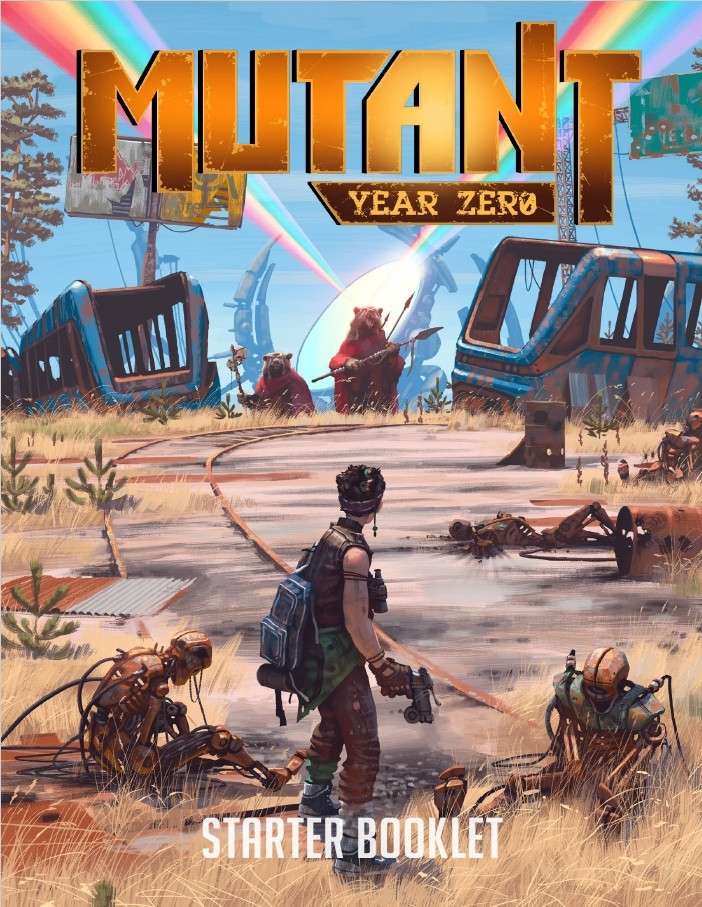
To be honest I had no idea that people even made CGI trailers for rpgs! You can download a free sample of the game giving you character creation and an introduction (41 pages in total) here http://bit.ly/MutantFree.

The publisher must have thought of that too. So not only do they have the 41 page intro book but they also have a 66 page MUTANT: Year Zero – Starter Booklet.

Surely, that creates a funnel to draw people in? Hook them with the movie, give them a range of free material to get them hooked, let them play the game. Only then do they need to actually pay for the game book. At $24.99 it is hardly the most expensive game in the world and you do get a 269 page rule book for your money. So M:YZ is not a light game by any standards.

Since the original release in Oct 2015 there have been 11 releases for M:YZ, so what is that, once every two months? Strip out the freebie intros and you are looking at 1 every 3 months. Oh yeah, there are just two writers and everyone else works freelance.

Here is something else. This is the hook or vignette as BriH blogged about…”She had wandered too far into the Zone. Tula had walked through the dark forest, followed the old rail tracks between crumbling ruins and rusting train wrecks, towards the glimmering silver disks by the horizon. She wanted to reach them so bad.  Become a hero of the Ark. A famous stalker. Now, she would be a dead stalker. If the thirst didn’t kill her, zone ghouls or the rot would. That’s when she saw them. Scattered across the ground like metallic rag dolls. Machine beings. Dead for decades. Tula had heard stories of them. What had happened here? Suddenly she heard a noise. Growls. Voices. Tula drew her scrap pistol and got ready to fight for her life.”

A strong female lead to promote your game? Welcome to the 21st century!

I think ICE etal. could learn a lot from M:YZ. How to entice people into trying the game, about 21st century marketing, about feeding the desires of the fans.

Now for a funny thing. M:YZ was first written in 1984 as a Swedish language game. It was somewhat niche due to the language barrier but it is of the same vintage as RM, has just gone through a reinvention, just like RMU and needs to reach a broader audience, just like RMU.

Are there lessons to be learned?

I personally don’t see the need to put character creation in the free sample or quickstart rules. I fall on the side of give them pregens and get people playing. That is about the only thing I would have done differently.

Finally, this is slightly worrying, the highlighting is mine but look at the feature list.

  • 269 page full colour core RPG rulebook – everything you need!
  • Create a unique mutant player character – including skills, talents, mutations, gear and relationships – in mere minutes.
  • Push your character’s skills to their limits, releasing amazing mutant powers in the process.
  • Fight fast and furious battles, making every bullet count and using a detailed list of gruesome critical injuries.
  • Set your game in one of the Zones provided – The Big Smoke and The Dead Apple – or create your own Zone, based on your home town.
  • Develop the Ark – your settlement in the Zone – by undertaking Projects, building a new society.
  • Explore the Zone using the grid map and the unique sector generation system that populates the Zone with mutants, monsters and phenomena.
  • Experience the five Special Zone Sectors – scenario locations that can be placed in any sector of the Zone.
  • Search for the mysterious Eden bunker in the Path to Eden campaign frame provided, which includes an epic finale.

How Low Can You Go?

I spent the weekend playing a different RPG(!)

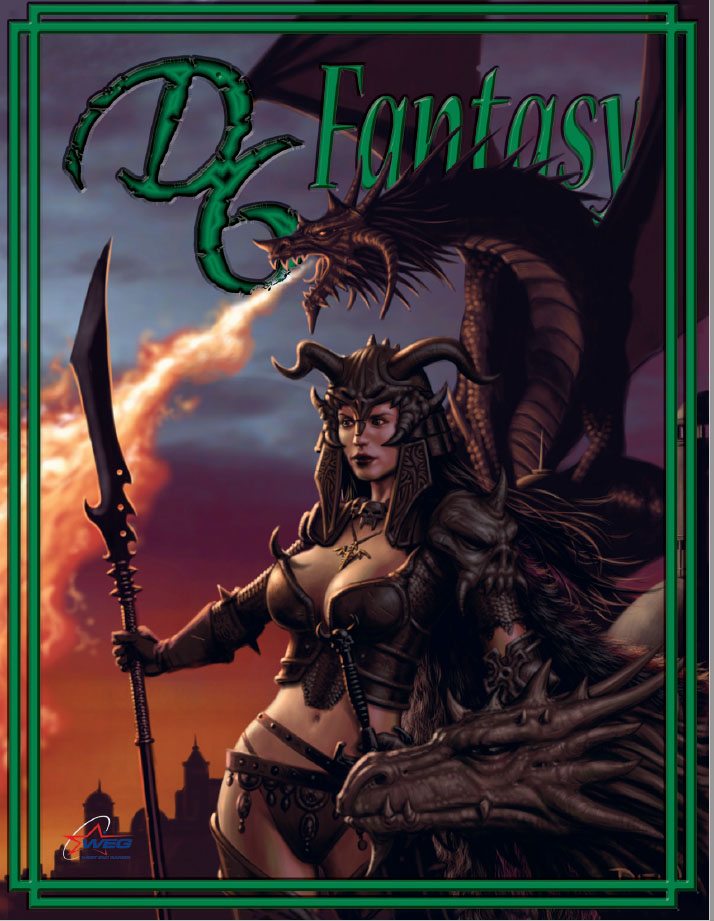
We ran a session of d6 Fantasy from West End Games. It was interesting from the point of view of having never played the game before and ignoring the loads of pregen characters provided and diving straight in to character creation we were still up and playing in less than 30 minutes.

I was expecting a really simplistic game with none of the detail of RM but I was pleasantly surprised.

I was playing a thief, I like thieves as initial characters for a game as they can do more than just a fighter but typically you are handy with a sword as well.

So we had 7 stats to play with, six covering mental and physical attributes and one for magic. To all intents and purposes stats are point buy as you have 18 dice and you assign them to each stat. So I ended up with 4 dice each in the strength and dexterity departments, three dice in the intelligence and acumen and only 1 dice for magic.

There was an option to get more dice to spend on skills by taking disadvantages or to spend some of you skill dice on advantages, think talents and flaws and you would not be far wrong. This time I avoided this as I didn’t really want to pick a disadvantage and find out that what I thought I had and what the GM thought I had were two very different things! For a first character I wanted to keep it simple.

Having assigned those dice we then got seven more dice to assign to specific skills. The game offered about 50 skills. You can add no more than two additional dice to specific skills. I those to add one dice to seven skills.

The mechanics are really simple. Mostly you have to roll 10+ to succeed. You roll the number of dice you have in the governing stat plus any additional skill dice. So for example I had 4 dice in Coordination and 1 dice in lock picking so I would roll 4d6 for each coordination skill test except when lock picking I get to roll 5d6.

One dice in each roll is exploding when you roll a 6, so just like an open ended you keep the 6 and roll again adding to the total. Get another 6 and you add and roll again. Maybe in was my inner rolemaster but getting an open ended roll on average every 6th roll felt like bonanza time!

The adventure was an old school dungeon crawl where we fought Hobgoblins in the upper levels but they had disturbed an undead horror when they had set up their camp.

The whole thing was every enjoyable and I don’t often get to play which also made a pleasant change.

So what about combat? Well we were using the wounds system so basically I could sustain 5 levels of being wounded and the better the damage roll the more wounds you sustained. One wound stunned you, three was a severe wound, five was potentially mortal. The exploding dice thing happens with damage rolls as well as skill rolls so if you were lucky you could one punch a beasty with an open ended damage roll.

The damage was described using location and severity. I killed a hobgoblin and the GM said that I struck the hobgoblin in the chest causing a mortal wound. It was no ’66’ on a critical but it was definitely better than doing 8 hit points damage.

So what did I think?

I like my games simple and fast to play. I liked the speed with which we got down to actual play. There were more skills available in this game than I use in my RM campaign. The way that stats play an important part in the game is something I had independently arrived at for my own game.

The combat was no Rolemaster. It was actually slower to resolve than my house ruled RM. In D6 Fantasy you roll to hit, and you roll damage, the defender gets to roll a physique roll and add their armour dice to that. If you did more damage than their total of physique plus armour then you deliver a wound. The ‘units’ digit of your attack roll gives the location and the GM rolls 2d6 for a graphic damage description such as lacerations, gashes and broken bones. How much you exceed the defenders physique+armour tells you how severe the wound is. Just like Rolemaster wounds confer penalties to skill rolls.

That is much more convoluted than roll your attack, add OB deduct DB, roll your crit.

There are some nice elements. They have something called Character Points, you start with five and you can spend them after you have made a roll to add additional d6 to the roll. If you are dodging and you do a terrible dodge roll you could spend a character point to add an additional d6 to your dodge. You can keep spending them until you have no more points or you are happy with the result. If you rolled that terrible dodge and spend a character point and roll another 1 then you may want to spend a second point to add another d6 and so on.

I don’t use Fate points to let players dodge the bullet, so to speak, but the Rolemaster equivalent I suppose would be to give each character a pool of 5 +20 modifiers. If they make a bad roll then they could spend one of their 5 to boost the rolls.

These character points then form part of the experience system where they can be used as described or spent to improve skills.

The game also has Fate points. These are less dramatic than more Rolemaster implementations. They double the number of dice you get to roll for a skill roll for just that one roll. Character points you can declare after you know your final roll, Fate points must be declared before you roll the dice.

During our game session I did use character points, I assume I was going to earn some in experience, but not my Fate point.

Can Rolemaster Learn from WEG D6?

The number of template or pregen PCs featured in the core rules was a definite plus. I didn’t use one but I did look at one and learn what I should be aiming for.

The other striking thing was that WEG (West End Games) D6 was very much aimed at welcoming new role players. The text said it assumed that everyone knew what an RPG was but that was all that was assumed. This was a stark contrast to RM that likes to think of itself as an ‘advanced’ system. I suppose if you call yourself ‘advanced’ or for ‘experienced’ players then you have an excuse for excessive complexity. If players or GMs don’t like then they can go play something else. I am not sure that is a positive attitude, but it fits with much of the discussion on the boards.

I personally would love it if ICE sat down with some late teen/early 20s, inexperienced role players and hand guided them through RMU and then revised the text accordingly. I am not saying make it childish. What I would like them to do is make it accessible and welcoming to new players. That is the lesson that RM can learn from WEG.

Hot off the Presses!

This is one of those weeks were many things all come together.

Last week we published the first of the 50 in 50 mini supplements. The first was BriH’s Spires Reach. Last Saturday we published Far From the Baying Crowd and tomorrow another mini-supplement goes out. You can keep up to date by following Azukail Games on RPGnow.

Spire’s Reach is an adventure hook based around an enigmatic structure of the same name. This structure is a black box, a puzzle for players to discover and try to solve. The building can be used as an important element in an adventure, but one which players will need to attempt to solve in order to gain entry.


Far From A Baying Crowd is a short, two page adventure idea where the characters are in a village which has had problems with a werewolf. The characters should encounter the werewolf in human form and in a manner which makes the lycanthrope look like the victim, rather than the problem, and certainly much of what they say is actually true, if a bit misleading.

In addition The PDF and Kindle versions of Fanzine #7 went out this week. The print edition will be on Amazon early next week as the print on demand takes a little longer.

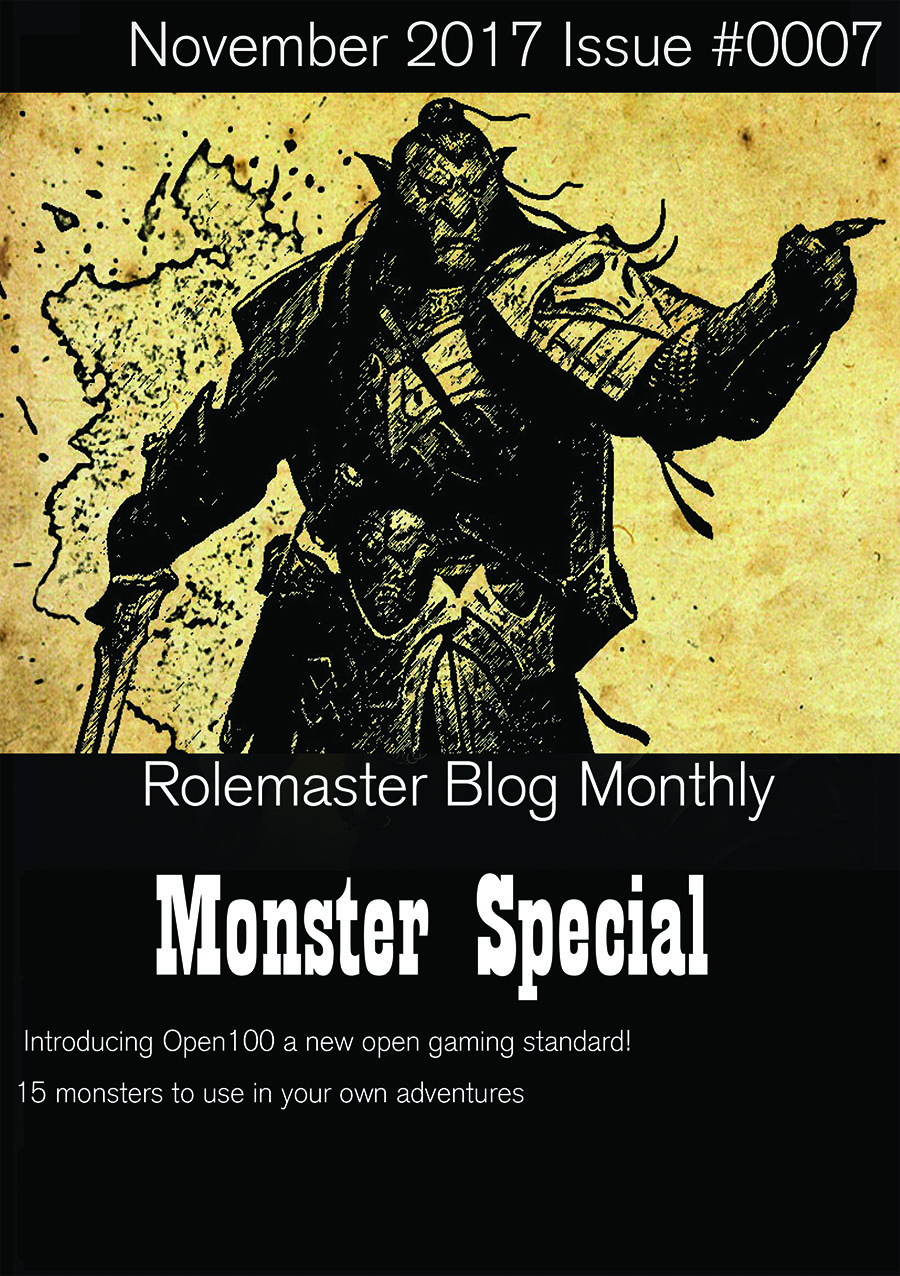
The monsters in this issue are: Bugbear, Ettin, the Giants,
Goblin, Gnoll,  Hobgoblin, Kobold, Ogre, Orc, Owlbear and Troll. Most of them come in variations for higher levels such as sergeants, captains and leaders.

I am thinking of doing the monsters in themetic blocks so there will be a block of undead, demons, dragons and so on. Releasing them piecemeal like this reduces the workload for me and means that you don’t have to wait a year or so for me to get around to do them all.

All the monsters will be listed eventually online in a one page, one monster format so people can freely access them. The plan is to try and get people to use them to produce indie adventure supplements for all flavours of RM!

So for me it is back to the grindstone to get more projects finished off! I will leave you with this 🙂

https://www.facebook.com/bbcgloucestershire/videos/1473269656055977/


Sleeping with the enemy!

This week my challenge is to read up on OpenD6. The reason for this is that they have have a very simple approach to descriptive critical wounds, they have hit locations based upon the attack roll and features like ‘stunned’ and bleeding. At first glance their combat system seems a lot less fluid or more cumbersome than Rolemaster but on the other other hand the rule set is a lot more flexible in that it copes with spells, shotguns and superpowers all in the core rules.

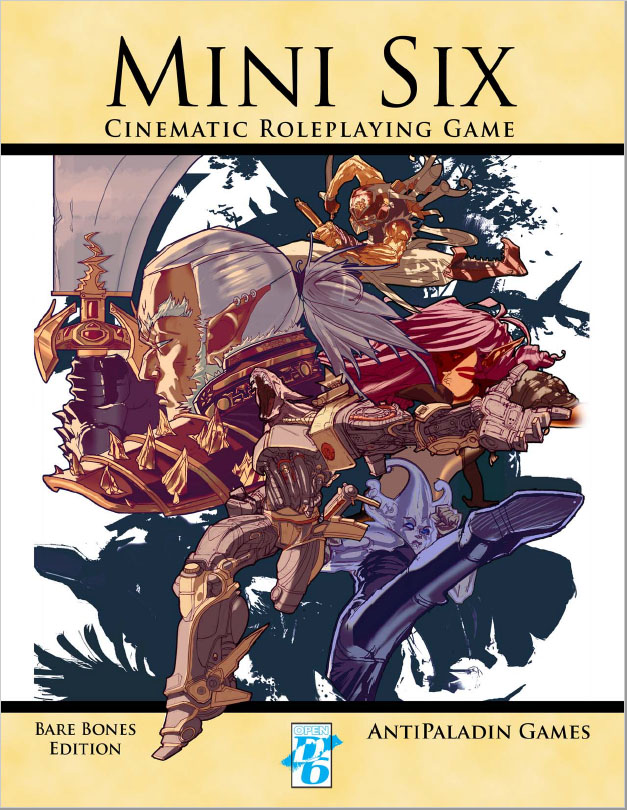
Mini Six is a bare bones system based upon the Open D6 core system.

One of my intentions is to scavenge any interesting spell effects for my magic system. I, like BriH, intend to create a stand alone magic system. I would like mine to be compatible with all flavours of RM, from HARP to RMU. It has a working title right now of SPaM (Spells, Powers and Magic).

What I can scavenge from OpenD6 will be added to spells I have scavenged from the 5e SRD spells. This continues the circular journey. RM was originally a set of house rules for D&D and now I am house ruling RM to add in the best of 5e.

The finished product eventually will be released under a badge of Open100 and be free for anyone to modify and extend. Take a look at this… In the ‘star’ box out (upper left) you can see how Might Six has taken and extended Mini Six…

Getting back to Magic…

SPaM will sit alongside my open monster companion. These two alone will be sufficient for any independent adventure writer to create standalone adventures for Rolemaster.

One of the points that BriH mentioned in his post http://www.rolemasterblog.com/spell-law-reconstruction-many-spells-many-powers-generic/ is that my ideas may be too freeform for a completely new GM and player group to have to construct entire spell lists right from day one.

The solution to that is also a solution to another problem. Many of the monsters need spell lists and innate spell abilities. One criticism of the monster rules in RMU was that you almost had to roll up every orc before you could play any combat. I don’t want to do that to my potential users. So the solution would be to create exemplar spell lists from my freeform pools of spells and the exemplars would be all the spell lists required by all the monsters in monster compendium.

So now you will get the flexibility of pools of spells and unique lists sat alongside exemplar lists.

I think that should address that weakness. Is it enough?

How many Spells is enough?

BriH touched on this with his high level adventures but a very high level spell caster is highly likely to have every open and closed list and every base list to the max. Obviously the rules in play can affect that. I am playing my lay healer in a game where almost everyone in the world has at least some kind of magic and every family has a spell caster.

In that game 10 ranks in learning a spell list is enough for automatic success and you can learn lists in parallel. You can learn one list for every powerpoint/level you gain. The GM also allows you to add your stat bonus to the spell gain roll if the chance is not automatic.

To put that in perspective due to background options I have 4 power points per level and a total stat bonus in PR of +50. At 1st level I had 7 spell lists and I am learning 4 more for next level.

If that sets the tone for the character going forward then by the time I am 6th level I could have every open, closed and base lists to 10th level. By the time I am 12th level I will have all lists to 20th. By 21st level I would have my 10 base lists to 50th level.

My character is exceptional. I pushed my PR to 100 with a background option and then rolled the skill at magic and got a further +25 bonus. Even without those extreme odds any pure caster should have nearly all the lists to 10th level long before they get to that level themselves.

In the game I run I am stricter on spell list acquisitions. You get +5 per rank and there are no bonuses to the roll. That is the RAW with no options in play. The intention was that a 10th level caster should have in the region of 8 lists. I wanted magicians to have fire law OR light law OR wind law not everything right across the board.

The problem with too many lists is that it gives you too many spells. Just from a playing perspective if you have 400 spells to choose from and many of them are stackable to create new effects then very few players or GMs will know all the options. I have always loved low level spells. Many of them have the effect based upon RR failure, like sudden light. So even though it may be a low level spell it can be devastating in the hands of a higher level caster.

Another objective of limiting the number of lists being learned is that a party with two magicians now do not necessarily have two of everything. The casters have very different lists and what lists you buy is an important strategic choice.

In my game it also promotes spell research as adding spells to your existing lists does not cost DPs in the RAW game.

I am finally zeroing in on the house rules I would like to fomalise for an alternative for Spell Law. I have touched on this many times in the past.

I am most definitely getting rid of all three realms. There is now simply just ‘magic’.

My lists are no longer linear progressions. Lists are now more like three dimensional cubes. In one dimension they still go from 1st to 50th. But I am bringing in HARP scalability so each spell can have a depth. I also allow multiple spells at the same level so lists can have a thickness to them.

A first level character starts with a couple of sentences to describe the list of their own devising.

The next step is that the player chooses a first level spell from a pool of all the first level spell to fill the first slot. Every slot may hold a spell of that level or lower. So in theory if there were two first level spells you wanted but no second level spell then you can take one as your first level spell and one as your second. Spells do not have names anymore, just effects. When the player adds a spell to their list they create a name for that spell. The names and the spells must fit the description at the top of the list. The GM can veto any spell on any list.

The point is to avoid a single list with fly, invisibility, fireball, lightning bolt and regenerate on it. Essentially characters could recreate fire law as a list or lofty bridge but slot in a few of the other related spells such as Sunfires into Fire Law or some of the channeling movement spells. More interesting though is mixing some of the barrier law spells with the other ‘wall’ spells from base lists all over Spell Law.

All the lists created by a single character should have a single theme of concept to them. So if you are “Pyromancer” then any fly spell would have you carried on fiery wings, teleport would have you leave in a column of flame and so on.

So far this is all untested at the game table. I hope I have given enough detail of how this would work.

My question is… If you really could pick all the spells on every list, now many lists do you think you would want as a spell caster?

P.S. My warhorse and I are travelling today and competing all weekend so you may have to wait for replies to comments as I could be a bit busy.

…and another Happy Halloween!

Brian got in there first with his Happy Halloween From BriH post. He signs off by saying that “I know  all of us at Rolemasterblog have a lot of work in store for the coming year.” This was timely as on Saturday we released our first mini supplement. I say mini as it is a single page adventure hook. This one was written by BriH and edited by Edgcltd, published by Azukail Games and sold on RPGnow. Now it only costs 50¢ but that is not the point.

Spires Reach is the first of 50. All 50 are already written and cued up. If we were allowed to give you NPCs in all their detail, Monster stats for the encounters and so on then these would not be just a couple of pages of adventure hooks, or locations or outlines of adventures. These would be much more substantial adventures.

You may ask who is going to pay even 50¢ for an adventure hook like Spires Reach? I don’t know the answer to that but they are selling as I can see the royalty reports.

I spent yesterday evening writing the next edition of the fanzine which looks like it is going to be the biggest issue yet. I am full steam ahead on converting monsters. These free to use monsters will mean that anyone can start to create adventure modules for any version of RM.

I am convinced that if there were a 3rd party industry for producing adventures and supplements for Rolemaster then the system would be more attractive to the gaming community. Right now RM is just a game people used to play in 80s. If anything Rolemaster is a bit like Latin, yes, sure a small number of people can still speak it but to most they think of it as a dead language. Rolemaster is not dead but it is going take a small band of plucky adventurers to take on the quest to save Rolemaster, especially if RMU is not going to be on the shelves until the 2020s!

If the RPG year starts now then the next year is going to be really exciting.

New Generation Orcs!

Once upon a time Rolemaster was a drop in set of house rules for D&D. These monsters bring things full circle. These are the monsters from the D&D 5e SRD converted back to an approximation for any version of Rolemaster. Some monsters will be weaker than the official Rolemaster monsters for your version of Rolemaster. Some will be tougher. As a GM you should look at the monster and decide if you need to adjust the number encountered to take account of any variation in power.

Every monster has a mini stat block. Monsters exist to be killed, out smarted or avoided. They are not there to be invited home to meet the family, you do not need full PC quality stat blocks. These mini stat blocks are there to give you a ball park figures for when you need start making rolls for the monsters. Strength is a combination of Strength and Constitution, Speed is Agility and Quickness, Intelligence is a mix of memory and reasoning, Empathy is both Empathy and Intuition, Presence is a mix of Presence and Self Discipline.

Attacks and OBs.

I am not using the rules in the original Creatures and Treasures for converting AD&D monsters to Rolemaster. As Hurin pointed out some the RM2 monsters were a bit arbitrary. Another point is that original RM did not have multiple attacks. Two Weapon Combo did not arrive until RoCo2. The way that C&T dealt with multiple attacks was to increase the OB of the creature, part of the flurry of blows style of combat round. I am going back to the D&D style multiple attacks as that is what the PCs have. It also makes monsters slightly more dangerous as the more attacks, the more chances of that open-ended up roll!

Base Rate.

There is a big change between new and old Rolemaster and that is the round length. RMU rounds are 5 seconds, RM2 rounds are 10 seconds, HARP rounds are 2 seconds. The movement rates are quoted as per second, so you can time 2, 5 or 10 as you desire.

Armour Types

This is the biggest change between version. RM2 & RMSS have 20 armour types. RMC (with the combat companion) and RMU have 10 armour types. The listing will show both but 3/20 means AT3 if you are using AT 1-20. An AT of 2/10 means AT 2 if you are using ATs 1-10. Armour in HARP is expressed as a DB modifier. As a rule of thumb if you take the AT in the 1-10 scale and times it by 10 you can add this to the DB and you will not be far off the mark. So for example an Orc in this collection of monsters has an AT of 3/10, 2/10 means AT3 in RM2, AT2 in RMU and for HARP it will need +20 DB (2×10). Any number in brackets after the AT is the creatures natural DB rounded to the nearest whole +/-5. For example the orc has a Speed of 60. That is an approximation of its Agility and Quickness. Under RMU that would give a +2 stat bonus and a +6DB. Here it is rounded to a +5DB.

Overview

Comparing my Orc to a RMC Orc and we have the same movement and the same hits. The RMC Orc wears armour and carries a shield but this something that the GM can change. My orc has a higher OB. This is in line with the sample character sheets I have that all show starting characters are much more powerful than the original characters and NPCs bundled with books like Heroes and Rogues. The NPCs I was sent all, right across the board, had higher OBs, DBs and hits. They all also had higher perception skills which is equally life saving!

So here is the ‘open’ Orc that is usable with RM2, RMC, RMSS, RMFRP, RMU and HARP.

Orc

Orc Grunt

Level 3

Base Rate 5’/sec

Max Pace/MM Bonus Dash/+10

Size/Critical M

Hits 50

ST SP IN EM PR
80 60 35 50 50
+15 +5 -10 +0 +0

AT 3/20 2/10 (+5) Leather Hide or by Armour type

Attacks OB 67 Weapon Spear or Javelin

Environment: Temperate hills

Organization: Gang (2-4), squad (11-20 plus 2 5th level sergeants and 1 leader of 9th level), or band (30-100 plus 150% non-combatants plus 1 5th level sergeant per 10 adults, 5 8th level lieutenants, and 3 11th level captains)

An orc’s hair usually is black. It has lupine ears and reddish eyes. Orcs prefer wearing vivid colours that many humans would consider unpleasant, such as blood red, mustard yellow, yellow-green, and deep purple. Their equipment is dirty and unkempt. An adult male orc is a little over 6 feet tall and weighs about 210 pounds.

Females are slightly smaller.

The language an orc speaks varies slightly from tribe to tribe, but any orc is understandable by someone else who speaks Orc. Some orcs know Goblin or Giant as well.

Most orcs encountered away from their homes are warriors; the information in the statistics block is for one of 3rd level.

Combat

Orcs are proficient with all simple weapons, preferring those that cause the most damage in the least time. Many orcs who take up the warrior or fighter class also gain proficiency with the falchion or the great axe as a martial weapon. They enjoy attacking from concealment and setting ambushes, and they obey the rules of war (such as honouring a truce) only as long as it is convenient for them.

Orc Sergeant

Level 5

Base Rate 5’/sec

Max Pace/MM Bonus Dash/+10

Size/Critical M

Hits 80

AT 3/20 2/10 (+5) Leather Hide or by Armour type

Attacks OB 95 Weapon Great Axe or Spear

Orc Leader

Level 9

Base Rate 5’/sec

Max Pace/MM Bonus Dash/+10

Size/Critical M

Hits 134

AT 3/20 2/10 (+5) Leather Hide or by Armour type

Attacks OB 150 Weapon Great Axe or Falchion

Orc Lieutenant

Level 8

Base Rate 5’/sec

Max Pace/MM Bonus Dash/+10

Size/Critical M

Hits 120

AT 3/20 2/10 (+5) Leather Hide or by Armour type

Attacks OB 135 Weapon Great Axe or Falchion


Orc Captain

Level 11

Base Rate 5’/sec

Max Pace/MM Bonus Dash/+10

Size/Critical M

Hits 150

AT 3/20 2/10 (+5) Leather Hide or by Armour type

Attacks OB 165 Weapon Great Axe or Falchion

So Where Next?

I think I have a working formula for doing a conversion from 5e to a sort of averaged version of all the RM flavours. These are not meant to be achieving a carbon copy of the Creatures and Treasures monsters but new and different versions. Many of the monsters will be completely new such as the Aboleth who simply does not exist in any flavour of RM.

I think these will be great fanzine material as that is less likely to fall into players hands. I can remember getting White Dwarf or Dragon magazine and really looking forward to new monsters that my players didn’t know. That is the effect I am after!
Thought Experiment Update

I huge thank you to everyone that sent me character sheets!

The brief was intentionally vague to give everyone creative freedom. Most people produced a non spell using rogue or thief which is what I has sort of expected. My Xan is exactly in that vein.

Things that really stood out were that I got three RMU characters. Seeing as RMU is still in play test and the experiment was for people who had house ruled character creation I had only expected one RMU character and that was Hurin’s who uses individual skill costs.

An interesting aside here but RMU is not yet published and the developers are pretty determined to stick with category skill costs. On the other hand there is already one ‘officially sanctioned’ optional rule in the form of Hurin’s individual skill costs published in the Guild Companion completely undoing the developers work. Only in Rolemaster eh?

The fact that RMU character creation is being house ruled while still in play test make one wonder about what is being tested? My personal intermittent play test is still RAW but with JDales new tables applied.

Back to Xan

I have distilled the character down to just a few really basic numbers. If you were reading a module or adventure and she was an incidental NPC then you may just get a one liner.

The ‘average’ Xan taking every sheet I received looked something like this.

#Hits 64, OB (shortsword) +59, DB +14, Perception +28
She typically has 18 additional skill including primary and secondary skills.

If you compare that to the off the peg NPCs in Character Law (RMC version) you get

#Hits 20, OB (shortsword) +30, DB +0, Perception +15.

The house ruled characters are far more functional than the off the peg NPC. In addition nearly every Xan has a secondary attack and either multiple attack or two weapon combo and many have given her a thrown dagger as well.

Interestingly, one came back with a single spell list.

I do want to look at the characters in more detail later but I thought I should really do something immediately as you all took the time to send them to me.

So the immediate take away is that all these Xans are more functional than RAW characters. I make my starting characters more functional as it is more fun to be capable than not. There is more fun in being able to survive more than one hit with a sword, all baring the critical, than not. These heroes are more heroic than RAW player characters.

The impression I have got so far is that house rules in general are making RM more survivable for starting characters than the rules a written.

More to follow…