Shadow World Flavor: Cool suits of Armor.

Just a few days ago I posted up some of the unique armors that I had developed for Shadow World cultures and groups. This included a laminate process, slate armor and various hide armors using Wyvern and Quarnak skins. You can download the file HERE (you need an RM Forum user account)

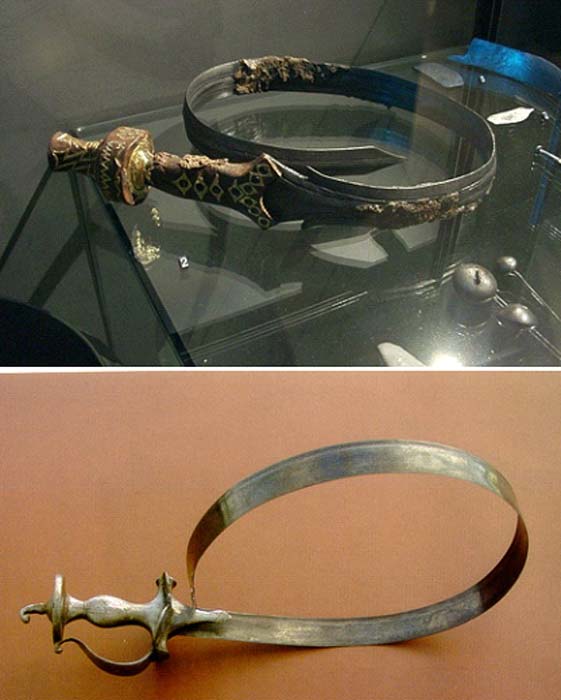
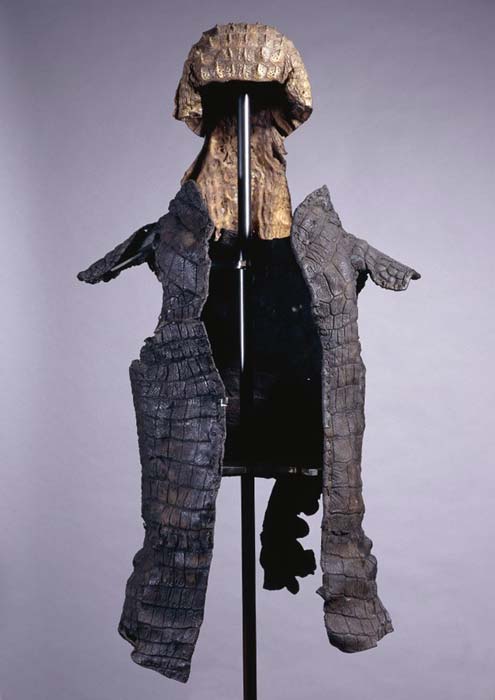
So it was interesting to see this short article on historical armors HERE. I thought the crocodile armor (pic above) was really neat!

Breaking News!!!! ICE to publish special, limited edition of RMU!

Rolemaster Unified, the in development new RM ruleset , is planning on releasing a limited set of premium books. This edition will feature individual tomes, parchment pages, sheathed in 24k gold leaf and personally signed by the authors and developers.  The limited set is priced at $999 with only 500 editions planned.

With the purchase of this premium set you also get access to “RMU University”. This individualized program will give users in depth training into the rules and gameplay by trained, top level GMs and RMU specialists. There will be 3 levels of training at RMU University:


Bronze Elite                                                          Retail Value

RMU Game Retreat                                 $5,000

Campaign Quick Start Retreat           $5,000

Total Value                                      $10,000 you pay $7,000!!!

Silver Elite                                                       Retail Value

RMU Game Retreat                                 $5,000

Campaign Quick Start Retreat           $5,000

Creative Adventure Retreat                 $3,000

Training your Players Workshop        $2,500

Total Value                                          $15,500 you pay $10,000!!!

Gold Elite                                                             Retail Value

RMU Game Retreat                                 $5,000

Campaign Quick Start Retreat           $5,000

Creative Adventure Retreat                $3,000

Training your Players Workshop        $2,500

Personal GM Workshop                         $4,000

Creature & Profession Design            $2,000

Advanced RPG Techniques                   $4,000

Gold GM Life Membership                    $5,000

Total Value                                             $30,500 you pay $20,000!!!

An official spokesperson, John Miller, on the new RMU limited edition and RMU University:

“Rolemaster has been the best RPG rpg game of all time, with more players and games sold than any other competitor. With RMU we’ve brought in an experts, the best people, to offer a fantastic product to the market. The other games on the market are losers, just bad and are failing badly. RMU will appeal to every player, with better more expansive rules and at a cheaper price. RMU limited edition is amazing, a premium product and RMU University will teach and train attendees to be amazing and successful GM’s using knowledge and techniques by hand picked experts all over the world. With RMU limited edition and RMU University we will create the #1 RPG and a community of role-playing winners!”
 

Rolemaster Rule Hack: Inherent stat abilities.

Well I got sidetracked yesterday and missed my attempt to post “A blogpost a day”.

In one of Peter’s blog posts, he sparked an idea for establishing character abilities that are dependent on Stat scores rather than a developed skill, stat bonus or level. For those that follow my blog posts, I’ve been in the process of reducing the # of total skills and trying to decouple level from intrinsic ability so this had an immediate appeal. Tying into RMU and past RM optional rules, I’m calling them “Feats”. Each stat has a corresponding function that uses the full stat value for resolution. Some benefits:

  1. Despite a strong argument for eliminating stat 1-100 scores and just using stat bonuses, this adds functionality for the use of d100 stats.
  2. Stat dependent abilities are “level-less” and give even low level players competencies.
  3. Inherent abilities improve the potency of 1st and low level characters despite the lack of skill levels.
  4. It makes sense. ie Even a 1st level character with a very high strength should be able to perform acts of strength as well as a high-level character with the same stat score.

This is a work in progress and needs much more thought and testing, but I have sent the outline to my players to incorporate into the next game session. (they call them “Interoffice Rule Memos”—I generally make changes or adjustments every session). We will try to assess and fine tune based on gameplay and feedback.

Each Stat gets a corresponding “Feat”. When performing a feat, the GM assigns a difficulty level (+30 to -150) and the player rolls adding their STAT SCORE. If the roll is over 100 that attempted Feat succeeds. Depending on the Feat, the GM may elect to use % success as well.

Feats:

Of Strength. Attempts at a short, finite burst of strength to lift, move, break or bend an object. Use RMU Feat of Strength rules for guidelines)

Of Quickness. Used for “Alternate Initiative Rules” or quick bursts of speed. (replaces quick draw and similar skills)

Of Constitution. Used for saves vs. Poison and Disease. We replaced normal level assignments for poisons and disease with Difficulty rating.

Of Agility. For use in responding to general maneuvers requiring hand/eye coordination, bodily movements. Also replaces “Dodge” skill. (opposing roll between dodge and attack OB, dodger can’t attack or parry, if Dodge skill fails, dodger loses DB vs attack)

Of Intuition. This is the “Sixth Sense” of the character. This could work passively—a GM could ask for a perception roll and use the Intuition stat score instead. Players shouldn’t rely on this as a skill, but in very rare or special circumstances. A GM could also just roll for the player with the highest Int. Score.

Of Memory. Used when a character/player wants to recollect something from the past.

Of Presence. Used when trying to influence another: charm, convince, persuade, intimidate etc.

Of Self Discipline. Used for saves v. Fear, Shock or Disorientation.

Of Empathy. Hmmm (this needs more work?)…the ability to sense others mood or temperament or to soothe/calm an animal or emotional person.

Of Reasoning. The ability to correlate info, make conjectures or make mental assessment of facts.

You’ll note that these Feats merge some skills, some RR’s and some special rules into a simpler framework. This ties these abilities directly to the player’s inherent abilities (stats) and not a level based resolution or a skills with marginal utilitity. I especially like taking the level assignment from poison, disease and even fear and using the maneuver penalty scale instead.

Shadow World Weapon: the Urumi

I was doing some research and looking for ideas for a interesting cultural weapon and came across the Urumi. Functionally it’s a steel whip–deadly to opponents and deadly to use for the wielder!

Using RM weapon tables, the whip table makes the most sense with only slash criticals. To differentiate even more, I can devise weapon specific performance using our “Weapon Modifier Chart“.

Of note:

urumi-wielders learn to follow and control the momentum of the blade with each swing, thus techniques include spins and agile maneuvres.[2] These long-reaching spins make the weapon particularly well-suited to fighting against multiple opponents

The benefit of our optional rules for weapon stats is that it allows for  customization and differentiation beyond their efficacy against AT’s and their hit & crit thresholds on the attack chart. RMU established fixed penalties for several combat maneuvers (reverse strike, dual attack, protect etc) when it should be the particular weapon that decides that penalty. Shouldn’t unarmed combat have a lower multiple attack penalty than a warhammer?

Anyway, the Urumi would have a low multiple attack/opponent, flank and rear attack penalty but have a VERY HIGH fumble range and no real ability to parry.

Also:

When not in use, the urumi is worn coiled around the waist like a belt

I have a few cultures or groups where this would be a great weapon: the Daughters of Inis and a special group utilized by the Alliance in Agyra.

I’m sure if I looked the Urumi is probably already included in Combat Companion or some other past publication, but I don’t have those so it struck me as very cool!

Shadow World Speculation: What is the Mazatlak Pillar City?

For those that have perused the extensive Shadow World timeline in the Master Atlas or Part IV: Lands will have seen a few references to the Mazatlak Pillar City. Call me intrigued! There are four references in the Master Atlas (I’m using 3rd Edition):

p.31

  1. Mazzara Delta: [Cool Temperate/Seasonal] Y’nar (Mixed economies/Monarchy/TL: ) A vast delta/archipelago; this fragmented land and the shores to north and south are controlled by a Y’nari kingdom. At the head of this delta is the capital: Mazatlak Pillar City.

Gendael: A trading center where furs, ores, fish, meat and other staples are exchanged for exotic spices and other items from more temperate lands. The road to Mazatlak is heavily travelled.

Mazatlak Pillar City: A regional trade center and capital of the Mazzara Delta kingdom.

p.184 (Timeline 6053 TE)

Mulira: Mazatlak Pillar City shakes but the ancient stone pedestals stand.


So, what the heck is a “Pillar City”? That’s been churning around in my hind brain for years; trying to imagine what that would look like and how to design the city for a possible module. The few clues we can glean is that it’s a city, it has pillars which can shake, it’s located on a river delta:

Definition of delta: a piece of land shaped like a triangle that is formed when a river splits into smaller rivers before it flows into an ocean

The impression is lowlands, prone to seasonal flooding that require houses built on stilts like many third world areas. Like this:

But Mazatlak isn’t a “stilt village”, it’s a “Pillar City” with stone pedestals. That makes me think of this:

This is the famed Basilica Cistern in Constantinople. So this could be a good model of Mazatlak: a normal city with a vast foundation made up of pillars and columns. This feels right and creates a great opportunity for a dual world: the normal city above and this surreal “underneath” where trade, commerce and skullduggery could occur! This also reminds me of Chicago where they built a new street level above the first floor of the buildings and created a below ground world that mirrors the city above.

I was good with that image until I thought of something more fantastic. In my interview with Terry he mentioned his building design was more grounded in reality while Pete Fenlon designed more over the top structures. Is Mazatlak interesting enough as just a city built on a foundation of pillars? Is that too mundane and realistic? Then I imagined the city as large platforms on immense stone pillars. Sort of a Cloud City of Bespin, but with a thicker more substantial pillar as a base. The platforms would be connected via bridges and the heights of each platform would indicate status and prestige.

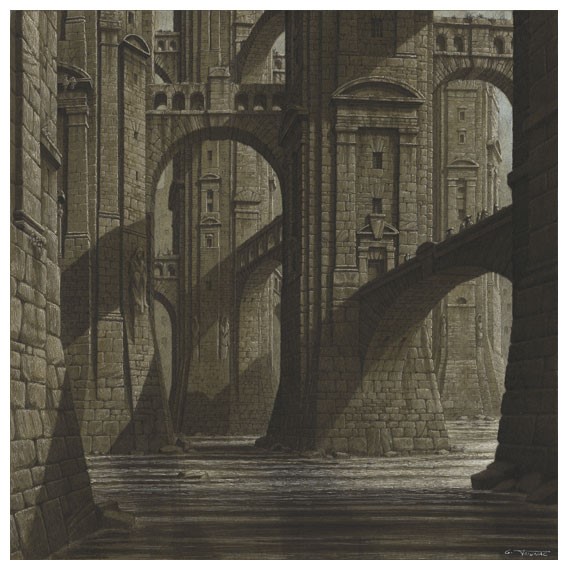
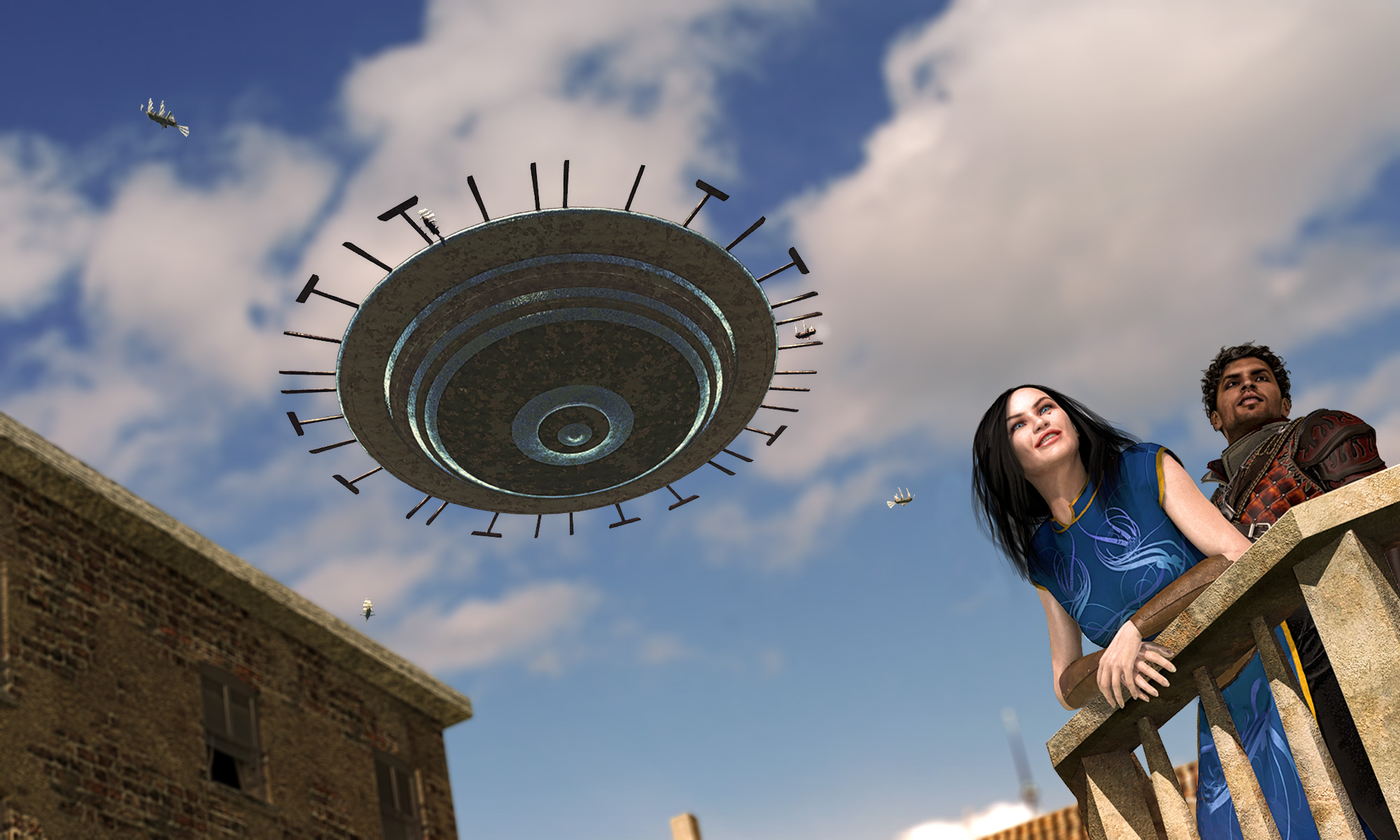
So while I’m finishing up Nontataku, thoughts of Mazatlak kept buzzing around in my head. I wish I were an artist or illustrator and could explore different concepts through drawing. Then, the other day I was reading RPG Bloggers and this came up, an illustration by Gerard Trignac:

I thought, “The Pillars ARE the City!). For Mazatlak I see the pillars being round, and much larger than this picture.

One final idea I had was that the Pillar City was actually much older, originally a Hirazi city—soaring columns with eyries on the top that was later populated by Y’nar settlers. Obviously I have several competing thoughts on this “Pillar City” that Terry hints at. Anyone have thoughts, ideas or suggestions?

Rolemaster: Outside Looking In.

I’ve been reading quite a few RPG blogs lately, and as you might imagine most of them discuss DnD or one of it’s near variants. Some of it is nostalgia (OSR), part curiosity, and general interest in other viewpoints and experiences. One thing I notice over and over–most of these other blogs and forums don’t spend too much time on rule litigation/arbitration. Most blog posts are:

  1. Product reviews or retrospectives
  2. In game experiences
  3. General advice on creating content or running games.

That made me wonder what non-RM rpg players see when they encounter online RM content. First, if you google “rolemaster, blog” you won’t get that many results. Some of it is older forum discussion on “chartmaster”, “rulesmaster” or the complexity of playing. That’s probably not best foot foward. So how about the people that check out the RM Forums? What do they see or what impression do they get? If they aren’t a member they won’t see the RMU development forums (that may not be a bad thing–those discussions really get in the weeds). If you are active on the RM Forums, take a step back and look at it through the lense of a new user.

One of the most active thread topics of course is “Rolemaster”. What are the current topics? “Withdrawing from Melee”, “How to teleport into a moving target”, “how to handle Perception/Stalking”, “monster orientation roles”. These threads and many, many more are adjudication topics–“How do I handle this or interpret the ruleset”?

I’ve made the analogy before comparing Rolemaster to DOS and other game systems to MAC OS. DOS users love to tinker and program while MAC users just want a packaged user experience. While I consider the “rule programming” of RM a plus, I often wonder if it has been at the cost of user experiences (game content). Obviously Terry can only write so much, so fast. MERP is in permanent stasis, Cyradon and Echoes of Heaven are…(I have no idea really)? When people do wax nostalgic about RM it’s usually about the old MERP modules: artwork, maps etc and of course the cool critical tables. How do you create more content? Does opening up to third parties help? Is there even a large enough user base?

When I read about cool new content and modules in other RPG blogs, I sometimes feel like an outsider. What do other players see when they look at RM now?

Weekend Roundup: March 25, 2017

Welcome back to the “Weekend Roundup”! It’s been several weeks since I’ve done one; it’s been hard to scan the news here in the U.S.A. without getting bogged down in political crazy. In the interim, I got a message on the RM Forums:

BHanson: Do you think you could post more roleplaying news rather than obscure or fringe stories?

To clarify, the ‘Roundup’ is more a collection of news, stories or facts that grab my attention or give me an idea or hook for my own RM/Shadow World campaign. Sometimes a story just clicks, I make a note of it and when I get enough of them, put them up on the ‘Blog. I was hoping for more comments–just curious if any of the links spark a similar thought, idea or creative path for anyone else. I think I just posted up general RPG news, it would a. be topics covered at other bog sites, b. rarely be about RM or SW! So with that said, let’s begin.

Keron, Eog, Laen, Ithloss…..ORICHALCUM????

I was doing research and found these real life Roman SUPER SHIPS!

Syrkakar Armor?

Something found in a Wizards Tower. In an RPG, THIS would have to be a powerful artifact!

Detailed and Mystical Statues.

Real life Arms Law


The more things change, the more they stay the same.

Sweet Jesus!  #$&@!& more Elvish crap!

Legacy of the Earthwardens: Cultural transmission of knowledge.

No Elves…how ’bout Gnomes?!

It’s been 5 years, but still a great reservoir of RPG blog posts.

Now I’m enjoying this RPG blog.

Speaking of “Longskulls”….The HUN also practiced skull elongation….

Good advice for the Next Generation.

I’ve posted up quite a few files on the RM Forums and linked to them on various posts on this blog. For those that asked–you need to have a RM Forum account to SEE and DOWNLOAD files and see the RMU development forums. JOIN! REGISTER NOW

Evil Healers?

All this talk about channelling got me thinking. There was also a thread on the forum of someone wanting plug and play adventures.

The problem with plug and play rolemaster adventures is that no published adventure can ever know what options are in play and which aren’t. As a rule of thumb you could optional rules relating to character creation in the companions made PCs more powerful, not less. If you accept that premise then any adventure written against the core rule books would be varyingly under powered when used with characters created with optional rules, spells and skills from the companions. As an example the core RMC core rules has no option for two weapon fighting styles which in many games are extremely common. Stunned manoeuvre is another skill that can have a huge impact on the outcome of a fight.

Any adventure where the PCs had twice the attacks and could shrug off stun results would have a huge advantage over adversaries who didn’t and couldn’t.

So bearing that in mind I am not going to give you any actual stats as you will have to build the enemy to fit your game and challenge your players characters. What I want to do is suggest what to me seems at first an unusual choice of villain.

This little adventure is completely off the top of my head, untested and unplayed. You should use it for inspiration only!

The Evil Healer

At first thought Healers would not necessarily seem the natural choice for an evil mastermind or villain. I think the prejudice comes from the idea that healers do good things to people and most people don’t want to piss off their healer. If anyone was going to coerce a healer and force them to do bad things, they are more likely to bad people themselves so a vengeful healer is most likely to be still on the side of ‘good’ or at the very least an anti-hero. Or that is what I was thinking until I stopped thinking of the healer as a one dimensional, personality free cliche.

Separate the person from the profession and  there are a multitude of reasons why you can justify an evil healer. Think how many stories there are based around experimenting on people or animals or even individuals that can get a twisted pleasure from being around the suffering of others or even their own.

For this adventure idea I want to think along the lines of having a whole ‘party’ of terminators after the PCs. What made the movie Terminator so cool was his unstoppable nature. In this little adventure at the heart of it is a simple band of brigands lead by an evil healer. The brigands have become incredibly successful as they are almost impossible to put down. Their leader can just put them back together and back on their feet again.

The healer will need the healing base lists including transference but I also  suggest adding Symbolic Ways, Light’s Way and Calm Spirits.

Back when this band started out the Healer assumed control buy using Calm Spirits to completely disarm literally and figuratively the original band of brigands and an crossbow bolt to the back of the head dispatched their former leader.

The current band is made up of two warriors, a thief and a monk. The skill level of each is up to the GM and the party that wander across this place.

The band’s hideout is littered with stones inscribed with magical symbols (using Symbolic Ways) that provide the band with a number of magical effects. Some are used as traps such as stones in the floor that when stepped on cast Calm spells. I will leave the level, number and position of these to the GM as having a single character ‘Calmed’ may be a big problem to a 1st level party but a Calm III may be more of a challenge to a higher powered group. As the brigands have been here for years any and every stone that is suitable has been enchanted to give the brigands every advantage. There are stones that will heal, protect and so on. All of these are well known to the brigands and they will use them to their best advantage while keeping them a secret if they can.

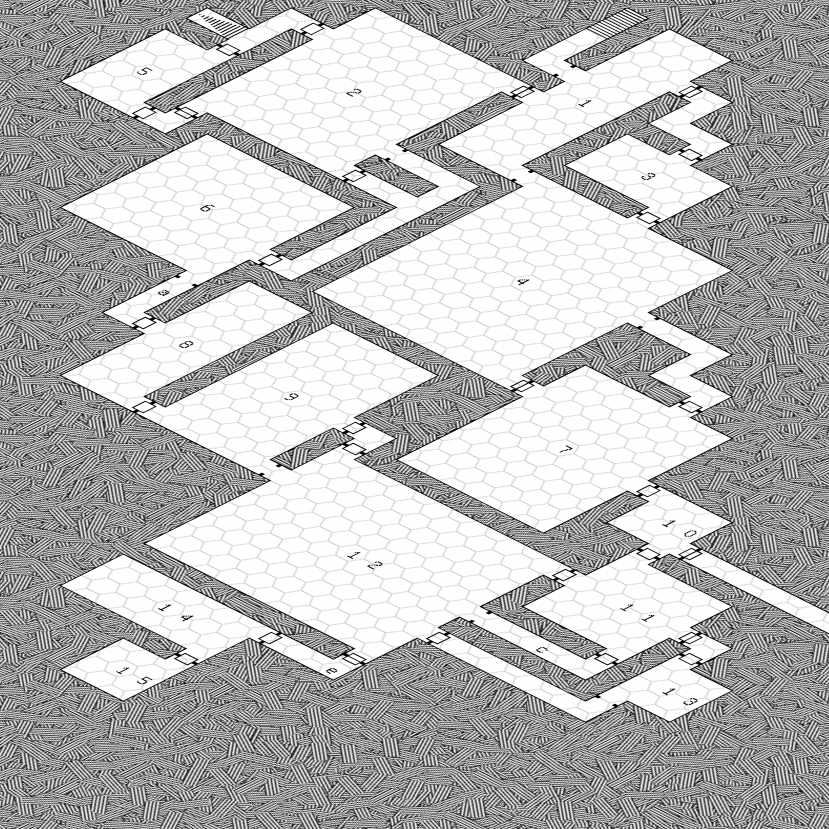
The band’s ‘lair’ is an old and now abandoned mine building. The stairs in the top left lead down into the collapsed mine tunnels. The rest of the rooms were once store rooms, workshops, dormitories, kitchens and all the other supporting services for a working mine.

The GM can dress this place as they see fit.

Much of the complex is still unused.

  1. This hall is used as both kitchen and mess hall. The corridor leading off of here ends in a natural chimney that draws the smoke from cook fires away.
  2. The centre of this room is set up for sparring and martial training. Around the periphery are assorted weapons, shields and armour that the band have accumulated over the years.
  3. These are the private quarters of a warrior.
  4. This is the groups main living area. Along one wall is an odd assortment of stolen furniture that is used for storing non-cash loot.
  5. This is the healers private quarters.
  6. These are the private quarters of a warrior.
  7. This room contains barricades and wall shields the group could use to defend their home should they ever need to. Invaders would be permitted to get this far and no further.
  8. unused
  9. unused
  10. The entrance hall is serving as little more than a tack room for the bands saddles and tack. The actual mounts are kept outside in a corral that is hidden from easy discovery.
  11. This room is piled high with junk. There is a way through but it is difficult to spot. The intention is to make it easy for band members to pass through but create the impression that the way is blocked to the untrained eye. The sort of thing they have done is lean bunks and pallets over the openings so there is no line of sight.
  12. This has been turned from a workshop into a gym for the Thief and Monk to hone their skills.
  13. The private room for a monk.
  14. This is the private chamber for a scout or thief.
  15. The thief’s walk in wardrobe.


The players should meet the brigands outside of their lair. They [the brigands] will attempt to size  up the party before deciding if they are a good target or not. If they decide to rob them then they will wait until the party are a long way from the nearest town or village and then try and steal their horses in the night. If the party look too tough then if they cannot steal them then they will kill them. Once the party are stranded then the brigands will try and pick them off. They never fight to the death. They know that as long as they can get home they will be healed up and can try again. Nothing is worth getting killed for.

The brigands can and will come back night after night and grind the party down if they have to.

Get Off My Lawn!!!!! RPG Rant of the Day.

“Fair and Balanced” is not just a Fox News blurb, but a constantly cited principle for RPG game design. But what is balance? An arbitrary viewpoint? Neutral game mechanics? “Fairness”? Often it comes down to personal opinions and long accepted norms established long ago in D&D.

RMU development is a perfect case study in the tension between rethinking a ruleset and an unquestioning loyalty to RPG tropes. The most basic assumptions are often the most discussed: Magic Users can’t wear armor; magic is broken down into 2 or 3 realms; the balanced party (Fighter, Thief, MU, Cleric); Class tropes and the definition of a particular class, etc.

Rolemasterblog has discussed and deconstructed many of these tropes, but it always seems like the fall back argument is “balance”—without ever a real discussion of what balance means. Like most of you, I started playing D&D and AD&D—you know what? That was a broken, unbalanced system. I recall playing a higher level Cleric at a CON and just destroying everything. (Blade Barrier anyone?). It wasn’t fun, it frustrated the DM and while I got all the glory it didn’t feel earned.

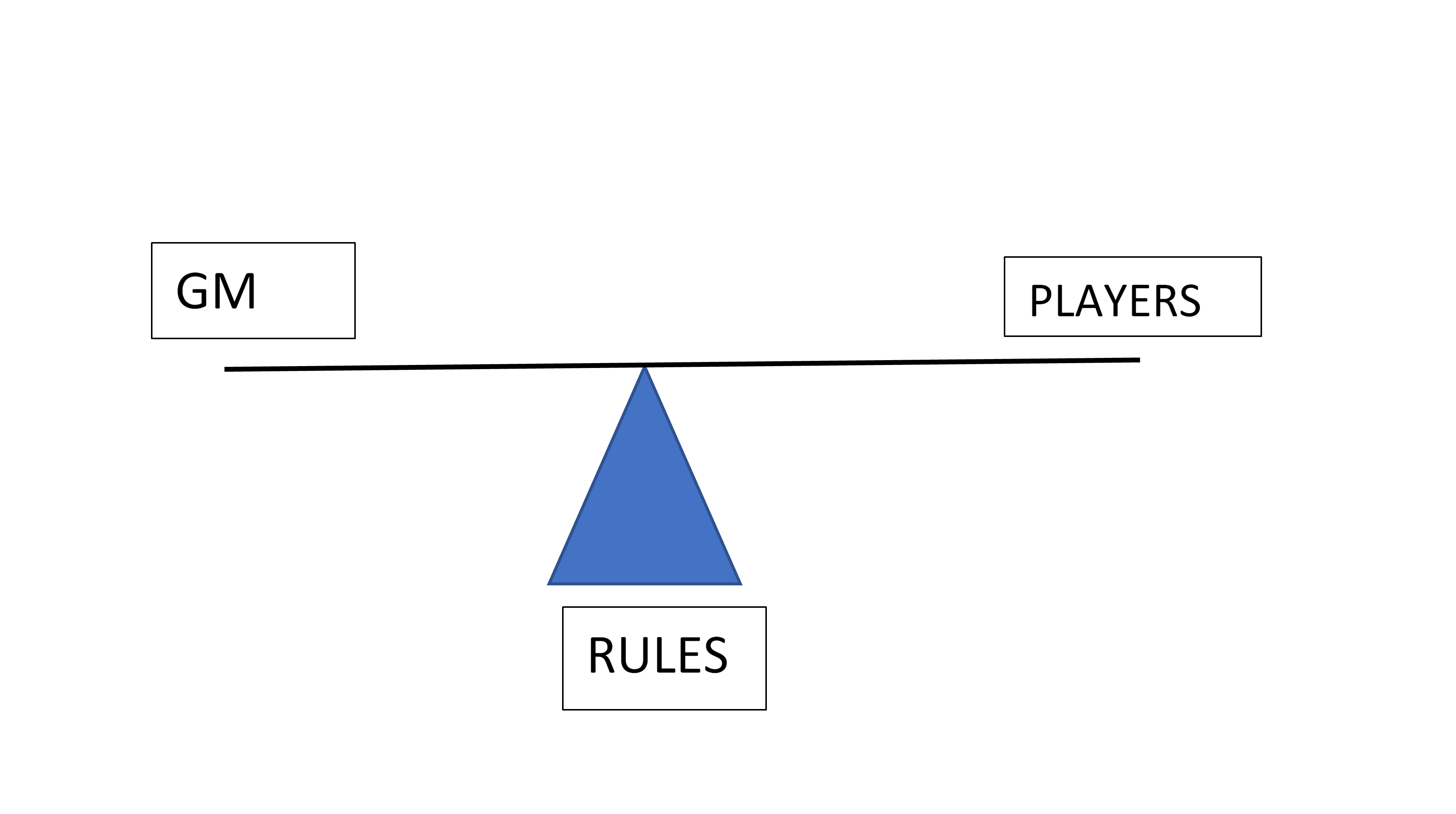
Table top RPG games have too many variables to allow for true balance. Players can make unexpected choices, it’s impossible to create encounter parity and role-playing actions can usurp game mechanics. Also, the adventure or GM can emphasize other aspects that rely less upon game mechanics and more on problems solving or role-playing. The problem with “balance” is that it assumes the following paradigm:


This model positions the GM on opposing end with a ruleset balancing the two. This is a false dichotomy, with the main focus on the impact of rules on the player and PC’s.

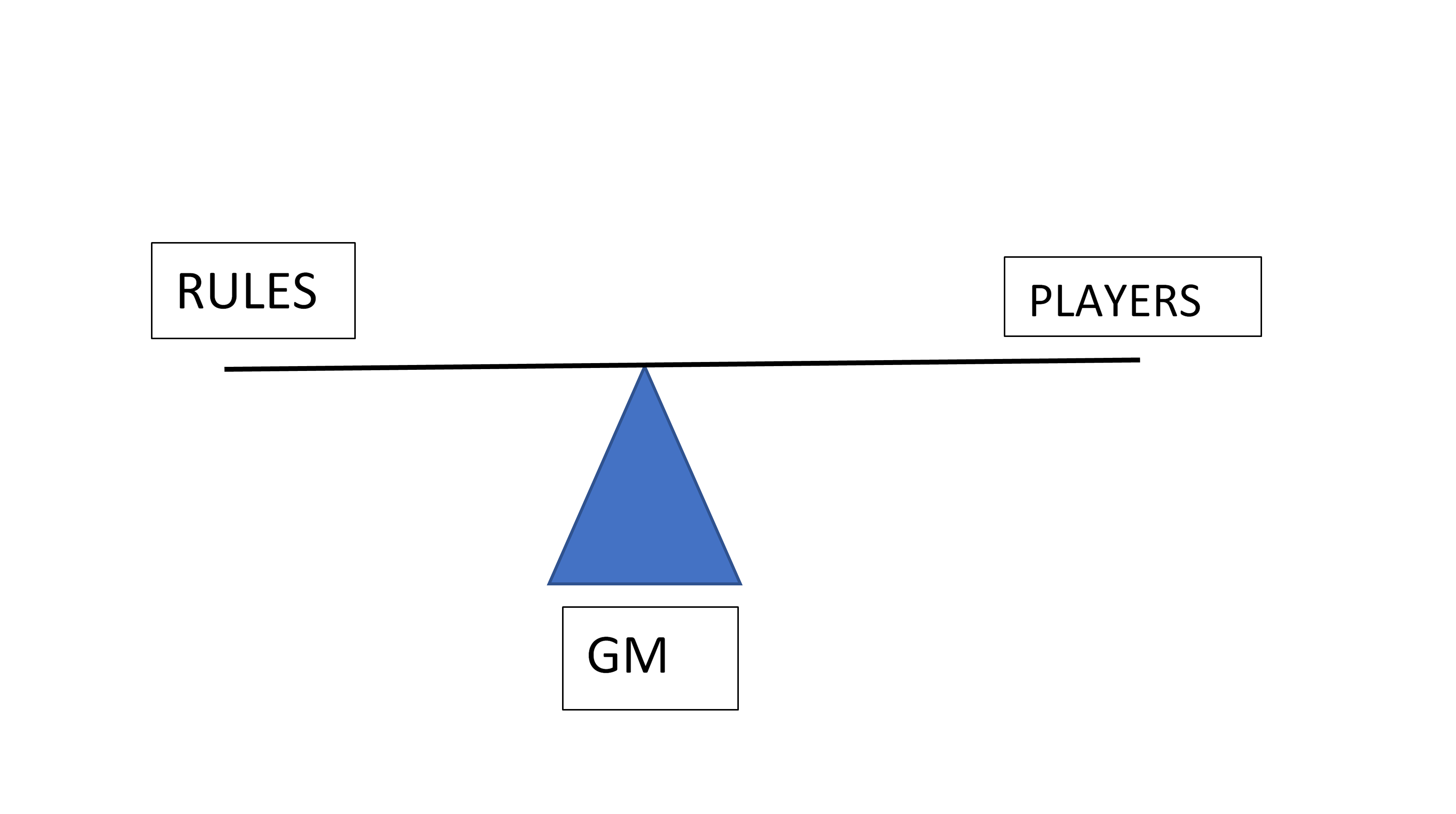
However, if chasing “balance” is a false choice, then a better mental model switches the positions of “Rules” and “GM”.

This model accepts that no open system can ever be truly “balanced” and recognizes that the GM is the final arbiter AND best able to adjust game flow to handle unpredictable outcomes, player behaviors and rule shortcomings.

I’m less concerned with a PC being able to cast spells AND wear armor, than a flexible set of rules that handle in game action resolution. Profession constraints, skill access and player roles within a group are NOT really RM/RMU game mechanics. The game mechanics are maneuver resolution, skill check resolution, spell resolution and combat resolution. Period. Whether a mage can wear armor or what skill costs should be for a Ranger is purely arbitrary or setting specific and not part of game balance.

“Balance” is the last argument of the scoundrel! So GET OFF MY LAWN!!!!

Mobile Apps and RPGs

In the real world right now I am studying Android development and Java programming. As a roleplayer I simply cannot do this without thinking about how I could use this to make bespoke roleplaying tools for my phone.

I am also a big fan of open source software and freeware.

The only real problem with creating Rolemaster apps is that RM is such a closed system that ICE would never agree to anything open source that anyone could take, change, expand and share.

Anything I could create would have to be somewhat generic. The most generic of rpg apps has to be the dice roller and there are hundreds of those available.

Somewhere there is a middle ground of more useful than a dice roller but system agnostic enough to avoid the intellectual property rights belonging to ICE but also useful to the RM fan base.

Does anyone have any ideas?