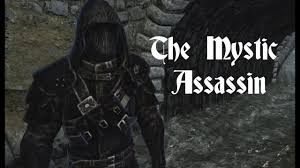
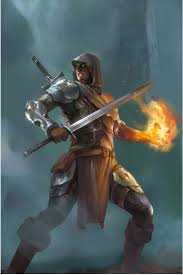
I have to say that I was surprised at the lack of love for the Mystic in Hurin’s and Peter’s recent posts. Why? Because Mystics ROCK!!! I’m not sure I ever played one, I started GMing almost exclusively early on, but I’ve always been intrigued by the profession. Like the Astrologer, Seer and Alchemist, I thought the Mystic was a new profession concept in the early 80’s that upended the “boring” D&D classes I was accustomed to.
So what is the Mystic? Unless Terry or another original ICE developer weights in, we’ll never know exactly what they had in mind 40 years ago–but to me it’s clear that the Mystic is a pure spell caster Assassin/Spy. I’m not sure Peter or Hurin are picking up on that–and if you only look at the spells it might be tougher to see the “Mystic DNA”. First, take a look at the skill costs:
Ok armor DP costs. That’s typical for Mentalists in general, but it implies a more combat oriented profession.
Stalk & Hide: 2. That’s the lowest skill cost for any pure caster, and implies the stealthy nature of the class.
Perception: 2. Again, this is only beaten by the Seer and matches the Illusionist.
Ambush: 4. That’s not low, but it’s by far the lowest for a pure caster. The Mystic ambushes!!
Just based on those skill costs alone, we already have the basis for a stealthy, perceptive character whose primary attack is ambushing.
Base Spells. So there is not much appreciation for the Mystic spell lists, but let’s take a closer look:
Confusing Ways. This is a fantastic spell list with some great utility. The first 5 spells: Distraction, Confusion, Blur Vision, Fear and Stumble are all combat effective and still fall into the character concept. Most of the other level spells are as useful, although the lack of spells lvl 16-19 could be easily corrected.
Hiding. Again, this is another solid list with some cool spells: 3rd lvl Shadow, 7th lvl Screen, 10th lvl Shadow Mystic and 13th lvl Flattening. The combination of Hiding and Confusing Ways spells with some combat effectiveness makes the Mystic and formidable character class!
Mystical Change. The “piece de resistanance” of the Mystics spell lists, this allows the caster to change their appearance or impersonate other creatures or persons.
For me, those three lists and the skill costs are a great character template. I would also argue that the Mystic’s low level spells are almost all useful–which isn’t necessarily the case for other pure spells users (I’m thinking of you “Mr. Boil Water”!).
I think the confusion with the Mystic is with the other 3 spells: Liquid, Solid and Gas Alteration. Those spells seem off-brand, or perhaps another mentalist type given how core the skill costs and the other lists feel.
Personally, I would jettison the 3 alteration spells and maybe drop a weapon skill down to 4 and make a few small tweaks to some other skills. I’ve never been a proponent of a mandatory 6 base lists: a profession needs just the right amount of base lists, and often it feels like some base lists are just there to meet that arbitrary requirement.
A slight bump to combat abilities and those three lists makes for a great Assassin archetype. The Mystic is a great profession and one that deserves more respect!!!
Hurin wanted Rolemasterblog to tackle the Warrior Mage next, so I put aside my blog on the Mystic and spent some time reviewing and thinking about the Warrior Mage. I can’t recall any of my players choosing a Warrior Mage, but I know that the Warrior Mage is VERY popular among players and controversial as well. Hurin is doing a rebuild of WM spell lists and is a proponent in general, so I thought I would take an opposing view of the profession!
One of the first issues for me, is that the Warrior Mage doesn’t feel like a “Profession” like other RM semi-spell users. Instead it’s really a multi-class, A Fighter-MU that combines the 2 most popular PC aspects: combat and elemental attack spells. Not only does it merge the best of 2 classes, but it fully embraces the Fly, Sleep, Charm, Fireball cornerstones of the fantasy Magic-User.
What’s in a name? Most RM Professions carry an implied conceptual design with their name–a topic we visit with these blog posts. Most people have a clear concept of a character when they hear words like: Bard, Ranger or Paladin. These Profession names evoke class tropes, literary references and a skill and power framework. We don’t call a Ranger a “Animist/Fighter” or a Paladin a “Cleric/Fighter” even if those descriptions are technically accurate. Profession names carry enough referential information that we can even argue over skill cost minutia. Of course some of these Professions imply a setting or specific social construct but the Warrior Mage does none of that. What do you think of when you hear Warrior Mage? Probably that it’s a great character because there is both fighting ability and useful spells–but what’s the context? It’s merely a Chimera–a combination of two primary ABILITIES, but without any conceptual framework. While we may disagree on small details of varying Professions, we immediately get the concept of an “Astrologer”, a “Beastmaster”, a “Dervish” or a “Moonmage”. There is connotation. I just don’t get that with a Warrior Mage. To me, it feels like a work-around and a class designed by a player not a GM. A RM Magician can already allocate DPs to learn combat skills–the Warrior Mage just accelerates and amplifies that outside of the game balance. The Warrior Mage spells feel cherry picked for power and utility–in some ways they feel BETTER than the Base lists of the pure Magician spell caster!
Spell lists picked and designed by a player. There are several versions of a Warrior Mage, but let’s stick to the original in RMCOII. In this version, the Warrior Mage receives 3 Base lists and a suggestion for a 4th: Minds Touch, Elemental Ways and Highriding. The 4th suggestion is Body Renewal, a Monk base list. If a player could individual choose spells and put them into their own lists, I’m not sure you could do better than these. I’m not making a argument for the inherent power of the spell lists–I realize that there is an argument that they are “overpowered”. I just don’t like the incredible bias of these lists.
Minds Touch. Basically combine Spirit Ways with Telekinesis and you get the 4 incredible spell abilities: Charm, Sleep, Telekinesis and Telepathy. All great for in-game use!
Elemental Ways. Why bother with a handful of Elemental Spell lists organized by the Element, when you can just bundle the ALL the best spells of a Magician into a single Base list! Fireball, IceBall, Fire Bolts, Ice Bolts, Water Bolts, Shock Bolt at 2nd level and Lightning Bolt by 12th.
Highriding. My favorite! Flying, Longdoor, a Tensers Floating Disc and even Teleport. Wow!!!
The final suggested list is Body Renewal–a Self Healing list that rounds out the Warrior Mage as virtually a self-sufficient offensive machine. While the WM base lists don’t have spells from 16-20 why bother? Most games seem to run at player levels less than 15th, allowing the WM to put together a basket of great spells by 10th.
Profession as a Trope. So I want to return to the Warrior Mage as a template beyond a Fighter-Magic User or semi spell user/Essence. I’m not opposed to a simple Essence semi-user, but that doesn’t really fit into the RM system does it? Is there a better set of spell lists that aren’t: a teenager’s masturbatory idea of a PC; imbue the Profession with a concept or connotation like other Professions?
I’m going to think about this further. Since I can already build a Magician that spends Development points on a combat skills (yes, at a high cost), I want to see a Warrior Mage concept that is unique or inspires roleplaying ideas. Of course, I always think of Professions in relation to Shadow World–in that setting there are some ideas that could make great templates for a WM: Cloudlords, Xiosans or the Guarla of the Raven Queen. Any of those might work as an organization of Semi-Essence professions, albiet with specific organizational spell lists rather than the RMC II Base. I’m interested in seeing what Hurin comes up with! What are your thoughts?
Now that I’m posting up some more spell lists–Mentalism primarily, I’m tracking comments and feedback on the forums and here at RMBlog. The number one issue I see is the desire for spell list reductionism, maybe build 10 spells per “list” and allow for creative scalability similar to or identical to HARP.
That is a compelling thought, but after writing a ton of spell lists I wanted to put my own thoughts in order.
Distillation. Rebuilding classic RM spell lists typically requires some trimming. Many spells within a list are redundant: not just the spells that progress as I, II, III etc, but different named spells that do similar things. Distilling the essence of a list can really reduce the total number of spells which makes a scalable spell system very appealing!
Spell scope. I’m not a fan of kitchen sink style spell lists, but do see a fundamental difference between the realms. Essence should be very tightly focused around a key aspect, Channeling should allow for much more variability based on the particular god and I see Mentalism lists following a shared mental mechanism. Using these basic rules provides different ways to build lists in different realms.
Compatibility. A major motivation to maintain the 1-50th spell lists is basic compatibility with RM and Shadow World.
Built in scalability. Many of my lists are built around 3-6 spells, that progress from I-V and maybe include a mass effect. If each spell repeats every 5 levels that takes up a chunk of the list, but also gives a repetitive appearance that seem suitable for scaling. However, the spell versions don’t just scale progressively, but change in target size, AoE, Range and other aspects that provide “more bang for the buck”. General scaling assumes increased power point cost/expansion of range, area, damage etc. So from an efficiency standpoint, higher versions of the spells in BASiL provide a better impact/PP than just linear scaling. “Spell II” isn’t just 2x better than “Spell I”, it can be 3x better or have expanded efficacy or powers as well.
Opportunity and tactical cost. By having built in scaling, players can use higher or lower level spells based on the target, PP consumption and risk/reward calculations. Of course, that’s also one argument for Scaling spells, but the PP usage will be much different per #4 above.
Level assignment. One of the more difficult aspects of designing a spell list is deciding what level to make a spell. Part of me wants to calculate an estimated “power cost”, while other times I’m thinking of utility and game balance. For instance, the big three: Charm, Fly and Invisibility can be very unbalancing to the game, but perhaps shouldn’t be based on “power needed” or some other arbitrary assessment. Some lists just can’t be distilled into 10 spells with scaling options. Some spells need to be higher level to reflect their real power and also make them unavailable to lower level players.
Vertical versus horizontal acquisition. RM (and probably RMU) is build around horizontal model of spell acquisition. Generally players will know more spell lists than overall spell levels. For instance, a 5th lvl caster may have access to 5-10 lists but can only effectively cast to 5th level without risk of failure. In BASiL, it’s the opposite. I use a levelless system so players generally know a few spell lists to higher level. That gives them more powerful, niche abilities. It’s just the way I like my game to run–hard specialization versus the generalization of RAW.
Keystone spells. I still like cool spells that can be found at 10th, 20th and certainly 50th level. I try to add something unique or interesting at these levels for players to look forward too, or to give the list a “bump”!
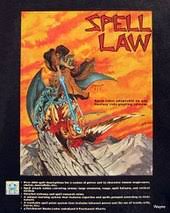
I guess sticking with RM I wanted to improve on the originally 35+ year old Spell Law and incorporate spell ideas and powers introduced since then. But if I were to start over, I would take a hard look at a HARP scalable system. Or maybe just use HARP rules?
Many of you also build your own spell lists. Do you have build guidelines, mechanistic philosophies or other design criteria that help you in the process?
RM Spellcaster Professions are defined by 2 game design factors: skill costs and base list. Skill costs are only significant for levels 1-8th (due to declining rank bonuses and professional rank bonsues), while Base Lists have since taken on a disproportionate share of Profession identity and ability.
I have two issues with Base Lists: the “forced-learned” aspect and the “all-profession” trend that started with the Rolemaster Companions. (further explanations forthcoming..)
First lets consider the “force-learned” angle of Base Lists. It’s argued that Professions, and their associated skill costs, model aptitudes of learning. While I don’t particular buy that argument, I at least understand it. But how does one’s aptitudes apply to spell lists? Isn’t any education/learning dictated by what’s available to learn? Whether that’s through books, tutors, mentorship, institutions or guilds, education (skills) should be driven by availability and access. So yes, I can see that a character may have an aptitude for spell casting in general, and even maybe an aptitude for a specific spell realm, but I can’t get my head around the idea that by merely selecting a Profession then mandates a specific set of 6 spells lists they are inclined to learn. Of course the larger argument is that game design requires that a Profession template drives skills and spells, and in return skills and spells reinforce the template. A virtuous loop.
My second issue with Base lists is the “all-profession” trend that I feel has crept into the design process. What do I mean by that? It feels that new Base list builds are driven by the desire to balance all aspects of the character–regardless of traditional non/pure/semi trade-offs. In other words, many newer spellcasters have a mixture of offense, defense and utility spells that make the Profession independent of group balance-they basically have no “flaws” or shortcomings! Starting in RMC I, this idea has been wholly adopted without a second thought. What are some examples:
The inclusion of a “Self-Healing” spell list. What’s better than not having to rely on a Healer, Cleric or Lay Healer!
The addition of a elemental spell list with major attack spells. Everyone wants at least one directed spell or AoE elemental spell.
Use of spell lists and spells that just give significant bonuses to skills or actions. Instantaneous spells that give +25 to the next melee attack? Very nice.
“Potpourri” spell lists that are a grab bag of the most useful or effective spells in category spell lists. Why bother with 2, 3, or even 4 Open or Closed lists when all the best spells are distilled into a single Base list!
I think there are many reasons for this:
“Power Creep”. Many new classes were designed to improve upon original RM professions that were deemed too weak or game ineffective.
Blank slots. If you have older spell lists with lots of empty slots it makes sense to fill them in. Making new spells is NOT that easy–so it’s a quick solution to just drop in spells that replace core skills OR spell abilities that flesh out the profession.
“Balance”. For some, each Profession should be internally balanced: have a mixture of skills, abilities, combat effectiveness and defensive capabilities that make them balanced.
Rolemaster already allows Professions to build non-core abilities, at a cost, through the skill system. My concern is that there is an easier path to just build Base lists that replicate expensive skills or abilities without the associated costs or skill ranks.
In the end, a lot will come down to the GM’s perceptions on “balance”, but when reviewing new Profession base lists let’s ask ourselves if the Base Lists are supporting the Profession theme, filling in the traditional weaknesses of a given class or just making an “uber class”.
The recent discussions on Druids here on the blog seemed a relatively easy assignment. I hadn’t given a lot of thought to Druids and generally argued for a more distinctive Druid by making them either a semi-spell user or even an Essence based profession. For me the Druid was just a new name on a predictable template already covered by Clerics, Animists and Rangers.
However, several comments and some googling made me start thinking about Druids quite a lot…
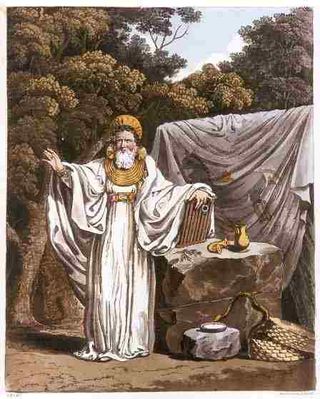
An arch-druid in his judicial habit.
Who were the Druids?
There is not a lot of first-hand knowledge of the Druids, but it’s generally believed they were: “philosophers, teachers, judges, the repository of communal wisdoms about the natural world and the traditions of the people, and the mediators between humans and the gods.” So, in some respects this sounds a lot like a Cleric or Priest, and in RM terms, a Channeler. But there are other descriptions of Druids that evoke a more mysterious and perhaps even sinister aspect. Then, while reading this description,
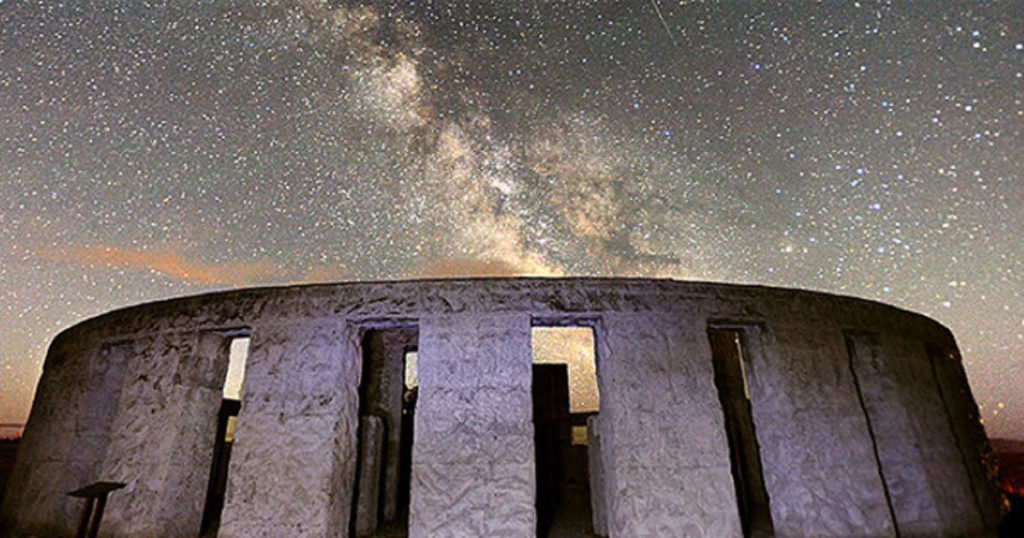
Druids, like numerous cultures both prehistoric and modern, were fascinated by the movements of stars and other celestial bodies. This implies that they were still using Neolithic monuments such as Stonehenge to track different astronomical alignments.
I was struck by a thought. While the Druid profession was missing in the original RM, the Astrologer was not. The Astrologer is an odd profession–I certainly thought it was cool when I first was introduced to RM, but the concept seems curiously unfinished. First, I think star-based spell lists are a very setting specific idea and the the lists themselves were incomplete with very few actual spells on each list. Assuming some fixes to the Astrologer lists, a great Druid concept would consolidate the Druid base with the Astrologer base lists. That would make the Druid interesting and unique while still retaining some the cool factor that the Astrologer promised. In this scenario I see possible Druid Base Lists as:
“Far Voice” But a rewritten combination of Astrologer “Far Voice”, “Way of the Voice” & “Starsense”
“Visions” A combination of Astrologers “Time Bridge” and “Holy Visions”
“Starlight”. Original Astrologer but needs some fixing.
“Druidstaff”. Either the original RMC I version, Hurin’s version or my BASiL list “Talisman”.
“Natures Forms”. Original Druid list.
“Stone Mastery”. Original Druid list.
“Weather Mastery” type list as an alternate.
These six Base lists make a Druid very distinct from other Professions, especially the Animist and Ranger, by dropping the Animal and Plant control spells. To me this still feels like a “naturalist” spell user but in a more raw and visceral way. There is a nature and elemental angle to the class with “Starlight” and “Stone Mastery” and a touch of a Seer with “Visions”. Plus the elemental spells and the Druidstaff gives the Druid combat and offensive ability. “Far Voice” allows the individual Druids to communicate across vast spaces with each other–providing them a network of information.
I was pretty satisfied with this new Druid concept and would have left it alone…but I kept thinking about Druids and Shadow World. Shadow World has an organization that aligns quite well with a Druidic concept: The Earthwardens. In SW canon, the Earthwardens helped heal and rebuild the shattered planet. They built great earthworks, megalithic constructions, circles, henges, and passages, while nurturing civilization back from the brink. This is a familiar tale–not unlike legendary figures in our own history: Hermes, Thoth, Quetzalcóatl, and other “bringers of civilization” that were steeped in hermetic traditions.
While it’s not implicitly stated or clarified, the Earthwardens were using “proto-magic”; early Essaence before it was divided into the individual realms. The Earthwardens built structures on Essaence Foci–basically “Earthnodes” and “Leylines” often associated with Druidic tradition. While the Earthwardens esssentially disappeared during the Interregnum, it’s conceivable that their knowledge was passed down through a secret tradition and organization: The Druids.
So putting it all together we have an organization/profession that utilizes “proto-magic” and “Earthnodes” and is the repository of ancient traditions and wisdom. To me, that sounds a lot like what many people would think of for a fantasy Druid archetype. What types of spell powers are proto-magic? Luckily, I don’t have to write a bunch of new spells–just adopt the Arcane Magic lists as Druid base lists! In fact, Rolemaster Companion I has every thing we need: earthnodes, arcane magic and Druids! The base lists would be:
Bladerunes. A great utility spell list that gives the Druid weapon enchanting ability and replaces the list “Druidstaff”.
Earthbloods Ways. Obviously, this is easy to convert to Shadow World’s versions: Essence Flows and Essence Foci.
Entity Mastery. I would make some changes and eliminate the homoculous spells, but I like the idea of a Druid commanding Golems and Elementals.
Ethereal Mastery. Not sure about this one, but I like the concept of Astral Projection for Druids.
Mana Fires. Feels very Allanon’ish and Druids should be “Wielders of the Secret Flame”.
Shapechanging Ways. Gives the Druid the connection to Flora and Fauna.
The Arcane lists in RMC I are right on point for Druid spells and work well as inherited knowledge of the Earthwardens. With these lists, Druids tie into SW history and make a kick-ass profession with unique powers.
So what do you think? Druid/Astrologer or Druid/Arcane? I like them both, but Druid/Arcane fits my SW campaign. You can read my amended history of the Earthwardens in this file (inspired by page 5 of Rolemaster Companion I)
I was busy writing a Spell Law related blog but we are powering along discussing professions so here we go with Druids!
First off, Peter covered all the bases with his overview of Druid spells in his last POST. I was going to go over the various RMC spells he discussed, but I’m sure I did it back in the day when working on BASiL and it sounds like he hit the nail on the head. For the most part, the first few RM Companions seemed like an attempt to power up various RM professions: Animists into Druids, Warrior Monks became High Warrior Monks, Mages became Archmages, semi spellusers expanded to include Beastmasters, Paladins and Warrior Mages etc.
Per recent blogs here on on the RM Forums, I think it’s clear that the real differentiation between professions is: the general classification of Non, Full or Semi; and the “base” lists of each class. There has been lots of debate and parsing of profession skill costs but in reality it doesn’t much matter after 6-8th level. By then, most core skills have peaked out their contribution bonus and stats, magic and professional level bonuses carry the weight. So let’s take each of these in turn:
General Classification of a Druid. One argument someone could make for a more martial animist is just to make the Druid a semi-spell user. That way you avoid the seeming duplication of the Animist-Druid dynamic and bestow better combat abilities on the Druid. By doing so you don’t have lean so heavily on overpowered/unbalanced combat spell lists to bridge the gap. Of course, this might depend on your vision of a Druid (we’ll get to that), and it steers very close to the Beastmaster and Ranger but it’s clear that much of the RM communities loves lots of Professions, no matter how similar they might be.
Base Lists of the Druid. Looking at the lists from the companions it’s hard to justify playing a regular animist! Peter has pointed out some problems with the Druid spells, and Hurin will be suggesting his own versions but for me the problem is not the lack of offensive/combat spells for the Animist–it’s that most Animist spells basically suck in general.
So what might a Druid look like? Perhaps the most well known fictional Druid from early RPG is Allanon from the Elf-Stones of Shannara. Allanon was a Druid more in the line of Gandalf, with wizardly power, understanding of Old Magic (technology) and Lore. If you compare Allanon to our western mythology, “Druid” is more of a title and not a class trope. Allanon is basically a Loremaster with lost knowledge and power.
Another concept for a Druid is a spellcaster that specializes in natural magic–this could also include elemental magic. So really there is no reason why a RM Magician can’t be called, or be part of organization, that calls themselves “Druids”. Magician spells of Wind and Water contain plenty of spells to affect weather or the natural world around them. From the outside, this could seem very “Druidic”. I see no issues with a Druid that is an Essence user.
A third way to look at the Druid is it’s professional realm designation. Druids are Channelers. By definition that implies that Druids powers come from or are granted by a God or pantheon. A Druid isn’t going to be granted offensive spells and combat acumen by a god that is a pacifist. If your vision of a Druid is a “combat nature priest” then their God should reflect that. Do you really need to parse out skill costs for all of these slightly different “Nature Channelers”: Clerics (of a nature god), Animist, Druid, Beastmaster, Ranger, Shaman and maybe even a Witch?
I take a diametric view of this situation–each profession isn’t a different set of skill costs and base lists; as Channelers, each represents a servant/priest of a specific God or type of God:
Cleric/Priest (nature aspected God). A general priest with a mixture of general Cleric lists and Animist/outdoor lists.
Animist: A Priest of a very nature oriented god or a local god. Spells focused on Flora And Fauna.
Druid: A Priest of a Elemental God or temperamental god of nature. Spells of Wind, Air, Weather and perhaps Earth.
Beastmaster: A Priest of a Animal God or Totem style god. Animal Control and Bonding.
Ranger: A “Holy Warrior” type of a nature god, or an outdoors man that has loyalty to a nature god. Survival and Weather spells.
Shaman/Witch: like Hedge Wizards they may serve a local god or ancient elemental god. Grab bag of spell lists.
I see variations of Druids that are Essence users, semi-spell users and even just “re-badged” Rangers! If a GM is willing to be flexible with spell lists, it’s easy to create a Druid that meets your concept or setting.
Before I get into my thoughts on the Bard, it’s probably important to look into the past. The rpg Bard profession was introduced in the 1st edition AD&D Players Handbook, wayyyy in the back on page 117 as optional material. What does Gary say regarding the bard:
As this character class subsumes the functions of two other classes, fighters and thieves, and tops them off with magical abilities, it is often not allowed by Dungeon Masters. Even though this presentation is greatly modified from the original bard character class, it is offered as supplemental to the system, and your DM will be the final arbiter as to the inclusion of bards in your campaign.
AD&D not only required the Bard to have fairly incredible stat scores to qualify, but they needed to attain at least 5th lvl fighter, than switch to thief, then attain at least 5th level and then start tutelage as a Druid!!! That’s a pretty steep climb for any character class. What was it about the Bard that required multi-classing and high attributes?
That wasn’t the final word on the Bard. New material for the Bard was presented in Dragon Magazine #56 of December 1981. Both the original Players Handbook and Dragon Magazine article are worth a read just to understand the origins and ideas around the Bard class. The Dragon article, in particular really delves into the western cultural history of bards.
Obviously, the RM Bard profession was included to match up with the AD&D rules, but where does a Bard really fit into a gaming group in Rolemaster? Like any semi-spell user, they are weak by nature of the balance between spell acquisition and martial skills. Song spells require them to perform at the cost of all other actions, and their lore and knowledge skills are only important if the game requires it–the RM “Attunement” skill takes over a lot of magical item analysis.
Several original RM professions seemed more geared towards being NPC’s than PC’s: Healers, Astrologers, Alchemists, Seers certainly, and Bards might be just a toss-up? So what might a player character Bard bring to the table?
A “Jack of All Trades” role for the group.
Knowledge/Lore.
Language Skills.
Social Skills.
AoE Spells. (with major limitations)
That’s a great list if you are playing AD&D that has strict profession requirements and limitations, but how does that work with Rolemaster?
Jack of All Trades. Rolemaster already allows any profession to access all available skills. You can be a “Jack of All Trades” with virtually any profession.
Knowledge/Lore. Meta-gaming aside, this will really be dependent on the GM and the game. Rolemaster has the Attunement skill and there are various spells to assess items so a specialist Bard might not be critical.
Language Skills. Language should be important but can often be a plot obstruction. However there are Channeling and Mentalism spells that allow for communication.
Social Skills. For many games, social interactions are just roleplayed. I think social skills can add depth to a game, but does a GM want to develop greetings, insults, eating graces and social norms for every culture, civilization or group the game meets? In social situations–which could be virtually every encounter that isn’t met with immediate violence, the Bard could be a lifesaver. Literally.
AoE spells. The one standard thread of Bard’s abilities is the power of music and song. This allows a Bard to cast “buffs” on the group and possibly neutralize adverse affects like “Fear”, “Loss of Morale”, “Sonic attacks” etc.
So, looking over this list, there are 2 items that stand out as Bard specific: Social skills and AoE spells. Do these two abilities justify the Bard profession? Does it only come down to a handful of constructed spell lists to make a Bard? If so, do normal skills and skill costs matter if virtually all of the Bard’s abilities are derived from their Base lists?
Putting aside the D&D versions of the Bard, what works of fiction depict Bards? My earliest idea of a Bard came from the Black Cauldron series: Fflewddur Fflam. Later, there were traces of “bardic” DNA in Tolkien: poems, epic stories, songs and even slight ditties were sprinkled throughout the story. Obviously, there was “Bard” in the Hobbit: a descendant from the men of might, who slew Smaug and became the lord of Dale. Of course, his name evoked an image of “Bard” but not necessarily “a Bard” profession. In more recent works, we have Kvothe, from the Kingkiller trilogy. Kvothe is a man of many talents, a “Jack of All Trades” who has spellbound people with the power of his music. But he is also a “Wind Mage”, “Alchemist” and “Martial Artist”. Is Kvothe a “Bard” drawing from fantasy inspirations, or simply drawing from the “Philosopher King” mythos? It’s apparent that in myth and literature, Bards are truly unique individuals; AD&D reinforces this principle with the stat requirements and lengthy development process. But every PC cannot be king or group leader by mere fact of their profession. How do Bards fit into a fantasy RPG group?
Whether you base it on Welsh, English, Western or Eastern lore, Bards can be defined by their titles: Minstrel, Troubadour, Jester, Actor, Diplomat, Tinkerer, Jongleur, Poet, Musician or even Balladeer. Some seem noble, others tricksters. Some are repositories of truth while others spread fantastical tales for fame or fortune. These wide ranging and varied definitions are no different than any other RM profession. But the single factor that defines a Bard over another class is the use of music and song. Otherwise, the tertiary skills of Bards are purely cultural and are driven by the fantasy world it occupies.
So where might that fit into Rolemaster? I’m going to revert to an earlier blog format I’ve used previously: ROLEMASTER PROFESSION REVIEW: TAKING ANOTHER LOOK AT THE SHAMAN. In this blog, we’ll be looking at a few variations of Bards that could work in Shadow World.
Bard Loremaster.
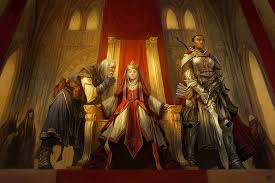
A Loremaster advising a young ruler.
Bard Type: Diplomat, Mentor, Tutor, Advisor, Historian
Tasks/Jobs/Roles: Bard Loremasters serve as advisors, observors, tutors and diplomats to governments, leaders, and rulers.
While a Loremaster is not an official RM Profession, they hold a quasi professional status in Terry’s world. They have Base Lists, organization etc but under RM rules still have to be proscribed a traditional RM class rather. (It would be easier just to create a quick skill cost list and designate the Loremaster as a SW specific profession!) When looking at the roles and skills of Loremasters: historians, mentors, advisors and teachers, the Bard class seems well suited for this job! Loremasters will often appear to be powerful NPC’s that can guide the players, but Loremasters have to be low level to start! Making your Bard PC a journeymen Loremaster is a great solution for the class. They can provide campaign guidance to the group, become a vector for new adventure paths, access information and help when needed and not necessary imbalance the game. A low level initiate in the Loremaster organization and being in an adventure group are not exclusive!
Tasks/Jobs/Roles: Cleric Bards serve as Masters of Ceremonies, lead Holiday and Festival events, entertain, spread cheer and goodwill and impartial but fair judges.
If you drop the mental models around classes and realms it’s easy to see that a Bard could easily be a “Cleric” of Kieron. Sure, you might need to change the spell Realm to Channeling, but so what! Kieron is the God of Festivals, and he would definitely want a Bard type to be his emissary on Kulthea. This really doesn’t change the nature of the Bard and probably makes more sense from a learning and institutional process.
Spell Lists: Bard Base “Controlling Songs”, Mentalist “Mind Merge” and “Mind Speech”, Druid Base “Natures Lore”
Tasks/Jobs/Roles: Keep hidden or lost knowledge alive. Search/find/protect bloodlines of past empires. Recover knowledge and artifacts of past eras.
There are 2 major empires that might have a “legacy organization”–a small group of survivors that retain the knowledge of a past era. If we focus only on Jaiman and Emer that would be the combined crown Kingdoms of Jaiman in the early part of the third Era and the Emerian Empire of the 2nd Era. Imagine a hidden group of loosely organized Bards. Who better to retain and disseminate the knowledge of these past empires and work to return the world to it’s old glory. Emerian Bards might be secretly fighting the new Orders that have been subverted while the Jaimani Bards work to re-unite the splintered realms.
Travelling Bard.
Bard Type: Jack of All Trades, Tinkerer, Minstrel, Troubador, Adventurer
Spell Lists: Bard Base, Mystic Base “Confusing Ways”, various Open and Closed up to 5th lvl. Minor Illusions.
Like a “Hedge Wizard” a Travelling Bard is more akin to a Tinkerer, an informally trained “Jack of All Trades”. These Bards wander and survive on their wits and skills. They have spells, but they are generally lower level and represent a broad hodge-podge of spell powers. These Bards still play instruments and perhaps sing, but not with a great deal of skill. Travelling Bards are great random NPC’s or can be a fun addition to the group by straddling the role of Thief, Negotiator and Comic Relief!
So that’s my thoughts on 4 types of Bards that can be great in Shadow World or Bard archetypes to be used in any setting. Really, there is a Bard for every occasion!!!
Several days ago, Peter blogged about the Ranger and then Hurin responded with his own blog post and thoughts on the Ranger. Since they both weighed in, how I could resist not adding my own ideas on the Ranger! Since there have been two previous posts, why not “Three Tales of the Ranger”? ( a subtle reference to the writings of Elor Once Dark and the three tales of Tor’lan p. 26)?
Peter. First let me tackle a few items from their posts. Peter, while you titled it regarding RMU, you also needed to drag in a 20 year old spell list from RM Companion to flesh out the Ranger. Fair enough, but that allows me to utilize other non-RMU spell lists for my own Ranger build! Yes?
Hurin. Welcome to the club! While you fully didn’t embrace “no-profession” in your post, you clearly embraced the spirit of flexible chargen. Your story about your Thief character that had convincingly played as a “Scout”, “Ranger” and even a “Paladin” is great anecdotal evidence that skills define the character and not an arbitrary profession designation! If your Thief was spending DP’s on spells, transcend armor and other non-core skills is he really a Thief? I also appreciate your eagerness to adopt Mentalism or Essence realms to build your ideal character. With some type of no-profession philosophy you can build whatever type of PC you want; and call him whatever you want. You didn’t transcend armor, you transcended class tropes! Congrats!
While I don’t use standard professions and build off a profession DP template, it’s easy to build a “Ranger” in my ruleset. Not only build a “Ranger”, but virtually any type of Ranger or subclass concept the player wants. However, I’m not going to dive into skill minutia, but instead define a Ranger via spell lists as Peter and Hurin have done. Luckily, I have a whole slew of non-ICE spells to choose from, that were designed for exactly this type of flexibility: BASiL Channeling! And guess what–they are non system, general d100 spells that could be PUBLISHED shortly for any d100 system.
But wait, doesn’t that conflict with some game company IP? NO.
RMU RANGER LISTS.
First, I wanted to address my personal issues with RMU Spell Law/Ranger lists. These are my opinions, not mean to be criticism since RMU was meant to be the gentle arbiter of all RM and ICE conflict.
Beastly Ways. Generally I think this is a great list and improvement from RM Spell Law. First, I’m not sure it’s “Ranger” spell list as I conceptualize the profession. Druid? Sure. Beastmaster? Absolutely. Shaman. Of course. I think it needs some tinkering and I would use SW specific names (rather than Terran animals). Definitely could be treated as a Mentalism or Essence list as well.
Inner Walls. Another improved list and a good generalist list for any spell caster. I think there are some small logic errors and OOP spells: Sterilization which affects other than the caster, and Martial Wall should have some logical mechanism for it’s implementation.
Moving Ways. Great spell list and probably what I would consider the “Core” list of the Ranger concept: it has to do with travel, movement and traversal. I would tinker with it and the 50th lvl spell “Submarine Ways” is a horrible 50th level spell. (allows a 50th lvl caster to swim 50 miles w/o fatigue!!!! WOW!!!!). That should be a 10th lvl or under spell. The 35th lvl spell Distance Running should be a 5th lvl spell–especially with groups that don’t focus on fatigue mechanisms.
Nature’s Guises. Good conceptually, but really just a grab bag of ideas. Not sure what 3rd lvl “Freeze” is doing in this list (should be in a “Nature’s Manipulation” list, and “Animal Thought” is a bit of an oddity as well-That should be in “Natures Communing”). Pruned and tightened up a bit and it’s a great spell list that would work for a Ranger, Shaman, Druid or Animist–if you even think there is a needed mechanistic difference between those classes!
Pathmastery. This is another list that seems tailor made for a type of Ranger. Again, there are some outlier spells that don’t fit thematically in the list: Nature’s Tongue comes to mind. I’m also not a fan of bonus to skill spells. It just feels lazy and it undermines the value of the underlying skill itself. At third level a +50 bonus to Tracking? Why would the player even bother with taking more than a handful of tracking skill ranks at lower levels?
Survival’s Way. This is a solid spell list with some problems. Again, bonus to skill spells like the 3rd lvl Wound Tending I find problematic. How does that work? Does it bestow knowledge to the caster? Better coordination? A steady hand? Divine intervention? Also the 35th lvl Adaption should be moved to the “Inner Walls” spell list.
To be clear, these RMU Beta lists seem like a solid improvement over past Spell Law iterations. If there is a requirement for 6 base lists it will suffice. However I feel that a this archetype needs around 2-3 lists: some type of Moving Ways, Pathmaster and Survial Ways. All three RMU lists above need tweeking but certainly act as a foundation for the character trope. Looking at the remaining lists, I would combine some of the spells in Survival’s Way into Pathmastery and Inner Walls, move the Change spells into Natures Guises and Beastly Ways and maybe make a new list Natures Commune for plant/animal speech, thoughts, control and mastery.
BASiL “Ranger” Lists.
So writing this blog to the “Ranger Series” of blog posts, I hadn’t reviewed my BASiL channeling in several years (working on Mentalism final revisions). Luckily, these changes were prior to RMU Beta spell lists. I’m going back to review and revise, but this was a great opportunity to analyze them after several years!
While I purposefully didn’t organize BASiL to track with Open, Closed or Base–it’s fairly evident that it can easily follow along with this process. So for a “Ranger”, “Druid”, “Animist”, “Beastmaster”, “Pathfinder”, “Scout”, “Warden”, “Hunt Master”, “Shaman”, “Witch”, “Forest Wizard”, “Path Blazer”, “Elf”, “Liberal”, “Eco-Terrorist” or any similar ridiculous class or profession name, these are the following BASiL core spells:
Natures Guises. This is a cleaned up version we discussed above. Discarded nonconforming spells, adjusted powers to level and attempted to increase utility of ALL spells in the list (rather than meaningless placeholders.) All these spells are about concealment, disguise, misdirection etc.
Natures Defenses. This spell is purely self-reliant, with all spells about personal survival and protection vs. disease, poison, tainted food and water or extremes of temperature or elements.
I think these are CORE spells for any “Nature” style character. However, if I wanted to add some more specific powers that seem Ranger specific:
Natures Movements. This is a cleaned up and focused “movement list” for a Ranger. It covers different terrains: water, ground, air (not just a forest ranger from Tolkien!)
Locating Ways. This is meant to be the core locating power of a Ranger, Bounty Hunter (fantasy Mandalorian!), Beastmaster, Detective etc. There is a light overlap with Nature’s Lore, but far less than the overlap and redundancy of RM spell lists. None of these spells devalue, replace or simply add a bonus to RM skills.
Finally: though not really “Ranger”. Weather Mastery. This is more a Druid/Animist or Nature Cleric style spell, but depending on the campaign or setting could be used by a Ranger type for some weather and elemental control.
So this is just a classic Ranger build. If you want more Tolkien I would add a lesser healing spell list, lower level weapon rune spell list or even a lesser fire law list! (all can be found on BASiL spell lists btw). If you want a more martial Ranger, I would replace a few lists with some Mentalism lists for Warriors, Monks, Disciplars, Weapon Masters, Erudites etc :
So, lots of options, cleaned up spell lists, flexibility to build YOUR idea of a Ranger AND a real functional Ranger. Whatever that means to you! That is my Third Tale of the Ranger for the Rolemasterblog.com!
Back in July of 2016 I went a bit off topic to blog about a new TV series I saw: Stranger Things. What a difference a few years make, as the show went on to become a cultural sensation and further promoted the D&D legacy into our culture.
Recently I had the opportunity to watch a new show, The
Mandalorian, that has quickly become the new “It Show”. Much of that is due to
the popularity of Star Wars for over 40 years, and some of it to the quality of
the show.
I’m not going to review the show or risk spoilers, but just in case—spoiler alert! What struck me the most about the show was how closely it adhered to classic RPG beats. It was similar to reading a RPGLit book—the dice rolls, traditions and tropes were all right there on the screen. Some may argue that these are devices more similar to video games; that may be true but video games themselves drew from tabletop traditions. I find this revealing: for decades Star Wars was defined as following ancient mythical storylines: The Heroes Journey and classic fairy tales wrapped in a fantasy/scifi setting. But throughout the Star Wars trilogy there hasn’t really been traditional gaming mechanics. Yes, characters develop some abilities—mostly the young Jedi protagonists—but this was done through plot advancement and some handwaving. (Lukes Jedi training might only have lasted in days or weeks, and yet was the sum of his formal education in the movies).
The Mandalorian is a completely different beast. There is a serial adventure nature to the show. “Mando” finishes adventures with special alloy treasure that he brings to the “Armorer” to have forged into upgraded equipment. There are side adventures. There is new, cool equipment that gives added abilities and firepower. The Mando takes real damage, needs healing and is restrained by ammo and weapon limitations. You have temporary NPC’s (who mostly die and thus don’t have a lengthy plotline) that aid the Mandalorian for that particular adventure. I think it’s incredible that popular culture is embracing (perhaps unknowingly) a clear gaming format into a high-profile serialized event.
I’m not sure I’ve seen another high budget show that adheres
to gaming mechanics in such a clear way. Thoughts?
Now, in this ongoing series exploring the QuickStart rules for Against the Darkmaster (VsD), we cover Vocations and Skills.
The QS is but a portion of everything the designers have written for the game, and often the tables in the QS give some hint of what else is out there, since, I suspect, to avoid having to make all new tables specific to the playtest, the QS charts have been repurposed from master documents. The Vocation Development Points and Vocational Bonuses table contains listings for Warrior, Rogue, Strider, Wizard, Animist and Dabbler. These essentially are the six Professions from Middle-Earth Role Playing with a difference: recently the designers decided to axe the Strider from their game. Their reasons why are long and interesting, and I agree with them, but I won’t give them here. Also, though everything needed to play a Dabbler (MERP’s Bard) is on the table, the QS gives no deeper description of the Vocation, and it becomes uncertain what boundaries—if any—there are to a Dabbler’s access to Spell Lores (Spell Lists). And again we see an unstated assumption that gamers will playtest certain characters.
Moreover, as a reflection of the total game, in this case the Vocation options on the table are misleading for a reason besides the recent deletion of the Strider: I hear there are other Vocations in development, and one of them is something called the Champion. Anyway, this table, as expected, provides per-Level Development Points (DPs) to be spent on Skill Ranks. As the title of the table indicates, this chart also identifies one-time Vocation bonuses that players add to Skills at Level 1. The DPs specified are distributed at every Level. There are eight categories of Skills for which various Vocations receive DPs. Four of these categories—Combat, Adventuring, Roguery and Lore—neatly contain five Skills each.
Converting DPs into Ranks is fairly simple. It costs 1 DP to raise a Skill by 1 Rank (in its appropriate category). No one Skill can be raised by more than 2 Ranks by this method every Level. DPs may be transferred from one category to another with a cost of 2:1. While I’m on the topic of transferring DPs, an additional Magic Point (the table provides Vocational Magic Points per Level) can be purchased at a cost of 3:1 once per Level.
There are some observations about this table that should be of interest to Rolemaster gamers. Armor is a single Skill category and consists of a single Skill, Armor. The same is to be said for Body and (to a degree) Spell Lores. Basically the Armor Skill is used to erode any Armor penalties. The penalty for any Armor never can become positive from 0, so I imagine that those Vocations comfortable with lighter Armors will be looking at transferring these DPs at later levels. Only Wizards and Animists don’t receive DPs in this category. The Body Skill results in 5 HPs per Rank (added to a Kin’s starting HP and possibly bolstered by a character’s Fortitude Stat). But as one of the designers, ToM, recently shared with me in a comment last post, the Body Skill sometimes has applications outside of calculating HPs and, yes, if a character’s Body ever is reduced to 0, then that character dies instantly. Wizards and Animists (unlike the way in which they are treated in the rules for MERP) are not awarded any DPs in the Body category. After a first read, this concerned me. I asked the designers if they had not created a “tax” on magic-users because I couldn’t imagine any player being comfortable with not increasing HPs at every Level. The developers disagreed. They said that, in their play experiences, magic-users tended to be comfortable with their starting HPs. I have yet to see if magic-users will be similarly comfortable with this arrangement in my own games.
Spell Lores, technically its own Skill category, I’m discussing separately from the above, and the way Spell Lores are handled in VsD I think should have a similar application to the Cultures Skill, which is contained within the Lore category of Skills.
To begin with Spell Lores, these are developed in a manner that BriH has told me is how the BASiL spell system works. In VsD, DPs buy Ranks in particular Spell Lores. These lists follow MERP in going as high as ten (though, considering all I’ve been learning recently about the “full game,” I would not be surprised if in manuscript form they reach higher than this). For example, a character with 4 Ranks in a Spell Lore would be able to cast spells up to Level 4. At the same time, the total bonus resulting from Ranks and other considerations in the Spell Lore would be applied to the Spell Roll. Each Spell Lore is attributed to a variable Stat—sometimes a different Stat even within a specific “realm of magic.” For example, in the Wizard Lores, the Stat associated with Eldritch Fire is Wits, whereas with Detections it is Wisdom.
Since the QS is a “living document,” in one area the Skill Cultures is erroneously identified as Languages, and this suggested to me that the Cultures Skill should be handled similarly to Spell Lores. Also, here is the Cultures Skill description:
This skill represent the general knowledge that the character has of a specific culture. This skill can be also used to try to establish communication with another culture by using specific knowledge of that culture which includes spoken, written or signed language.
p. 26
Cognitive dissonance here results from two uses of the word “specific” for a Skill which appears to be generalizable. Even though such a discussion isn’t in the QS, we all can assume that (to continue with my favorite example) our Deep Dwarf understands his Dwarven language and everything but, perhaps, the most particular specifics of his Culture (in my own American culture we might not all understand the lore behind certain Christmas traditions). Now the Deep Dwarf encounters a Fey Halfling (that’s a startling combination of Kin and Culture!). The Deep Dwarf has 4 Ranks and +5 in Wits. The player rolls and succeeds with, let’s say, a 125 for her Dwarf to understand this puckish little creature’s chirps and whistles. What now? Are we to believe that the Dwarf simply understands the Fey Halfling? Can that make sense? And what’s to be done going forward? Does this Dwarf now permanently understand the Fey Halfling language? Should the player write this down on his sheet? What strange, good luck!
Instead I propose that (borrowing from MERP) some Kin and all Cultures should begin play with Ranks in specific Cultures. The player can develop these Skills and others through the expense of DPs. In a manner similar to how Spell Lores operate, Ranks in a Culture should give a measure both of how well the character speaks that Culture’s primary language and a bonus on any Skill attempts to understand/remember something specific about that Culture’s heritage. To hew close to the Spell Lores precedent, 10 Ranks should be absolute fluency in a language.
To get back to the Skills as written, every Skill, of course, is associated with a Stat, but some—if not all—can be associated with more than one. I know that this isn’t a problem unique to VsD, so at my table I prefer for my players to keep Stat bonuses out of their total Skill calculations. Instead we add them at the time the Skill is being used, and the Stat used is determined through how or with what application the Skill is being employed. In tactical combat, of course, this allows Swiftness, rather than the default Brawn, to be applied to small, fast weapons. The designers have said that the possibilities for this kind of play shall be made explicit in the full rules.
In the Skills section is a table with a short list of Secondary Skills. These are given without elaboration, and descriptions for these are highly desirable, particularly for such Skills as Battle Frenzy—how does that work?
Finally, the section on Vocations states that Vocations enjoy special abilities specific to the Vocations. Unless these are the one-time bonuses on Skills, though, these are not described in the QS.
I had more to say about Vocations and Skills than I thought I would! Next up: Backgrounds, Passions and Drive.