Optional Rules Options

The way our gaming group is set up is that we are a group of five that meet regularly and when we meet we normally play two games, both Rolemaster. Up until recently that has been one Shadow World and one Faerun/Forgotten Realms.

When we next get together to play; the Shadow World game should come to an end as we are about to take on the ultimate bad guy and either save the world or die trying with no other options on the cards.

What this means is that we need a new game and it is someone else’s turn to GM. As it happens the new GM has not game mastered Rolemaster for many years (in fact his rule books are so old his spell law is printed in a hand written style font in blue ink, what was going on with that?). What we are doing is taking the opportunity to go through ever single companion and every single optional rule and skill and between us trying to unify exactly what options we are using.

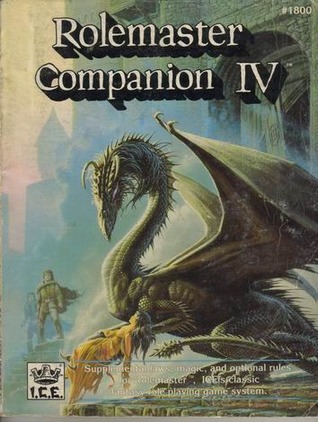
The Cover of Rolemaster Companion IV
Rolemaster Companion IV

One of the nicest features of all the Rolemaster Companions after Companion IV is that they contain a couple of pages of tick lists with all the optional rules and how important that option is, whether it is considered a core rule now, is it highly recommended, does it add a lot of complexity to the game and so on. As two separate GMs we can complete the tick lists apart, see what is the same and then look at where we diverge and discuss those particular rules.

I think this is a brilliant concept of not only identifying every rule and where to find it but also how important the game designers felt each rule was. I am a bit of a miserable git at times and think that every optional rule I introduce has to add something substantial to the game, to pay its way so to speak.

The framework we create in the coming months will probably be our default game now for the next ten years unless I can convince them all to do a Rolemaster Unified Beta II play test.

Watch this space.

Faerun Campaign Update

Today I am traveling to meet up with my players for the second weekend of my Rolemaster / Faerun campaign.

For the first session I only had three of the four players so the party looked like a Sorceress, Cleric and Warrior Mage. This time those three will be joined by the fourth player character and an NPC being a Paladin and a Mystic, The mystic is “Little Miss Defensive” from previous posts. I finally made up my mind on Tuesday night as to which version I was going to use and the mystic won out in the end.

All in all this is a very magical group of characters that is pretty much what I wanted. Every realm is represented to some degree and there is a little bit of cross over which is good. In my world magic users of all persuasions tend to have less spell lists each to force players into deciding what is really important to them. If you look at the realms of magic in this party you have essence/channeling (sorceress), channeling (cleric), arms/essence (warrior mage), arms/channeling (paladin) and essence/mentalism (mystic). Everyone is unique but at the same time they can share and learn from one another.

I have seen a few people on twitter talk about tweeting their game ‘live’. I am in two minds about this. Would it be distracting to be constantly picking up your phone to tweet? I think it will not do any harm to try it at least once so it is my intention to tweet the party progress tonight and if it seems OK then tomorrow as well. We will see how that works out.

I have given the stats for a few monsters that are common to Faerun but new to Rolemaster over the past three months. Once the party have met them, and that should happen this weekend all being well, I will share a few more creatures with you.

If you are a D&D DM considering trying Rolemaster then let me know any creatures you know and love and I will make sure you have the stats if they are not in any of the official books. The conversion process is pretty simple and not particularly time-consuming.

In the meantime there is a link to my twitter account to the left and look out for some tweets from me after about 6pm.

Rolemaster and Faerun – A little Background

Rolemaster Logo

I thought I would share a little bit of background as to why I am so interested in Rolemaster and Faerun. The game I am running is not your usual Friday night gaming session. My players and I get together just twice a year for a gaming only weekend where we manage about 30hrs of pure roleplaying once you take out the time needed for sleeping and eating. The next of these mammoth weekends is just eight days away and I have been working up to this session since November last year.

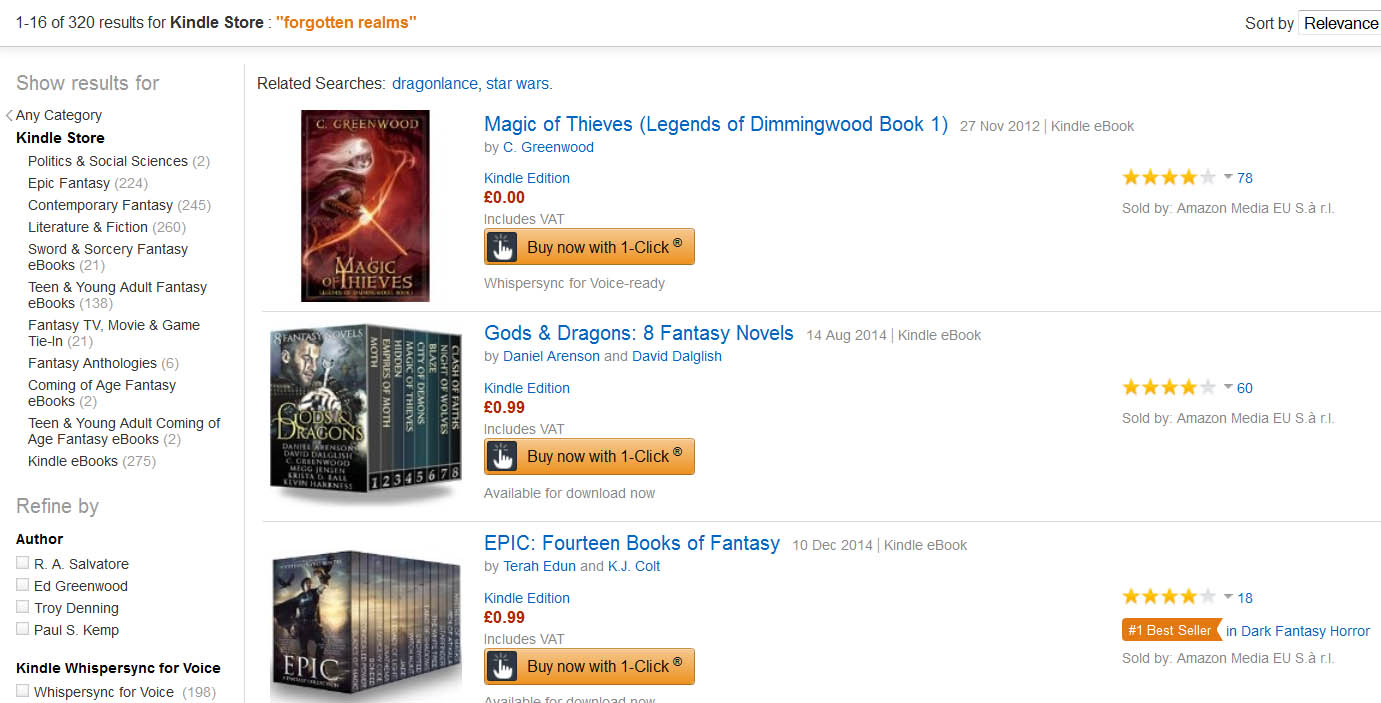
The game is set in Faerun as you know and after the time of troubles. I have never played a game in the forgotten releams before but I do own a lot of the materials, picked up cheaply second-hand, and none of my players have adventured in there either. Due to the infrequency of the gaming sessions I wanted something that would keep the game alive between meetings. There are so many forgotten realms books now on kindle for free or so cheap as to be almost free

Forgotten realsm books on Amazon
14 books fo 99p or if that is too expensive then you can have books for free.

that both my players and I could read about the world gaining in our understanding of the setting and its lore.

My players are familiar with Shadow World, a native Rolemaster game setting, and one of the features of Shadow World are Eassence Storms. Faerun after the time of troubles had areas of wild magic and for me I can make the two almost synonymous and give my players a point of reference they can identify with.

I hope you can see that as a setting the realms is an incredibly easy option even if like me and all my players you have busy lives and obligations and cannot devote the hours and days required to create a believable and rich bespoke gaming world of your own. I honestly believe that if you have never visited the realms and you are planning on starting a new campaign then it is definitely worth your consideration.

If you are coming from the D&D world then as a transition to Rolemaster it is easier to have as many familiar points of reference for your players and again the realms can serve you well. Not every monster or race has a direct one to one equivalent but that is one of the things I am addressing here. I am creating the Rolemaster statistics for anything I find in the forgotten realms that I cannot find in the Rolemaster rules and more importantly I am going to create them for the forth coming new edition of Rolemaster, Rolemaster Unified (RMU).

I have up until now been holding some things back. These are creatures and such that my players have not yet met and I do not want to reveal before the game session coming up just in case they stumble upon this blog. They do not know I am writing this and I am not going to tell them. Once they have met/defeated and have the measure of the next new monster on the menu then I will happily share the stats with you all.

I will of course share with you the parties progress as they get on with their adventures.

PC Perils #4 The Wamping Willow Has Nothing On This One!

Rolemaster Logo

Don’t say I didn’t warn you but this is going to smack some one up really badly when it unwinds!

Tree showing distinct twisting in the trunk.
This is going to hurt when it unwinds and takes you full in the face!

In the Monster Manual we had Treants, in MERP they were Ents and Active Trees. If you are just coming to Rolemaster then Creatures & Treasures (Page 51) gives you three varieties to play with, the Awakened Tree, Slowroots and Treeherds being 5th, 10th and 20th level respectively.

Your Awakened Tree is the the classic horror moving dark forest that the innocent fool wanders into before disappearing never to be seen again while everyone in the audience is thinking “Why do they always go into the forest in the middle of the night all alone when people are disappearing?” (If you know what I mean.)

Your Slowroots and Treeherds are the more ‘goodly’ variants and the Rolemaster equivalents of Tolkien Ents as seen in the Lord of the Rings.

I am pretty sure the tree in the photo above is completely natural and the twisting just a turn of fate (groan!) and that I didn’t catch it about the beat the hell out of me. If that is true then how would a party of adventurers ever be able to tell when they walk into an ambush of this kind?

Rolemaster Unified in 2015

Rolemaster Logo

I did say a while ago that I was going to give the gameable stats for both RM2/RMC and RMU for everything I write about. In Nicholas Caldwell’s directors briefing this month he says how well the second beta of Rolemaster Unified is coming along and there is the promise of the RMU Creature Law to come too.

I cannot see the benefit of statting things out for RMU Beta 1 when Beta 2 is just around the corner so for the time being I will skip the RMU stats and just stick to RM2/RMC.

What I am really looking forward to is getting some RMU stats for the Undead. There are a few adventures I would like to create using the undead as the main existential threat with an evil cleric or necromancer pulling the strings in the background. I like playing an NPC to the absolute max of their ability to see just what they could achieve.

This is one area where Rolemaster spell casters massively out-gun their D&D counterparts. In the AD&D that I used to play Animate Dead was a 3rd level Cleric and a 5th level Magic User spell meaning that the characters needed to be 5th or 9th level respectively to case it. In Rolemaster your evil cleric can go around raising his Zombies or Skeletons from 1st level although they will only last for a minute a level at that point. From 5th level onwards he or she can create permenant undead followers.

One of the beauties of Rolemaster spell users and spell lists is the way you can combine things. With Channeling users such as Clerics they can use Symbols to create your classic standing stone type shrine that will happily create an undead ‘guardian’ once a day if an infidel were to wander by. Again this is a 5th level spell. So even if the evil cleric isn’t at home when the players come knocking they still get to fight any permenant undead they ay have created and have others effectively respawn should the players return the following night.

Fearûn definitely has enough evil gods to give any GM ample opportunity to play with the undead, evil clerics and necromancers in abundance.

PC Perils #3 I Will Arise!

Rolemaster Logo

After my last PC Perils post (Whats in the hole?) we left the party facing trolls, hill giants or maybe an entire abandoned mine complex. We catch up with them again fleeing the woods and heading for higher ground and so their adventure continues in our little photo story.

Is that some sort of spire I can see through the trees?

Is that some sort of spire I cna see through the trees?

341
Yes it is a definite spire

342
It doesn’t look like a church.

344
What on Earth is that? It looks like a three sided pyramid.

345Hmm, that says “Resurgem” above the crest or “I will arise”.

346

Who puts a door in the side of a pyramid? Wait a minute what’s that?

347

Oh you are kidding me right? Someone has tried digging their way into the burial chamber of whaterver it is in there!

So there they are having emerged from the woods to find a granite pyramid wth a door in the side that someone has had a go at and inscribed in Latin “I will arise”. The family crest reads Nil Desperandum” or Never Dispair.

This just has to end badly for the party doesn’t it? In a world with magic and ‘long door’ or ‘portal’ spells the stone door is no barrier to something magical within but would stop frightened peasants from getting in and burning the thing whatever it may be.

From a real world point of view this pyramid is real and really is at the top of the same hill with the abandoned mines in the previous perils post. The person who paid for its construction also left a trust fund to have local children brought up to it every 5 years to dance around it. It was intended to be his burial place but by chance he was away in London when he was taken ill and died just outside the city. They still open the doorway every 5 years to see if he has risen from the dead yet as per his instructions despite the fact that he isn’t in there. If you want to read a bit more about it there is a wikipedia article about John Knill.

As a GM there are never enough really good reasons to use the undead if find and it would be  a shame to pass one up.

Monster Snobbery

I am perfectly happy to admit that I am a snob. Not just any kind of snob though, I am a monster snob. I am running my campaign set in Faerun and the Forgotten Realms but using Rolemaster in preference to AD&D. There is no problem doing that and Rolemaster gives you a set of conversion rules (Creatures and Treasures pg 92-93) for doing the job. As it happens the majority of common monsters have already been converted so there are not that many to do most of the time. So where does the monster snobbery come from?

Part of the conversion process from AD&D to Rolemaster is in balancing the adventures. A pair of 3rd level AD&D fighters may well wade through 2-24 Kobolds but you try that in Rolemaster and you have a pair of very dead fighters on your hands probably in under 30 seconds. You need to balance the encounters for the much more dangerous combat system for a start. Sometimes you can just reduce the numbers encountered but that often just isn’t an option. Any sensible Dark Lord would not just put a single guard at every gateway, they don’t use just three warders to escort the party of five PCs who have just been captured and that viking longship did not just have two rowers!

So  if you cannot balance the game and the challenge there where do you look? Many of the Forgotten Realms source books provide starting adventures and that is where my party of adventurers are right now below the Tower of Ashaba. In addition to the Drow they are going to have to fight, the main point of the adventure, there are a number of incidental encounters.

Here are the cast of monsters (just the races not the numbers) that make guest appearances as one-off encounters:  Aballin, Cave Badger, Gambado, Gelatinous Cube, Huge Spider, Moray Rat, Mud-man, Piercer and Rats. That is quite a cast and that is in addition to six additional races including a Drow priestess and an evil magician that make up the core adventure.

Now looking at the supporting cast an Aballin is a pool of intelligent living water and a Gelatinous Cube is a giant single cell creature. It is these two that I have a problem with. Funny enough a Mud-man I can cope with. There is enough wild magic around (akin to Eassence storms on Kulthea) to animate a Mud-man, after all there is an awful lot of life in a pool of goo. I just cannot believe in malignant intelligent water or giant cubes of jelly.

Working on the principle that I am god ergo I don’t like it so it doesn’t exist. And that is probably the ultimate snobbery. If I don’t like you, you don’t count. This also goes part way to the balancing of the adventure.

There was another creature in that cast that you may not know, the Moray Rat. This is a Faerun creation and one that I do like. I will share the stats for them in a future post.

A Drow Fighter RMU vs RM2

Rolemaster Unified Character Law Cover

I have created a Drow fighter using the current Beta version of RMU Character Law. I have tried to stick as closely to the previous Drow warrior I used for comparing the four elven races so as to be directly comparable.

To boil down a character to the absolute minimum I have a little comparison table for you.

System DB Primary OB
Perception #hits Stalk/Hide
RMU 15 38 11 53 15
RM2 20 35 8 49 -25/0

The RMU character is 2nd level and the RM2 character is 1st level but if you take into consideration that an RM2 character goes through Apprenticeship and Adolescence and before becoming Level 1 and starting play both characters have two levels worth of development points and a single lot of stat gain rolls.

So the RMU character has slightly higher OB, perception, #hits and Stalk & Hide skill but the RM2 character has a higher OB. To be honest the differences are negligible.

If you look in more detail at the character sheet then you will see that we have lost the blind fighting skill, Iai Strike and the tumbling skills. Those skills do not exist in RMU (yet) and the Tumbling Evade works slightly differently. What the character does get is a much wider education, a greater range of combat skills including more weapons and unarmed combat and I said when I created the original character that I wanted to buy Poison Lore but couldn’t. The RMU character has Poison Lore (2 ranks).

What this has shown me is that although I quite liked the stripped down skills lists, that demand will almost certainly that they be reinstated. All the mechanics are in place for how blind fighting would work (it would be a Combat Expertise:Blind Fighting, the cost would be 1/2, no stat bonus and it would reduce the penalty for fighting whilst blind). Iai strike would be identical and it would reduce the penalty for drawing a weapon in the same round as your attack. It is all there ready to roll but that just means that so is all the skill bloat. It may not be quite as bad. Mechanical:Traps seems to serve as Build  Traps, Set Trap and Disarm Trap and that has to be an improvement. I never liked having to separate out Build and Set as two skills.

Just so you can go over them here are the two character sheets. The RMU one is a bit rough(!)

Just to clarify a little bit of shorthand I have used. After a skill it may say something like RC1 or C1122. That means that the first skill rank came from his racial background and the second from his culture the third from his 1st level DPs. In the second example he has one rank from culture and bought two ranks at each of level 1 and level 2.

I hope that makes sense.


Quaggoths and Boogin

Rolemaster Logo

These are the two races/creatures I discussed last week as being both tied deeply into Drow culture. These two are in my opinion near perfect low level monsters to throw at beginer parties.

Why? Well if you look at their stats below they have a low OB, low-ish DB and not many hits. So they should in theory be easy to kill. When you are very low level with a poor OB yourself it is in many ways easier to kill a large creature than it is a man-sized one. If you are only doing A & B criticals then the chance of getting a killing blow is probably just 1% but Large criticals are open ended so you have a 5% chance of getting a takedown as any open-ended critical is enough to take out one of these guys.

It is not just that they are easy to kill that makes these two interesting though. They both have the tendency to go into a Frenzy. this gives them effectively more hits and a higher OB (+30). So if the characters are doing well then they can go into a Frenzy and get tougher if they party are doing badly then they are unlikely to go into a rage and they stay relatively weak. If they do go berserk then the tactical advantage goes to the characters and there is a likelihood that a Quaggoth may accidentally take out one of its allies.

When the party meet the Quaggoth they could be just in a small partol of just two or a small tribe of over 20. They may be lead by Boogin, their more inteligent half breed cousins or even orcs. Finally where you find Quaggoths and Boogins you find Huge and Giant spiders.

All in all you get a creature that is both weak and defeatable but also challenging and dangerous, you can use them in small encounters on their own or in mixed groups of varied races and species. Finally they are so closely linked to the Drow that I would suggest that a character with Faerie Lore (a fairly common skill) would recognise them as a race often enthralled by the Drow. Thus a single Quaggoth could be a plot hook into a bigger adventure.

So down to stats…

I have used the standard rules from Creatures and Treasures I to do the conversion to RM2/RMC

Quaggoths

Quaggoths are sometimes enslaved by other races, notably drow. Quaggoths usually live in underground lairs. They are about seven feet tall and covered in shaggy white hair, though brown-haired quaggoths are sometimes seen. When quaggoths live above ground they are savage, bestial hunters who live in nomadic tribes.

AT3(30), MV 150MS/AQ VF, Level 2, #Hits 20, Number encountered 2-20. Attacks Lge Claw (30OB) or Greatsword (20OB). All Quaggoth are immune to poison. They are 11′ tall and take Large criticals.

70% of Quaggoths groups are unarmed and will fight with their claws but 30% of groups will be armed with greatswords. For every 12 Quaggoths encountered there will be a leader wielding a battleaxe.

Quaggoths can speak haltingly and have a vary limited vocabulary.

They hate all surface dwelling elves.

Boogin

Boogins are brutish, hairy orc-quaggoth crossbreeds sometimes known as “spider killers,” a nod to the constant pressure from drow slavers. These half-breeds are more like quaggoths than orcs, though slightly weaker and more in control of their rages than their beast side.

AT3(30), MV 120MS/AQ F, Level 3, #Hits 55, Number encountered 1-10. Attacks Greatsword (35OB) or Spiked Club (20OB). All Boogin get +100RR vs poison. They will go into a Frenzy when attacked to get +30 OB and x2 concussion damage.

Boogin are the slightly more inteligent half orc/half quaggoth cousins of the pure quaggoth. They are often employed by drow as overseers of quaggoth patrols and are better able to follow orders.


Race Ag Co Em In Me Pr Qu Re SD St Chn Ess Men Poison Disease Size Fat Hits Rec Life DP
 Quaggoth -2 +1 -2 +1 -2 -2 -1 +2 immune L 25 x1 100 11
 Boogin -1 +1 -2 +1 -2 -1 -1 +2 immune L 25 x1 100 8

 Traits and Flaws

Quaggoth
Immunity to poison (costed the same as immunity to disease), Giantism I (11′ tall), Natural Armour AT 3, Natural Attack (Claw), Animal Empathy (Spiders), Frenzy.

Boogin
Immunity to poison (costed the same as immunity to disease), Giantism I (11′ tall), Animal Empathy (Spiders), Frenzy.

I have not created these races as player character races. I am just aware that there are a lack of creatures for the RMU playtest and with these, the drow I published this week and the orcs goblins and trolls from Character Law and the few creatures from the sample Creature Law (add in the special mushrooms and fungi from the herbs and poisons tables for good measure) that is almost enough to run an adventure into the Underdark.
The Drow (a Rolemaster Unified Race)

Rolemaster Logo

A while I ago I created a direct comparison between a Wood, Grey and High Elf and a Drow Elven fighter (see my previous post on Elven races). As part of my commitment to Rolemaster Unified (RMU) I started to look at adding Drow to the list of races provided in Character Law.

The way that stat bonuses work in RMU diminishes their importance somewhat in comparison to RM2 (especially if using the Companion I background options). Gone are the days of walking around with a +40 Strength bonus. Because of this I did not really feel the need to adjust the stat bonuses as provided.

Here are the stat bonuses for a High Elf in RM2 and RMU

System Ag Co Em In Me Pr Qu Re Sd St
RM2 +5 +5 +5 +10 +10 -20
RMU +2 +2 +2 +2 +2 -4 -2

You can see that the basic concept of the elf is the same with pretty much the strengths and weaknesses lying in the same areas, although RMU elves are physically weaker it would appear.

What really defines the races are their racial talents. I have never used talents before. I believe they first emerged in Talent Law, a RMSS book I do not own and have not read. RMU also uses Talents and as a way of defining the particular specialism of one fantasy race over another they do work very well. RMU gives every race a number of bonus development points (DPs)  as a one-off bonus, the more the races talents benefit the race the less bonus DPs, the less bonuses or even if the Talents are actually flaws then the more bonus DPs you get.

The RMU elf is the most talented race in the starting line up and as such get the least bonus DPs. There talents are immunity to disease, meditational sleep and nightvision. OK I am happy with that, that is exactly what you would expect to find if you opened up an elf and looked inside. So how do you turn a generic elf into a Drow?

Firstly the Drow are well documented as being totally insensitive to light. They live in the underdark and if they do ever venture to the surface they only ever do so at night. RMU usefully has a light sensitivity ‘flaw’. I have given the Drow a -75 when operating in full daylight.

Secondly nightvision is not going to get you very far in the underdark but RMU has the option of Darkvision. This allows you to see in any natural darkness. This is just what a Dark Elf needs to stop it falling over the furniture so we have that.

According to all the sources on the Drow they have two innate spell-like abilities. Levitation and creating Darkness. You can add innate spells to a race by buying them of their spell level. In this case Levitation is 4th level so 8 points and Darkness is 5th level (Dabbler base list).

That is it. The Elf now looks exactly like the Drow in the books and given the net pluses and minuses of buying talents the Drow get 7 bonus DPs.

The first character I will be rolling up will be our Drow warrior from my previous post who in RMU terms will be a Drow Reaver Fighter. I will attach a character sheet as soon as I have one!

Looking at the RMU playtest discussions on the ICE forums one of the issues seems to be a lack of monster stats for running a test campaign. This Drow race gives anyone wanting to playtest the new RMU an evil race to use in addition to the goblins and trolls provided in Character Law.

One Thursday I will be giving you the Quaggoth and Boogin races meaning you run adventures set in the underdark.