Is RMU missing an opportunity to fix the rules system?

Rolemaster Unified Character Law Cover

I have been doing a bit of homebrew rules writing this week and I have taken bits and bobs of other games and mashed them all together to get a set of rules that did a particular job. It isn’t rolemaster so doesn’t belong here but bits of rolemaster ended up in what I was doing.

Now if you take bits of different games you get different mechanics and different ways of doing the same thing. In rolemaster particularly RM2 if you look at how skills work you you get different ways of doing things in the same game!

Lets take buying skill ranks.

Some skills you can buy as many ranks as you like each level eg Armour, languages and spell lists.

Normally you can buy one or two ranks but occaisionally some professions can buy more etc Healers and First Aid.

Some skills have ranks that always give a +5 bonus eg Armour.

Most skills have deminishing returns eg +5, +2 +½.

Some skills each rank is only worth +1 eg Ambush and Stunned Maneuover

Some skills have multiple options so Stunned Maneuver could be +1/rank but could be +5, +2 +½.

Some skills can only cancel out penalties but not give a bonus such as Armour and Transcend Armour

Some skills cancel out penalties but can give a bonus on top such as Spacial Location Awareness.

Some skills have the same function or role as other skills but at different costs and use different stats such as tumble defence and adrenal defence, Iai Strike and adrenal quickdraw, spacial location awareness and blind fighting.

Going back to the costs some weapons and musical instruments use the same mechanic of the first you learn is the cheapest, the second the next cheapest and the more you learn the more expensive they get. Languages on the other hand all cost the same regardless of how many you learn. Martial arts has yet another mechanic for its costing with the prices remaining constant but prerequisites on what you can buy.

Some skills come with special rules attached such as iai strike that can have you throwing your own weapon away on a bad roll. Subduing is another

Is all of that really necessary? I can understand that some skills are moving maneuvers and some are static maneuvers and different rules apply but RM2 has reputedly 200 skills all told and apparently 200 rules for how to apply each one. I kid you not! You would have thought that sprinting would be a MM skill to be applied as a bonus to MM rolls when sprinting. Wrong! MM rolls normally give a result that can go over 100% to show greater that expected progress of faster completion times. It would make sense for sprinting to be a bonus and help get those over 100% results but instead sprinting has its own special table that limits the gains you can get.

Now that is only a tiny snapshot of the problems in RM2.

I don’t know RMSS/RMFRP but I do know the real sticking point for players of either RM2/RMC and RMSS/RMFRP is the skills system. RMSS has categories that you have to do something with before you can buy a specialism but it has everyman skills that operate a buy one get a dozen free or something. On top of that you then get training packages that I think give bulk discounts and talents that give bonuses or cancel penalties. I am possibly being unfair to RMSS but as you all know I love minimalism so it was never going to be the system for me. There is nothing wrong with it if it appeals to you.

So where does RMU come into this?

RMU has the opportunity to really sort out the mess of different mechanics for skills. Do skills cancel out penalties, the new Combat Expertise works that way but will any future flying skill or Spacial Location Awareness skill work that way? What will happen if you get an EO downward roll on a quickdraw/iai strike roll? Can you get a downward roll or will it be a fumble roll?

I am really looking forward to the final draft rules. I want to apply my classless levelless house rules to RMU and as such I really want them to sort out a long lasting structure that will prevent the balls up that was the RM2 skill system.

That turned into more of a rant than I intended. It was not supposed to be that way and RMC (derived from RM2) is my weapon of choice. The more I looked the more inconsistencies I found and the more of my own post-it notes I found in my old paper RM2 rule books.

I have only seen the Beta II rules and that does appear to be falling into the different rules for different skills trap with the Control Lycanthropy skill having its own rules as do Piloting, Jumping and Adrenal Focus. There are also different Knowledge tiers for lore skills that do not apply to more physical skills. I repeat though, these are Beta rules and not the final rules. I hope you can see the reason for my concern. if you start off setting a bad example it is very hard to fix it later.

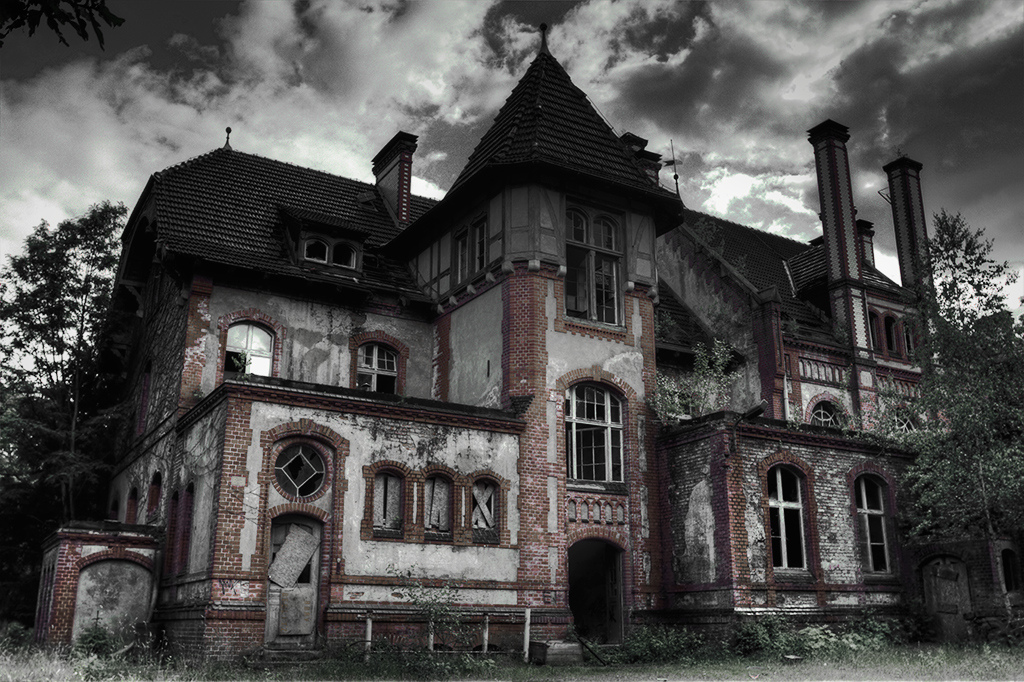
Haunted House Time

In the next session I want to send my party to a haunted house. This is a really good opportunity to put into practice my resolution of piling on more atmospheric description (see last weeks post)

What I was hoping is that I could ask the readers here for more tips and your experiences of running a haunted house session. I am planning on the final showdown to be a zombies attacking from the grounds, breaking in through the doors, windows etc and slowly forcing the party up the stairs to the top of the house.

The lure to get them to the house will be to a meeting where they can learn something really important about one of the characters estrnged family.

Between the party arriving and the grand finale I want a skills based challenge for the party.So far I am thinking of having the house is a very poor state of repair so I can collapse the floor under someone (using moving maneuver skills), locked draws in a desk (subterfuge skills), Some kind of vault in the cellar (some kind of Lore based challenge maybe with runes that need interpretation).

I want to use the weather a lot with the wind ripping shutters open and banging them around, blowing curtains around etc. and flashes of lightning lighting up the scene in monochrome (probably revealing a zombie arching right over one of the party before the attack starts!)

Do you have any good advice? Is there anything you think I should avoid?

The party are all 3rd level but I feel they are punching above their weight (some good spell aquisition rolls have given them a rich set of spell lists along with the fact that ever character is a semi, hybrid or pure spell caster).

Engaging the senses

Rolemaster Logo

I have been through the adventure notes today adding post-it notes to scenes and locations with little added comments about sounds, smells and little visual ‘clips’ such as dust swirling in a vortex as a door slams shut.

These serve no purpose at all except to remind me to be more descriptive, not great long tracts of prose to be read out just little details to drop into the scene. I am hoping to bring scenes to life a little more, to make the sessions are little more atmospheric and engage more of the characters senses through the players’ imagination.

I am not sure why I have this love affair with post-it notes, I think it could be the immediacy they lend to editing. They are also great for moving anot NPC or monster around a location.

I read a post the other day about turning off your electronic devices while you are playing so you can focus on the game. I think that although I love having PDF rulebooks and my PDF GMs quick reference if I had to choose between post-its and and my tablet I would choose the sticky notes every time.

The motivation for the senses notes is two fold. Firstly I think it will make for a better game experience. Secondly I have an ulterior motive. I need to do to things in the next session. I want to try and make my players characters bond more. This may require more role play and less killing things so engaging the players in the world may help. I also want to ‘teach one of my players a lesson’. That sounds harsh but the way he has built his character is to pile all his DPs into weapons, body development, Spells and perception. The only other skills he has are things I gave away free or skills I pretty much insisted he buy. That is OK if you want to play a completely uneducated oaf but on the contrary, he keeps insisting that his character would know this or that because of his background.

In the next session I am going to make the challenges more skills based. Normally he is the überman of the party, the highest OB, the most spells, he sees danger coming and is normally the last man standing. I want to put him in a difficult situation where his sword is not going to help him.

Indirectly my sensory notes will feed into the slight change of tack. I don’t want to make him feel victimised, more like I want to demonstrate the value of being a more rounded character.

I also know now what I am going to do with the party. I think a haunted house is in order. I cannot remember ever doing a haunted house scene with these players and I have been GMing them on and off since 1985. I thing it must be a bit over due.

RMC House Rules – My Experience System #3 Spell Lists

Rolemaster Logo

There are really three parts to this, improving the spell lists you know, learning entirely new lists and improving your power points. I will take each in turn.

woman-1072572_640

Improving the Spell Lists you know

This is the easiest bit. If you cast a spell off a list in a meaningful situation (not just rattling off a few spells at the end of the day just to tick the box) then you can mark the list as used. When you are in a situation where you can study, reflect and improve then you can roll to improve the spell list. For every rank you have it counts as 5. Roll a D100 OE and if you roll over the current total you gain a rank. So if you know Fire Law to Rank 5 (5th Level) you would need to roll 26+ to learn the 6th level spell. Progress through ranks 1-10 is pretty quick but then slows down. Once you get to rank 19 you need an open ended to improve.

Learning entirely new Spell Lists

You need to study to learn new lists. I use the same rules as are given for researching new spells for studying new lists. Essence lists require books and a teacher, mentalism require meditation and channelling, prayer. Hybrid lists need to meet all the requirements. If there is no first level spell then the time required would be to research the first available spell and at that point yu would have the number of ranks required to cast that spell.

Improving your Power Points

This is based upon improving your Power Point Development Skill. If power points are used in earnest (just as with casting spells that count for experience above) then when you get a chance to rest and improve then you can roll to improve your PPD skill.

This means that starting characters get more power points quite quickly but it then levels off, just like learning spells. That really is the intention of the entire experience system. Everyone should improve quite rapidly in the skills, stats and spells they are really using. Once they are competent then that progress slows but it never stops. Unless you are a real one trick pony each time when experience would have been dished out you will probably improve in something, a little here a little there. Having characters pay for training brings real benefits at that time, not six months later when they finally level up.

Finally, this system works really well with the new RMU spell law. The diference is that every level in RMU has a spell associated with it. RMU kind of expects characters to be higher level when they start so having characters improve quickly fits in well with that expectation. In RMC, my preferred system the gaps in the spell lists does add a bit of extra excitement when a character gets a new spell as often the rank will improve but this does not bring any new abilities. It is rather swings and roundabouts as to which you prefer.

RMC House Rules – My Experience System #1 Skills

Rolemaster Logo

This is how I want to work the experience system. I am going to treat Skills, Stats and Magic in three different posts, not because there are different rules but because the way I envision them being handled is slightly different.

As characters get there cultural background ranks and their 1st level development points to spend. The standard rule is still in place saying you cannot buy more than 2 ranks in a skill unless it is starred like a language skill or moving in armour. So a first level character entering play will have no more than 2 ranks in their primary weapon. Their total skill will be made up of Skill + Stat Bonus + Professional Bonus.

In my variant Stat Bonuses, being additive rather than averaged will be higher and I have scrapped the Self Discipline penalty for the elves. so I accept that the characters stat bonus will be higher.

A starting character should typically have a starting OB of about 40-ish but a skill bonus of only +10 from the two ranks.

Depending on when and how you choose to give our experience, I know this varies from GM to GM, you ask the player to roll a d100 OE against every skill they have actually used or explicitly practiced (more on practicing later). If the player rolls greater than their current skill they gain a rank in that skill.

So in our starting out player example a roll of 11+ would give a free rank with that weapon.

If the player simply puts a small tick against each skill that they use and get at least a partial success in those are the skills they get to roll against.

In this way the allocating of experience take only a couple of minutes. There is no allocating of development points and trying to balance your budget. There are also no sudden leaps forward in power.

What also happens with this system is that the higher someones skill the harder it is to roll above that number so their progression slows. I am retaining the deminishing returns so the first 10 ranks give a +5 and then the nesst +2 and so on but the system is naturally balancing so that the higher your skill the harder it is to learn and improve.

On the other hand under standard rolemaster you could buy a single rank in a skill use it every day, ten times a day and never improve if the player doesn’t devote DPs to improving it. With my system every skill you use gets that chance to improve.

What you lose is rapid skill development but you gain more rounded characters. If you allow characters to roll this skill rolls more often than you dished out experience points then the speed of progression is about the same.

The only skill that does not get rolled this way is body development as that is covered in my next post, Stat Gains.


RMC House Rules – Character Creation #7 Spell Lists

Rolemaster Logo

There are two significant bit so to learning spell lists for my house rules.

Firstly I will be using pretty much the Spells as Skills rules. You only need to learn the 1st level spell to enable you to start progressing up the spell list. This means that for the most part you will only need to spend 5 -15 development points to get the full list at first level.

Beyond first level it will typically take a week of study from a suitable source to gain the first rank in a spell list. That is taken from the spell research rules. That would give you the first level spell and from there you need to use the list to progress in it. If we take a list like lofty movement then that has no 1st to 3rd level spells so it will require 4 weeks of study or 20DP as a first level character to learn.

The second part is the way that spell effects are based upon level. There are spells that have a duration based upon level and these are the easiest to adapt. Here you read ranks in the spell list as the level with that spell. This means that you may have a duration of 3 minutes with one spell and only 10 seconds with another but then if you rarely use the second spell you are likely to be less good at it!

The second reference to level are spells like Sleep V that effects 5 levels of target. For this I will use 2 ranks in Body Development equates to 1 old style level. So Sleep V now effects upto 10 ranks in body development.

That seems balanced to me. Of all the changes to make to Rolemaster these changes to Spell Law are the simplest but also have the greatest effect on balance and game play.

Spending just 5DP (out of 50 at 1st level) to get a spell list means that anyone wanting to play a Mage like character can easily afford possibly 5 or 6 lists and still have a range of other skills.

All the rules for learning portions of lists are now gone.

Everyone is always 1st level so resistance rolls will work the same. If you are casting a (Base) spell then the rank in the spell will be the attack level.

That all seems to work. I suspect that in play spell users will end up with more spells sooner but the self regulating nature of the experience system means that this will soon level off. As it is at the higher levels that Rolemaster seems to breakdown that point should be almost pushed back to the points where it doesn’t happen any more.

Interestingly This house ruled version should work brilliantly with the RMU spell law when the final version is released as every list in that has all slots filled. That would standardise the cost of all the lists and give beginning characters a nice range of spells.

RMC House Rules – Character Creation #5 Profession

Rolemaster Logo

One of the problems for D&D players coming to Rolemaster is that although ‘Profession’ appears to be pretty much the same as ‘Class’ they are definitely not the same thing!

There are significant flaws in Rolemaster professions.

  1. Once you choose a Profession in RM just about everything is set for life and is unchangeable. If your chosen profession virtually excludes magic then whatever happens in the future you will be forever pretty much excluded from magic.
  2. There are so damn many professions. Professions define the costs of your skills and the base spell lists that can be learned. The difference between a fighter and a barbarian is just the skill costs, the difference between a witch and an illusionist is skills and base lists. Choosing profession comes down to which profession has the best skill costs for the skills you want to buy and the closest fit for the spells you want cast. I have ended up viewing it as institutionalised min/maxing as when you get up to 70+ professions there has to be optimised to give the lowest price for exactly what you want.
  3. The professions are scattered though so many books that if every GM does not have all the same material then your particular profession simply may not exist.
  4. Not all professions are as equally balanced as others. There are some optional rules that when combined with some of the professions either makes them unplayable or unstopable. I have seen games where one single Directed Spells skill is used for ALL directed spell attacks. In the case of the Warrior Mage profession all of their attacking spells are on a single list so with a single skill they can attack with their full OB with every attacking spell. The magician who is meant to be the specialist with elemental attacks would have to spend 10 times the development points to be equally good AND could not even start to learn the skill in Lightning bolt until twelth level. The Warrior Mage could start learning it at 2nd level.

As you can see there are issues with professions as they stand. I propose using the No Profession as the basis for all characters.

The No Profession is a standard set of skill costs that are uniform to everyone.

Normally once you have chosen your profession you have to buy skills using your development points at least twice. The first time is your ‘apprenticeship’ level, essentially 0th level. The second time is your 1st level skills and then a third time to show what you are learning at the moment. As skills are spread thoughout most of the rolemaster companion and Law books it can be a challenge and very time consuming to evaluate all 200+ skills available to you. 200 skill costs for 92 professions makes over 18,000 different combinations.

In my version there is only the No Profession, only about 40 skills and you buy your skills only once. There will be more about skills later.

Professional Magical Realms

In addition to the skill costs your profession also gives you a Realm of magic, six base lists and a set of professional level bonuses.

The realm of magic remains the same as standard RM in that you get the choice of one realm from the three standard realms (channeling, mentalism or Essence). Technically I do not insist you choose your realm until you start to study some sort of magic. On the other hand though your power points will be based upon one of your stats. This means that if you envision casting spells then you will need to ensure you have some power points from your stats before you start.

If you have spell lists from just one realm then all your power points will come from the stat governing that realm (EM), (IN) or (PR). If you learn a list from a second realm then your power points will come from the average stat from the two realm stats. If you then learn magic from the third realm then all three stats will be averaged to find your power points.

You do not need to chose all your base lists right from day one. There are 10 lists in total that you can learn above 20th level and these will be the first 10 lists you learn above 20th level. As you can only learn spells but actually using them it is logical that your ‘speciality’ will be the magic you have proven best at.

Professional Bonuses

The professional bonuses or level bonuses will be the ones as described on pg 128 of the RMC Character Law. This uses the RMSS skill categories. The only variation here is that you may swap up to 2 of the bonus categories for example you may choose to move the +1 from Outdoor Skills to the Urban category and move the +1 from Athletic Skills to Directed Spells. This allows you to customise your professional bonuses a little so if you want to play a wizardly character you can shape him or her into a more academic type rather than the athletic type that the No Profession starts out as. Once you have moved a set of bonuses they cannot be changed later.

That is it. The No Profession is intended to be a bit of a blank canvas from which you start building your character.

RMC House Rules – Character Creation #4 – Cultural Background

Rolemaster Logo

Cultural Background is another element of RMU that I really like. The mechanism is really simple. There are a number of predefined backgrounds such as urban, nomad, coastal and sylvan, plus 4 others in RMU, and there is a mix of skills that are typical for people growing up in that culture. So you choose your culture and you get free skill ranks to assign into skill categories defined by your culture.

This has two immediate effects. Firstly it replaces at least in part the adolesence level for buying skills. you are just given a few ranks in some or all skill categories and regardless of the cost you just pick the skills that you want. The second effect is to force every character to have a good balance of background skills.

Avoiding Meta-Gaming?

I have a player in my face to face game that has only spent development points on weapons, magic, body development and perception and a couple of other skills that I insisted on. For hobby skills I give away 13 ranks that you can assign to secondary skills and he always tries to assign some or all of them to combat and magical skills. Compared to all the other characters he has the most hits, the biggest OB and the most magic. On the other hand he gets very upset when the challenges facing the party require tracking, lore or any of the other useful skills he eskewed in favour of big weapons.

I will confess that every now and again I take great pleasure in seperating him from he rest of the party by a wall, pit, door or whatever and give him a really simple challenge that everyone on one side of the door could easily do and he is completely perplexed by.

It is also no surprise that this player is the biggest meta gamer in the party who most of the time is using his own knowledge to decide his characters actions rather than what the chracter knows.

How Cultural Backgrounds Work

Anyway back to cultural backgrounds! Each background in my variation comprises 35 ranks spread over 13 different skill categories. The average skill costs for a single rank is about 2DP so that equates to about 50DP as an apprentice level although the single biggest block goes to languages which are traditionally cheaper.

The point of these character cultural background ranks for me is two fold. It is both faster and easier to just pick skills from a list than to try and spend exactly a fixed number of DPs. We have all been in a situation where you have to trade off one skill against another to make everything fit into your budget. Secondly it will make a Barbarian from the Frozen North significantly different from a Warrior from Chult and that difference has an impact on those characters which will last a long time into the characters careers.

Actually implementing this I have skewed everything to fit my world setting of the Forgotten Realms. If you are from Thay then you will have a significantly different skill set than if you are from Chult. On the other hand I have not really split it alone national lines. Both Waterdeep and Thay are magically very rich places and the citizens will both have a great amount of day to day experience of magic.

Cultural Background Skills Table

Cosmopolitan

(Waterdeep)

Coastal

(Sword Coast)

Harsh/
Tundra/
Waste

(Frozen North)
Highland Nomad Rural

(Dales)

Sylvan

(Chult)

Underground

(Underdark)

Urban
Athletic 1 3 2 2 1 1 1 1 1
Awareness 1 2 3 2 2 1 2 1 1
Body Development 1 1 2 2 1 1 1 1 1
Combat Maneuvers 1 1
Communcations 13 10 6 8 10 8 10 10 12
Crafts 5 6 4 5 5 7 5 6 7
Influence 2 1 1 1 1 1 1 2
Lore 4 4 5 4 4 4 4 4 4
Martial Arts 1 1 2 1 1 1 1 1 1
Outdoor 3 2 5 3 2 1
Scientific Analytic 1 1 1
Subterfuge 1 1 1 2
Technical/Trade 7 6 6 6 5 8 7 5 6

When assigning these ranks the same rule applies as with buying skills. You cannot buy ore than 2 ranks in a single skills unless the skill is listed as 1*, 2* etc., such as languages. This forces players with say 7 ranks in Technical/Trade skills to buy a range of skills.

You will notice that there are no weapon skills or armour skills in here. That means that all of your OB has to come from your 1st level development points.

RMC House Rules – Character Creation #3 – Rolemaster Races

Rolemaster Logo

I am not suggesting many changes to the Rolemaster races in my RMC variant but first a bit of background on the long running ‘issue’ of Elves and Self Discipline.

Elves and Self Discipline

Most elves in Rolemaster based games get a -20 on the Self Discipline (SD) stat. SD happens to be one of the stats used to determine your Stalk & Hide skill and Meditation skill.

When most people see that -20 they assume that elves have no self control or discipline which is not the way Tolkien’s elves are generally portrayed. Rolemaster elves are the direct decendants of Tolkien’s elves as the roots of Rolemaster are set in the world of the MERP (Middle Earth Role Playing) franchise.

Furthermore when you notice that when you read about the stalk and hide skill the elves -20 should be treated as +20 and that elves get a natural +20 to meditation. It strikes me that if you are having to ‘fix’ the figures because of something you did earlier then the initial thing was wrong.

Elves are not irrational and impulsive and clumsy. You firstly have to remember that all stat bonuses are relative and not absolute. Originally the common man had no penalties or bonuses at all and that all the tables were constructed as the common man being the absolute norm. From that point races are describe relative to a common man so if a typical dwarf is stronger than a common man then it gets a strength bonus. In this way elves are seen as being less disciplined than a man. Not bad at discipline, just less discplined than our common man. This idea was prompted by the idea that elves being immortal have all the time in the world to complete tasks and most problems tend to resolve themselves if given a few centuries to bed in. Your common man with a short and often hard life has to act now. An elf could spend several thousand years building an empire, a man probably has no more than 30 years if he wants to have any time to actually enjoy it!

I have no problem with this concept of ‘relative’ stats. I do have a problem with the elves -20 because obviously this is the wrong implementation if the rule has to be applied only some of the time or additional fixes have to be put in place to fix the problems that the rule introduces.

I would argue that although elves may not be as hasty as humans to interfere in affairs their long view almost breeds more self discipline in that they are inherently patient and this builds tolerance. If you have to cancel out the penalties for mediation and stalking then why not just forget the whole thing?

In my rules there is no SD penalty for any elves including half elves.

Base Hits

There is a table known as “04-01 RACE ABILITIES”, on that table it tells you the hit dice used for each race. Common men get a d8 as do some elves and halflings. Other races get d10. Why? Rolemaster is a d10 based game. The only places where you get all the other polygon dice used is in the variable amounts of healing from some herbs.

My first reaction was to say everyone gets a d10 hits but then I decided to go in a completely different direction.

The way hits are calculated in RMC is your Con stat/10 plus the accumilated dice rolls plus your Con stat bonus as a percentage. Almost every race gets a con bonus so most people get a few extra hits from this. So if you have a Con of 76 and a total of +10 Con stat bonus and you bought 4 ranks in Body development as an High Elf you would have 8 hits from your Con (76÷10) plus 4x1d10, lets say that comes to 28 plus 10% of the total from your con bonus. So 8+28=36 plus 10% = 40 hits.

Some GMs I have played with say re-roll hit points if you get a 1-3 on the dice and others have given out maximum hitpoints at first level. Letting the characters have a decent number of hit points gives the GM more freedom in what he or she can throw at the party.

With that in mind I am going to give a little, take a little and simplify things a little.

In my rules you always get maximum hits, so 8 for a human, 10 for an high elf and so on but you no longer get the con bonus percentage. So under my rule the above character would get 48 hits being (76÷10)+4×10=48. So we now have diceless body development. In fact as you will see all of character creation is now diceless.

Background Options

In table “06-01 RACE BACKGROUND OPTION TABLE” each Rolemaster race has a number of background options ranging from 2 to 6. I personally feel the options in Character Law were a bit limited and those in Companion One were too powerful. I like the HARP and RMU talents and I nearly included them but at the end of it they just seemed a bit ‘wrong’ to me. Instead I am going to steal another RMU feature and that is Knacks. In the RMU beta rules all characters get to pick to specific skills that get a +5 bomus. this makes a character just a little bit better than their peers in that particular skill. It is a one time only bonus and is always fixed at +5 and cannot be doubled up. I am going to replace the background options with knacks but each character will get between 2 and 6 knacks depending on race.

Race Background Options
Common Men 6
Dwarves 5
Halflings 5
Orcs 5
High Men 4
Half-elves 4
Wood-elves 4
Greater Orcs 4
Trolls 4
High-elves 3
Fair-elves 2

This does reduce the impact of background options but then I never liked the way that some good rolls could turn a character into an almost superman and likewise a bad roll could cripple them or destroy the players concept of the character they wanted to play. This solution puts the player in charge, is non-random and always give the character a slight advantage without making a massive impact. They are far easier to administer than Talents and Flaws.