Assassins as PCs.

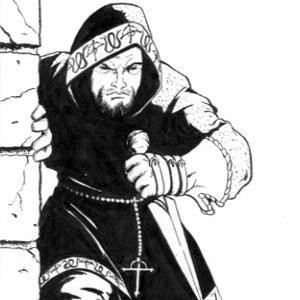
Image result for d&d assassin players handbook 1ed artwork

Based on the recent discussions about Mystics here on the Rolemasterblog and the RM Forums, I think one interpretation is that the Mystic could serve as a proto-type “Assassin” profession in lieu of companion classes like the Nightblade.

That got me to thinking about Assassins as a rpg profession in general–and perhaps the first iteration in the 1975 Blackmoor supplement by Dave Arneson. Most of the Assassin material was wholly transplanted to the 1st Ed. Players Handbook (p.27). The Assassin is a subclass of the Thief, and generally gains the same abilities with a few Assassin specific skills:

  1. Assassination. With a successful backstab attack the Assassin can use the Assassination table to determine if their is a kill strike.
  2. Language. Assassins can learn other alignment tongues. (recently discussed HERE.)
  3. Disguise.

Of course, all three are cool abilities, but how does an Assassin fit into an adventure group? It’s implied that Assassins can pose as a Thief or perhaps another class or person (using another alignment tongue and disguise) but would that last long in a cohesive group?

I’ve read a bit about Gygax and the early development of D&D and an Assassin class just seems incongruous to the core idea of a “balanced group” and spirit of play. Rolemaster has Professions similar to an Assassin; the Nightblade could be seen more as a Ninja style character, but nothing like the D&D version which is described thusly: “The primary function of assassins is killing.”. That’s pretty straight forward, but how does “assassinations” fit into a traditional fantasy game? What about poisons? I’ve seen quite a bit of comments/feedback from people who dislike the idea of poisons in gameplay.

Has anyone played an Assassin in D&D or similar in Rolemaster? If you GM, would you allow an assassin in your group?

Novel Weapons in Shadow World & Rolemaster

The Katar…is that a lizard man motif?

Every now and then I stumble upon another blog or reference to odd or unusual real life weapons. Some seem very impractical, but they still fuel the imagination. (Beside, impracticality is of little importance in a fantasy setting!)

Rolemaster has some “fantasy weapons” that are really Shadow World specific available HERE, and I’ve posted a couple of blogs about some alternate and odd weapons:

Helmet in the shape of a conch shell
Conch Helmet

I’ve also had the opportunity to see some fantastic collections of armor and weapons at the Army Museum in Paris, and the Higgins Armory Museum that was relocated to the Met in New York.

Since I had already written about the Urumi, I was delighted to stumble across THIS BLOG‘s post on eastern blades. Of particular interest, besides the Urumi, is this:

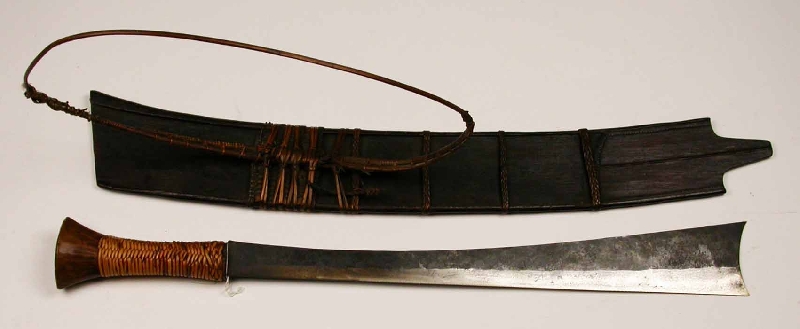
Assamese Dao

Like the Adya Katti, the Assamese Dao lacks a guard and gets broader towards the tip, but there the resemblances end. This is a straight sword rather than the curved one, and though it seems somewhat simple, the unusual shape of the blade adds enough character.

In my Priest-King module, I have a similar weapon that is basically a battle machete. These weapons were designed to be used by the Kinn Rangers to hunt Quarnaks–thus the lack of a hilt that is necessary against other bladed weapons. the Assamese Dao provides a good model for that weapon.

The blog post describes several other cool looking weapons that would add flavor to a fantasy setting. Do you have any unique or strange weapons in your game?

Rethinking Inherently “Evil” Races. (Updated 2/14/21)

Image result for evil fantasy races

Synchronicity, being what it is, has brought together one of my blog topics and some current discussions floating around the web. In particular the racist nature of dark-skinned fantasy races that also are inherently “evil”.

Over on the RM Forums there is discussion about the dark-skin – evil duality. However I am more interested in the broader issue of evil races and if they even make sense. As a primer this is an interesting take:

Certainly a lot of progression has occurred in fantasy over the last 40 years: simplistic tropes have developed into more mature themes, the founding player base has aged and “awoken” and world building has expanded into more realistic modeling of societies.

Putting Tolkien aside, perhaps the most stark examples of monolithic races that I can remember was in David Eddings Belgariad series. Even as a young reader, the stark rigid depiction of racial characteristics was distracting. But this was pretty standard for Golden Age fantasy gaming and driven by the ideas on literature.

There are probably many driving forces for the standardization of evil races in fantasy gaming:

  1. Alignment. The introduction of alignments, and the assignment of alignments to races, monsters and creatures created a blanket behavioral type that was hard to overcome. I remember one early game where we first introduced a half-orc PC–the rest of the group was suspicious that the PC was secretly an assassin and was never trusted.
  2. Physical characteristics. Again, there is enough written about skin color, but there is also the physical attractiveness equation: ugly = bad, beautiful = good (although beautiful is also depicted as evil, but in a remote dispassionate cruelty).
  3. Story element. Every hero needs a foe, so races of inherently evil humanoids are a great standard foil. Fighting, attacking and killing any member of a evil race is just and righteous.
  4. Societal traits. Civilizations that are ambitious, colonialist, capitalist or warlike could be described as “Evil” or just immoral. Does that mean that every member of the society also holds those traits? A majority of them? Or just the leaders and powerful members of society?

Personally, I like moral ambiguity in my campaigns. It provides a more complicated ethical framework and consequences for actions. However, I realize that one of the appeals of RPG’s is it’s relief from a morally complicated reality and the escape to a good vs evil paradigm.

But even if you like a simpler framework, does it make sense to apply a blanket label like “evil” to an entire race? Is that corruption embedded in their DNA? Is it nature vs nurture? Can a societal structure create so much influence as to pre-ordain a person’s ethical nature? This is a philosophical debate, but still worth considering when using races like Dark Elves and Orcs in your setting.

One hand-wave approach to rationalizing a racial alignment is to have it driven by the race/society’s god; ie they worship an evil god therefore the people are “evil” too. Simple. In my own Shadow World campaign, the only truly evil entity is the Unlife. Dyari (Dark Elves) are simply a label for Elves that have forsaken the Lords of Orhan, and are not a distinct separate race.

There are a lot of arguments against a intrinsic evil as a racial trait. What are the argument for it? What do you do in your game?

{Update} In a related note, James over at Grognardia had an interesting post on alignment languages. It’s been decades since I’ve dealt with alignments, but the more I ponder the concept of alignment languages the less it makes sense. Based on the comments to James’ post, a lot of people struggle to define or rationalize them.

Shadow World “Krylite”: Race or Monster?

Image result for fantasy insect creature with gun

It’s been 4 years since I’ve blogged on “Race vs Monster”, the last time we discussed “Neng“. So today I wanted to review Krylites, an insectoid race that is classified at an “alien race” in the SW Master Atlas (page 131). Described as non-native to Kulthea and non-humanoid. They have professional limitations of no Essence or Channeling, but that makes common sense for a non-native race.

Krylites are grouped in 3 classes: Workers, Defenders and Minds. Apparently there are total Minds that direct and lead the collective through a hive mind. The most interesting aspect of the Krylites is their knowledge of advanced technology-specifically electricity. One group of Krylites works in cooperation with the Itanian Warlocks and trade resources for some of their technology.

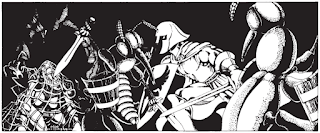
The Apsis from Slave Pits of the Undercity.

So clearly, Krylites have quite a few limitations and perhaps don’t make the best PC race, but is it possible? Certainly there would be limitations when interacting in normal societies and settings, but a Krylite would definitely be a cool PC to play for a one-shot. Perhaps the “Hive Minds” need help against the Trogli and have sent a Krylite warrior on a mission with the PCs? Or a Krylite might be a good race for my “Monster Squad” idea. Maybe just fleshing out the Krylites and their society would allow them to be PCs in a more Mieville inspired Shadow World setting.

What are your thoughts? It would be great to do an adventure hook or one-shot with a Krylite or Krylites.

Shadow World Religions Supplement

I finally finished a better version of my various SW channeling and religion files done and packaged it into a “SW Religions & Channeling Handbook”. You can find it HERE. (you need a Rolemaster forum account to see it and download it. You can register HERE.).

I already have some new material for it and some updates, but it might give GMs and players a few ideas on how to structure a Cleric/Priest in Shadow World.

I’ve also updated my Shadow World master file list here on the blog.

(Updated 1/17/21) Rolemaster Profession Review: The Astrologer

While the Astrologer has not been included in RMu, it does hold an interesting place in the minds of Rolemaster players. What was the point of the Astrologer? Is the profession even a useful PC? Why are the base lists so sparse? I decided to ask Terry if he could remember anything about the origins of the Astrologer from the early gaming days in Charlottesville. It’s been 40 years, but he did have this to say:

It was included partly for the spell-user realm symmetry (we needed a hybrid mentalist/Channeling?) I never played one; I think they are better suited as NPCs.

That’s interesting and re-affirms my thinking that some of the original RM professions were probably never gamed extensively. (Not dis-similar to the new RMu Delver). Nonetheless, the Astrologer is a profession in RM and I’ve had a few thoughts about it recently:

  1. Astrology implies a game setting that supports the concept. Sure, the Astrology spells are mostly replicated in other spell lists, but the conceit itself relies upon some systems around the sun, moon, stars or “heavenly” bodies. Does that work in all settings? Probably not. Does it work in Shadow World. Yes!
  2. Many of the Astrology spells are divination based. That can create challenges for the GM in terms of predicting future events. The more vague the information (for instance through “Dreams”) the easier, but specific info about the future may require the GM to funnel the gameplay to meet a desired, predicted outcome.
  3. The Astrology base lists need work. I addressed some of that in my blog below.

Conceptually what is an Astrologer? For me, the Profession invokes ancient magic, star-cults, sun based worship or Zoroastrian magic rather than “horoscopic” mumbo jumbo. The Zorastrians were seen as a priesthood and called Magus or Magi, so it was a combination of religion and magic. In Rolemaster, Astrologers are Channeling/Mentalism hybrids, but you could make the argument for Channeling/Essence given their “star-fire” powers.

The Astrologer was a prominent feature in early MERP products and shown in color coded city maps using red fill with a question mark for Seer/Astrologer. Clearly, Peter & Co. saw a need for Diviners in their early campaigns even if those professions were left out of the MERP ruleset. As an NPC, the Profession adds an air of mystery and exoticism and would be a useful resource on occasion. As PC, it’s not clear that the Astrologer would be that effective.

In other “Profession Review” blogs I offer up more specific spell lists and remedies that I think would fix or focus a profession. With the Astrologer, I have some ideas but the verdict is still out. Here are a few thoughts:

  1. Combine the Seer & Astrologer Profession. They both have a divination aspect and consolidating the base spells lists would tighten up the spell abilities.
  2. Tie the spell lists into some type of astrological mechanism. For instance, why not have some spell lists tied to the Sun that can only be used from Dawn to Dusk, others that can only be used at night under starlight and a list that can only be used when the Moon is full. (see next item).
  3. I haven’t reviewed the Moon Mage in a while, but Astrology includes the “Sun, Moon and Stars”. Why not roll the useful and usable MM spell lists into a fleshed out Astrologer. Moon Mage is a goofy name anyway.
  4. In conjunction with #2 & #3, an Astrologer could be an interesting Profession using Shadow World. With 2 prominent moons (Orhan and Charon) that are the home of the Gods, and other planets in the Solar System, there is a basis for building the Profession around orbital mechanics. I’ve already experimented with Essaence cycles and lunar orbits in Chapter 3. It might be cool to develop unique spell lists for different moons, planets and the sun that only work during portions of their orbit in relation to Kulthea.
  5. Currently, I use Astrologers as a subset of the Phaon clergy. They act as Priest-Astronomers and justified their use of Sun-Fire spells. I think using Astrologers as Priests of Phaon in Shadow World, or Priests of a “Sun God” in other settings makes sense.

So just a few thoughts on the Astrologer. Has anybody played one as a PC?

Legends of Shadow World Chapters 1-5

I had a handful of people looking for the final chapter of my Legends of Shadow World series. If you are not familiar this was an experiment with a few purposes:

  1. Write a tournament style module for RM that could be used as a 1-shot adventure or for use at conventions.
  2. Test the viability of high level (50th lvl) roleplaying with Rolemaster.
  3. Give the players a chance to play some notable characters featured in Shadow World books and be involved in a “major” event in Kulthean history.

Some of the chapters include stat blocks, but I refrained from adding them in the last chapters. I think now, I want to wait for the RMU ruleset to be finalized and see if ICE has any interest in me fleshing it out as a RMU/SW product.

With that said, if anyone has any interest in adding a map, floorplan, battle map, illustration or art to this, let me know. I think a finished product with artwork, printable character sheets, maps and added narrative could easily hit 50 pages. From a tourney standpoint, if the players can move quickly and avoid lengthy battles then the entire series can be played in 4-6 hours.

Finally, thanks for the people that sent me feedback and thoughts. You can message me via the RM Forums (if they go back up) or email me at bhportland at yahoo. If you get a chance to play it, have any thoughts, ideas or feedback I’m happy to hear them.

Happy New Year and best wishes for 2021.

Rolemaster Profession Review: Thoughts on the Warrior Mage.

Hurin wanted Rolemasterblog to tackle the Warrior Mage next, so I put aside my blog on the Mystic and spent some time reviewing and thinking about the Warrior Mage. I can’t recall any of my players choosing a Warrior Mage, but I know that the Warrior Mage is VERY popular among players and controversial as well. Hurin is doing a rebuild of WM spell lists and is a proponent in general, so I thought I would take an opposing view of the profession!

One of the first issues for me, is that the Warrior Mage doesn’t feel like a “Profession” like other RM semi-spell users. Instead it’s really a multi-class, A Fighter-MU that combines the 2 most popular PC aspects: combat and elemental attack spells. Not only does it merge the best of 2 classes, but it fully embraces the Fly, Sleep, Charm, Fireball cornerstones of the fantasy Magic-User.

What’s in a name? Most RM Professions carry an implied conceptual design with their name–a topic we visit with these blog posts. Most people have a clear concept of a character when they hear words like: Bard, Ranger or Paladin. These Profession names evoke class tropes, literary references and a skill and power framework. We don’t call a Ranger a “Animist/Fighter” or a Paladin a “Cleric/Fighter” even if those descriptions are technically accurate. Profession names carry enough referential information that we can even argue over skill cost minutia. Of course some of these Professions imply a setting or specific social construct but the Warrior Mage does none of that. What do you think of when you hear Warrior Mage? Probably that it’s a great character because there is both fighting ability and useful spells–but what’s the context? It’s merely a Chimera–a combination of two primary ABILITIES, but without any conceptual framework. While we may disagree on small details of varying Professions, we immediately get the concept of an “Astrologer”, a “Beastmaster”, a “Dervish” or a “Moonmage”. There is connotation. I just don’t get that with a Warrior Mage. To me, it feels like a work-around and a class designed by a player not a GM. A RM Magician can already allocate DPs to learn combat skills–the Warrior Mage just accelerates and amplifies that outside of the game balance. The Warrior Mage spells feel cherry picked for power and utility–in some ways they feel BETTER than the Base lists of the pure Magician spell caster!

Spell lists picked and designed by a player. There are several versions of a Warrior Mage, but let’s stick to the original in RMCOII. In this version, the Warrior Mage receives 3 Base lists and a suggestion for a 4th: Minds Touch, Elemental Ways and Highriding. The 4th suggestion is Body Renewal, a Monk base list. If a player could individual choose spells and put them into their own lists, I’m not sure you could do better than these. I’m not making a argument for the inherent power of the spell lists–I realize that there is an argument that they are “overpowered”. I just don’t like the incredible bias of these lists.

Minds Touch. Basically combine Spirit Ways with Telekinesis and you get the 4 incredible spell abilities: Charm, Sleep, Telekinesis and Telepathy. All great for in-game use!

Elemental Ways. Why bother with a handful of Elemental Spell lists organized by the Element, when you can just bundle the ALL the best spells of a Magician into a single Base list! Fireball, IceBall, Fire Bolts, Ice Bolts, Water Bolts, Shock Bolt at 2nd level and Lightning Bolt by 12th.

Highriding. My favorite! Flying, Longdoor, a Tensers Floating Disc and even Teleport. Wow!!!

The final suggested list is Body Renewal–a Self Healing list that rounds out the Warrior Mage as virtually a self-sufficient offensive machine. While the WM base lists don’t have spells from 16-20 why bother? Most games seem to run at player levels less than 15th, allowing the WM to put together a basket of great spells by 10th.

Profession as a Trope. So I want to return to the Warrior Mage as a template beyond a Fighter-Magic User or semi spell user/Essence. I’m not opposed to a simple Essence semi-user, but that doesn’t really fit into the RM system does it? Is there a better set of spell lists that aren’t: a teenager’s masturbatory idea of a PC; imbue the Profession with a concept or connotation like other Professions?

I’m going to think about this further. Since I can already build a Magician that spends Development points on a combat skills (yes, at a high cost), I want to see a Warrior Mage concept that is unique or inspires roleplaying ideas. Of course, I always think of Professions in relation to Shadow World–in that setting there are some ideas that could make great templates for a WM: Cloudlords, Xiosans or the Guarla of the Raven Queen. Any of those might work as an organization of Semi-Essence professions, albiet with specific organizational spell lists rather than the RMC II Base. I’m interested in seeing what Hurin comes up with! What are your thoughts?

Spell Law Deconstruction: Building Spell Lists to 50th lvl.

Image result for spell law

Now that I’m posting up some more spell lists–Mentalism primarily, I’m tracking comments and feedback on the forums and here at RMBlog. The number one issue I see is the desire for spell list reductionism, maybe build 10 spells per “list” and allow for creative scalability similar to or identical to HARP.

That is a compelling thought, but after writing a ton of spell lists I wanted to put my own thoughts in order.

  1. Distillation. Rebuilding classic RM spell lists typically requires some trimming. Many spells within a list are redundant: not just the spells that progress as I, II, III etc, but different named spells that do similar things. Distilling the essence of a list can really reduce the total number of spells which makes a scalable spell system very appealing!
  2. Spell scope. I’m not a fan of kitchen sink style spell lists, but do see a fundamental difference between the realms. Essence should be very tightly focused around a key aspect, Channeling should allow for much more variability based on the particular god and I see Mentalism lists following a shared mental mechanism. Using these basic rules provides different ways to build lists in different realms.
  3. Compatibility. A major motivation to maintain the 1-50th spell lists is basic compatibility with RM and Shadow World.
  4. Built in scalability. Many of my lists are built around 3-6 spells, that progress from I-V and maybe include a mass effect. If each spell repeats every 5 levels that takes up a chunk of the list, but also gives a repetitive appearance that seem suitable for scaling. However, the spell versions don’t just scale progressively, but change in target size, AoE, Range and other aspects that provide “more bang for the buck”. General scaling assumes increased power point cost/expansion of range, area, damage etc. So from an efficiency standpoint, higher versions of the spells in BASiL provide a better impact/PP than just linear scaling. “Spell II” isn’t just 2x better than “Spell I”, it can be 3x better or have expanded efficacy or powers as well.
  5. Opportunity and tactical cost. By having built in scaling, players can use higher or lower level spells based on the target, PP consumption and risk/reward calculations. Of course, that’s also one argument for Scaling spells, but the PP usage will be much different per #4 above.
  6. Level assignment. One of the more difficult aspects of designing a spell list is deciding what level to make a spell. Part of me wants to calculate an estimated “power cost”, while other times I’m thinking of utility and game balance. For instance, the big three: Charm, Fly and Invisibility can be very unbalancing to the game, but perhaps shouldn’t be based on “power needed” or some other arbitrary assessment. Some lists just can’t be distilled into 10 spells with scaling options. Some spells need to be higher level to reflect their real power and also make them unavailable to lower level players.
  7. Vertical versus horizontal acquisition. RM (and probably RMU) is build around horizontal model of spell acquisition. Generally players will know more spell lists than overall spell levels. For instance, a 5th lvl caster may have access to 5-10 lists but can only effectively cast to 5th level without risk of failure. In BASiL, it’s the opposite. I use a levelless system so players generally know a few spell lists to higher level. That gives them more powerful, niche abilities. It’s just the way I like my game to run–hard specialization versus the generalization of RAW.
  8. Keystone spells. I still like cool spells that can be found at 10th, 20th and certainly 50th level. I try to add something unique or interesting at these levels for players to look forward too, or to give the list a “bump”!

I guess sticking with RM I wanted to improve on the originally 35+ year old Spell Law and incorporate spell ideas and powers introduced since then. But if I were to start over, I would take a hard look at a HARP scalable system. Or maybe just use HARP rules?

Many of you also build your own spell lists. Do you have build guidelines, mechanistic philosophies or other design criteria that help you in the process?

Druids in Shadow World.

The recent discussions on Druids here on the blog seemed a relatively easy assignment. I hadn’t given a lot of thought to Druids and generally argued for a more distinctive Druid by making them either a semi-spell user or even an Essence based profession. For me the Druid was just a new name on a predictable template already covered by Clerics, Animists and Rangers.

However, several comments and some googling made me start thinking about Druids quite a lot…

druid, druid religion
An arch-druid in his judicial habit.

Who were the Druids?

There is not a lot of first-hand knowledge of the Druids, but it’s generally believed they were: “philosophers, teachers, judges, the repository of communal wisdoms about the natural world and the traditions of the people, and the mediators between humans and the gods.” So, in some respects this sounds a lot like a Cleric or Priest, and in RM terms, a Channeler. But there are other descriptions of Druids that evoke a more mysterious and perhaps even sinister aspect. Then, while reading this description,

Druids, like numerous cultures both prehistoric and modern, were fascinated by the movements of stars and other celestial bodies. This implies that they were still using Neolithic monuments such as Stonehenge to track different astronomical alignments.

I was struck by a thought. While the Druid profession was missing in the original RM, the Astrologer was not. The Astrologer is an odd profession–I certainly thought it was cool when I first was introduced to RM, but the concept seems curiously unfinished. First, I think star-based spell lists are a very setting specific idea and the the lists themselves were incomplete with very few actual spells on each list. Assuming some fixes to the Astrologer lists, a great Druid concept would consolidate the Druid base with the Astrologer base lists. That would make the Druid interesting and unique while still retaining some the cool factor that the Astrologer promised. In this scenario I see possible Druid Base Lists as:

  1. “Far Voice” But a rewritten combination of Astrologer “Far Voice”, “Way of the Voice” & “Starsense”
  2. “Visions” A combination of Astrologers “Time Bridge” and “Holy Visions”
  3. “Starlight”. Original Astrologer but needs some fixing.
  4. “Druidstaff”. Either the original RMC I version, Hurin’s version or my BASiL list “Talisman”.
  5. “Natures Forms”. Original Druid list.
  6. “Stone Mastery”. Original Druid list.
  7. “Weather Mastery” type list as an alternate.

These six Base lists make a Druid very distinct from other Professions, especially the Animist and Ranger, by dropping the Animal and Plant control spells. To me this still feels like a “naturalist” spell user but in a more raw and visceral way. There is a nature and elemental angle to the class with “Starlight” and “Stone Mastery” and a touch of a Seer with “Visions”. Plus the elemental spells and the Druidstaff gives the Druid combat and offensive ability. “Far Voice” allows the individual Druids to communicate across vast spaces with each other–providing them a network of information.

I was pretty satisfied with this new Druid concept and would have left it alone…but I kept thinking about Druids and Shadow World. Shadow World has an organization that aligns quite well with a Druidic concept: The Earthwardens. In SW canon, the Earthwardens helped heal and rebuild the shattered planet. They built great earthworks, megalithic constructions, circles, henges, and passages, while nurturing civilization back from the brink. This is a familiar tale–not unlike legendary figures in our own history: Hermes, Thoth, Quetzalcóatl, and other “bringers of civilization” that were steeped in hermetic traditions.

While it’s not implicitly stated or clarified, the Earthwardens were using “proto-magic”; early Essaence before it was divided into the individual realms. The Earthwardens built structures on Essaence Foci–basically “Earthnodes” and “Leylines” often associated with Druidic tradition. While the Earthwardens esssentially disappeared during the Interregnum, it’s conceivable that their knowledge was passed down through a secret tradition and organization: The Druids.

So putting it all together we have an organization/profession that utilizes “proto-magic” and “Earthnodes” and is the repository of ancient traditions and wisdom. To me, that sounds a lot like what many people would think of for a fantasy Druid archetype. What types of spell powers are proto-magic? Luckily, I don’t have to write a bunch of new spells–just adopt the Arcane Magic lists as Druid base lists! In fact, Rolemaster Companion I has every thing we need: earthnodes, arcane magic and Druids! The base lists would be:

  1. Bladerunes. A great utility spell list that gives the Druid weapon enchanting ability and replaces the list “Druidstaff”.
  2. Earthbloods Ways. Obviously, this is easy to convert to Shadow World’s versions: Essence Flows and Essence Foci.
  3. Entity Mastery. I would make some changes and eliminate the homoculous spells, but I like the idea of a Druid commanding Golems and Elementals.
  4. Ethereal Mastery. Not sure about this one, but I like the concept of Astral Projection for Druids.
  5. Mana Fires. Feels very Allanon’ish and Druids should be “Wielders of the Secret Flame”.
  6. Shapechanging Ways. Gives the Druid the connection to Flora and Fauna.

The Arcane lists in RMC I are right on point for Druid spells and work well as inherited knowledge of the Earthwardens. With these lists, Druids tie into SW history and make a kick-ass profession with unique powers.

So what do you think? Druid/Astrologer or Druid/Arcane? I like them both, but Druid/Arcane fits my SW campaign. You can read my amended history of the Earthwardens in this file (inspired by page 5 of Rolemaster Companion I)