Gaming Styles – Roll it or Role it?

Twice recently, once on the ICE Forums and the second time here (http://www.stargazersworld.com/2016/10/26/falling-in-love-with-white-box/) the topic of how to check for traps has come up. There are two competing ideas, the first is what I call the Roll it option of declaring you want to check for traps and the GM says “fine, roll your skill”. The second option is you say you want to check for traps and the GM says “How are you doing that?” This is the OSR method or Role Play it version.

My Shadow World GM is one of the “How are you going to do that?” school. In that game I played a thief called Alfred and I was by far the most powerful character in the group. That is not egotism, it was an unfortunate fact. We were playing a high level game and we started out with pregen characters of 10th level. I have talked about this character a lot in the past so I won’t go into too much details. The GM made a mistake in the pregen character which both he and I recognised. The mistake was that in a group with only one fighter, in a very much hack and slash game, where the GM likes to put his villains in plate mail making the thiefs primary OB ‘thrown dagger’ was a serious problem. In Rolemaster it is not the hits that kill you but the criticals. If you have a character where the maximum damage they can do is 3CP and that  is from virtually point blank. Even throwing the dagger from 1′ away from your target incurs a -10 penalty on OB, at 11′ it is -20 and over 25′ it is -30. The character had a built in penalty to every single attack, extremely limited ammunition and pretty much anyone he fought could moving into melee in the next round and attack with a greater proportion of their OB than I could hit them with than I had used to attack them because of range penalties. The GM had given me AT5 with is a bit of a walking death sentence so overall beind cast as the second fighter in the group was not good for my prospects.

My solution was to immediately start developing two weapon combo and thrown dagger in the off hand. If I could only do tiny amounts of damage then I may as well try and double it up. The character was given Adrenal Move speed anyway so I could at least attempt to get 4 attacks in in the first round. If I could do 4 criticals then there was a chance I could put my foe down. Of course this was a long term solution as it was going to take many lavels to build up a new weapon skill and two weapon combo.

The GM soon realised that I was not effective in the role he had pretty much assigned me. In fact our first few combats went pretty badly. The fighter had been given 2H Sword and Frenzy and his best skills. The ranger was great with a long bow but was terrible with his shortsword. The fourth character was a magician. Our first four fights were all close quarters combats inside a tower, mostly on the stairs. Things did not go well.

The GM wanted a quick solution that was to dish out some powerful magic items. The fighter got a pair of laen broadswords and that motivated him to start investing in his secondary weapon and two weapon combo.

For me he gave a set of three uber daggers. They were +30 when thrown and hit as broadswords. At the end of the round they longdoored back to their sheaths. So all of a sudden from doing one ineffective attack each round I went to three full on broadsword attacks. I was throwing two of the daggers with my primary OB and one with my evolving off hand OB but with a useful professional bonus, plus stat, plus +30 for the weapon and just a few ranks made for an OB up in the 90s.

Within three game sessions I had totally eclipsed the fighter as the main battle tank in the group. I coordinated well with the mage and between us were were taking down the lions share of the enemy before melee even started. I had also from the very first time I spend DPs starteed to invest in a spell list. Concussion Ways was my first choice

But I was not a fighter I was a thief. It was me that scouted out the way ahead, it was me that defeated traps and opened the locks. Thieves are very much the skill using profession and they get a lot of skills very cheaply in RM2. Compared to almost everyone else I could ‘do it all’.

The GM had created this monster and in doing so he was finding it hard to challenge us. We played the game for seven years and during that time I tried to select magical items from our adventures that gave daily spell effects. So I had my own spells from just a few open channelling lists plus a handful of other spells that could be used a few times each day. Magically I was like a little low powered hybrid with maybe thirty spells to my name. Given that all my spells were 5th level to less my 50 powerpoints went quite a long way and then I gained a x2 multiplier so I pretty much had unlimited spell casting. In combat I was a death dealing gattling gun of magical daggers. The GM still used the combat phases so missile attacks, the GM included throw attacks in this phase, came before melee and movement. Out of combat I was the one with the broadest skill set.

I think the idea of ‘role playing your skills’ was introduced to try and limit my power in some respects. As I was accelerating away from the other characters in the party my skills were improving rapidly. So when I approached a lock I was throwing a +120 to +140 skill at it. Even absurdly difficult locks were 50/50 and in that situation I would use meditation that gives a +20 bonus. That pushed the odds to 70/30 in my favour. You cannot fill the world with everything being so insanely difficult that all rolls are made at -70 just to make it challenging. That was when the GM suddenly started asking me ‘How’. so when I said I wanted to check a lock for any traps he would reply with ‘How was I going to do that?’ This sort of had me on the back foot for a few minutes until I could think of a few logical methods for what I wanted to look for and how. As I am a RoleMaster player I started thinking abou this. If I am looking for any additional holes that could be exit holes for needles, for trying to feel for any weak spots or dimples on the wood that may suggest they are just a thin veneer hiding points where needles or blades may come from (just as examples) why am I not now using General Perception? If I was not a a thief profession and I asked my GM the same questions in the same situation he would probably allow me to roll perception to see if what I am looking for is discernable. No GM is ever going to say “No, you cannot roll to see if you can see that.” when the player is stood right next to the thing that they want to look at. They may not see it but that is another issue.

So if my knowledge as a player is less than a 23rd level thief is my thief’s ability limited by my lack of knowledge? Do you ask the healer exactly how they are going suture a wound? How the mage is going to cast fireball? I have never heard of anyone trying to use this roleplaying technique for anything except the stealth and subterfuge skills.

In the example of OSR role playing on the ICE forums the example given was again the poor old thief.

A thief suspended from a rope to steal something.
I defy anyone to describe their character doing it like this and not to end up on their backside with a duff roll at some point!

On another point if you are playing the thief character, you can possibly bring rangers into this as well, and you are asked “How are you going to do that?” you could quite possibly come up with a dozen suggestions. Each one you describe what you are attempting, the GM describes what you discover. You then try something else and you get the feedback on that and so on. You could quite easily ‘waste’ half the entire game session with just you trying to detect a trap on a chest when there is no trap there to be found. The rest of the party need not have even bothered to come.

I think in Rolemaster with its sophisticated skill system, particularly with the more compact meta skills that Brian and I use the OSR approach is unnecessary. It slows the game and devalues the skills. If you are only as good at Survival as the play playing the character why bother buying the skill? You would be better off just buying more ranks in General Perception as everything from tracking to detect traps to lip reading and interogation can all really be described in terms of perception rolls looking for tell tale signs.

The more I think about this OSR way of doing things the more I think of it as incompatible with the Rolemaster system.

Rolemaster’s Best Feature? Is it the criticals?

Rolemaster Logo

We all know the skills system(s) in Rolemaster are a bit of a shambles, the stats system is decidedly wonky with its 11 stats working in several different ways. The magic system seems to have as many people favouring HARP scalable spells as those that like the lists and those that like spells as skills. What almost everyone seems to agree on is that the Criticals with their mix of graphic description, dark humour make Rolemaster completely Rolemaster.

There was a recent forum thread about the condensed combat system that got rid of all the combat tables and criticals and just used #hits of damage. It didn’t take long before someone pointed out that if you only want to do hit points of damage then you may as well play that other system. Criticals are what make Rolemaster combat what it is.

There are those that cannot have enough tables.

There seem to be three camps of people when talking about combat and criticals. There are those that cannot have enough tables. They love the way that the damage from each and every weapon is modelled to interact with every kind of armour.  They cannot have enough critical tables to give graphic images of the wounds from every possible sort of harm from stress criticals to plasma weapons.

plasma-weapons-demotivational-poster-12162591501

The next camp are more minimalist. I know some people use the MERP combat system that pretty much fits on 4 sheets of paper. One attack table for all slashing weapons, one for crushing and one for piercing and so on. These are condensed tables so they all fit on one or two pages. Another page has a single column for each critical type. An A critical is a straight D100, a B is D100+5, C a D100+10 and so on. the tables go from 01-120.

I do not go that far but my preferred version uses 18 pages to model every possible weapon, spell, falls and natural attacks. I don’t have puncture, slash and krush criticals, I get Arrow criticals for bows, long blade criticals for swords, club criticals for all the varieties of club and so on. One critical table for every one of the 18 attack types.

Finally, there are a few who seem to be content to roll damage on the dice and ignore criticals although these are few and far between so it appears.

There are pretty much three stages to combat, Initiative, the attack/parry/db roll and the critical roll. There are hours of discussion over initiative, optional rules, alternative systems, phases and action points that come in 4s or 5s and I have no idea which is the best option. I have my preferences and my players like it so the arguments do not impact us.

The actual attack roll stage is almost as hotly contested with zones of control, facings, positional modifiers, what penalties to apply or not, does size matter, how thick is your armour and so on.

Rolemasters best feature

It is only the critical roll that no one really seems to argue over. If I was to throw out everything else then it would be the critical rolls that I would keep. The only changes I have made over the years are to change which critical tables I use and to rewrite some criticals because they were becoming too familiar having been inflicted again and again.

I think the Critical is Rolemasters best feature and for a lot of us that makes other systems seem bland in comparison.

Keeping Up Appearances – The Appearance Stat

A nice round 11 stats

Deconstructing Rolemaster a little, the stats system is not particularly outstanding. The whole stats system lacks conviction, there is one option to use just a single stat bonus with skills, another to use the average of two or three stats and the latest version with smaller stat bonuses that are added together. If you bring HARP into the frame then there are 8 stats, in Rolemaster there are 10 stats if you ignore the poor relation of Appearance that makes 11 stats.

Appearance is rolled like all the other stats but then modified by Presence. Take a look at this example from the RMC Character Law pg33

Example 2: Linthea is 6’1″ and 170 pounds. Tall and lithe, she stands out among humans. Her hair is a deep brown, and is quite pretty when down, but most often kept tied in a bun at the back of her head. Her green eyes have a slightly slitted pupil, and her pointed ears also show her elvish ancestry, though she has earlobes like a human. Lauren rolls a 38 for appearance, +10 for Linthea’s presence modification. A 48 is slightly below average, the GM explains that her half human appearance is found odd by the elves. Among humans Linthea is considered exotic and attractive, though she sees herself as plain. Her persona is quite friendly for an elf, but among humans she comes across as reserved, mysterious, and a trifle odd.

The bold text is added by me to highlight the pertinent point. No other stat is modified in this way. All the other stats are pretty much 1-100 for ‘normal’ people but not Appearance. Appearance works on a -24 to 125 scale.

Appearance gives no stat bonus and is not relevant to any skills

Rolemasterisms

This is one of those “Rolemasterisms”. I have complained in the past about how the skill system is so inconsistent. To put it briefly some skills cancel out minuses such as armour skills, some are 101+ for success or failure, some are incremental, some give +5 per rank (then +2, +½ etc.), some give +1 for every rank. Most have stat bonuses, some have none, some use one pricing rule like weapons, and musical instruments and others use a different system (the 2/6 for two ranks). Some are disposable, like spell lists where once you have the list you discard the ranks (this is important if a caster stops learning a one list to start another) and so on. There are so many variations it is hard to keep track. Don’t get me started on the skills with special rules and the ones with almost magical powers like the adrenal moves, disarming, iai strike and stunned maneuver!

DB, DP & Hits

The stats situation is not as bad but it is in the same vein. Some stats give development points, some don’t, some stats are used only for stat bonuses but others like Constitution and Quickness have a massive impact, hits and DB in this case. Then you get powerpoints. You have a different stat depending on your realm, or the average if you are a hybrid.

If you have high stats at 1st level then if all things are equal then you will massivelyh out strip your companions in experience and levels as you get more DPs, so more skills, so you can do more and earn more experience.

At mid to higher level stats are irrelevent. You may have a total skill bonus of +150 or more but the difference between a character with an average stat of about 50 and an exceptional character with a 90 is just ±10 on that total.

All in all if you look at Rolemaster stats too closely you see just what a hodge podge they really are.

Is a Kenku a race or a monster?

I came across the Kenku last week and I really like them. The basic idea is that these are humanoid avians. They are great mimics, infact they have not language of their own but rather string learned phrases together from what they have heard but all in perfectly mimicked form of the original voice. They are also natural thieves.

kenku_by_dave_allsop
I am debating as to whether they should be a monster or a race when converting them over to Rolemaster. As a monster they are rather weak but as a race they require a lot more effort from the GM to prepare them before time.

A basic Kenku, as per the D&D to Rolemaster conversion rules is a rather weak creature.

5th level, 55 hits, AT1 DB10 34OB (short sword)/49OB (short bow). They should have a decent Stalk and Hide Skill of at least +25 as well as a +30 Trickery. There is something of the magpie about them and their desire to steal as much as their carrion crow like behaviour. I first encountered the Kenku in a grave robbing encounter so that may have coloured my perception of them. Their big feature is their mimicry. They communicate via mimicked phrases joined together to get the message across. They can also use it to confuse and lure people into traps.

There is great roleplaying protential here with hidden Kenku masquerading as members of the party and giving conflicting orders. They also gather in social groups called flocks, naturally, so you can use any number of these guys. They cannot fly but going by their D&D stats they should have at least a +15 Agility bonus. Play them as fast, stealthy assassin types when defending their territory and there is a great adventure in here. I just want to use them to steal something from the party.

With mimicry there is a lovely opportunity to have witnesses swear under oath that they heard the party talking at the scene of the robbery and with the best megic in the world the witness would be shown to be telling the truth. How were they to know they were hearing a perfect reproduction?

I now have a urge to put a gang of Kenku into my world, set them up near the players and just see what happens. Is there an opportunity for the Kenku to over hear the parties plans? Would the Kenku be interested in stealing what ever it is the party are trying to find or steal? Who will get there first?

I will see if I can work these guys into my game some time soon. If I manage it I will let you rknow how it goes.


Does Low Fantasy Gaming work with Rolemaster?

I have stolen this idea from Brian’s weekend round up. I think the answer is an emphatic yes to Low Fantasy; especially RM2/RMC when played with the core rules and no options.

Why core only? The first one is magic. The actual base ruling on spell list acquisition is in RM2 and RMC is D100 + ranks in the list. Roll 101+and you learn the list. You can learn only one list at a time unless you buy 20 ranks in the first list and then start to learn a second. If you fail to learn a list you can carry those ranks over to the next level and continue learning that list or you can lose all those ranks and try and learn a different list. You will note that there are no bonuses to that spell list acquisition roll, no level bonuses, no stat bonuses.

Building a character that way you tend to end up with maybe 4 spell lists every 5 levels, sometimes slightly less. As most essence spell casters want to be able to fly and go invisible and cast sleep this means that a magician may have just one of their base lists by 5th level, maybe two by 10th level.

The problem with learning lots of Magician base lists is that you need to learn lots of Directed Spells skills to make use of the bolts and the natural development point economy means that you simply cannot afford to diversify like that.

If Low Fantasy is meant to be scarce then making spell lists hard to learn makes spell casters less attractive to the players. If there is a very real chance that your first level character is going to start the game with just 1 first level spell you are going to make the average RM player uncomfortable.

With just the core rules there is no undercasting and no overcasting so they are really stuck with just that one spell.

So pure Rolemaster played RAW (rules as written) fits the magic specification for Low Fantasy.

Fast and Engaging Combat

There is no more engaging combat system than Rolemaster with its descriptive criticals and deadly edge. I personally prefer the Combat Companion version but I have said this is core RM only. Without all the bells and whistles bolted on to combat by many of the companion books rolemaster combat is pretty fast. When I used to use Arms Law I would print the page from the PDF of the weapon used by an NPC and of the PCs and put them in a folder with the most common critical chart facing it. In essence what I had was just the pages of Arms Law I needed for that session. It cut down the rules look ups and page turning.

Rules Light

Without all the companions Rolemaster is not that rules heavy. It has a reputation for being a mammoth but it is really undeserved.

Once you simply know that a skill roll total of 101+ (plus any difficulty mod) equals success you can play for hours without having to look at a single rulebook. Without the companions there are are only something like 50 secondary skills. That is enough to differentiate the characters without bogging the game down.

I have condensed the entire rules down to just 12 pages for running a weekend of gaming.

A Realistic World

Rolemaster does realistic mediaval worlds very well. If anything it is less monster driven than many RPGs including D&D and Pathfinder. If you want to poison someone in RM you do get to choose what type of poison and that describes the effect. This is not a game of make your saving throw or take x points of damage. Poisons are very realistically handled for a game.

Falls are not 1d6 per 10′ fallen. We have an attack table that takes into account velocity and criticals that are in tune with having fallen. This does not add to complexity as it is still jsut roll a d100 + the distance fallen in feet and look up the result but it is a lot more realistic than 1d6 per 10′.

The list can go on. Almost every natural hazard has been given a realistic work over in Rolemaster. So this is another tick in the RM box regarding Low Fantasy.

Rolemaster is also setting neutral

The Low Fantasy that the article points to says it is setting independent. Rolemaster is also setting neutral. Shadow World is the offical world setting but there are no setting specific rules in the rulebooks tying it that setting. It actually works the other way around with the Shadow World books referring to Rolemaster materials not the Rolemaster books referring to Shadow World.

So yes RM is most definitely capable of Low Fantasy judging by the definition above. Just leave all your companions and add on Laws at home.

Melos, A contribution to Aioskoru

Quite a while ago now I produced half a dozen blog posts in support of Ken Wickham’s Aioskoru world setting. Things than kind of went off the boil a bit and I didn’t do much more beyond describe NPCs, three settlements and some adventures based around a ship full of orcs.

So recently Ken emailed me and said that he had bundled up a lot of his Aioskoru material from his blog and posted it on RPGnow. He had kept the format simple so that it was easy for him to update but he was putting it our there. He has had over 200 downloads of the material he has produced which hopefully means that the setting may get more supporters and continue to grow and develop.

I am always willing to lend a hand so I bundled up my old blog posts, re-edited them to turn them into a coherent supplement and submitted them to RPGnow. They have only been up for a few days but they have already had about 50 downloads. You can download them yourself for free at the link below. (click the cover image)

Melos, A contribution to Aioskoru

PPM-Melos_cover

The ship on the cover refers to the sloop full of orcs in the featured adventure material.

If you want to download it and you like anything in it then let me know whar you think!

Is Rolemaster Rules Heavy?

Rolemaster Logo

I saw a survey today that listed Rolemaster as an example of a ‘Rules Heavy’ system. If you bought ALL of RMC that would be Character Law, Arms Law, Spell Law, Creatures & Treasures and Companion 1 you would have the entire published system and the entier page count runs to about 800 pages. That is roughly the size of just the three core DnD 5e PHB, DMG and Monster Manual.

Page count is not the best way of measuring the weight of the rules. If we were to look at spells every spell in Rolemaster works in one of just a few ways. Either you roll on an attack table (eg Fireball), the spell effect is dependent on the severity of the targets failed resistance roll (eg Sudden Light) or the spell is not variable and has a baked in effect (eg Projected Light). If we look at DnD you get every spell with its own bespoke rules and formulae such as Magic Missile that fires of a variable number of projectiles depending on the level of the caster but never misses. As a magic system Rolemaster is a lot lighter than DnD 5e. Incidentally DnD 5e was quoted as a medium weight system in the survey above!

Combat in DnD vs Rolemaster is a hard one to compare because I have never known anyone apply the rules correctly in either system. DnD is often protrayed as Roll to hit, roll your damage and move on. That sounds really easy and fast but then you add in initiative rolls, and weapon vs armour modifications and different ‘to hit’ tables for different professions/classes and a few hundred classes and things are not as simple if you apply the rules as written. In rolemaster the big bug bear is exhaustion points. I have never even read the rules in full, I have never played them and do not know anyone who has played them. If you ignore exhaustion then Rolemaster looks more complicated with books of tables, one page for each weapon and books worth of critical tables but it still comes down to roll to hit and roll damage (our beloved criticals). rolemaster has more pages but actually less rules. It does have a hell of a lot more flavour than DnD combat. It is aledgedly more dangerous but that is down to how many first level magic users you have tried to play in DnD I suppose.

The point I am trying to make I suppose is that what makes one system ‘rules light’, I think my RM variant is very rules light, one rules medium and another rules heavy is I think the eye of the beholder. the person who created the survey thinks or has heard that Rolemaster is rules heavy and therefore puts it as an example of a rules heavy system perpetuating the myth.

I think ICE need to address that perception and one way to do that is to adopt the Adventure Path methodology and literally put a ready to play pa together that new players can pick up and start playing in the same evening. Of course with a new generation of RM about to be released this is the perfect opportunity to do so.

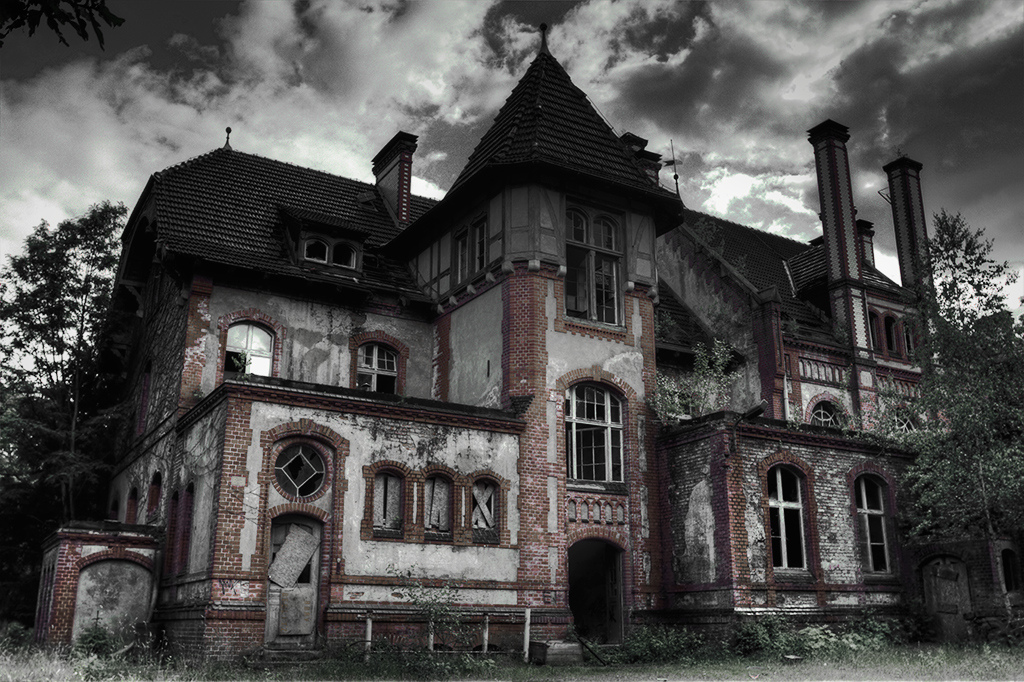
Haunted House Time

In the next session I want to send my party to a haunted house. This is a really good opportunity to put into practice my resolution of piling on more atmospheric description (see last weeks post)

What I was hoping is that I could ask the readers here for more tips and your experiences of running a haunted house session. I am planning on the final showdown to be a zombies attacking from the grounds, breaking in through the doors, windows etc and slowly forcing the party up the stairs to the top of the house.

The lure to get them to the house will be to a meeting where they can learn something really important about one of the characters estrnged family.

Between the party arriving and the grand finale I want a skills based challenge for the party.So far I am thinking of having the house is a very poor state of repair so I can collapse the floor under someone (using moving maneuver skills), locked draws in a desk (subterfuge skills), Some kind of vault in the cellar (some kind of Lore based challenge maybe with runes that need interpretation).

I want to use the weather a lot with the wind ripping shutters open and banging them around, blowing curtains around etc. and flashes of lightning lighting up the scene in monochrome (probably revealing a zombie arching right over one of the party before the attack starts!)

Do you have any good advice? Is there anything you think I should avoid?

The party are all 3rd level but I feel they are punching above their weight (some good spell aquisition rolls have given them a rich set of spell lists along with the fact that ever character is a semi, hybrid or pure spell caster).

Engaging the senses

Rolemaster Logo

I have been through the adventure notes today adding post-it notes to scenes and locations with little added comments about sounds, smells and little visual ‘clips’ such as dust swirling in a vortex as a door slams shut.

These serve no purpose at all except to remind me to be more descriptive, not great long tracts of prose to be read out just little details to drop into the scene. I am hoping to bring scenes to life a little more, to make the sessions are little more atmospheric and engage more of the characters senses through the players’ imagination.

I am not sure why I have this love affair with post-it notes, I think it could be the immediacy they lend to editing. They are also great for moving anot NPC or monster around a location.

I read a post the other day about turning off your electronic devices while you are playing so you can focus on the game. I think that although I love having PDF rulebooks and my PDF GMs quick reference if I had to choose between post-its and and my tablet I would choose the sticky notes every time.

The motivation for the senses notes is two fold. Firstly I think it will make for a better game experience. Secondly I have an ulterior motive. I need to do to things in the next session. I want to try and make my players characters bond more. This may require more role play and less killing things so engaging the players in the world may help. I also want to ‘teach one of my players a lesson’. That sounds harsh but the way he has built his character is to pile all his DPs into weapons, body development, Spells and perception. The only other skills he has are things I gave away free or skills I pretty much insisted he buy. That is OK if you want to play a completely uneducated oaf but on the contrary, he keeps insisting that his character would know this or that because of his background.

In the next session I am going to make the challenges more skills based. Normally he is the überman of the party, the highest OB, the most spells, he sees danger coming and is normally the last man standing. I want to put him in a difficult situation where his sword is not going to help him.

Indirectly my sensory notes will feed into the slight change of tack. I don’t want to make him feel victimised, more like I want to demonstrate the value of being a more rounded character.

I also know now what I am going to do with the party. I think a haunted house is in order. I cannot remember ever doing a haunted house scene with these players and I have been GMing them on and off since 1985. I thing it must be a bit over due.