Tomes of Cthulhu by another route

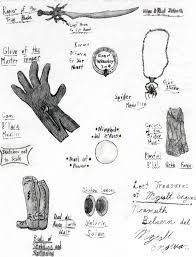
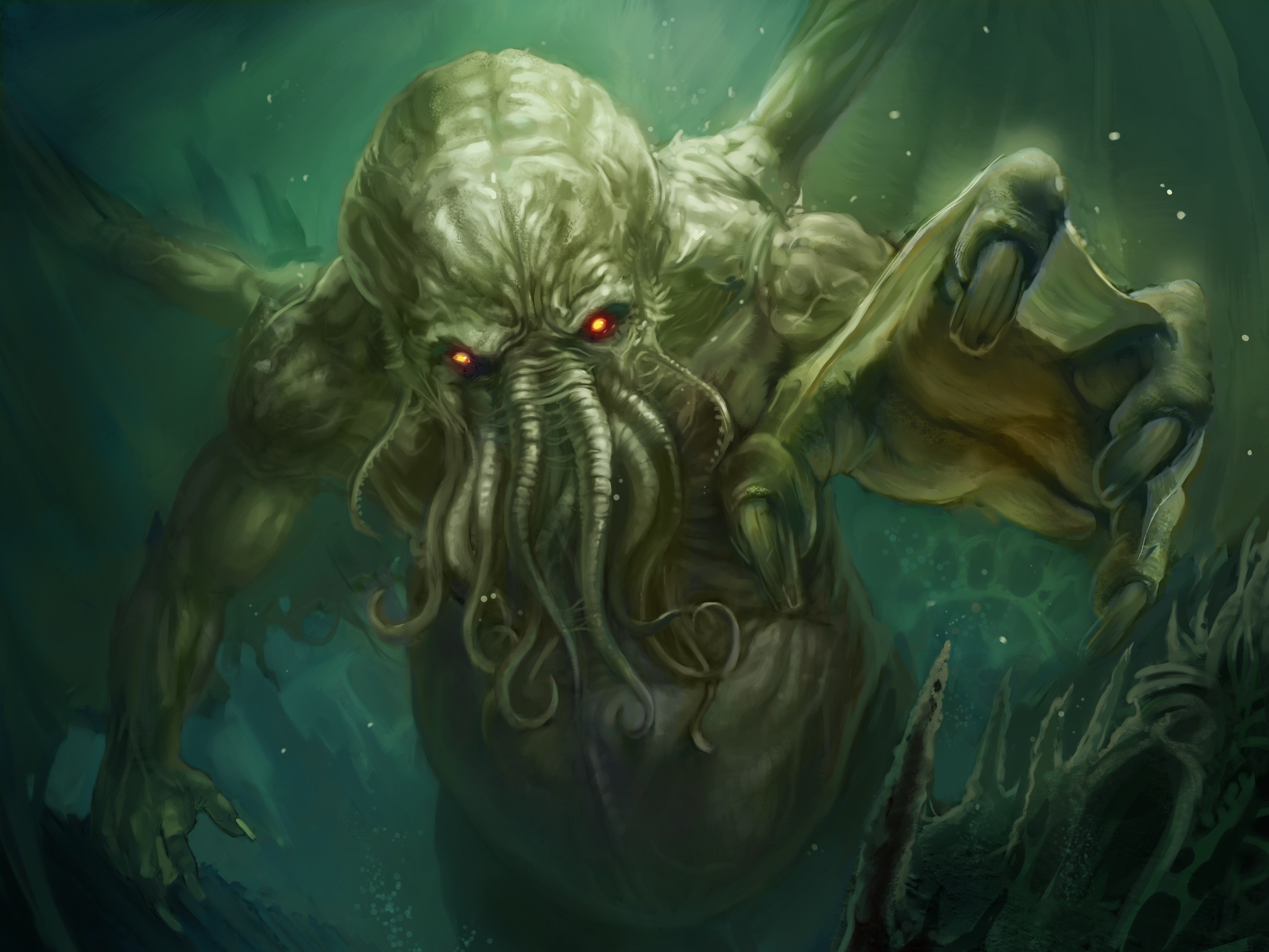
Egdcltd (Azukail Games) has kindly sent me a copy of Tomes of Cthulhu. This supplement details 40 books, journals or tomes to add colour and detail to a Cthulhu based game.

Like nearly all of Azukail Games supplements this is system neutral so if you were running a Rolemaster based Cthulhu game you could use this just as easily as alongside one of the official Cthulhu games.

Each book is steeped in details about how it was written, the author, where and how it was lost or found and they are all suggestive of adventure hooks. Not all Cthulhu is based in the 1920s so the book descriptions consider the influence of time between writing and the game setting. It looks like a lot of thought and work has gone into this supplement.

This got me thinking about Rolemaster and Cthulhu. My Cthulhu experience was all with the Chaosium game which was very much based on the RuneQuest game mechanics with a bit of insanity thrown in.

So we already have insanity, if sorts, with the Fear rules. Parapsychology was an essential skill in those games and there is no difficulty in adding a skill to rolemaster for that purpose.

Making magic unavailable to the players is not something that requires a rules change, it is simply a GM/world building choice. It was my experience that magic was slowly revealed to the characters as the story developed.

The magic itself as far as I can remember was more of the summoning and control style so putting together customised spell lists would be easy enough. Anyone who was a keeper of the secrets  (GM) would have a better understanding of the spells needed.

There is nothing here that RM cannot cope with except one thing.

The go to weapons of the 1920s and 30s were firearms. I have always felt that guns in RM and Spacemaster for that matter were disappointing. I had always used Spacemaster until I discovered 10 Million Ways to Die. Even with the add on book guns are not really any better, 20 or 30 hits plus a critical just do not make guns scary. Spacemaster 1st edition was by far the worst with a 11mm Automatic doing a maximum damage of about 15 to 20 hits against unarmed targets.

I know this is intothatdarkness’s speciality but it had never occurred to me that this is the only thing stopping people from running a perfectly capable Cthulhu game using Rolemaster rules.

I know this is a little premature but this is something that RMU (for muskets and the like) and SMU (should it ever happen) needs to address.

So I have wandered off topic a little but if you were looking to run something a little different then consider this take a copy of Don’t Let Them Take You Alive (PWYW) for the setting, Tomes of Cthulhu ($2.99) for a bit of flavour and your favourite RM/SM version with guns and have a fun night of horror and insanity.

This post currently has 8 responses


“what is necessary, but nothing more AND nothing less”

I continued to be a big fan of RM/SM until 1989. I could see ways to do just about every gaming setting, and several non-gaming settings (Aliens, Dune, etc.) using those rules. But, something happened over the summer of 1989. I was at DragonCon, and a naval war gamer challenged me that if I need more than 1 sheet of paper (4 pages) for rules, for a war game, then that was too many. The more I thought about it, the more I couldn’t get away from the idea of minimalism.

Though, he was an extreme-minimalist. Minimalism isn’t “the least”. It’s “what is necessary, but nothing more AND nothing less”.

The quote above comes from the Stargazer’s World site in a comment on Michael Wolf’s review of RMU. The comment was by a regular contributor called Johnkzin.

It is an interesting idea, what is necessary, but nothing more AND nothing less.

I have had that going around my head all week. They are talking about wargames and RPGs are not wargames. What that means to me is that to play the game at the table the monster stats are not part of that 4 page limit. Monsters and their stats are easily condensed down to what the GM needs at the table but the monster book is a resource and not ‘rules’.

I think spells and spell lists are part of the PC or NPC. You can give your players a copy of their own lists, I think that is pretty much common practice, and the same for NPCs. The rest of spell law is just reference material and not rules needed at the gaming table.

I also think that character creation is not needed at the table and does not need to count towards our 4 page limit.

That removes a lot of bulk.

So what do we need? Arms Law for one and skill resolution for a second. Base Spells and resistance rolls for third. One is relatively big and the other relatively small and spell casting is just a simple look up. So how low can we go?

The following two documents are a single page (2 sides) super condensed combat and skills resolution version of Rolemaster. This is really not intended to challenge Arms Law in any way and it is not meant to be historically accurate. You will also notice that it draws on bits of MERP, bits of RMU and everything in between.

What you get is a single attack table that is generic but below it are modifications for each weapon so to all intents and purposes each weapon is differentiated.

You get a hit location system using the units dice to give a 1-0 result.

The critical is then rolled for that location and the bonus damage, stun and bleeding scales with the critical severity. The GM also has to insert descriptive words like blow/strike/hit to vary things a little. Each critical does come in two parts for armoured and unarmoured so what looks like just 16 possible criticals is actually nearer to 100 possible outcomes.

Why would anyone ever want to use this?

One of the best roleplaying sessions I ever played in took place on bicycles riding though country lanes. We used the stop watch function on digital watches (this was the early 80s) for dice and we knew our characters and the rules of D&D well enough to not need any books. That sort of game session is almost impossible with Rolemaster because of its table dependence. On the other hand if you had a dice roller app on your phone and just these two pdfs you could pretty much run an impromptu game session with nothing else.

I would go so far as to say that you could run an entire game session using this and most of your players would not notice the difference unless a particular favourite critical should have come up.

This is a bit too minimalist even for me but it was an interesting experiment.

Does anyone think they could do a 2 page character creation? I suspect I could, but then I have had a week’s head start.

This post currently has 7 responses


Tie a yellow ribbon around the Angry Druid!

This post was meant to be published yesterday but I was up before dawn on my way to my first ever elite fencing competition. The difference between sport and combat is that I would have died about 17 seconds in if this was a combat but as it was I vanquished two foes but was defeated five times myself. Not the best hit rate by anyone’s reckoning. If there is every a quest to save the world, I am probably not the hero you are looking for.

The weird title to this post is a bastardisation of the latest two 50 in 50 adventures. I wrote ‘Tie a Yellow Ribbon‘ and Brian produced ‘The Angry Druid‘.

I always try and have fun with my adventure titles and in this case Tie A Yellow Ribbon is obviously a reference to a dreadful 1970s song but is a deadly serious adventure which could cost either the players or hundreds of innocents their lives.

On the other hand The Angry Druid sounds like a dangerous foe, which he is, but is actually a bit of a tongue in cheek adventure.

We have passed a bit of a milestone and you can now by a bundle of the first 10 adventures, at a discount if you have bought any of the individual issues. The 1-10 bundle is obviously going to be the first of at least 5 bundles.

Going forward there is going to be a post each Saturday with a round up of what we have published this week. I think I will recap any new uploads in the same post.

I feel that this is going to grow in importance in 2018. Looking at the Directors Briefing for January, if you are not using Shadow World then excepting RMU there are no planned releases for RMC/RMSS or Spacemaster for 2018 at all.

While we await the Singularity we will try and keep RM alive and kicking!

This post currently has 3 responses


2017 Highlights

I have Google Analytics installed on the blog so I can see how many visitors we get, roughly where you are coming from, what pages you visit most often and that sort of thing.

Posts

Looking back over the past year a few posts in particular stand out.

These are our most commented on posts:

RMU – to infinity and beyond!

‘Well sir, if I were you, I wouldn’t start from here’

Is Rolemaster Worth Saving?

Rolemaster deconstruction: questioning the undead.

Now 3 out of 4 were all about RMU. I think that is really positive. We obviously care about RMU and the future of Rolemaster.

On a typical day we get about 40 unique people on the blog. When I say unique that is Googles term not mine. If you checked the site on your phone and then on your laptop you would count twice as different cookies were set. The day the ironcrown site went down we got 473 unique visitors. That means, in my eyes, that this blog is only reaching 1 in 12 of the active RM community. I think that is a ‘could do better’.

And talking of doing better. The single post that was read the most times was…

Rolemaster Character Creation in 15 Minutes.

Writers

Back in 2014 it was just me putting out 2 posts a week. The very first comment was actually by Spectre771 on December 14th 2014 about three weeks after the blog started.

In 2017 we have had more writers than ever before.

BriH

intothatdarkness

egdcltd

…and most recently…

Brad

I suspect that our most prolific commentator has to be Hurin, but then that is no surprise!

I would like to thank all of you and all the other people who have commented or read the blog last year.

Publications

This was probably the biggest change in 2017. We have published the first 10 of the 50 in 50 adventure outlines. These are also available as a bundle if you haven’t already checked them out. The ones with the hilariously funny/clever/witty titles were written by me (please read that as being humorous and not egotistical). From what I have seen the most popular by sales so far are:

  1. The City of Spiders
  2. Spire’s Reach
  3. Creatures Of The Night!

You can grab the 1-10 bundle from RPGNow.

In addition to adventure outlines we published the first 7 issues of the Rolemaster Fanzine. You can see them all here. This has been a year of experimenting with the fanzine and it is now available as a PDF on the OneBookShelf sites and in print version on Amazon and on Kindle. If you have Kindle Unlimited you can read it for free!

2017 also saw the introduction of two new site sections. Our free downloads section (see the menu above). Project BASiL is by far the most popular download.

The second new section is the monster Wiki. This is still lagging behind reality at the moment. I have created more monsters than are featured in the wiki. I will be setting aside an evening shortly to upload a whole bunch more. There is a suggestion that the monsters should have skills and professions and I think this is a good idea. Any registered blog user should be able to edit the monster entries and add things like that to them. I also want to update the references to the Spell Law lists to point to BASiL lists. That should help keep players on their toes if there are completely new spells coming at them!

So that is my look back on 2017. I think we have both achieved a lot and at the same time barely scratched the surface! The best thing is that even after 3 years I have never once sat down to write a post and thought “I don’t know what to write.” If anything I need 2018 to be a year of completing projects so I can make some more space on my todo list for the crowd of ideas I haven’t been able to work on yet.

(That To infinity and beyond post was not particularly brilliant but it triggered a crystallisation of thoughts from that post and others have have written elsewhere by me and others. I will try and get them all together into something exciting for next week.)


This post currently has 2 responses


Gnoll

Medium humanoid
Level 5

Armor Type 6/20 3/10 (+10/+30 with shield) (leather armour, shield)

Hits 60

Speed 6’/sec

Max Pace Max Pace Fast Sprint /+10

ST SP IN EM PR
65 60 30 50 35
+10 +5 -10 +0 -10

Environment: Warm plains

Organization: Solitary, pair, hunting party (2-5 and 1-2 hyenas), band (10-100 plus 50% non-combatants plus 1 8th-level sergeant per 20 adults and 1 leader of 10th-12th level and 5-8 hyenas), or tribe (20-200 plus 1 3rd-level sergeant per 20 adults, 1 or 2 lieutenants of 10th or 11th level, 1 leader of 16th-18th level, and 7-12 hyenas; underground lairs also have 1-3 trolls)

Gnolls are hyena-headed, evil humanoids that wander in loose tribes. Most gnolls have dirty yellow or reddish-brown fur. A gnoll is a nocturnal carnivore, preferring intelligent creatures for food because they scream more. A gnoll is about 7½ feet tall and weighs 300 pounds. Gnolls speak Gnoll.

Combat

Gnolls like to attack when they have the advantage of numbers, using horde tactics and their physical strength to overwhelm and knock down their opponents. They show little discipline when fighting unless they have a strong leader; at such times, they can maintain ranks and fight as a unit. While they do not usually prepare traps, they do use ambushes and try to attack from a flanking position. Because of its shield, a gnoll’s modifier on Hide checks (untrained) is -2, which means gnolls always take special care to seek favourable conditions when laying ambushes (such as darkness, cover, or some other form of advantageous terrain).

Rampage. When the gnoll kills, knocks out or incapacitates its target it may attempt to roll adrenal move speed at +25 for the following round.

Actions

Bite. Medium Bite +90OB

Spear. Melee or Ranged Weapon Attack: +85 OB

Longbow. +35 OB

Gnoll Sergeant

Level 8

Armor Type 6/20 3/10 (+10/+30 with shield) (leather armour, shield)

Hits 70

Speed 6’/sec

Max Pace Max Pace Fast Sprint /+10

Bite. Medium Bite +110 OB

Spear. Melee or Ranged Weapon Attack: +105 OB

Longbow. +50 OB

Gnoll Lieutenant

Level 11

Armor Type 6/20 3/10 (+10/+30 with shield) (leather armour, shield)

Hits 81

Speed 6’/sec

Max Pace Max Pace Fast Sprint /+10

Bite. Medium Bite +125OB

Spear. Melee or Ranged Weapon Attack: +120 OB

Longbow. +70 OB

Gnoll Leader

Level 18

Armor Type 6/20 3/10 (+10/+30 with shield) (leather armour, shield)

Hits 102

Speed 6’/sec

Max Pace Max Pace Fast Sprint /+10

Bite. Medium Bite +155OB

Spear. Melee or Ranged Weapon Attack: +150 OB

Longbow. +75 OB

This post currently has 2 responses


So this is 2018!

I am really excited about 2018. We have a new ‘thing’ to look forward to and that is Nicholas’s Singularity. You should read the Directors Briefing for more.

Since November 2014 I have tried to post every Monday and Friday, sometimes I have missed a day but more frequently we and I have posted much more often. For 2018 I am moving my Friday post to Saturdays. The focus of this Saturday post will be publications. We have the 50 in 50 adventures in conjunction with Azukail Games. These tend to be released on a Saturday. In addition there is the Monthly fanzine which from this month’s issue will have a regular Shadow World section. To start with it will mostly involved serialising Brian’s downloads. I am 99.99% certain that I can twist Brian’s arm to write some new and unique Shadow World content going forward.

The next exciting thing is the new RMU play test game I will be running. I am using RPOL for hosting it. I created the game this week and I will be contacting the players later today to get their usernames so I can add them to the game. I am hoping this will be a rich vein of content for the blog. It has to be the rpg equivalent of “The proof of the pudding is in the eating.” It is one thing to be talking about what we think of this or that rule in RMU but to be actually playing it puts our money where our mouth is, so to speak.

So all that remains is for me to wish all of you a great 2018.

This post currently has 9 responses


This post currently has 3 responses


Rolemaster & Fantasy RPG’s. What are monsters really?

Since this is my last blog post for several weeks I thought I would write on a more general topic: Monsters. While “Monsters” are the mainstay of fantasy RPG’s, they were not entirely embraced by Rolemaster. Again, probably due to the influence of the generally monster-less Middle Earth and Pete Fenlon’s original campaign.

Even my earliest experiences with RM coming off of AD&D, I always appreciated the monster-lite approach that was in sharp contrast to the Gygaxian Naturalism found in the Monster Manual and Fiend Folio. The parade of fantastical creatures felt like an endless one-up manship that could never be slated.

Even Rolemaster’s “Creatures & Treasures” generally avoided the term monster and looking through it, there were very few truly bizarre creatures. The standard dragon/griffin/unicorn mythical tropes were all there but the homogenization process of monster creation was lacking. Shadow World introduced a few cool “monsters” (artificial creatures) but these were setting driven and fit into the conceptual world framework.

In the real world, “Monsters” are imaginary, fictional beings. What then would you call creatures that were as real and encounter-able as horses, giraffes or alligators? In a few recent Post, I discussed whether monsters should be treated like any other race or creature; those with intelligence should be considered a “Race” just as much as a human or Elf.

The larger issue of course is whether the term “Monster” becomes less an abstract idea then a defining rule mechanic. For instance, D&D created spells for summoning or controlling “Monsters” and spells for summoning or controlling “Animals”. Suddenly we have a delineating wall–a need to classify creatures as monsters or animals. A simplistic approach would be to define “Animals” as creatures that exist in our real world, while “Monsters” are fantasy creatures that exist in the rule books. Doesn’t that sort of feel like ‘breaking the fourth wall’ from a rule perspective? Another mechanism would be that Clerics/Druids can Summon/Control Animals while Mages can summon/control Monsters. Again, that feels quite arbitrary doesn’t it?

These are real questions I ask myself while I work on various spell list re-writes. Putting aside Gates/Summons/Calls, how does one define creatures in terms of spell mechanics. These rules should be flexible enough to address different settings (than Shadow World), different game styles, but still be strict enough to avoid vagueness or excessive rule lawyer-ing.

Since I think it’s impossible to delineate a creature from an animal from a monster in general rule set terms it requires more concrete attributes. Some possible game mechanic criteria:

  1. Creature size. For me, this was the first and foremost important criteria. 1st level spell users shouldn’t be able to “spell” super-large creatures easily, if at all, not matter what their deadliness.
  2. Creature intelligence. This gets to the general difference behind animals and intelligent beings and allows for spell limitations due to intelligence levels.
  3. Creature morality/alignment. Rolemaster doesn’t use alignments, but for settings that do, perhaps limiting spell users on a creatures alignment might make sense.
  4. Creature natural environment. Requiring that a creature is indigenous to the local environment makes sense as well.

I believe that the term “Monster” is just too arbitrary to be useful in game mechanics. Remember, that the “Monster” you just killed probably had a mother somewhere!!!


This post currently has 2 responses


RMU Attack Tables

I have spent my down time over Christmas working on a spreadsheet to create attack tables in the most usable format we have seen so far.

The biggest issue with RMU for me has been the size rules. There were two issues really, firstly, in incessant math required to even work out how much damage an attack does. It may be relatively simple math but it is a mechanical step that slows down almost every attack. In fact it is more than one step as a quick calculation is needed to work out the size of the attack before the attack roll and then a calculation after the attack roll to calculate the damage. Size also still effects the OB and DB of the targets, according to Beta 2 but that may have changed and it then adjusts the critical.

My second issue with the size rules is that it looks like a solution looking for a problem. The same progression that is being applied via the size rules is being applied every which where regardless of whether it works or not.

On one hand the proponents that like the size rules are seeing this as an elegant solution unifying many disparate game mechanics. Those, like me that do not like the rules just see a bad rule wrongly applied.

It is possible that I am wrong, according to Mrs R that has happened before.

To that end, the game I am going to run this year is going to use the size rules but there are some attack chart layouts that have been suggested on the forums that precalculate the size shifts.

So stating in the bottom left with Diminutive, then tiny, small, the bold result is the medium, then the top row, right to left is big, large and huge.

That image is from the spreadsheet I am working on. Merkir from the forums has shared a Google Sheet that will generate attack tables on the fly for any of the standard weapons. If I paste that into my spreadsheet it then explodes every individual result into the seven displayed sizes. That takes away one of the game slowing steps.

Another option is that once you paste the Merkir table into the spreadsheet you can apply adjustments to it. So Rather than a short sword being a Dagger +1 size I can apply a +10OB shift to the Dagger table and then generate a dedicated Short Sword table. I can do the same for two handed swords so they are no longer Broadswords +1 size. This takes away one more size calculation.

I accept that magic and things like charging will always involve a size shift. I do not have a problem with that. I personally feel that +1 size for charging is a retrograde step that harks all the way back to D&D basic rules where a charge just gave you double damage. +1 size does basically the same thing and ignores 40 years of increasing sophistication and any attempt to model what happens in the real world. I am happy to accept the size solution as it fits nicely with my desire for fast and simple rules.

The sizes of the damage shifts in my tables do not follow the RAW in beta 2. As Hurin has pointed out the RAW favours smaller attackers by giving them disproportionate amounts of damage. The result being that rabbits being overly dangerous.

My tables will diverge slightly from the standard tables and it is all down to rounding. Normally if you were doing 0.4 of a hit in damage you would expect that to be rounded down to nothing. The problem with this is that all touch magic requires a successful unarmed attack that delivers 1 hit. If you have a small or diminutive spell caster it is impossible for them to cast any magic against a foe in AT 9 or 10. For that reason I have chosen to always round up to the next whole hit in damage. So if the Medium attack did at least 1 hit then at all sizes at least 1 hit will be delivered.

This puts my charts mostly towards Hurin’s toned down charts, without the killer rabbits, but fractionally above them so a bit from a rabbit will still do 1 hit if it hits where the Hurin formula would have rounded down to zero.

What I have left to do is mostly donkey work of copy and pasting my spreadsheet formula into hundreds if not thousands of cells. I cannot just fill the spreadsheet as the formula has too many nested functions that Excel cannot cope with updating all the references to the look up tables. As soon as I have something to show I will share some finished tables with you. How much I can share is a different question as I think I am really on the edge of the Beta NDA if I start sharing complete sets of attack tables!


This post currently has 8 responses


Rolemaster deconstruction: critical tables.

We’ve spent quite a bit of time deconstructing Rolemaster, analyzing RMU and trading thoughts on various house rules.  One thing is evident, that while some tinkering may be necessary, the critical charts are the core of RM differentiation and perhaps the most beloved mechanic of the system.  I think these critical charts work so well is that they provide expository for combat damage. Where most early RPG’s relied upon simple hit damage, critical charts allow a GM to provide flavor to the combat without having to ad lib damage effects. So while some see charts as crunchy or clunky, I see a powerful tool for combat narrative.

A year ago, Peter blogged about the RM critical charts, but I wanted to take it one more step–how do the original critical charts stand up after almost 40 years?

The 3 basic weapon critical charts are the Crush, Slash and Puncture that elegantly handle the imaginable ways most weapons can deliver kinetic damage. More importantly, almost any damage delivering device a GM can think of (traps, spell effects, environmental) can probably utilize these 3 core crit charts to model effects. I can’t think of any other critical types that are needed, nor why any of these three are unneeded. They stand the test of time. A+

The next three important critical charts are the Heat, Electricity & Cold tables. While they provide the basis for the Magician spells, they can also be used for extreme environment effects (magma, blizzards, natural lightning etc).  A+

Martial Arts. Of all the attack forms, having cool martial arts requires a novel mechanic. Again, while basic damage delivery is mundane and uninspiring, critical charts provide the  cinematic approach that brings unarmed combat the “fantasy movie” treatment. I’ve played Monks in AD&D–besides the special level abilities, the damage delivery is as boring as all the other weapon attacks. A

So what other Critical Charts remain that I don’t use?

  1. vs. Large & Super Large Creatures. 2 critical charts help balance the system geared towards human size combatants. Interestingly, both of these charts go up to 251 and also accommodate special weapons: magic, Holy, Slaying. For an early RPG, this isn’t a bad band-aid to sizing problems, but it’s still a band-aid. D
  2. Impact Critical. Found in Spell Law, this chart is for other elemental spells that delivery damage due to mass/velocity and not from a special property.  It’s a cool crit chart, but is it necessary when the Crush critical table could do the same? Alternatively, this might be the better chart for Falling/Crush and Bash attacks which currently use the Crush Crit table? For someone looking to par down the charts, perhaps this one is redundant? C
  3. Tiny Animals. Like the “Large” or “Super Large” charts, this table is meant address small creature damage. While I like the Beta sizing rules (which would just adjust crits down) there are other solutions as well. D
  4. Unbalancing. This is an interesting chart. If you read the effects, it does seem like there is a focus on stuns and unbalancing. However, much of the crit results are similar to the Impact and Crush crits and it should be obvious that any major impact from a weapon or creature should have a “unbalancing” effect.  New RMU beta rules already incorporate unbalancing and various stun effects into all critical types. It’s interesting, but I think it’s redundant. Crush/Impact/Unbalancing should be consolidated into 1 chart. B-
  5. Grappling.  In RM, grappling is a poorly executed mechanic so this crit table helps define it without adding much to a workable system. Grapple/entanglement/ensnare crit chart needs to be reworked, but more importantly there needs to be a core mechanic to address this in general: penalties to MM and ability to escape etc. B-

So of course there are tons of other critical charts found in Companions and Shadow World books. They are a great add-on and cool but are there any that should be “Core”? I have 3 that I use that compliment the 8 I use from above:

Stress – Mental. I use this for mind attacks, spell failure, concentration issues, time or dimensional travel, meditation or even secondary fear effects.

Stress – Physical. For failed MM’s, slips, fatigue issues etc this results in tears, sprains, and bruising.

Shrapnel – This is the great catch all for secondary explosion effects, insect swarm attacks, shattering objects etc.

That’s it for me — 11 perfectly distilled critical charts that handle almost any situation or damage effect. This of course excludes unique spell crit charts (nether, plasma) that I might use in special circumstances or is required by a spell list.

What do you think? Did I miss anything that could be “Core” or one that is widely useful that these charts don’t address?

This post currently has 3 responses