With all the detailed talk of combat rules at the RM Forums, I thought this blog post was worth reading.
Project BASiL: Mentalism Spells & Misc.

Most of my emails and forum messages have been asking about when I’m going to post the Mentalism spells for my Spell Law re-write. While Essence and Channeling were fairly straight forward, I’ve ended up re-working Mentalism several times–and now I’m doing it again! Part of this was a desire to really differentiate the realms: Essence is manipulation of the physical world and elements, Channeling is driven by the God’s aspect, “life forces”, and miraculous effects, and Mentalism are spells of mind and will. But what does that mean? What should Mentalism spells encompass for powers?
While Mentalism was never proffered as being Psionics, it was a good reference point for me to re-organize Mentalism spells, clarify their limits and group spells accordingly. Interestingly, I found that like Essence and Channeling, new spell lists and groupings created new profession possibilities.
Here are my initial power/ability groupings and associated lists/powers (same as Base lists). Most of them are just a single or a couple of lists to create a mental “Discipline”–most Mentalists might focus on 2-3 Disciplines for specialization.
Body Enhancement: Body Control, Self Augmentation, Body Weaponry, Self Healing, Body Resistance
Clairavoyance: Item Visions, People Visions, Place Visions (yes those names are pretty bad–suggestions?)
Glamours: Phantasms/lllusions, Hallucinations, Visual, Sound, Smell, Touch
Mesmerization: Mind Control, Enthralling, Suggestion
Mind Enhancement: Mind Shields, Mind Lore (Absorption list)
Precognition: Future Visions, Awareness, Dreams
Pyschokinesis: Move Objects, Manipulate Object (heat, bend, reform, break)
Pyrokinesis: Control Fire, Manifest Fire
Sense Projection: Astral Projection, Remote Sensing
Subterfuge: Cloaking, Distractions
Telepathy: Absorb Lore, Read Mind, Sense Minds, Mind Speech, Mind Attacks
Right now I’m around 30-35 “Base Lists”, 10 Closed (which are lesser/consolidated versions of base) and a handful of Open (limited to 10th lvl). Similar to the other BASiL lists, you can easily move things around: “Telepathy” becomes the Mentalist Base, Pyschokinesis and Subterfuge becomes Mystic Base and Body Enhancement becomes Monk base–the rest drop into Closed and/or Open.
My goal was 50 total lists which I think I’m at, but it needs another pass through. If anyone has any ideas, thoughts, spells, spell lists etc feel free to comment. After all the Companions, Guild lists, and add-ons I have no illusions that anything I’m doing is truly original. For me it was re-organizing, filling in blanks, eliminating redundant and or useless spells etc. Happy to hear any suggestions!
Blogging Shall Resume!
Back from a great trip to Iceland! Not sure if Peter feels the same way, but it gave me a great “Iron Wind” vibe and the landscape was certainly surreal and fantastic.
Lots going on to finalize the upcoming 50 in 50 adventure hooks and the 50th level adventures so I’ll be posting once or twice a week for the rest of the summer so I can focus on these other projects.
Now that I’m back I’ll be putting together the playtest packets for the 1st Chapter (of 5) of the 50th lvl adventure “Legends of Shadow World” preliminary titled “The Lense of Strok”. This will includes the mixed group of pre-gen characters, stats, layout and notes stat’ed for RM2 (plus some BASiL lists) for the 3/4 groups that have contacted me. I’m hoping 5 iterations will provide good feedback and ascertain an average 4 hour run time. Packets will be ready by end of month.
Skål!
Managing the narratives in your Shadow World or RPG Campaign.
Unless you are running single session, one-off adventures, you probably have three layers of narratives in your Shadow World campaign: your immediate adventure plot, the regional politics and power and then the world overview/timeline. If you enjoy world building, or are using a comprehensive setting like Shadow World, you want your group to discover the details of the setting. But much of the disclosure has a longer-term payoff when the PCs reach higher levels of power. Coordinating these narrative layers is like building a house—you lay the “foundation” and then erect the structure, brick by brick, floor by floor.
- Building the foundation. Starting your players with a basic world background provides a reference point that will tie the rest of the campaign together. Many GMs do this through comprehensive player backgrounds; perhaps giving each player a unique slice of information that will prove important later in the game. For settings like Shadow World there is a “Players Guide” that provides a broad world overview of the setting.
- Layer 1. Local plots & adventures. The simplest narratives are the short backgrounds or primers that start an adventure. Whether it’s looting a tomb, rescuing a princess or defeating marauding monster the players are given the basics to justify group motivations. Because they are simple plots, the players aren’t required to remember too much detail, relationships, politics—just a mission direction. However, this is an excellent layer to “seed” future plot devices. Maybe the GM introduces a group nemesis, establishes a rich, but anonymous, patron for the group or places a seemingly random object or place in the adventure that becomes important later. Perhaps a goal will be to plant 10-12 narrative elements in adventures as your party goes from 1st to 5th Write them down with ideas on how they might be used. You probably won’t use them all, but you’ll be glad for them later.
- Layer 2. Local and regional narratives. As the players expand their travels and world awareness, their adventures may take on more importance, they will encounter key NPCs and may influence geo-political events. Layer 2 can be the densest and perhaps the most challenging to manage in terms of the sheer volume of information or relationships that can be introduced to the group. Shadow World has an expansive timeline of local events that adds flavor and intrigue to the setting, but gamers that are juggling their hobby with real life, or only play intermittently, are going to have a very hard time remembering the nuances and intricacies of fleshed-out world settings. Throw in complicated place and people names and the carefully constructed setting can just become overwhelming. One strategy is to organize your adventures into chapters that are more easily digestible and maintain familiar reference points (common NPCs or places). This is the layer where carefully planted seeds from low level adventures should be re-introduced. To the players, it will seem familiar, and impress upon them the inter-relationships of your game world. This is also the layer you should seed with a half-dozen elements for higher level adventures. Rather than providing familiarity for the players, these seeds are tied to world events. In SW, this might be hints regarding the Secret Circle, the Northern Eye, or even the “East”.
- Layer 3. The World. Once the players become powerful and perhaps “renowned”, they’ll be dealing with higher level NPC’s and epic quests. In many ways, this layer can feel as personal and . intimate as Level 1—as the sand box gets larger, the framework around the group actions is more defined. Whether it’s considered “high fantasy”, you probably won’t bother with incidental encounters or low fantasy granularity. The world neighborhood is populated by fewer, more powerful people and creatures. The hints planted in Layer 2 become the starting point for these epic adventures.
A few other suggestions or thoughts.
- When using a detailed world like SW or Forgotten Realms, it’s understandable to want to embrace the complexity. Think of it as a “firehose” of information that you’ll need to throttle and control. Start small and simple, if your group can assimilate new/more information introduce it into the game. Don’t start with a massive data dump—it’s cool but can be an anchor on the narrative. 1st level characters aren’t going to know a lot—why should the players. It’s always better to start small and then go big then it is the reverse.
- Controlling information. Nowadays, a player can download free PDFs of almost any gaming product, how can a GM keep crucial information hidden until the right time in the campaign? Matt’s Nomikos library tried to control access through a GM code, but that project is gone. Terry’s Shadow World novel was full of high level spoilers (sorry Terry but it’s true! While it was a great addition to the SW ecosystem it gave out too much information!!!) Most players in SW will probably know about Andraax, details of the Gods and stats for most PCs—that takes a lot of the mystery out of the game! My advice is to work in the “tertiary”: use less known or newly created NPCs, agents or creatures so the group isn’t automatically informed about the challenge or encounter. You can also turn tropes upside down—change known elements, stats or abilities to confuse the player and teach them not to rely on meta-gaming.
- Memory as a game mechanic. Ultimately, your players might forget a crucial clue or piece of information that is needed for the campaign to prosper. In these cases, have the PC make a memory role so you can remind the player or re-introduce the information to the group.
In the end: focus on fewer, more manageable, plot seeds. Less information is better than more. Maintain a sense of the unknown and mystery. Counter meta-gamers with a change-up.
Legends of Shadow World pt3: The %#!@ hits the fan.

Last night the group attempted Chapter 3 of “Legends of Shadow World”. It did not go well. The session only ended up being 2.5 hours with 3 out 5 players killed and the other two “tapping out” since they could see the writing on the wall. This section was just too hard, and there are still 2 more! However, there is a gap between C4 and C5 where the group can rest, heal and gear up for the final confrontation.
I’m running these with loose notes, a rough outline and after the session I do an edit and then update the online files. Since they are meant as “tourney style” modules there is considerable railroading built into the adventure to segue between the chapters.
I’m heading off for an overseas adventure, so we won’t run Chapter 4 until next month. That will give me time to adjust the first three. What I would like to do is have another group play test these for feedback and other ideas. I can’t really run my own players through again and get good feedback now that they’ve already done it.
Keep in mind that these are not “publish ready”–it’s some bare-bones copy, a bit of exposition, pre-gen characters and hand-drawn layouts. I’m not interested in an editor or idea feedback–I need a 5 person group and GM run it in a session for gameplay feedback.
If you have an interest let me know. I can be reached at bhportland at yahoo.
Elves, Elves, Everywhere! Elves in Shadow World and fiction.
RMU has established a tool kit that balances out race, class and creature creation by assigning DP values to skills, abilities and attributes. It’s very detailed and typical RM! A currently running thread on the RM Forums is about Race balance, and more specifically Elves.
We discussed Elves here on the RolemasterBlog, and it’s also a common topic on RPG blogs as well. It seems like people either love or hate em! However, if you look through the various games or popular fiction, Elves can vary quite a bit, differentiated from the foundational trope established by Tolkien.
For purposes of this blog, Elves can be measured on the “Fey Scale”, with 1 being basically human with some unique physical differences and 10 being truly unearthly or alien. Let’s take a look at a variety of products and how they treat Elves.
D&D.
Per Wiki: Elves are renowned for their grace and mastery of magic and weapons such as the sword and bow. Becoming physically mature by the age of 25 and emotionally mature at around 125,[1] they are also famously long-lived, capable of living more than half a millennium and remaining physically youthful. Possessed of innate beauty and easy gracefulness, they are viewed as both wondrous and haughty by other races; however, their natural detachment is seen by some as introversion or xenophobia.
Gary Gygax claims Dungeons & Dragons elves draw very little from Tolkien.[5] Elves in Dungeons & Dragons are immune to paralysis as a holdover from a game balance adjustment in Chainmail.[6]
Reviewing some of the earlier D&D products I think Elfs started with the intent of being more Fey, but they feel more anthropomorphized in later editions.
Fey Scale 2-4
Richard Morgan’s “The Steel Remains”.
Elves in this great book series are called “Dwenda” and the race Aldrain.
The Aldrain are a race of immortal humans. They are often referred to as the Vanishing Folk or dwenda. They reside primarily in The Ageless Realm. They are described as being beautiful, with bone-white colored skin, gaunt, bone-sharp features, and dark black colored eyes, and do not like the sunlight. They can move impossibly fast and strong, and carry weapons and armor with featureless, sleek helms. They have their own language simply referred to as the Aldrain tongue.
The Aldrain can control strong, magic-like powers. When they appear and travel to Earth, they are engulfed in a flickering blue fire. A black, crystalline rock called glirsht can be used as beacons to guide the Aldrain to Earth from The Ageless Realm.
The Aldrain are referred to by a wide variety of names:
- dwenda
- Vanishing Folk
- Witch Folk
- Eldar Race
- Shining Immortal Ones
When introduced in the story, the Dwenda are formidable, using powerful combat magic and seem virtually undefeatable.
Fey Scale 9-10
Steven Erickson. The Malazan Series.
In this sprawling series, the Elves are called “Tiste” and are divided into three distinct races:
Each Elvish type have distinct physical features—triggered by their choice of patron diety. While very long lived, the Tiste are powerful, but not much different than other races. Their motivations, emotions and personalities are very human.
Fey Scale 2-3
Tad Williams. The Dragonbone Chair
But long before Mankind peopled Osten Ard, it is said that the undying Gardenborn once ruled these lands, building nine great cities long before humans walked the lands. Old stories say that the Sithi, Norns, Dwarrows, and Niskies were driven away when Mankind grew powerful centuries ago.
The Sithi
Chief among the Gardenborn clans were the Sithi, whom the people of Hernystir called “the peaceful ones”. It was the Hernystiri who gave these immortal folk the name “Sithi”. The Sithi called themselves Zida’ya, meaning Children of the Dawn. They once dwelled in the fair cities of Da’ai Chikiza, Enki e-Shayosaye, Kementari, and Tumet’ai. But their greatest stronghold was at Asu’a, the city which looked eastward, toward their lost homeland.
Despite the medieval European setting, the Sithi are Asian-influenced in their names and clothing. They also are quite different physically from humans, to the point of having recognizably different bone structure.
Fey Scale: 9-10
So what about Shadow World? Terry has given us several branches of Elves: the rustic Erlin (Wood Elves), and the Iylar (High Elves that are futher divided into Dyari, Loari and Linaeri).
Erlini Fey Scale 2-3
Dyari Fey Scale 3-5
Linaeri Fey Scale 7-8
Loari Fey Scale 5-7
I think the more “Fey” the Elvish type the harder it is to roleplay and perhaps harder to maintain a racial balance in a game system. Truly Fey elves are often depicted as higher beings with powers and attributes that mirror higher level powers in role playing games. How does that fit into the game world as a PC?
For more in depth info on the topic of Elves in fiction and games click HERE.
SHORT TAKES pt. 2: Alchemical MAGIC IN ROLEMASTER & SHADOW WORLD

So yesterday I blogged about a simple, unified system for imbedding magic into objects: what we term “Enchanting”. I also noted at the end, and linked to a RM Forum blog about a separate, but related system of Alchemy.
Curiously, most of the original RM Alchemist material had little to do with our common definition of “Alchemy”. Sure, Alchemists could make potions, but most of the spells related to the creation of runes, magic weapons and armor and Daily “X” items.
Anyway, after I posted my blog, I got a message asking for clarification about the differences between Alchemy, Crafting and Imbedding. So first to be clearer, these three disciplines are “Three Legs of the Stool” in creating magic items.
- Imbedding is the most direct approach—you just imbed certain spell effects into an object to be used “Daily”, with a set amount of charges or with a permanent effect.
- Crafting, while applying to a wide range of products, means creating an object out of already enchanted/magical material. The crafter doesn’t actually ADD the magic to an object, but the end result is the same. The blacksmith that forges a blade from an ingot of Eog creates a +30 sword. The carver that whittles a javelin from a Dragon bone creates an enchanted spear etc.
- Alchemy is the craft of mixing elements to produce a Compound material. This material can have mundane properties (like glue) or magical properties—depending on the effect and setting.
Alchemy is Chemistry—just in a fantasy world. The art is dependent on Formulas, either researched, experimented, bought or given. In my RM Forum post, I focused more on mundane creations: fireworks, gun powder, glues, acids, smoke grenades etc. However, it’s easy to add any and all formulas that allow for spell like effects or special powers. (Hurin, I think you brought this up in a blog comment or in the Forums). I never bothered devising specific magical formulas, but it has been done by other game systems, video games and works of fiction. Really the sky is the limit, but a lot will depend on the game setting. The newest Anthony Ryan book, the Draconis Memoria is based on the idea that distilled Dragons Blood gives special powers to the imbiber based on the type of Dragon.
It’s not that I don’t embrace the idea of magical compounds produced by Alchemy, it’s just that I haven’t got around to it yet! Shadow World offers a variety if interesting creatures and materials (and already has magical plants which is basically a narrow branch of Alchemy). Dragons and Shards probably have a lot of organic parts that could be used to make interesting compounds!
So, besides the “Third Leg of the Stool” analogy, Alchemy does several things:
- Producing “Substrates”. Liquids for potions, paper for runes, powders, candles etc are all examples of Subtrates—Alchemists produce the BASE product that is then used to imbed magical effects.
- Mundane Compounds. Alchemy is used to produce Inks, Oils, Glues, Acids, Itching Powder, Gun Powder, Dyes etc.
- Magical Compounds. Alchemy is used to produce magical products by mixing, distilling, reducing Magical Ingredients.
- Enhanced Materials. This is the big one that ties into yesterday’s post. Alchemy allows for the production of Enhanced materials that are more effective for Imbedding. For instance, while normal glass has a low item strength, Alchemical Glass can be made with a much higher strength. Or an Alchemist can devise a powder of ground Dragonbone that allows for imbedding of high level spells. In other words, Alchemy allows a user to fabricate an item with a higher Item Strength than normal.
In any event, Alchemy acts as an important “meta skill” in our Rolemaster/Shadow World game. Maybe this gives you an idea for yours!
Short takes: Imbedding Magic in Rolemaster & Shadow World
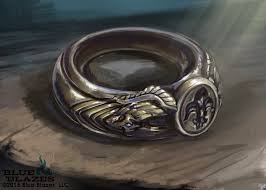
INTRODUCTION:
Although I wanted to slow my blogging pace down for the summer to focus on other projects it’s a hard habit to break! I want to spend less time on house rules; the RM Forums provides plenty of opportunity for rule minutia, and I think most of the active readers here already have their own set positions. So I’m introducing “Short Takes”, a minimized discussion for rule theory where I can offer conceptually ideas without getting into the weeds with my own solutions. If you look over some recent posts, I’ve already started with this approach. By offering a rule theory in more vague terms, I’ve found that people respond more with their own ideas that I can adopt to fine tune my solution. That’s been the case for “Stats as Skills”, “Resistance Rolls”, “Fixed HPs” and a few others.
ITEM IMBEDDING:
For my first “Short Take”, I wanted to tackle the subject of Item Imbedding. I believe that Rolemaster was one of the first rule sets to tackle a comprehensive system of magic item creation, and while no one in our group ever played an Alchemist we loved to look through those Base lists and play around with making cool items.
While they were a leap forward in the early 80s, a lot has changed over the past few decades. Reviewing the Alchemists lists for BASiL made me realize how inadequate the lists are now. At the very least, they should just be reclassified as Closed lists, but that doesn’t solve the problem of the lists themselves or working in issues with other realms.
The spell lists that I have the biggest issues with are: Inorganic Skills, Liquid/Gas Skills & Organic Skills. These spell effects should be handled with regular RM skills, and by establishing these lists, it infers that spell users are needed to produce certain items and materials. Take the Udahir of the Iron Wind—they have a Laen Crafters Guild but under RM rules the members would need to be 20th lvl to work the material. So either the Guild has an abnormal number of 20th lvl Alchemists or there must be another process to work Laen. Later rules did a bit of hand-waving, offered up ritual magic or other reasons to explain cultures like the Udahir (or Dwarven crafter societies), but ultimately RM established a very high benchmark to work materials that were ubiquitous in the game world: mithril, laen eog etc.
It seemed obvious to me that de-coupling Crafting processes from Enchanting processes (a better word than Alchemy in my mind) was the first step. This allows for societies with high technical competence to make items without the need for Alchemy spells and puts more importance on crafting as a skill in general.
Of course, eliminating those 3 Alchemly lists only leaves 3 Base: Enchanting Ways, Essence Imbedding and Ment/Cham Imbedding. The last two are basically the same so in the end you are left with 2 basic lists to handle RM magic item creation. Let’s put that aside for now (I’ll discuss in another blog re: BASiL Investiture Spells).
So now that we recognize that Crafting is used to work materials, magic and non-magic, how does that tie into imbedding magic? We decided to unify imbedding, crafting & item breakage into 1 mechanic: Item Strength.
Here is the basic chart I posted on the Forums last year. We’ve done some improvements and changes to it since.
Meta-physically, this directly ties together a material’s physical strength (fragility), susceptibility (resistance) and its magical capacity (# of spell levels). So, a glass object is fragile, unsuitable for magical imbedding and resistance to holding lots of spells. This means that for someone wanted to enchant/imbedding glass will either need to use a very low-level spell or be a powerful spell caster that can overcome the materials limitations. Conversely, strong items (like Laen) are both easy to Imbed and can hold lots of spell levels, but are difficult to craft.
This also simplified item crafting—the Item Strength number can be used either as an Item Level or a SM maneuver penalty depending on our own resolution process. For example, a crafter wants to make a sword of High Steel (Str 50). The crafting skill check roll would be made using a -50 (Sheer Folly), the sword could conceivably hold up to 50 lvl of spells and if an Enchanter wants to imbed a spell or power the item would save as 50th lvl to accept the spell. (Note that this is a bit counterintuitive–the material making the save would ACCEPT the imbed).
Occasionally there is an outlier (a strong material that is also magic resistant like Kregora, or a fragile material that holds magic well)—but it’s easy to track a few outliers than come up with a more complex system.
These guidelines also mean that potent magic items are going to be made with strong, high quality materials while those made with lesser materials will be weaker, used 1 time or disposable (potions, charms, wards, candles, powders, oil, ointments etc).
Hmm…I’m not sure this turned out to be a “Short Take”! A couple notes:
- I think Alchemy Companion and Construct Companion are fantastic books—but for us just too granular and complex.
- We’ve expanded our own Alchemy Rules (see HERE) which is different than standard RM Alchemists, so we call making magic items “Enchanting” to differentiate the two.
- When Imbedding fails the item makes a breakage check modified by the spell lvl.
- We have “Simple Imbedding” spell lists that allow players to make imbedded, 1 time items on the fly. Simplified rules like these make it easy to do “in game”.
Legends of Shadow World: Surviving Chapter 2
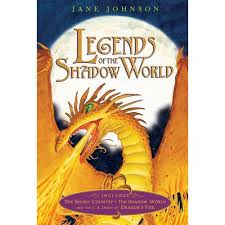
This is a continuation of my previous blog post on “Legends of Shadow World“, an adventure series I’m writing for characters level 40-60th. Last night the group attempted Chapter 2 (out of what is now 5 total chapters)! It’s getting longer….
While I thought I would replace the current group with other SW personalities of higher level, I didn’t have time this past week to put together the replacements. (btw: I liked T’vaar Dekdarion but I think he’s still in a coma an assassination attempt by the Cult of Stars). I did end up bumping the characters levels a bit:
Malim Pelax: 43rd lvl Loremaster (Magician)
Sumendar: 46th lvl Navigator –“Guides of Vurn-Kye” (Magician)
Knight-Captain Kroger: 48th lvl Captain of the Sun Guard (Lightbringers of Phaon)
Chomen Drah: 50th lvl Priest of Iorak
Jan Jo’drin: 54th lvl Changramai Warrior
The biggest change was allowing Chomen access to his 50th lvl Spell “Master”. (this is one of a few allowances I’m making while using RM2) All of the characters were effective, but the Navigator felt constrained due to his organizationally mandated neutrality. I may need to replace the Navigator in the group and just have the PCs use Navigator services when needed.
Chapter 1 introduced some environmental challenges and restrictions (Essaence Fluxuations) while Chapter 2 has different restrictions, this time on Channelers. The PCs were already depleted by Chapter 1 and Chapter 2 occurs immediately so there is no time for the group to “recharge”. C2 is more of a traditional dungeon crawl, with traps, guardians etc. For the most part, the group progressed slowly but steadily, but the challenges continued to erode their resources. The final confrontation proved to be a surprise–there are RM creatures that are incredibly dangerous to even high level characters! And no, they are not Shards.
While the players followed a fairly directed route that I sketched out, I’m going to flesh out the rest of the complex for the eventual published product. I think it’s going to be an amazing place to explore!
I think my biggest take away: even though there is lots of talk about high level spell casters having an advantage over non-spell users at higher levels, the reality is that casters better get good at some type of combat skill! Large numbers of semi-powerful creatures can overwhelm and defeat the most powerful caster and smart opponents will target casters who try and stay back and cast spells. (Isn’t that always how PCs beat tougher opponents?)
So far, I’ve been pleased with how the RM2 system rules are holding up at these high levels but a bit sad my group is back using RAW rather than my own simplified system. (although we are using the simplified encumbrance rules). My players and I discussed the differences playing this in RM2 versus our normal SW campaign using our own ruleset (SWARM). Here are some thoughts:
- Set HPs. We adopted Peters idea of set hitpoints and eliminating Body Development. The players liked having a lot more HPs at lower level, but now wonder if it would be better to have Body D back for these high level adventures! Ha, the grass is always greener!
- BASiL. RM2 and most iterations just give spell casters too many spells. A 50th lvl caster could conceivably have 25 lists and over 400 spells. By 15th lvl, most casters will have all the Open and Closed, the only differentiation being Base Lists. The players like having less, more distinct, more specialized and more powerful spells that BASiL allows.
- Unlimited Rank Development. The group would have liked to have unlimited rank development back. A fighter could have 200+ skill ranks in a weapon. Thats a 200+ OB, but more importantly we use # of skill ranks to offset combat maneuver penalties (not Combat Specializations). So a Fighter (or Monk) with 200 ranks could engage 4 opponents without any OB penalty (-50 per opponent, but doesn’t take into effect position penalties). Or parrry most missile weapons or engage in multiple attacks against several opponents etc.
- Meta-Skills. By 50th level, you HAVE to bake in meta-gamer effects and assume powerful characters will just know things and be good at things. Fewer meta-skills lends itself to higher level gaming.
- “Level-less” gameplay. We have been using “Stats as Skills” which are basically level agnostic. The players like the improvements that a level based system gave them, but agreed it didn’t make much sense.
- Magic Power rules. I nerfed Daily Items quite a bit, so the players liked having Daily items that didn’t require them to provide the powerpoints!
- Great Role-Playing. Having the group adopt pre-gen characters allowed them to stretch a bit without the emotional attachment they might have with their own custom built characters. Out of the 5 characters the group favorite for roleplaying was Sumendar with Kroger coming in a close second! In terms of efficacy, guess who was the most potent character?
Unifying and Simplification: Rolemaster Herbs
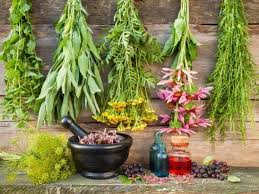
One of the early appeals of Rolemaster was it’s “realism”, and while most people thought of the combat system there was also exhaustive material around magical herbs. In many ways, RM herbs supplanted traditional fantasy RPGs reliance on healing magic and healing potions. Some even argue that RM healing spells are relatively weak, or that the detailed injury system required too many spells to heal even minor wounds.
I think many players/groups use herbs in different ways: some to augment natural healing processes while others allow for instant, miraculous healing effects. “Chew and screw” so to speak. Instant effects allow groups without skilled healers to adventure, or groups in intensive dungeon environments to maintain their tempo.
No matter how a GM handles effects and healing times, RM established some basic criteria for herbs: location codes(biome), form, prep and rarity. Peter discussed creature codes in a previous blog, and certainly RM herb codes were another example of over complexity!
RMU has done much to simplify herb criteria; biomes are simplified, rarity is given a modifier and “form” & “prep” are fairly simple. What RMU didn’t do is completely unify these simplified criteria with the RM skill and resolution process.
What we have done is apply difficulty modifiers to 3 criteria for herbs.
- Rarity. The same as RMU, we give herbs a modifier for it’s rarity. This can be applied to a foraging/survival skill check or as a check to see if an herbalist or store stocks the herb.
- Preparation. This is where we diverge from RMU which sort of combines prep and application into one criteria. Each herb is given a prep modifier, based on the difficulty in preparing the agent for use. Whether that’s brewing, distilling, steeping, powdering etc.
- Application. Finally, we give an herb an application modifier, based on the difficulty of delivering it’s effects. For healing and other herbs with a range of effects the maneuver roll can act as a % of success–so a 85% roll would delivery 85% of the healing effect. For herbs with an “all or nothing” effect it’s simply a pass/fail maneuver.
Interestingly, you can have a herb that is relatively easy to prepare but difficult to apply correctly or more commonly, difficult to prepare by very easy to apply. For herbs that require no prep, or the application is easy we just give it an n/a and don’t require a skill check.
Using these criteria gives herbs complexity, but still rely on the simple skill resolution process. Additionally, players may need to rely on different herbs at lower level that don’t require a high level of skill to prepare or apply, or may need to pay an herbalist to do the preparation for them. (For simplicity sake, I don’t get into much detail on “freshness” and removed most of the herb keeping spells from BASiL).
Also note, we put all rolemaster herbs into our SW Master Encounter table by biome. You can find that HERE.
So this is the last blog for May! Whew, we did a blog every day this month!!! For the next few months I’m going to reduce by blog pace to about 1/wk and focus on getting adventure files ready, finish the other projects I’m working on and do a bit of travelling overseas!