REVISITING SPELL LAW: SPELL CASTING MECHANICS PT. 3: CHANNELING

Doctors of Ancient Egypt

In Casting Mechanics Pt. 2 we discussed our reworking of the Essence spell lists. In this post we’ll tackle our deconstruction and rebuild of the Channeling lists.  Recent posts by Peter talked about his difficulties with the Channeling realm. For Project BASil we rewrote Channeling spells (rather than eliminate it), but I agree that the Channeling realm presents some problems. In short, the Channeling realm is dependent on the setting, world build and presence and type of Dieties. D&D and Spell Law deal with this by making Channeling spells fairly generic and “vanilla”—it took the Channeling Companion to really dig into “Aspect Lists” and rules for more flexibility for Clerics and other Channeling Professions.

First, let’s look at Channeling in the original rule set:

  1. Casting Time. Like all realms, spells take 1-3 rounds to cast.
  2. Metal armor interferes with casting.
  3. Spells require a verbal and hand gesture component.
  4. Spell Powers. Spells cover a very broad range of power but generally exclude elemental attacks spells.

Our deconstruction of Spell Law forced us to look at each aspect of Channeling spells and casting mechanisms.

Spell Access. If the very nature of Channeling implies access to, or permission from, a “higher power” than that also implies that not everyone can access Channeling spells. Unlike Essence where even a non-spell user could make an effort to learn an Open list, we must assume that the potential caster must at least worship a god and that the god allows that person to cast. (an atheist couldn’t learn Channeling spells) This assumption throws away the whole concept of Open, Closed and Base for the Channeling realm. Instead we reclassified/renamed the 3 categories. “Holy Believers” (Open) are less powerful, general spells available to faithful followers of the diety that put the time and devotion into studies and are granted access to some basic powers. “Holy Followers” (closed) are specialized or aspect themed spells that are only accessible to the priests and clerics or to special servants or high ranking members of the religion. “Holy Servant” (Base) spells are lists for Priests/Clerics and Holy Warriors of the religion. In short, spell access is driven by the casters role in the religion or church.

Channeling Mechanics. Given the need for a Diety to justify the Channeling Realm we also wanted to define the god’s role in actual spell casting. Spell Law touches upon the concept but it’s all a little vague. Are Power Points drawn from the Diety? If so, then why have PP limits for Channelers? Are the spells themselves drawn from the god? SL mentions that higher level spells may need tacit permission from the god or at least their awareness, but it’s not built into the game mechanics in any real way. Since we defined spell power (power points) as being single-sourced (the Essaence) and individual, it’s not the power that’s drawn from the god. Instead we see channeling as working like an app download. The caster prays and the god/diety provides the spell template to create the magical effect.

Casting Components. Given the above definition for Channeling mechanics, the channeling user doesn’t need to use a magical language or arcane hand gestures to generate spell effects. Instead, the caster just recites a specific prayer, “asking” for a certain spell effect. The prayer/spellcast doesn’t even need to be spoken but we do add a SCR bonus for praying out loud. We added a Prayer skill that is used for the SCR. The prayer skill measure the level of devotion and connection of the caster and also determines the highest level of spell that can be cast.

Channeling Spell Powers. Because the spell framework is provided by the god, we felt that Channeling spells didn’t need to be as logical or linear as the Essence lists They could manifest as more miraculous, wondrous or illogical. From a realm differentiation standpoint, channeling spells are better with the intangible: souls, spirits, auras and similar non-physical aspects. Because they are tied to a higher being, channeling is also better at divination/augury and other “fuzzy logic” spells.

Encumbrance. We eliminated the encumbrance and armor effect for Channelers. As discussed in another blog, the Transcend Armor work around is just rules for rules. I don’t see a balance issue.

Casting Time. Channeling spells can be more miraculous and powerful than other realms, we eliminated casting penalties for armor—so are Channelers now too powerful? We chose to balance these benefits with longer casting times. Since the caster needs to pray for a spell effect it might take some time. Our casting rule for Channeling is 1 rnd per spell lvl. A caster can cast quicker, by “rushing” the prayer but there are casting penalties. So yes, a 50th lvl spell would take 50 rnds (just over 4 minutes) to cast without a penalty.


Weekend Roundup: October 8th, 2016

imgres

Cool treasure at Sutton Hoo. A helm worthy of an RPG.

IT’s spreading and being TALKED ABOUT

So call the FBI and ask for the “Clown Division”.

Art imitating life?

Lord of the Rings?

F#@%ing Elves!

I never turn away from a story regarding GNOSTICISM.

Have you ever cleaned out some old storage and found the “Blast From the Past” RGP adventure?

My go to resource for RPG ships.

Mapping resource. Any good?

RPG Brand Management. How about I.C.E.?

Tombs, traps, creatures and temples! The Lost Shrine of Tamaochan!

Spell list for a Cleric of the God of Needlework!


“NO PROFESSIONS” = All Professions

Jordan Tate: You’re not a cook.
Casey Ryback: Yeah, well… I also cook

I have had a handful of email conversations going on with other RM players about our “No Profession” ruleset and one of the first assumptions that people make is that our PC’s (or NPC’s) are just called “No Profession” or “Layman” or really nothing at all.

As I have discussed in other Rolemaster Forum postings, Professions/Classes do act as a short-hand to summarize a characters skill-sets, aptitudes and general abilities. In that regard, eliminating Professions does create some problems or more work when creating NPC’s. Since we’ve thrown away Professions, we’ve generally thrown away the working template for quickly creating NPC’s and assigning skill abilities.

However, while we’ve thrown away the profession mechanism, we haven’t discarded the professional names. In our rule-set “Professions” are more tags—driven by 2 factors: the skill sets developed by the player and/or the social conventions of the setting. For instance, a player that develops the majority of their skills in armor & weapons will still call themselves fighters. As a counter-example, in RM a PC that chooses the Fighter profession but chooses to dedicate all of their DP’s into thieving/subterfuge is still called a “Fighter”. From a societal/setting standpoint a Fighter may be called a “Warrior”, “knight”, “Barbarian”, “Janissary”, “Armsman” etc. This is no different than a lawyer in our world; some societies call them barristers, counselors or consults. Players can build their character and apply any name/descriptor they want, or based on their background/training or organization ties might be assigned a professional name/tag.

In Shadow World there is already some gray areas around professions using the RM2 rule-set. Navigators and Loremasters could be considered stand-alone Professions, each with their own Base Lists, but in actuality are assigned standard professions giving them 2 sets of Base Lists. Issues around the Unlife, access to evil spells, hybrid magic, power point sources/pools, further complicate things. (this topic was discussed in my blog post about the “gap” between rule sets and dedicated settings).

Our transition to “No Profession” was gradual. First, like many others, we kept designing new professions (with associated spell lists) to meet player wants and needs or to fit into a particular setting. Basically the “RM Companion” approach. At a certain point we realized that small skill cost differentiators meant very, very little past the first few levels and became meaningless at higher levels when skill rank bonuses were minimized. In an effort to maintain “balance” we moved to a archetype template: Non, Pure, Semi but still keeping Realm assignments. (A Pure Essence archetype could pick between elemental spells, illusion spells etc and label themselves a “Mage”, “Illusionist” or whatever fit their character image or setting. After we tried that we realized we had one foot in the old ways and one foot into a better, flexible approach. I realized that using skill costs and other “free market” approaches, character generation would be a process of choices and opportunity costs that would enforce character balance without the need for lots of rules or arbitrary skill cost assignments. (Rules for Rules) Characters can’t be great fighters and great magic users—the fall somewhere in the middle (ie Semi).

So, in short, our campaign and rules have ALL the professions, not NONE of them. A character that focuses on farming skills is a farmer. A character that focuses on the Fire Law magic is a FireMage, Wizard, Mage, Elementalist etc. A character that develops subterfuge and poison might call themselves an assassin or a nightblade. A member of the Loremasters is a Loremaster. A cleric of Z’taar is a Battle-Priest. A character with certain mentalism spells in Itanis is called a Warlock.

It’s not for everyone, but it works for us.


Weekend Roundup: October 1, 2016

imgres

Science behind the “Bardic Tradition”.

Science or Magic?

Nietzsche’s “Beyond Good and Evil”?

Gods of Old, Gods of New.

Any spell list ideas here? You betcha!

How about ordering some effects for the game table or Peter’s haunted mansion adventure?

Not all loot glitters like gold!

Sweet jesus—that’s a clown photo!

…but clowns aren’t a laughing matter!

Does Low Fantasy Gaming work with Rolemaster?

Anybody watch this on Netflix?


Weekend Roundup: September 25 2016

images

I stand corrected on a previous news item.

Are these the Yinka/Y’kin?

Changramai Warrioress? Followers of Inis? Female Warrior Monks Kick Ass.

Iuraic has no words for empathy.

20 ranks in Rolemaster Herb Lore?

What are the Kulthean Dark Gods up to?

Now that’s an Essaence Storm!

Nature, nurture, skill bonus, stat bonus, talents, professions…the DEBATE is endless.

Shadow World Chegains are now the new Cool.

Real life cool treasure. Ancient craftsmanship. Here, here and here and last…here.


Rolemaster Rant of the Day: Rule Bloat & Complexity

imgres

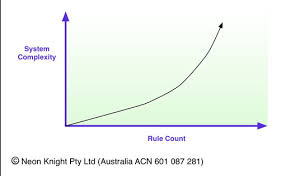
“Rules for rules”. To me one of the biggest drivers of system complexity and bloat is “rules for rules” ie—new mechanisms to modify original rules or to make  work-arounds to disliked rule restrictions.

Let’s use “Transcend Armor” as a perfect example. Why do we have “TA” as a skill? Because the addition of Paladins and other new professions in RM Companions required a mechanism for Channelers to cast spells. Why? Because the common trope of Paladins is that they are armored knights that cast clerical style spells. The solution? A new skill and a whole bunch of arbitrary new rules so Channelers (or Essence casters) could safely cast spells while wearing metal armor. Let’s ignore the fact that many fundamental rules that we don’t question are really just a result of acceptance to early D&D standards. Why is there a restriction on armor? Because in D&D magic users weren’t allowed to wear armor. Period.

Rather than add complexity to the system, why not question the original restriction in D&D on casting in metal armor to begin with? No reason except for “balance” and to reinforce class distinctions and class roles within a group. Sure, there is a hand-waving, quick reasoning that armor interferes with spell-casting and within the relatively simplistic rule set of early D&D that works. But in D&D, clerics would wear metal armor…so why not in RM?

Here’s a solution. GM’s, just remove any penalties or restrictions on Channelers wearing metal armor. Does that create a “balance” issue? Why would it? It certainly avoids a slew of issues, rule parameters and discussions about “Transcend Armor” and simplified things for new players.

The larger issue here is generating a whole slew of new rules and mechanisms to eliminate parts of RM that you don’t agree with, or want to work around. It’s a bit dishonest and many times the driving force behind rule changes or suggestions seem to come from players and not GMs. Some of the forum posts feel very much like players “working the ref”. You don’t need RMU developers or RM to canonize a rule so you can feel good—if you want Channelers to cast in armor just ignore armor penalties for Channelers.

What other types of changes were wanted that required new, additional rules? Players didn’t like 3 round casting (it’s more fun to cast every round) so ESF rules were introduced. Then more flexibility was required so “Grace” was added to offset various casting issues. Rules, skills and complexity layered over the original foundation that are completely unnecessary.

Is all this really necessary? Could the original rules just have been tweaked without the extra complications?

Rant over.

Rolemaster House Rules: Skill Consolidation

images

As part of our efforts to create a viable “no profession” Rolemaster rule set we’ve focused on distilling skills down to as few as possible meta-skills. I think I’m down to 45 or so total skills in our S.W.A.R.M. rules but after reading some of Peter’s ideas I think I can get it down further. Part of the goal is to just stop skill bloat, increase game simplicity and to create more parity between skill utility.

Today I want to talk about consolidating a number of power/channeling skills down to one meta-skill: specifically Power Points, Channeling, Power Projection and Power Perception. Let’s explore them individually:

Power Points: Obviously PP is a KEY skill—it sets the amount of power a spell user has to cast. From a functional standpoint this infers several things: this skill allows players to absorb power, store power and expend power. Sort of a receiver, battery and transmitter.

Channeling. Channeling appears to be a fairly major mechanic in the original RM rules. Not only are pages devoted to the concept of transmitting and receiving power and spells but there are a number of spell lists that concerning channeling as well. In all my years playing RM I have never used Channeling as written in the original rules, nor has anyone used any of the channeling related spells in Spell Law. There is an interesting idea here but not sure it proves practical in normal gameplay and/or combat. To make matters more confusing, Channeling the skill has really nothing to do with tapping your gods powers or the realm channeling itself except in terms of profession related skill costs. I’d be curious to hear if anyone has used Channeling spells RAW in game play. Either way, it’s clear that Channeling the skill allows a player to acts as a transmitter and receiver of PP’s and even spells.

Power Projection. In all honestly I’ve never used this skill, not sure what rule set it belongs too but I am intrigued by the concept of spell casters able to project their PP’s in some sort of test of will or strength. The last time I looked it didn’t seem very useful as written but there might be something there. As a stand-alone skill I’m definitely not convinced. Equally intriguing is the idea that spell casters could simply project, OR CHANNEL, raw power to inflict damage. (However, this might be a better idea to explore using Arcane magic). Either way, Power Projection may have some utility and from a practical standpoint the skill allows the caster to act as a power transmitter.

Power Perception. This is another skill that I don’t use—I try to keep a strong firewall between skill ability and spell ability and Power Perception blurs that line allowing a skill with magic like ability. However, in SW there is an argument that Power Perception could be a trained sensitivity to the Flows and Foci of Essaence or a racial ability. Basically the skill allows detection/attunement to raw power.

In summary these four skills are closely related: allowing for detection, receiving, transmitting or storing of power. Does it make sense to roll these into one skill? I think so and we have. We now use 1 skill, “Channeling” that encompasses these related facets.

The skill bonus is used to determine total PP’s, skill checks for sending or receiving power (we allow PC’s to charge items and draw PP’s from storage crystals). The # of skill ranks is used to determine the Rate of charge/discharge at rest. So a Mage with 75 PP’s and 10 ranks of Channeling would recover 10 PP’s/hour. Or would need 4 hours to re-charge a wand with 40 PP’s.

That’s our hack—what’s yours?

Weekend Roundup: September 18, 2016

unnamed

Magical gem with a mysterious inscription?

Re-writing textile history again.

Do not try this at home. These are trained professionals.

Or just cast a Mentalism spell.

Chronagenic sleep around the corner?

I can’t resist…bring out the clowns!

The ancients collected ancient things.

More ideas for “Sound Law”.

And more clowns.

Death’s Tale spell?

Good GM advice.

Monte is at it again.

Workplace self-defense or Elvish hand crosswbow?

Weekend Roundup: September 4, 2016.

imgres

Heading off to vacation but thought I would put up some interesting articles.!

I always wanted to include a Vomitorium into one of my adventures as a Pythonesque scene. I think we had it all WRONG!

It’s all about materials science.  Photonic Crystals.

Ancient Althan base? The mysterious EYE….

Or, a story worth keeping your EYE on.

Imagine the Flows of Essaence.

Lightning strike??? Maybe 40th lvl  Chain Lightning cast.

Haven’t we learned anything? Don’t #$%& with Elves.

Why? Obviously to untap latent Mentalism powers?

I will never tire of Creepy Clown stories.

Great PIC.

Sorry Peter, all is not LOST.

If only ICE had these production RESOURCES!

Stranger NEW Things.

September book release. Peter Hamilton.

ICE Directors Briefing.

Happy Labor Day!


RPG Rant: #@$! Potions.

imgres

I hate potions. Ok, perhaps I don’t feel that strongly but I certainly don’t use them a lot., and thankfully Terry doesn’t use them either in his Shadow World setting. So what is it that bugs me about potions….

Potions are a common trope in early fairy tales and mythology, a standard in RPG’s and are a critical mechanic in many computer video games for health or hit point rejuvenation. Maybe that’s why it feels like potions have “jumped the shark”. Rolemaster already has a comprehensive spell and herb healing system–why duplicate that with healing potions?

I remember in my early days of D&D gaming we allowed players to “sip” a potion to test its properties. For instance a player would go a little transparent if it was a potion of Invisibility or feel “lighter” if it was a potion of levitation or flying.

Rolemaster has a fairly flexible system to imbed virtually any spell into a potion. I’ve seen GM’s allow Fireballs and Lightning Bolt potions–that makes little sense to me. Allowing Mentalism spells to be made into potions also makes little sense to me. Channeling isn’t much better–can a “Good” priest create a potion that can be used by a evil player? hmm….

So while I do have rules for “consumables” (candles, potions, charms, powders– items that get used up to activate the spell effect) I generally shy away from their common use. Potions are silly.

Just had to get that off my chest. Back to Spell Casting Mechanics: Channeling.