I.C.E. Deep Dive. Loremaster Series Review pt.2: The World of Vog Mur.

For a long time, The World of Vog Mur was never my favorite Loremaster book (although still better than Shade of the Sinking Plain)! I recall talking with John Ruemmler on the phone back in 1988 or so and mentioned my “lack of enthusiasm” for Vog Mur. There was a long, awkward pause, and John said “I was the author for that….”. Oops, foot in mouth! Over time, though, I’ve grown to appreciate it–sort of the “Empire Strikes Back” effect. It’s a bit awkward but charming in it’s mixture of Rolemaster, Middle Earth elements and basic D&D. And there are great ideas and layouts that makes using the module as a drop-in side adventure easy. Shipwreck the players?

Vog Mur is a short supplement, only 34 pages, and was originally included with Gamemaster Law. The book conveys a sense of a tutorial: it has wide right margins with developer notes and space for a GM to add their own. There are many explanatory sections on how to use the material, handle NPC’s and encounters. As a section of Gamemaster Law that approach makes sense, but it feels a bit clunky as the stand-alone module.

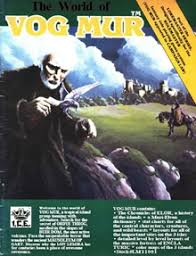
Cover Art. First off, the cover art: it didn’t have the punch that Brian White’s Iron Wind cover had, and certainly it was no Gail McIntosh cover on Cloudlords of Tanara. But I like it now, for it’s color and realism. There is a ruined castle, an imposing black figure astride a horse and in the forefront, the gentle Vorig Kye releasing a small bird. Ha! He was cool when I first read Vog Mur but now that he has been promoted to a full Dragon Lord in Shadow World it’s much more interesting to look back and see his humble beginnings.

The Setting.  The world of “Vog Mur” (which means Death Watch) is comprised of 3 small islands: Dalov Perll, Ordye Throg and Dalla Veurd, all basically volcanic atolls situated to the north of Emer. Dalov is 14×11 miles, Ordye is 7×6 miles and Dalla 2.5×2 miles so these are small sand boxes to control player travel and maintain the adventure narrative. Again, as a introductory setting for a new GM this is a very manageable theater. Interestingly, there is no mention of Essence Flows, Navigators or Loremasters. So while this came out after Iron Wind and supposedly part of the cohesive framework, the “Loremaster Series” it seems to lie outside that framework. I’d be interested in more background on the genesis of Vog Mur. (Terry, are you reading this)?

Content and Organization. One of the frustrating aspects to Vog Mur is how information is delivered and organized.  Adding to the confusion are the naming styles: Ordye Throg, Dalla Veurd, Puirl Buirn, Oevaag Baas, Geleb Daart and Usiva Krem (and a ton of other 2 word names) don’t roll off the tongue!!!!

Inhabitants. Again, there is more confusion on how information is organized and transmitted. For example, Section 4.21 Plants has more material on geography, drops a hint about the haunted Mausoleum of Gart, then covers wolf packs, Ghouls and the Throk-Vurd. Those all should be in the other section on animals and monsters. Then, the next section 4.22 Wild Beasts and Monsters covers some other creatures that weren’t described in the Plants section. While these islands are very small, they have a very D&D like ecology. “Monsters” include intelligent baboons, a Hydra guarded and tended to by a Giant, a large squid, Firehounds, Ghouls, Trolls and even Sea Krals. (weren’t Sea Krals in Quellbourne as well?) Then you have a fisherfolk village, pirates, Half- Elven lords, and cliff dweller tribes.

Elor Once Dark. Like the Iron Wind, Vog Mur uses the writings of Elor Once Dark to transmit information and history. Here it feels very “Middle Earth”, for example:

The new King, Lembalas, married a woman of mortal blood, one Janella, who bore him two children — a boy named Tereborn and a girl called Eledrial.

Places. Vog Mur has some great maps/layouts that make for great adventuring on the islands or as drop-ins to your campaign or adventure:

Purll Cibur. This is a small town of 60 stone dwellings overlooking the cove. A few merchants and similar are described and then there are some “activities” which include brawling in the Inn & Combat contests of hand-to-hand, archery and jousting!

Encla Turic. Next we have the fortress of Encla Turic. This is a great small castle keep with mechanical functions, water tunnels, and a great library. This is the great tradition of these books and probably done by Peter and Terry. A great drop-in layout for your adventure.

The Mausoleum Gart. A old school tomb with 3 entrances that are a great dungoen crawl. Beware the undead inhabitants! Like Encla Turic, this is classic Amthor/Fenlon design and layout key with cool features, traps and treasures.
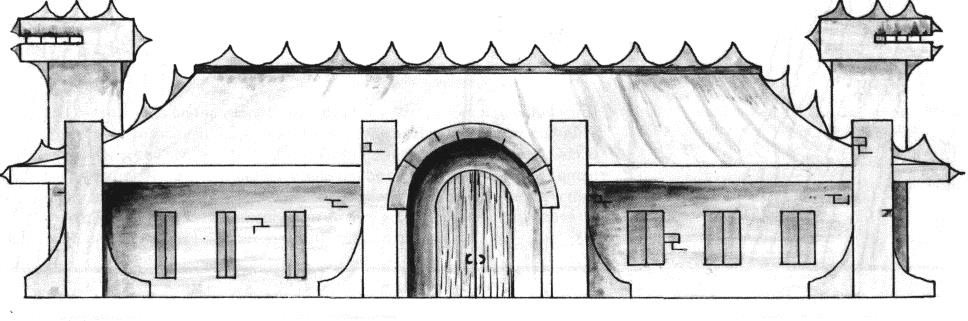
Gudd Tyl. A simple Elven manor but a nice little drop-in.

Vorig’s Manor. A simple building where the Dragonlord lives.

Last bits of stuff. At the back there is a Muri-Elven dictionary and a couple of colored maps. A simple, crudely drawn elevation style map and then on the back cover what is clearly a better version done by Fenlon with clearly marked locations of key spots.

Final thoughts. While I had to read through several sections to make sense of everything, it’s a fun little module. The islands have varied topography, there are ample places to explore and it’s small enough to control the action and give the party some “wins” without being overwhelmed with a larger world. Clearly, the module could use with a redesign and re-organization to present the material better, and maybe, just maybe, tone down or simplify some of the place names. The creatures feel very OSR and Sea Krals were never canonized by Terry, but it would easy to replace them with another race.

There has been some retro-modding to Vog Mur in later Shadow World material:

  1. Vorig Kye’s name was changed to Voriig (and he grew in power quite a bit!)
  2. Lon Lemira is now an Earthwarden construction and there were several built. btw, here is my list of the Earthwarden Golems and locations.

Yanie Steraiad, the Eog Golem.  Earthwarden temple in Vog Mur.

Arestiis Lanedri Laen Golem.  Isle of the Turning in Mythenis.

Renia Athos, Titanium Golem.  Under Nontataku in a cave

Zarin Deyroain, Kregora Golem.  Dawnswaters Edge, Mur Fostisyr.

Elezyii Ankyra, Diamond Golem  Earthwarden Ruins in NE Kelestia.

3. Dulcaborn and his 101 knights are integrated into the master timeline.

The World of Vog Mur is clearly an entry level module with it’s smaller size and scope might be a good candidate for a RMU makeover as the first introductory module.

 

I.C.E. Deep Dive. Loremaster Series pt.1: The Iron Wind.

In a recent blog I reviewed some of the earliest ICE ads that were featured in the Dragon Magazine. Iron Crown’s two very first products were Arms Law, a drop in combat module for use in other game systems, and The Iron Wind, an expansive “generic” fantasy setting.

Later, ICE would formalize their modules into the Loremaster Series which would then morph into Shadow World.  The Loremaster series consistested of 4 modules: The Iron Wind, The World of Vog Mur, The Cloudlords of Tanara and the Shade of the Sinking Plain. Two additional modules were advertised but never published: “Cynar: the Cursed Oasis” and “The Gates of Gehaenna”.

I thought I would do a “deep dive” analysis into the 4 Loremaster modules, starting with the Iron Wind. The Iron Wind was written/published in 1980, the start of the “Golden Age” of RPG’s and is a informative marker for the trajectory of Iron Crown Enterprises, it’s creative style and future product development. There are 3 basic versions: a b&w Parchment edition, a colored cover parchment version and then the final blue/green cover edition. As of yet, Terry hasn’t expressed an interest in a new updated edition, but this may be due to authorship issues as well. (If I recall, authorship was shared by, or predominantly done by Pete Fenlon).

There are a number of traditional online reviews of the Iron Wind, but I wanted to review the original 1st edition b&w parchment, offer my thoughts and identify any material changes that occur with each edition. But first off, let me say this: in my opinion, The “final, 3rd edition” Iron Wind is one of the best RPG adventure supplements ever produced. It was a self-contained sand box with a great mix of cultures, geography, structures, cities and plot narratives. While Judges Guild, Midkemia Press and others produced third party adventure content for D&D in the same period, these were drop-in products, lacking distinct and novel cultural frameworks beyond the “re-purposed renaissance style” or “Gygaxian racial tropes”. Too me, the lack of Orcs, Goblins and “True Elves” in the Iron Wind is pretty amazing given the Middle Earth roots of Iron Crown Enterprises and industry trends at the time.

With that said, the first and second parchment editions were a VERY stripped down version of the later 3rd version. While it did include the Priests Arnak and mention of the Unlife, there was no “Loremasters”, “Flows of Essence”, Navigators” or other elements that later defined the module series and ultimately Shadow World.

Front and Back Covers. The Iron Wind was published with 3 different covers: The B&W parchment, the “red” contrast parchment and the glossy paper green cover.

The parchment cover (top left pic above) depicts a mountainous terrain and a small citadel with a perspective of looking out of a small cave. It’s initialed “RB”, so I’m assuming that is Richard Britton, one of the ICE staff. The back cover is a large size Syrkakar Warrior also initialed “RB”.

The red parchment is a more fascinating scene. A (top right pic above), horned helm warrior twirls a morning star from a cliff edge while looking over a distance city–probably Syclak. Far in the distance a volcano is spewing an ash cloud and high above a red dragon is flying. There is so much dynamism in this art and once again captures the raw, gritty nature of The Iron Wind and early Rolemaster. It’s hard to say who the author is, but in the upper right border is a faint dotted PCF, so it appears that Pete Fenlon drew that cover!! This cover art was re-used in the third edition on page 23. The back cover is a colored Fenlon map of the area–interestingly it’s not an island, but a coastal region. This goes back to the Iron Wind being placed on the northern shores of Middle Earth.

The third edition had a full color picture done by Brian White in 1984. It shows 2 “barbarian” style characters fighting a demon that has seemingly burst from the ice of a frozen lake. A cool citadel is seen in the background. While I don’t like the Demon’s facial appearance, I think this is a great picture and I used it for inspiration in my game hook, Gauntlet on the Ice.

Maps. So let’s talk about maps. There is a definite progression of maps in these 3 products. Of course, Pete Fenlon’s map skills won ICE the Middle Earth license, and ME and Loremaster maps are some of the best ever published. The hand drawn “relief” style maps with key symbols are the GM’s best friend. Unfortunately, the 1st and 2nd  parchment edition of The Iron Wind lacked the more polished Fenlon elevation maps found in the later Loremaster modules. The two color regional map that was included was for a whole different coastal geography! In the first two parchment editions, the Mur Fostisyr wasn’t even an island. Instead, the area is a coastal region. (I believe it was meant to be a northern coastal area of Middle Earth).

Content. Both parchment editions have the same material, which again, is quite sparse compared to the final 3rd version. Basically these two versions detail 6 locations, a section on the Iron Wind and 4 cultures. There are a few maps in the middle of the book and some scattered supplementary info:  a weather chart on page 37, 2 small tables of herbs and poisons on page 43, food and lodging prices on page 47, and a  “master military chart” on page 55 called “Basic Warriors of the Mur Fostisyr”. So right there you can see the primal DNA of future ICE modules, both ME and SW.

Narrative. Almost all of the books narrative is given via a storytelling device by Elor Once Dark. While those parts were included in the 3rd edition, in the 1st & 2nd it’s the entire “voice” of the product. This gives the product a more distinct and raw feeling. It reminds me of the voice over narration found in Conan the Barbarian–but that movie came out in 1982 and this product is dated to 1980.

Languages. One thought on “naming conventions”. The Iron Wind  established a naming convention using word construction and consonant use that  lends itself to setting depth. Check out these place names found in the Iron Wind : A-Arnaar, Uda Tyygk, Aalk Gaath, Taurkytadl.  A mouthful certainly, but conveys a a sense of history and realism. We are used to this type of naming conventions from Terry’s subsequent work in Shadow World, but in 1980 it was unusual to see place names that were different from D&D standards: i.e. Greyhawk, Black Keep, Cross Fell, Hommlet etc.

In the first two parchment editions there is a small section on the Ky’taari. The third edition adds language notes on Syrkakar and expands the Ky’taari dictionary.  Later Loremaster and SW modules continued building upon this foundation with language notes on Iruaraic, Kugor and others.

Citadels and Cities. Let’s get to the “meat” of the module–cool floor plans of amazing citadels. This is an area where Terry really shines and the Iron Wind is no exception.  A couple of thoughts. First, all of the floor plans are “grid-less” (no grid paper background)–a significant different from D&D modules. This might be a subtle change, but lends a certain authenticity to the floor plans. Second, the Iron Wind established a more minimalist approach to room description. There are no “narrative boxes” and many of the room descriptions can be quite terse. For example: 16, 18. Offices. Of the chief librarian. Chairs? Desks? Luxurious? Who is to say! So while you have cool structures and floor plans, they leave a lot of unknowns for the GM to work out. Last thought–each citadel has a exterior drawing which is a great GM tool and helps with understanding the spatial aspects of a building or city.  It’s nice to see a exterior view actually match the floor plan!

The parchment editions had 6 citadels/cities, plus a map of Syclax. The 3rd edition had the 6 citadels, a newly designed Fenlon map of Syclax plus Tharg Jironak (Tower of the Astrologer).

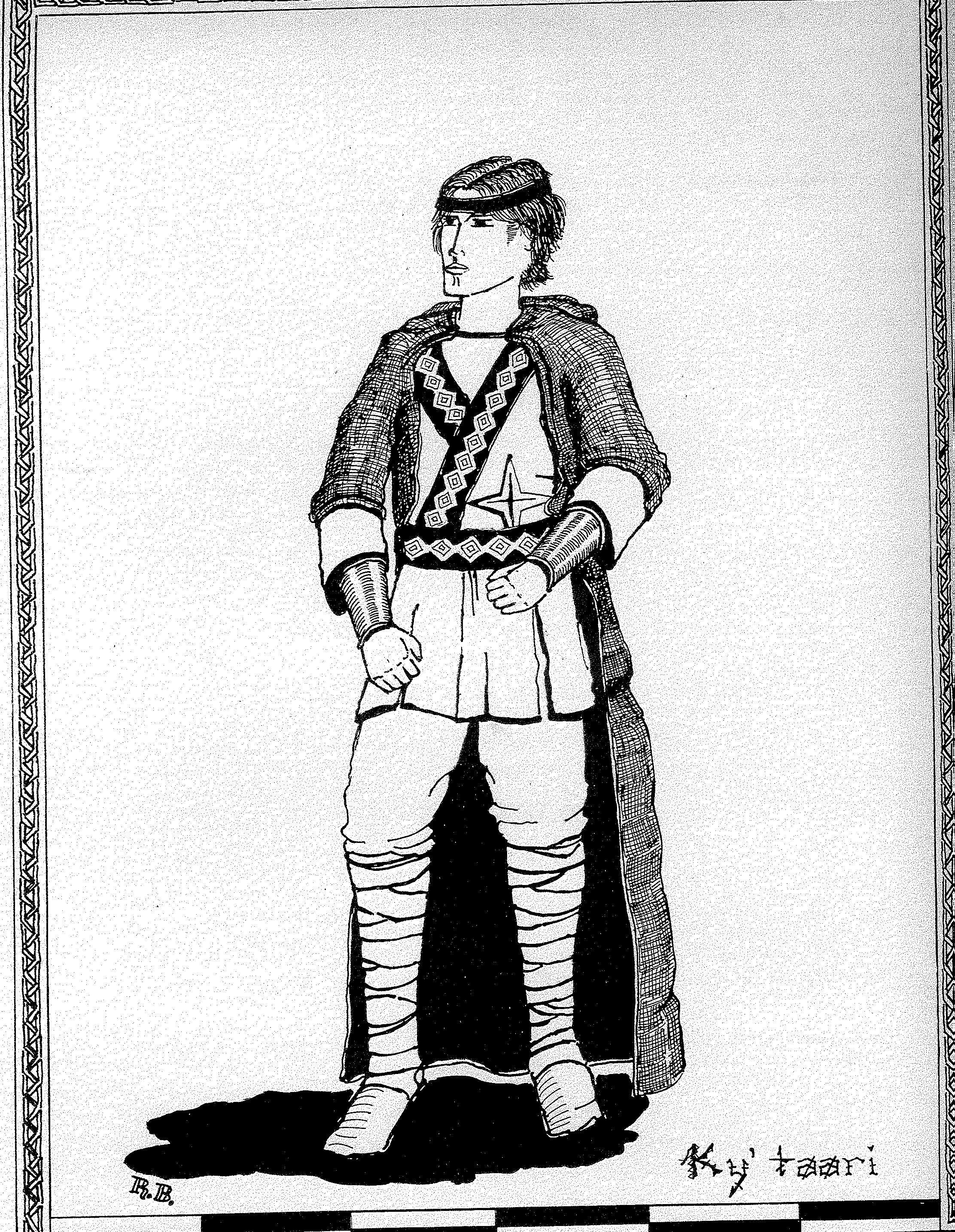
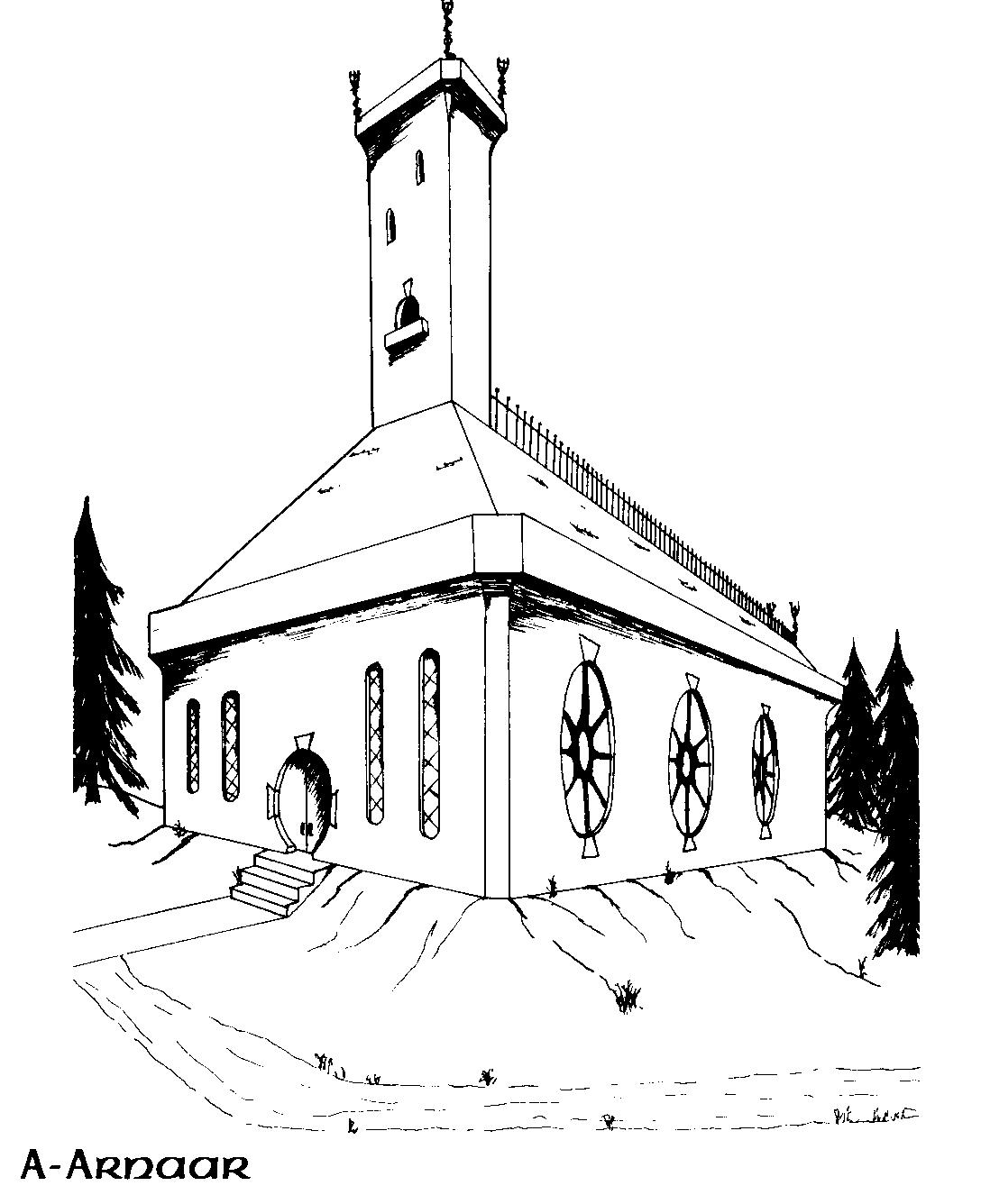
A-Arnaar. The High Temple of the Ky’taari. Parchment editions only had the lower hall layout. 3rd edition added the “upper hall”. There is a short narrative in the parchments that is expanded upon in the 3rd edition. Interestingly, both refer to the “master orb of the seeing stones of the Ryaani). Not sure if I missed who/what the Ryaani are, but this sounds like the basis for the Ilsari Seeing Stones established in later SW canon. Both had an exterior of the building, but I can’t tell who did the drawing.

Kaldaraak-Vaar (Dawnwaters Edge). Interestingly, both parchments and 3rd edition refer to the “master orb of the seeing stones of the Ryaani. Not sure if I missed who/what the Ryaani are, but this sounds like the basis for the Ilsari Seeing Stones established in later SW canon.

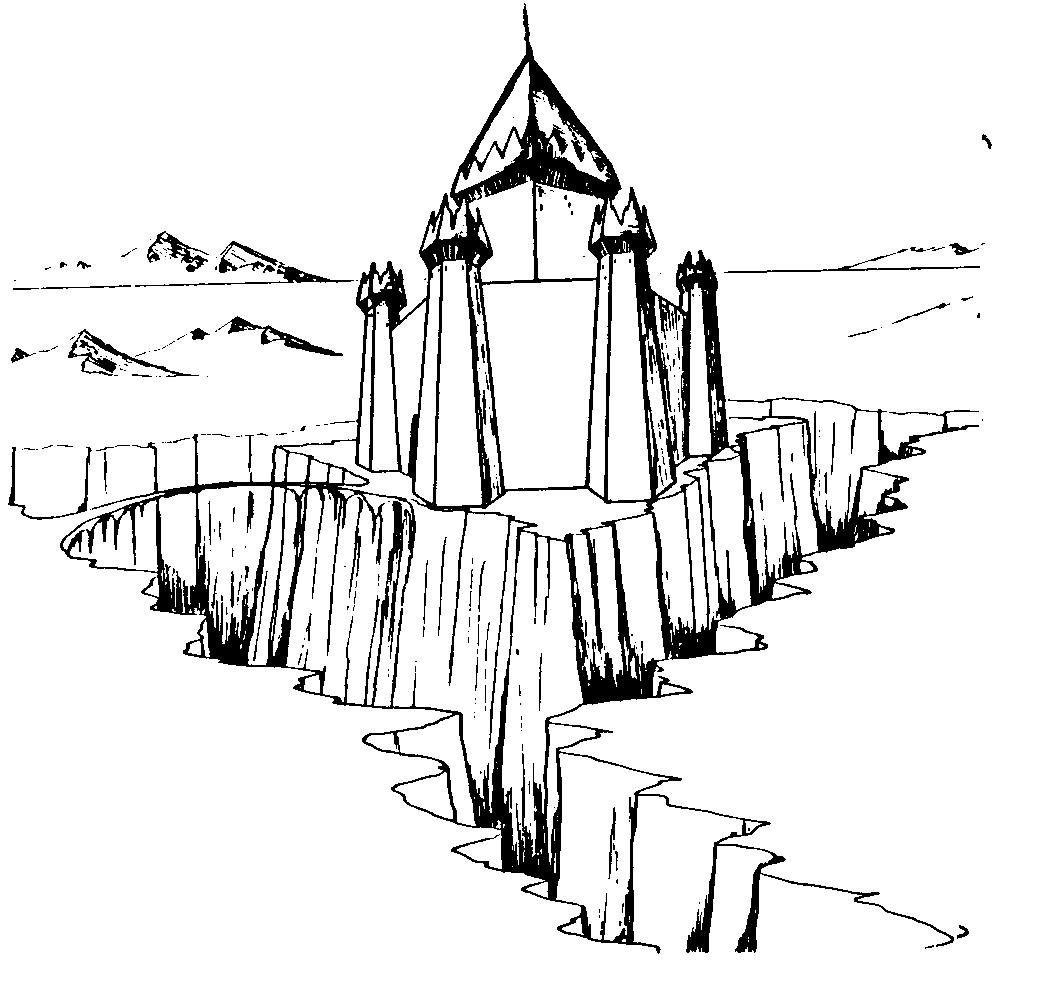
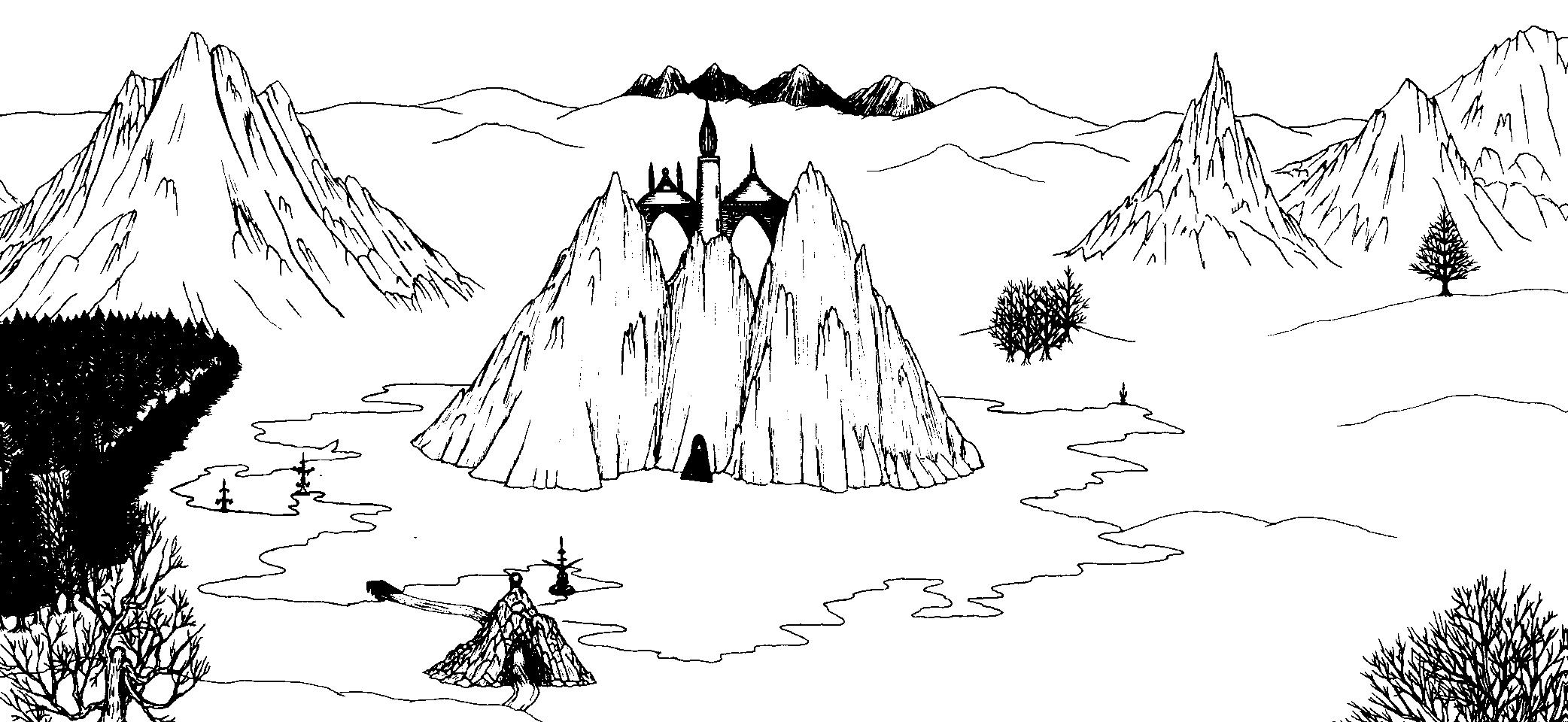
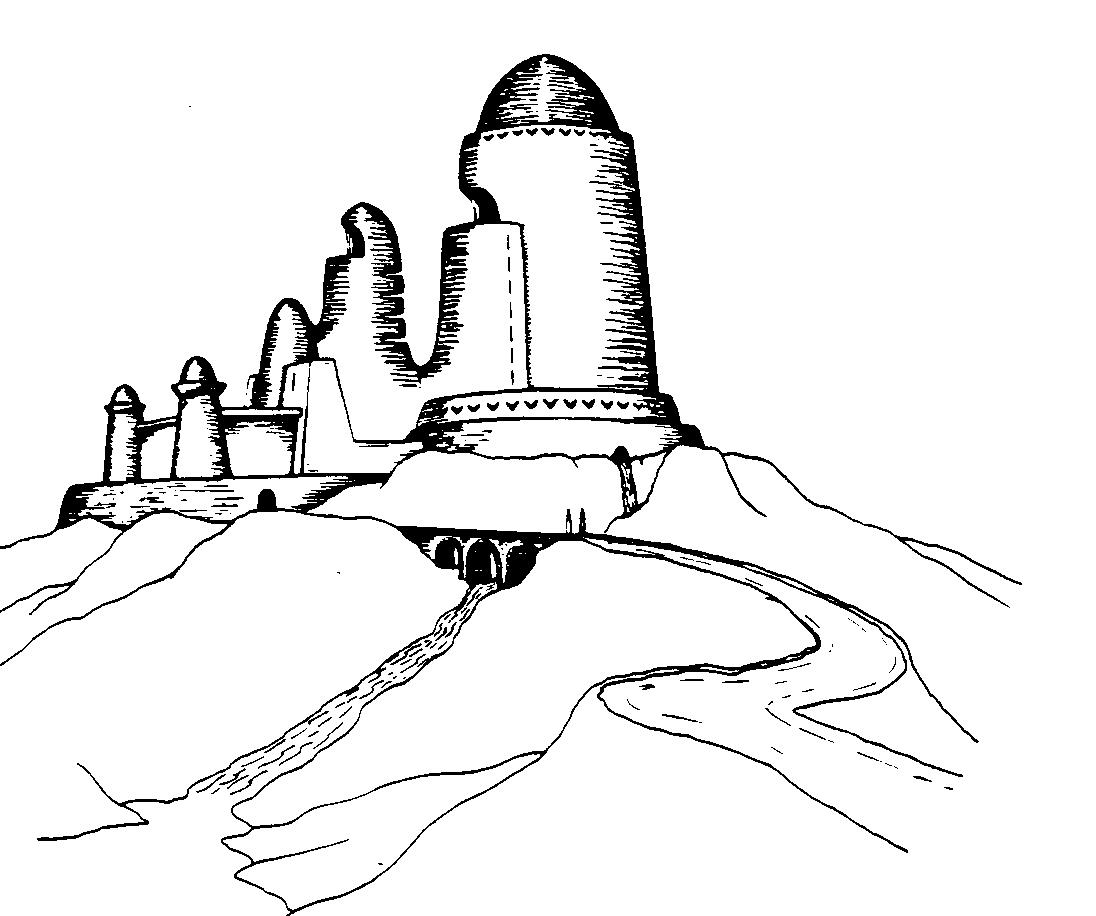
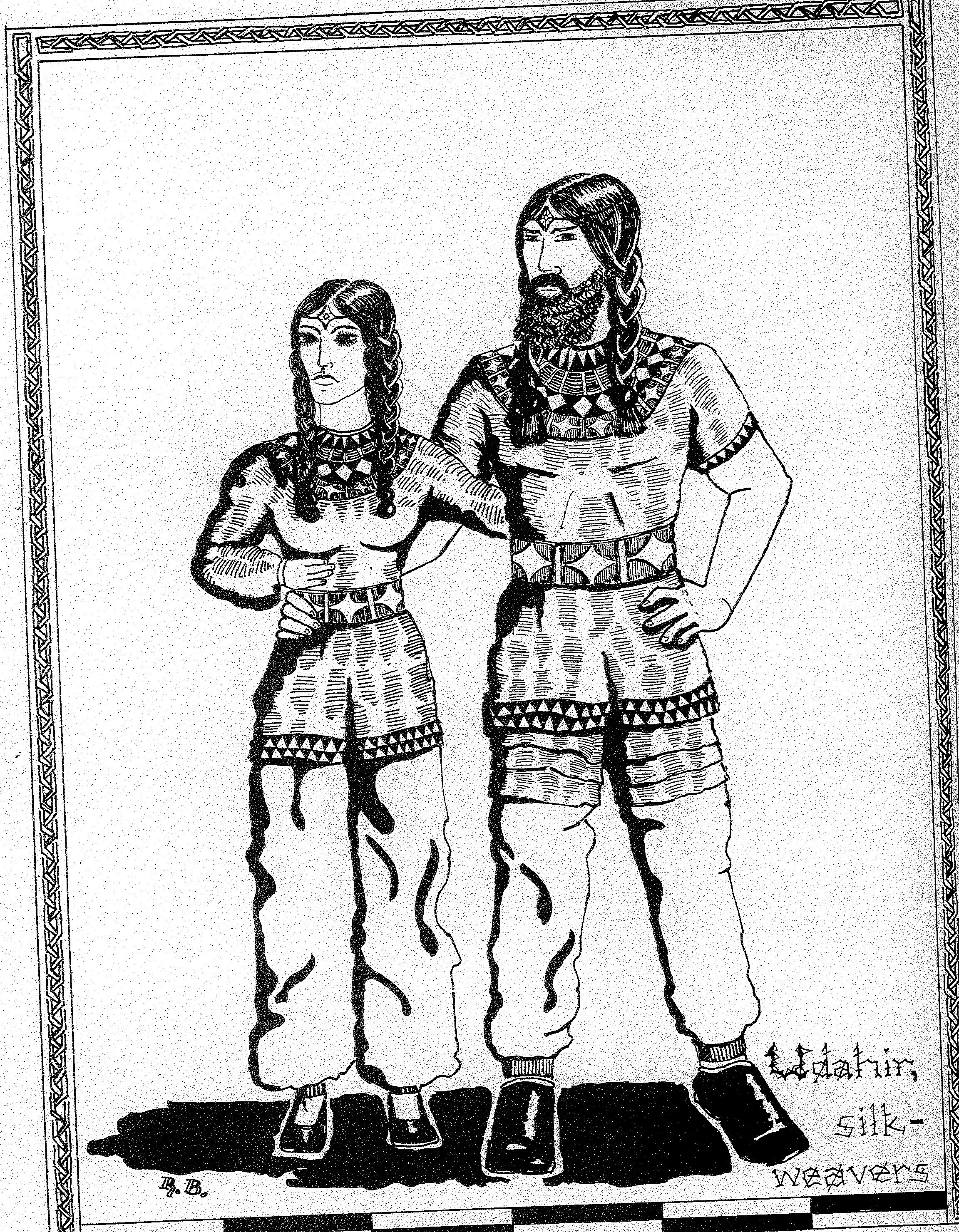
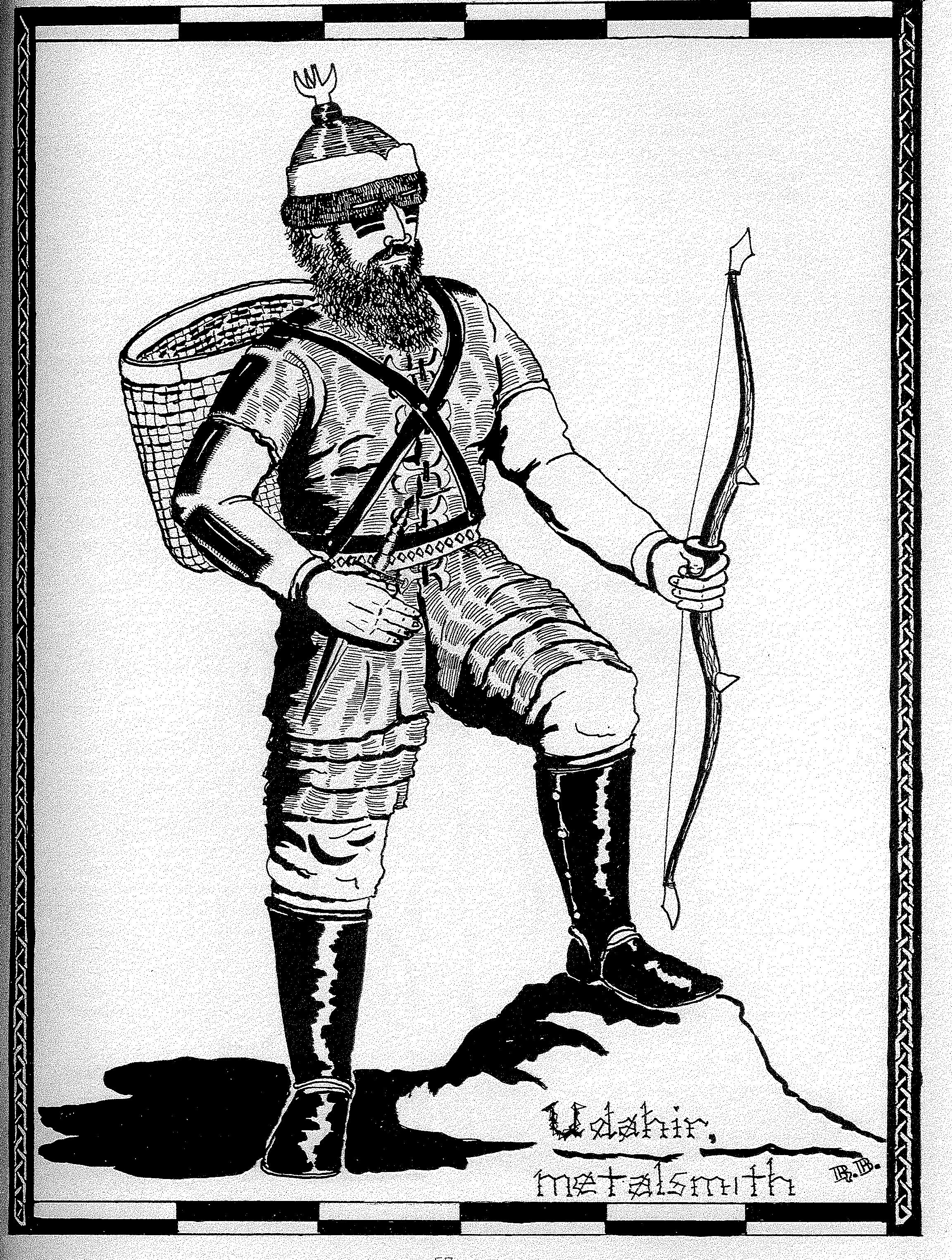
Uda Tyygk. One of my favorite RPG fortresses of all time! Not only is it a very “Bond Villian” style mountain lairs, it’s the home of the Udahir who fly giant birds. The floorplans were cleaned up from the parchment versions to the 3rd edition but none of them came with any floor plan key; instead the major areas were labeled on the map. The parchment versions did include one extra drawing of the “water entrance to the Uda Tyygk” that was left out of the final version.

Taurkytaal. This is the fortress of the Demon-Lord Astaur. This is a great stand-alone fortress with clever features: teleport thrones, retractable bridges and a “elven seeing stone” and cool magic items. There was some small changes to the layout from the parchment to the 3rd edition; basically rooms #28 & #28 vaults were relocated. There is mentions of Ryykaar the Mage and Darath but no stats in the parchment editions but they are stat’ed in the 3rd edition NPC section.

One last item of note. At the end of the section there is a small  passage, “The Texts of Arduvaal of Vraniis”. It describes: “…and of four Pales were demons made, the first being the most strong and fierce, and the fourth the least in might”. For those familiar with RM, this was flipped with the 1st Pale being the weakest. This was changed for the 3rd edition.

Aalk Gaath. Home of the “Dragon Lord”. Here, we have a major deviation between the parchments and 3rd edition. In the parchments this citadel is the Fortress of Dread and home to Muul Chort, the White Dragon. Obviously the Dragon Lord was changed to Oran Jatar in the later edition (and Shadow World. Confusingly, room #6 was left as “the forges of Muul Chort” in the 3rd edition. An oversight I presume. This is also the home to the Priest Arnak of Gaath and Athimurl so a pretty dangerous place!!!

Var Ukaak. Let’s see, a Dragon Lords citadel, a Demon-Lords citadel and now a tower of the Susymog an Ordainer!!! This Mur Fostisyr sure is a dangerous place! There was additional rooms added in 3rd ed. and the treasury gold was reduced from 50,000 gp to 5,000!!! Oh, and that skull at the top of the tower?…glows with a red light that can be seen for miles.

Tharg Jironak. This citadel was NOT included in the parchment editions and is the home of a ex-navigator. This is a very interesting place, with many “Lords of Essence” features like laen doors/panels, exotic marbles, mirror mazes, glass tubes that hold people in suspended animation. The tower is “ancient” and made using powdered stone and “huge molds and forms” and glazed giving it a obsidian appearance. The whole thing is odd, whimsical and very cool.

Art Work. The 3rd ed. is a much more complete and polished version of the original parchments and for the most part, contains everything in the earlier editions and expands upon it. There are however, a few pieces of art that never made it to the final version:


So there you have it! Certainly the 3rd final version of the Iron Wind is superior in every way. It’s more professional, expanded with full stats, it has Fenlon’s colored elevation maps and a cool section of magic items in the back. However, the parchment editions have their own charm. The fortresses and layouts are among the best of their time, the cultures are unique and interesting and the bones of Shadow World are clear to see.

There is a ton of usable material in any edition. pdf’s are available to purchase at rpgnow.com HERE. A great value for $5.

Next deep dive…the “unusual” World of Vog Mur…


Shadow World Speculation. Who are The Xiosians?

One of the more dense and information rich sections of the Shadow World Master Atlas is the timeline. By the 3rd Edition of the Master Atlas, the timeline has reached 25 pages and would be much longer if it incorporated all the local and regional timeline material found in other SW books. Plus, the timeline is growing: since the original release of the SW Master Atlas Boxed set I believe the timeline has increased by at least 9-10 years (6045 to 6054 TE).

My recent posts about a definitive, final Master Atlas proposes that the dated timeline be removed to another channel. A few years back, my brother Matt (Vroomfogle) started the Nomikos Library; an online database that collected all the timelines and had various search filters.

In any event, the timeline is a rich resource for a GM, not only offering unlimited adventure hooks but providing endless opportunities to explore Kulthea in different times. Sprinkled throughout the time though are many unanswered questions, cool hints and vague references that Terry has yet to explain or explore in detail. One of my favorite:  the Xiosians.

The Xiosians were first mentioned in the original Master Atlas: Warrior-Priests that were servants of the Masters of Emer and rode flying magical chariots. In Emer I we got a few more pieces of the puzzle with several mentions:

Warrior-mages on huge steeds begin purging the wilds in central Emer, driving out the ubiquitous Gark and Lugrôki hordes. These knights are harbingers of thecoming of the Masters.

They rule through an order of warrior-mages (the Xiosians)

It is believed that the Changramai are disenchanted Xiosians who left
the service of the Titans (In fact, some are

Corruption spreads through the Xiosians as well.

I was always fascinated by these references and decided to flesh out a background for the Xiosians myself. So putting what few clues I had together…

  1. Warrior servants of God like beings
  2. Flying magical conveyances

…I thought this sounds like another group of mysterious warriors that fly on magical steeds and purge the wilderness: The Cloudlords of Tanara. I wanted to tie together a number of loose ends: the origins of the Changramai martial culture, ancient militant orders with ties to the Althans/Ka’ta’viir, mysterious warrior cults and the genetic origins of special warriors like the Cal-chah and Guarlu. I had an idea that tied them all back to the 1st Era.

The Althans and the Ka’ta’viir are primarily an advanced intergalactic imperial society. But there is also a strong oligarchy element of immensely wealthy merchant families. It’s not a leap to assume that both leaders and powerful “Houses” would have their own security force to provide defense, corporate espionage and personal protection. This is not an original idea. The Romans had their “Praetorian Guards“, the Emperor had his Royal Guard, and in Dune: every Major House had it’s own army, formally independent from the Emperor‘s own military forces. (the Dune setting fit’s well with the Althan/Spacemaster/Kulthea dynamic).

As an highly advanced society, these personal guards would be genetically and biologically enhanced with superior speed, strength, healing etc. Ka’ta’viir and various Houses would want to customize their soldiers to their own aesthetic and design whims; perhaps based on distant racial lineage, or for practical purposes. These super-soldiers were mostly destroyed or scattered at the end of the 1st Era along with their Althan and Ka’ta’viir masters but remnants of them still remain. Some advanced genetic traits were passed down from individual survivors on Kulthea; operational bases were discovered with Xiosian equipment, fighting skills were passed down through many generations.

For me this was a good solution. Again, it ties up loose ends, fits well into canon for the most part and feels right. Here is a my material on the various “Xio Cadres” that ties into the Xiosians mentioned in the MA, Cloudlords, Changramai as well as others:

Xiosans

Obviously, playing a pure Xio warrior or even a partially full blooded Xio could be unbalancing. But I incorporated 2 significant drawbacks for Xio: behavioral inhibitors against Ka’ta’viir and the inability to use Essence/increase succeptibility to Essence effects. Of course, a player with only a small amount of Xio ancestry would have less inhibitors but conversely would have less genetic benefits as well.

Finally, since Priest-King of Shade is languishing in development limbo I thought I would share three vignettes from the book. They deal with the Tor’lan, a race descended from the ancient Xio warrior caste.

Of the Tor’lan

…apparently the Kinn have traded with them for generations, but little is known of the Tor’lan, the Giants of the Sullen Mountains. Brutish and uncivilized barbarians they are called, and they seem to have little interest in lands or conquest—they are rarely seen, content in their high mountain retreats.

We were heading south along the Ember Road, an ancient trade route that winds precariously through the mountains. Our caravan must have been watched, for just a few moments after we made camp, figures stepped from the shadowed edge of the jungle. All three were imposing specimens: tall, broad and heavily muscled—their size reminiscent of the Zor or Myri of Jamain but their skin was dusky and their facial features seemed cruder. Dressed in furs and dark leathers, they were adorned with a variety of crude fetishes: skin inks, bone jewelry and metal armlets. Tokens were woven into their long black hair. As they approached our camp site I realized the scale of the trees behind them had skewed my perception: these men were giants, much larger than the Zor and perhaps approaching 8’ in height and weighing over 250 pounds. They stopped 10’ away, and I swallowed a brief feeling of unease. The three stood confident and relaxed, and while their hands were loose at their sides and far from the grips of the huge swords strapped to their backs, I had no doubts that they would draw swiftly with little provocation. After examining us for but a moment, one stepped forward and spoke a clear greeting in Korsi, the trade tongue common to these western lands. I had made contact with the Tor’lan.

The Journals of Arand de’Mel

Loremaster Field Report. 5898 TE.Excerpt p. 131


On my third day with the Tor’lan I was allowed to travel upland into the mountains escorted by several other warriors. The air was still humid but cooler under the jungle canopy and we moved swiftly and with few rests. I still had not learned much about these imposing warriors, but we had established rudimentary communication through Korsi, the trade language common along the Storm Seas. I was always a quick study and their tongue bore a strong resemblance to higher, loftier languages, reinforcing my suspicion that their culture was a remnant of something far more ancient.

We maintained a strong pace as our path steepened and got rockier—I was feeling pressed keeping up with my companions, but they barely seemed winded. At times our trail climbed almost vertically—without guidance I would have been challenged to navigate the route. After several hours of strenuous climbing we reached the edge of a broad plateau high in the Sullen Mountains. While the lip of the plateau was broken and worn, I could see that the plateau was dressed with enormous smooth paving stones. Some were cracked, broken or tilted, but their craftsmanship was unmistakable: this was the work of the Althans.

Loremaster Field Report. 5898 T.E. Excerpt p. 147


I sat in preparation on a warm paving stone of the plateau. Around me a dozen Tor’lan stood forming a wide circle, large powerful barbaric figures, seemingly elemental in their strength and stillness that they projected. I thought back to the simple instructions from my guide:  Prepare. Fight. Honor. The words seem ritualistic and I could only guess at their deeper intent and meaning. My opponent would be a youth, not yet a clan warrior but with some battle training. I secretly felt that they underestimated me, for they had not yet seen me fight. I had trained with the Bikal Sword Masters in Sel-Kai and learned the two weapon attack forms of the Duranaki. I had traveled with Changramai Monks and witnessed the battle forms of a Void Knight. I had been tested in combat numerous times. While physically imposing and intimidating, the Tor’lan seemed crude in their manner and styles. I was determined to be a gracious guest and fight at whatever my opponent’s skill.

The far side of the circle parted and a warrior stepped into the circle. Taller and lean from youth rather than heavily muscled, his tanned skin also had fewer tattoos than the warriors I had traveled with. His hair was braided into numerous shoulder-length tails and he wore only a simple grey hide breastplate and leggings. He held a long heavy bladed sword, though not as large as the back-sheathed swords the other massive warriors wielded. He was taller than I, perhaps by a hand but not overly so. His reach would be comparable and though he moved confidently, I felt my speed and skills would quickly overwhelm his slight advantages in size and strength.

I looked down at my weapons. I wielded a longsword in my right hand and a Loari parrying knife in my left. In fairness I thought I should drop the knife, but the young warrior’s heavier weapon would still be an advantage against my two blades.

I rose to my feet and walked slowly to the circle’s center while my opponent watched with dark eyes, his face expressionless and bland. Were he in the city streets of Sel-kai his only notable feature would be his unusual height. He nodded slightly and raised his sword high and to the side, an unusual guarding position for a long blade. Crossing my weapons I returned the nod. Without further delay I stepped forward and lunged with both blades, hoping to reach inside is guard. Before my lead foot had touched the ground, a precise blow to the side of my head knocked me sideways onto the ground. I hadn’t seen the warrior move but he must have struck with the pommel of his sword. I shook my head, pushed off the stone and considered the barbarian. He still stood as if he hadn’t moved while my own head was still ringing and my footing felt less sure. Crossing my blades, again I approached just outside of his reach. Wary of his speed, I would not make the same mistake twice. I spun, both blades turned in a flat arc, my longer blade carving a path toward his left side while my shorter blade was held higher to block any movement of the opposing sword. I was half way through my attack and I saw the warrior move—almost quicker than I could fathom. Stepping back and to the side, just avoiding the tip of my longsword, his left hand dropped from his sword grip and tapped my left shoulder. I felt a shock run through my arm and my hand involuntarily dropped the dagger as my fingers went numb. I was exposed, but the warrior made no counter-attack. My mind reeled for I had seen a similar move practiced by the Changramai elite!  After this there is not much to relate. The remainder of the battle was a blur: every one of my attacks was blocked or avoided, seemingly without effort. My movements seemed clumsy and slow compared to the graceful barbarian. For perhaps two or three minute we fought and finally, when I was covered in sweat and aching from carefully placed strikes, I stepped away from the center.

The circle was quiet and the surrounding warriors watched me: their expressions were inscrutable but I felt I had failed some test. Much later I learned the truth: the warrior I dueled was just a young student; his training had been measured in only a few years.

Not long after, I witnessed the full battle skills of an adult Tor’lan warrior…pray that they never have reason to go forth in anger or war…

Loremaster Field Report. 5898 TE. Excerpt p. 204

So can you incorporate Xiosians into your campaign? They may be a better alternative than having a player with Ka’ta’viir heritage, or may give a boost to a non-spell user fighter if they have some limited Xio ancestry. Or you can build a campaign around uncovering the Xio heritage that is imprinted in any number of cultures or organizations around Kulthea.

Certainly, the players could encounter an original Xio warrior; perhaps they were in chronogenic suspension. They might make a great ally against a Ka’ta’viir–they would be able to provide advice and assistance but couldn’t directly fight the Lord of Essence due to the genetic conditioning. Xio Cadres had both high tech equipment as well as ceremonial garb (like the Cloudlords kit) but many of the cadres consisted of very large warriors, so keep in mind that much of the equipment would not fit a smaller size player. It’s cool when they find 1st Era Battle Armor…only to realize they can’t work the neural interface and it’s just too large!


A Fate Economy

This is a purely theoretical post for me as I am not a fate point user.

So the basic idea of fate points is that each character starts with a few fate points. You can spend a fate point to try and avoid a fatal wound by re-rolling a critical. You can earn fate points by extremely good role playing or by forcing the end of level boss to spend a fate point to save himself from you.

So spending a fate point is a big issue and gaining a fate point is a big issue.

If you think of a whole fate point as being a Silver Dollar I want to talk about dimes and cents.

This is not my idea, I have stolen it from a variety of other games that use similar mechanisms.

So imagine you ask a character to make a skill roll and you, as GM, really want them to make the roll. The success would be fun, would help advance the story or generally be a ‘good thing’. They roll the dice and fail. So you either suck it up or scrub the roll and let the player try again. I suppose it depends mostly on your style of GMing.

Fate cents are a mechanism to let you let a player make a second chance roll but maintain game balance.

What you do is every time you give the players a re-roll, or even if you fudge a dice roll yourself, you keep a tally of these minor adjustments and then ‘spend’ them at a later point to balance books.

Ways of spending them could adding an additional opponent to a minor skirmish latter, letting a villain make a re-roll if they fail a roll. nudging up a skill by a rank for a named NPC. If the player fumbles an attack then add +5 to the fumble roll for each cent outstanding.

Ideally, at the end of each game session the net balance will be zero or at most at the end of each adventure. You would not let the players ignore every inconvenient roll and never pay the consequences. I could easily have called this post ‘Rolemaster Karma’ because it is that sort of thing. If you are having to bend the rules to help the players then it will come back to bite them and sooner rather than later.

I do not use fate points as I don’t need them. I can see the attraction, RM is extremely dangerous and character creation is extremely complicated. Keeping the characters alive and the story advancing is of value to both GM and players. Limiting fate points maintains the danger of the system and consequently the sense of danger going into every fight.

Fate cents are meant to be much less significant and more about increasing the fun element for both GM and players. It makes players more capable because they have the option of taking a second bite of the cherry when a roll is failed and for the GM it means there is a balanced option for making the players character pay for every time you have to help them out.

What do you think?

Mating Season – Publication Round Up

This week’s 50 in 50 adventure hook is Mating Season. I wrote this one so obviously it is brilliant.

We wrote these adventures as a block many months ago now and to be honest when I saw the email saying that Mating Season has been published I didn’t actually remember writing it. I downloaded and expected to see one of Brian Hanson’s adventures.

Most of my adventures has slightly silly, or hopefully witty, titles so I should have guessed that this was one of mine! If you like to give your monsters a bit more background then you could well enjoy this one.

In Mating Season the king of the hill giants has died and the other giants are courting his widowed queen so that they can become the new king. Part of this courting process involves the bringing of gifts, and these gifts have got larger and more impressive. Until finally one giant’s gift is the characters. The PCs will need to escape or become a short-lived part of the new king’s coronation.

Elsewhere, rather belatedly, January’s fanzine issue is now available on Amazon.

I am also just putting the February edition together. I hope to have that issued by this time next week.

TIP FOR PLAYERS: CONTAINING SPECULATION

I read this yesterday and I know that my own group of players could certainly do well to learn this bit of advice…

Investigative scenarios often bog down into speculative debate between players about what could be happening. Many things can be happening, but only one thing is. If more than one possible explanation ties together the clues you have so far, you need more clues.

Whenever you get stuck, get out and gather more information.

So that comes directly from the Gumshoe rules I am reading. My players frequently bog down into endless circular speculation. Not always about clues but maybe the best way to attack a fortified position, or how to try and sneak past a guard and so on. It is almost like they want the ‘perfect’ plan but either have insufficient information for making that plan or it simply doesn’t exist.

Whether it is about investigations and clues, planning an attack or escaping from a goblin hold it is really good advice for players to ‘get out there and do something!’ As a GM if the players turn inward and debate about things between themselves there is little that us as GMs can do about it. It doesn’t move the story on. If you get out there and interact with the world then we can give the players the clues they need, or the way into the castle or whatever.

Let’s face it, as GMs we want the characters to solve the mystery, defeat the bad guys or escape certain death as that is what their story is made of and that makes the game fun for everyone. They may not escape every time and it shouldn’t be easy or there is no sense of achievement or reward but likewise doing nothing but talking in circles also brings no sense of achievement or reward.

In the last game session I upset my players as their characters were in the middle of a market, I was describing the traders and the folk hanging about, including a secret police spy trying to get close to them when the players started a massive debate about what they were going to do next including sharing all sorts of information that only the individual characters would know. I did mention that people were taking an interest but the players were so engrossed they mostly missed it. When the bad guy turned out to be completely au fait with their plans they got very upset but I pointed out that they had discussed them at length in public they were adamant that they would never have done that if they had realised people could over hear them. I do not like meta gaming, it is cheating which ever way you look at it but the point is the debate achieved nothing as they were none the wiser at the end of it than they were at the start. RPGs are mostly an action game as in ‘action movies’ and if you do not act then the story does not progress.

Anyway, I thought that was a good bit of player advice so I thought I would share it.

The compelling fantasy art of JB Clark.

One of the obstacles in creating high quality RPG supplements is access or affordability of quality artwork. Consignment artists may be too pricey for a small publisher or individual and clip art may not give your product the polish that you’d like to create. Some publishers revert to using “open domain” art–oftentimes older art no longer protected by copyright.

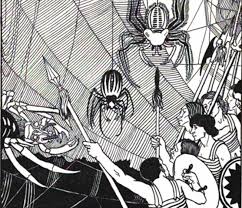
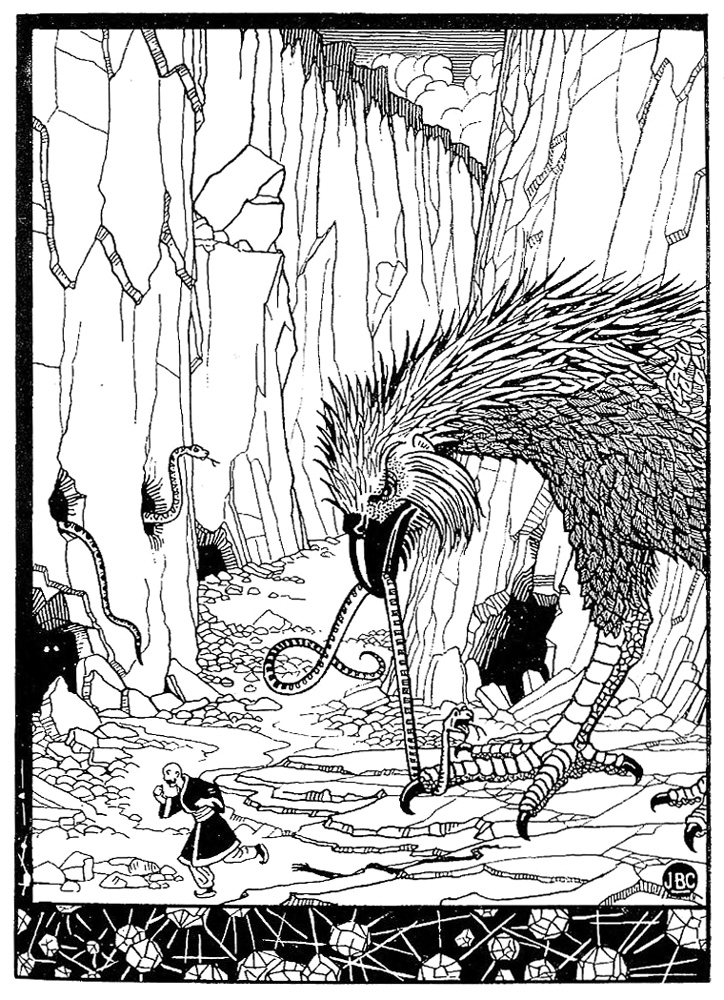
During a recent search for cool, older artwork I came across some sketches by JB Clark. At first I thought this was fairly recent artwork, but incredibly, much of it is dated to the 1890’s! JB collaborated with William Strang and together they illustrated the Adventures of Baron Munchausen, Ali Baba and Sinbad. Of course these were all fantasy/fantastic adventures and their illustrations captured that classic fantasy feel we often call OSR art style. JB is particular compelling and did some great illustrations for translations of some writings of Lucian of Samosata.  One of Lucians more known works is True Story. This was meant to be a tongue and cheek work of science fiction and fantasy. It deals with outer space, interplanetary lifeforms and interplanetary warfare! Not bad imagination for a writer in c. 150 AD! Reading through it I realized it would make a crazy and highly stylized fantasy campaign.

I find this art so similar to the pen/pencil line art common in early RPGs. They feature “action” or “movement”, the characters are often armed and it features strange, fantastic creatures.

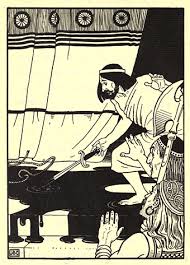
Check out the art above…is the top figure reaching for a sword stuck in blood? Is he prodding the liquid? It looks like the other two figures are calling to him to stop!  This feels like an image out of an old D&D module doesn’t it?

How about the picture below. A ship is in the background and it looks like the crew has disturbed a Roc nest!

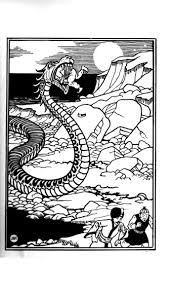
Here is one more–pretty self-explanatory!

Do you know of any older artwork from the 19th century or earlier that would work in modern fantasy RPGs?


Be Prepared!

If there was a sliding scale from simulationist games to purely narrative games then I think Rolemaster, especially a fully loaded RM2 or RMSS game, would be very much on the simulation end of the scale. Games like FATE would be right up the other end.

My simplification approach has had the somewhat unintentional effect of shifting my brand of RM into the centre ground and I would describe it as on the simulation side of centre.

I think this is somewhat inevitable. If you are going to amalgamate a dozen skills into one meta skill then you have unavoidably lost some granularity or detail.

In my meandering gaming reading this week I have been reading some Gumshoe rules. In that I came across a new skill I had never considered before.

My position right now is that this is a step too far, even for me, but the more I think about it the more it starts to appeal.

Here is the skill definition. You will have to skim over the references to PDAs and laptop computers etc. and other skills as this is copied directly from the rules.

PREPAREDNESS

You expertly anticipate the needs of any mission by packing a kit efficiently arranged with necessary gear. Assuming you have immediate access to your kit, you can produce whatever object the team needs to overcome an obstacle. You make a simple test; if you succeed, you have the item you want. You needn’t do this in advance of the adventure, but can dig into your kit bag (provided you’re able to get to it) as the need arises.

Items of obvious utility to a paranormal investigation do not require a test. These include but are not limited to: note paper, writing implements, laptop computer, a PDA with wireless Internet access, mini USB drive, cell phone, various types of tape, common tools and hardware, light weapons, flashlights of various sizes, chem lights, batteries, magnifying glasses, thermometer, and a no-frills audio recording device.

The utility of traditional anti-supernatural accoutrements such as crucifixes, holy water, and silver bullets is a matter of great debate within the Ordo Veritatis. Whether you choose to include them in your basic kit reveals your attitude toward the supernatural. Is it purely the work of the Esoterrorists, or are there other unnatural forces out there? Decide for yourself, and pack wisely.

Other abilities imply the possession of basic gear suitable to their core tasks. Characters with Medic have their own first aid kits; Photographers come with cameras and accessories. If you have Shooting, you have a gun, and so on. Preparedness does not intrude into their territory. It covers general-purpose investigative equipment, plus oddball items that suddenly come in handy in the course of the story.

The sorts of items you can produce at a moment’s notice depend not on your rating or pool, but on narrative credibility. If the GM determines that your possession of an item would seem ludicrous or and/or out of genre, you don’t get to roll for it. You simply don’t have it. Any item which elicits a laugh from the group when suggested is probably out of bounds.

Inappropriate use of the Preparedness ability is like pornography. Your GM will know it when she sees it.

Instinctively I want to reject this but with a moment of reflection it occurred to me that to a great extent I tend to hand wave the buying of mundane supplies anyway. Half the time the characters are so rich that the buying of a few supplies is of no significance. The only input I would tend to make would be describing the sorts of foods or goods if I felt it added something to the cultural background and a bit of local colour.

I also do not use the encomberance rules. I do tend to ‘once over’ the character sheets and if I think they are overloaded I will apply a manoeuvre penalty and tell them it is because they are overloaded. The players will soon lop off some unneeded kit.

So does forcing players to maintain a meticulous equipment list add anything to the game? There are certainly times when it does. I have had an issue in the past were the players just maintained a communal treasure list until such time as they divie it up and people claim ownership of specific items. This seemed to work just fine, the advantage is that character sheets do not become worn out from constantly adding and rubbing out of items of equipment and loot. The issue we had was that one of the characters was pick pocketed and I just randomly picked who was carrying are particular gem stone. It happened that the victim of the robbery was the gem holder. The players then protested that someone else was carrying the loot and they certainly would never have taken precious stones into such a rough tavern. Well, tough, if they had taken any precautions like that they should have told me about them. I bet if I had robbed their tavern room they would have insisted that the gem was with them.

Going back to the Preparedness skill, that would remove a lot of dross from the character sheet and a lot of pointless equipment resource management. I would still want the players to keep a list of significant items, their arms and armour but things like balls of wax so they can take an impression of a key or balls of string for whipping up a quick trap could all be done away with.

I can see a real analogy to the Vocation skill from RMU. You do not need to detail the thousand and one individual, little used, lore skills that everyone in that job would have, one catch all skill that can be applied as and when does the trick.

Is Preparedness that different? Is it a step too far in the direction of Narrative rpgs?

Character Creation Time

Today I finally got around to posting the character creation guidelines for my online game.

The only real break from the RAW is that I am giving more development points per level than listed. At each level characters will get 70 DPs rather than the standard 50DPs.

This should give the players a bit more wriggle room for buying skills. The No Profession is a bit more expensive than any one of the dedicated professions so the 70DPs will not go quite as far as you would imagine.

The game is set at a Heroic power level so the additional knack (+20) will also give a bit of a boost to the starting.

I hope that with the information I have given the players they should now be able to start creating their PCs.

If you have been waiting on this then I sincerely apologise for my tardiness! 2018 is turning into a rather fun but busy year so far!

It Lives! Muhahah!

I am running terribly behind this month by the looks of things!

I completely failed to get a post out on Sunday and despite really wanting to complete more of my lingering projects in 2018 I am, if anything, falling further behind.

So last Saturday we published It lives! Muhahah! which is a take on the classic Frankenstein story but for those that like a bit more role play over hack and slash there is a potential bit of investigation and plenty of NPC interaction. This adventure was one of my mine, so of course it is brilliant!

At some point this week I will update the side bar with links to the 1-10 bundle and all the latest adventures. If you have bought any of the earlier adventure hooks you get a discount on the bundle, or so is my understanding!