Sunday IS Funday! Rolemaster Spell Lists, Shadow World Adventures and Random Thoughts.

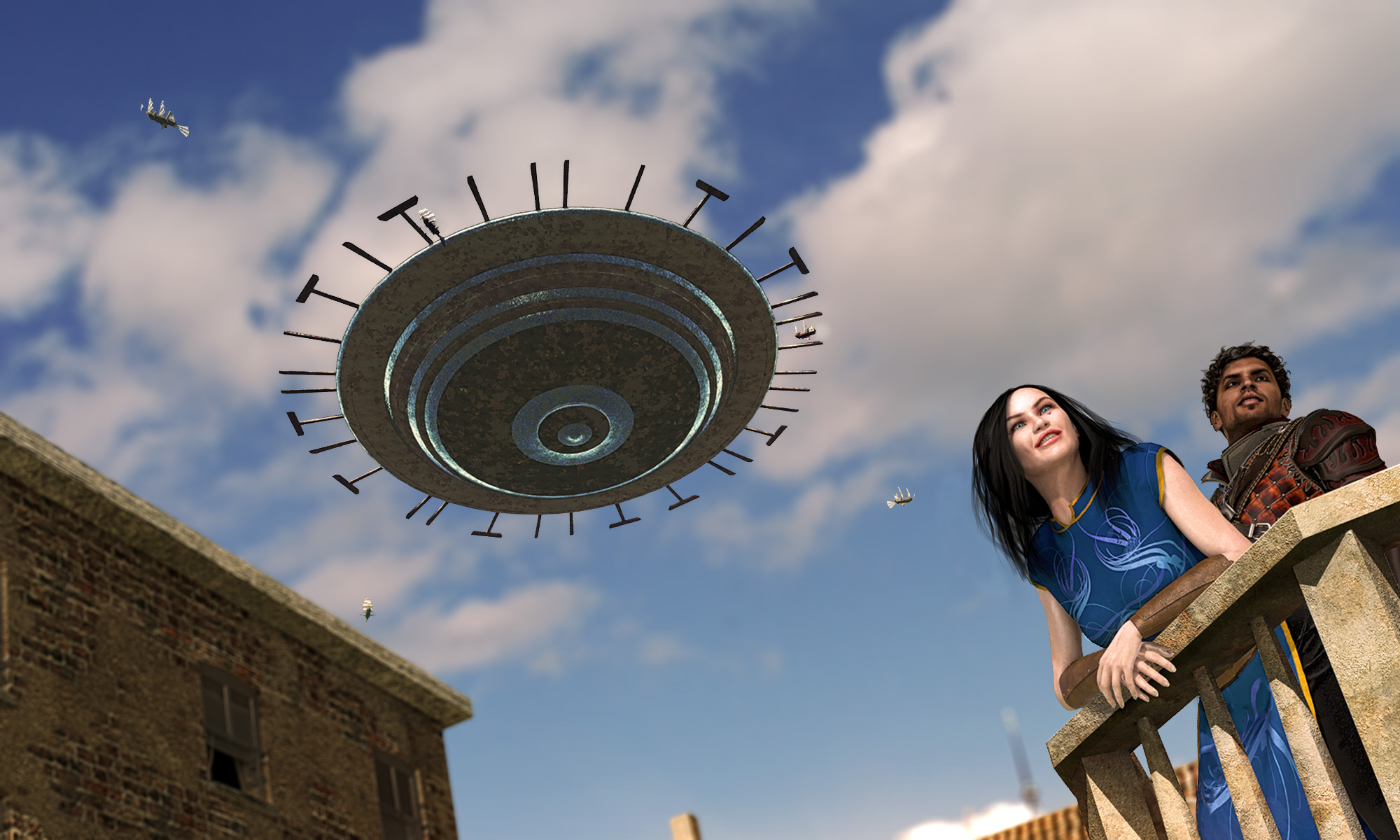
First off, let’s discuss the picture above. If you follow archaeology you might recognize this artwork: it’s actually an etching, a detailed picture carved on a 1.6″ agate gemstone found in a Minoan tomb. Here is an enlarged drawing showing details, some of them only 1/2 a millimeter:

Pretty incredible and is right up there with the Antikytherea device and the Lycergus Cup.

What else do we have for Sunday..how about some spell lists and a revised version of The Seers of Strok. I posted these over at RM Forums, but again, that site requires a user account to not only download but to even SEE a file that could be downloaded. I’ve had a few people tell me they had no idea how many SW files were on the THREAD until they created an account. So I also put them up here on the blog which doesn’t require a user account.

First, we have 4 new spell lists.

“Simple Embedding”. This utility list is meant to create 1 use magic items like candles, powders, salves, unguents, charms, potions etc. These are items that are activated by consuming, breaking or applying and are destroyed. We use a set of alchemy rules for actually making the underlying object, liquid, powder (we call them substrates), but isn’t necessary to use this spell list. It’s a great list to punch up the party’s abilities w/o permanent magic items and the cost of creating the substrates keeps it from being abused.

Simple Embedding

“Talisman”. I always liked the idea of casters having a personal magic item that they “invest” and it grows in power as they do. RM introduced this with the Druid Staff and I think there is a Mage Staff list floating around as well. This was an example of a need to consolidate the idea–just make one list that can be used by casters. The flavor and type of powers invested into the object would naturally differentiate the mage from the druid or warlock. I require the caster invests Co. points into the object, but some people have told me that seems to harsh. If you don’t like it, change it!

Talisman

“Weapon Runes”. Weapon Runes was a great concept in RoCo 1 but some of the functionality was poor and the list needed some work (in my opinion anyway).  Weapon Runes are one-time magical inscriptions that can be put on a weapon or object that activate when a certain condition is met–like a hit or critical result. Like the “Simple Embed” items above, it’s a good way to add offensive ability to the group without getting overpowered. The Runes can be seen if you look closely–they manifest as a faint glimmer–and can be deciphered using Rune skill. I’ve played around with various durations they can stay latent, and right now I use 24 hours. I originally had them last until they were used, but found players layering Weapon Runes on items between adventures when PP’s didn’t matter. I use a “Item Roll” to see if the object/weapon will accept the Rune. Basically, it’s the object item strength vs the combined levels of Runes–both the one being cast and any Runes already on the object. If it fails by more than 50 all the existing Runes are lost as well. Objects with high strengths: laen, eog, etc can accept and hold a ton of Weapon Runes, while fragile or inferior items aren’t going to accept them well.

Weapon Runes

“Protection Runes”. Like Weapon Runes but for armor, shields or any appropriate object. In fact could be tied into a simple object like a necklace that will activate when a trigger is encountered.

Protection Runes

Lastly, we have the newest version of the Seers of Strok, the 1st Chapter of 5 in my 50th level adventure.

50 chapter 1 – The Seers of Strok

And..the pre-gen stats for an all Cleric group to run through Legends

Chapter 1 NPCs – Priests

Go Patriots!!


This post currently has 7 responses


Hot off the Presses!

This is one of those weeks were many things all come together.

Last week we published the first of the 50 in 50 mini supplements. The first was BriH’s Spires Reach. Last Saturday we published Far From the Baying Crowd and tomorrow another mini-supplement goes out. You can keep up to date by following Azukail Games on RPGnow.

Spire’s Reach is an adventure hook based around an enigmatic structure of the same name. This structure is a black box, a puzzle for players to discover and try to solve. The building can be used as an important element in an adventure, but one which players will need to attempt to solve in order to gain entry.


Far From A Baying Crowd is a short, two page adventure idea where the characters are in a village which has had problems with a werewolf. The characters should encounter the werewolf in human form and in a manner which makes the lycanthrope look like the victim, rather than the problem, and certainly much of what they say is actually true, if a bit misleading.

In addition The PDF and Kindle versions of Fanzine #7 went out this week. The print edition will be on Amazon early next week as the print on demand takes a little longer.

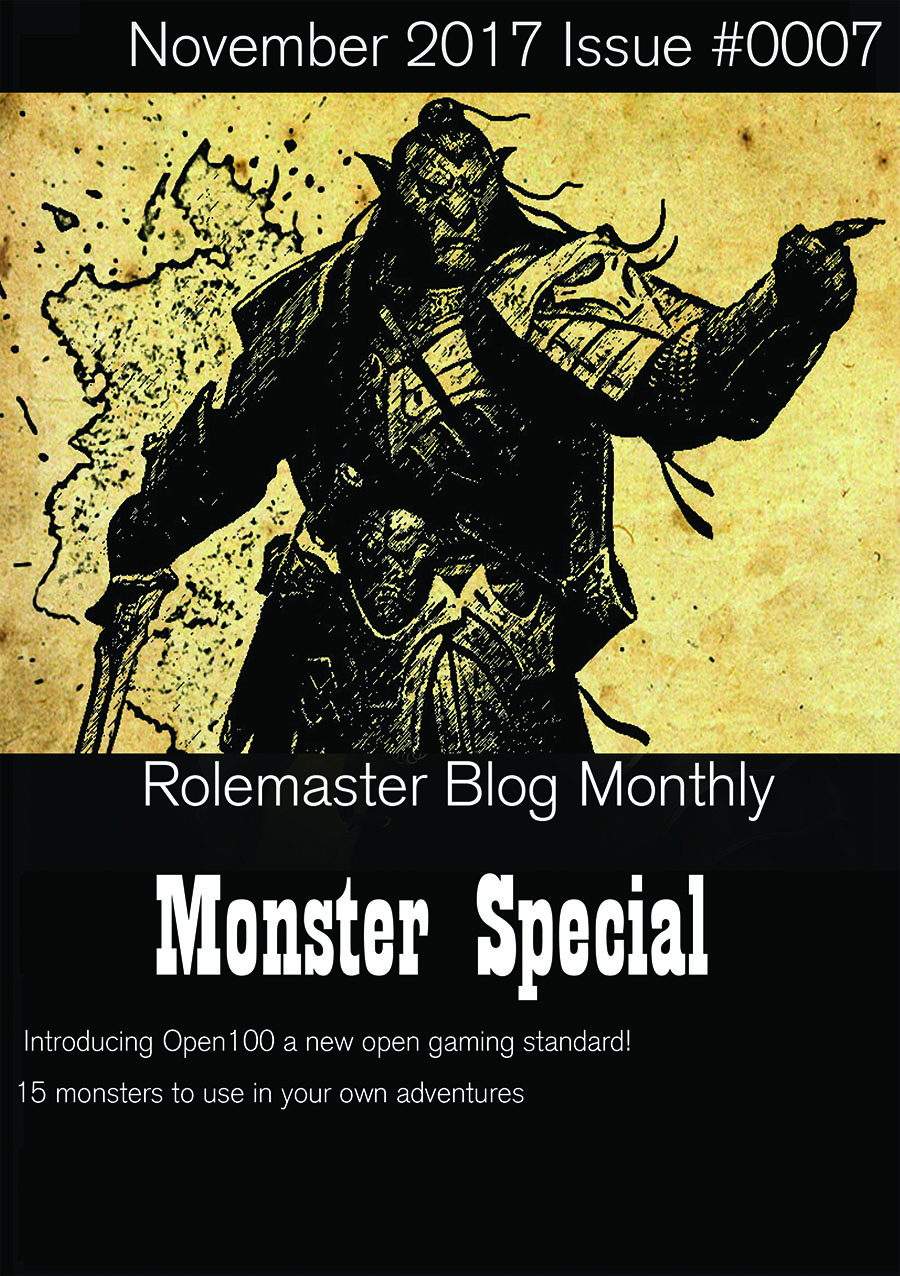
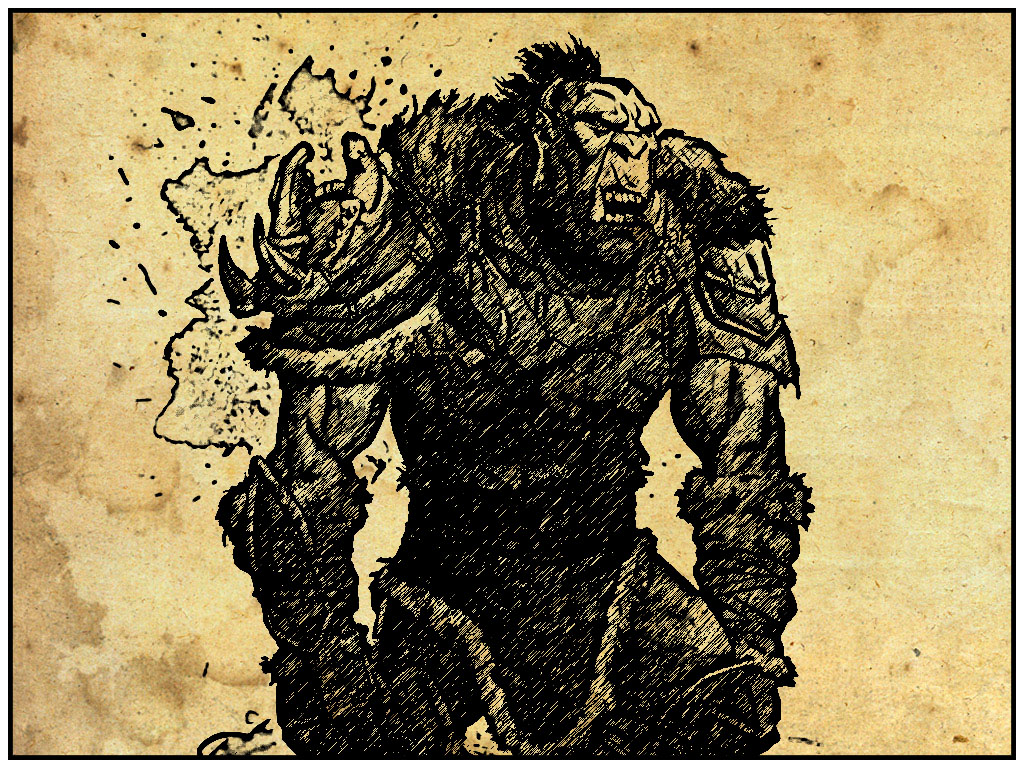
The monsters in this issue are: Bugbear, Ettin, the Giants,
Goblin, Gnoll,  Hobgoblin, Kobold, Ogre, Orc, Owlbear and Troll. Most of them come in variations for higher levels such as sergeants, captains and leaders.

I am thinking of doing the monsters in themetic blocks so there will be a block of undead, demons, dragons and so on. Releasing them piecemeal like this reduces the workload for me and means that you don’t have to wait a year or so for me to get around to do them all.

All the monsters will be listed eventually online in a one page, one monster format so people can freely access them. The plan is to try and get people to use them to produce indie adventure supplements for all flavours of RM!

So for me it is back to the grindstone to get more projects finished off! I will leave you with this 🙂

https://www.facebook.com/bbcgloucestershire/videos/1473269656055977/


This post currently has 10 responses


RMU and Kickstarter

Rolemaster Logo
Rolemaster Logo
Copyright; 2002-2014 by Aurigas Aldbaron LLC. All rights reserved. No reproductions without permission.

I’ve mentioned Kickstarter, and Patreon, a few times in the past. For those who aren’t that familiar with them, what both of those, and others like Indiegogo, do is reduce the risk for making products. Essentially, you are getting a guaranteed income rather than a potential one. The guaranteed income may be lower – but if a product doesn’t work out it will actually be higher. So, lower risk.

Now, I don’t actually think that it would be a good idea running a Kickstarter to complete RMU. The process is simply taking too long, and depends too much on freelancers with variable time, that running a Kickstarter would have a very high risk of simply annoying the backers due to how long it takes. There’s a great article on running regular Kickstarters by a very successful one man band in The Sandbox #1.

OneBookShelf and Print on Demand

What I do think Kickstarter could help with is getting RMU out there. Sure, OneBookShelf is a great network for electronic and print on demand books, but it doesn’t really work for getting the books in bricks and mortar shops. OBS does offer a discount for bulk purchases, up to 20% for 250+, but that’s a lot of books, a lot of investment and the margins aren’t really that great. 50-99 books only gives a 5% discount and 100-249 10%. The smaller amounts will work for conventions and similar, but not really for distributing to shops.

Making Money

In such a case you need a margin that’s high enough that both retailer and publisher makes money. Supposedly TSR was losing money on its boxes in the 90s; no matter what you think, if every product loses you money, you cannot make it back on volume. All that does is simply cost more money.

To really get into bricks and mortar means dealing with traditional printing and distributors, and that has problems itself – especially as, for books, the U.S. has an appalling concept whereby retailers can get back everything they paid for books even though they haven’t returned the product but destroyed it. I can’t think of anywhere else where you would be given a full refund for a product you’d chucked away. RPGs might not be classed as books, but as games, but it’s still a potential problem. Again, with TSR and, I think, the old ICE, both wound up with problems due to traditional distribution.

KickstarterHow Kickstarter Could Help

So, you want to get into bricks and mortar shops but you can’t afford the risk – which could easily destroy the company – of paying for up front printing and distribution of books, which may never make the money back. That’s where I think that Kickstarter could help. If a successful campaign was run that could pay for this, the risk would be greatly reduced. It would also be possible to reduce the risk for retailers, by offering books on sale or return – they may well not want to risk money on inventory that they have no definite interest in.

Setting up such a campaign would need some careful planning to make sure the numbers work, and might not get a huge amount of support to begin with, but, if done successfully, it could get RMU out there in front of a wider audience – and, by having physical books for sale in shops, make the system look like it’s here to stay.

This post currently has 14 responses


Sleeping with the enemy!

This week my challenge is to read up on OpenD6. The reason for this is that they have have a very simple approach to descriptive critical wounds, they have hit locations based upon the attack roll and features like ‘stunned’ and bleeding. At first glance their combat system seems a lot less fluid or more cumbersome than Rolemaster but on the other other hand the rule set is a lot more flexible in that it copes with spells, shotguns and superpowers all in the core rules.

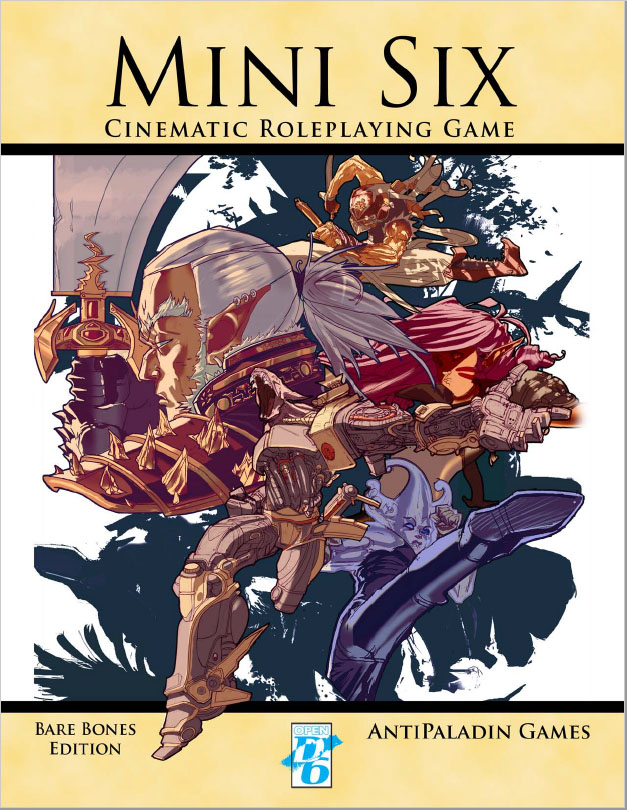
Mini Six is a bare bones system based upon the Open D6 core system.

One of my intentions is to scavenge any interesting spell effects for my magic system. I, like BriH, intend to create a stand alone magic system. I would like mine to be compatible with all flavours of RM, from HARP to RMU. It has a working title right now of SPaM (Spells, Powers and Magic).

What I can scavenge from OpenD6 will be added to spells I have scavenged from the 5e SRD spells. This continues the circular journey. RM was originally a set of house rules for D&D and now I am house ruling RM to add in the best of 5e.

The finished product eventually will be released under a badge of Open100 and be free for anyone to modify and extend. Take a look at this… In the ‘star’ box out (upper left) you can see how Might Six has taken and extended Mini Six…

Getting back to Magic…

SPaM will sit alongside my open monster companion. These two alone will be sufficient for any independent adventure writer to create standalone adventures for Rolemaster.

One of the points that BriH mentioned in his post http://www.rolemasterblog.com/spell-law-reconstruction-many-spells-many-powers-generic/ is that my ideas may be too freeform for a completely new GM and player group to have to construct entire spell lists right from day one.

The solution to that is also a solution to another problem. Many of the monsters need spell lists and innate spell abilities. One criticism of the monster rules in RMU was that you almost had to roll up every orc before you could play any combat. I don’t want to do that to my potential users. So the solution would be to create exemplar spell lists from my freeform pools of spells and the exemplars would be all the spell lists required by all the monsters in monster compendium.

So now you will get the flexibility of pools of spells and unique lists sat alongside exemplar lists.

I think that should address that weakness. Is it enough?

This post currently has no responses


Spell Law Deconstruction: Too Many Spells. Too Many Powers. Too Generic?

[[Updated. While I was writing this Peter posted his Friday blog on the same general topic!]]

I’m fairly close to publishing a complete version of my BASiL spell system. At this point, I’m making it generic for use with any d100 system and will make it available on RPGNow.com. The project was always meant to be flexible and used with any system (much like the original RM!). I had already discarded the specific attributes of ‘Realms’, and replaced it by classification by casting mechanics.

Everytime I review or revise BASiL, I’m struck by the very same conclusions–and now after writing 50th level adventures I feel my instincts are dead on.

  1. Rolemaster Spell Casters have access to too many spells. Sure, at low level it doesn’t feel that way, but the number of spells scales up quickly. Part of this is the spell acquisition system in RM, but as a character progresses and gains A picks, they automatically gain spells without further effort. Individual spell acquisition addresses that issue/problem, but on the whole, higher level characters just have too many spells. By 10th level, most spellcasters will have 100 spells and by 20th they’ll have 300!!! What do you think happens at 50th level? Here is an example from the Atlas on a 34th lvl Navigator: Sulfean knows all Base Mentalist lists to 30th, Navigator lists to 50th, Open and Closed Mentalist to 20th. I think that’s over 400 spells!
  2. Rolemaster Professions are too similar. The causality of having too many spells is that as characters progress they become more similar and generic, and thus, Professions within a certain realm become less important. hmm. Personally, the idea that a high level pure spellcaster of any realm basically has access to EVERY relevant spell list is both boring and
  3. Basic Rolemaster Spell powers are too similar. I’ve discussed the need to better differentiate the realms powers and scope. Right now each realm gets the obligatory spell defense list, light list, movement list plus many of the same spells are imbedded in various lists in all the realms. Obviously I believe that creating a clear delineation between realms makes casters more unique and a more interesting choice when choosing professions or realms.

In my own campaign, “pure spell casters” (no matter what the realm) are resource limited to a core group of specific powers and perhaps a handful of open or closed spells using individual spell acquisition. On average, they are able to buy 3-4 spells/lvl which costs them about 1/2 their available DPs! Depending on the ‘realm’, they’ll still need to acquire magical language, prayer, mental focus, runes or similar complementary skill to properly cast spells. On top of that they need to develop PP’s as well!

  1. As Peter discussed in his last post, our pure casters are also very much defined by their core spell casting ability and are not the generalists they are in RAW RM. An Elemental Mage might have 1 or 2 elements but not ALL of them. Or a Mage may focus on defensive spells. Priests are defined by their core list that is dictated by their choice of diety. Mentalism is divided into 7-8 disciplines, with most casters developing a handful of them.
  2. My latest iteration of BASiL goes further in creating distinct abilities, limits and parameters between the realms.
  3. I like Peter’s focus on spell research and horizontal development of spells, but my players need a bit more structure and many GM’s just want to pick up play with existing rules. That said, both spell research and magic ritual provide a great opportunity for ‘free form’ or creative paths of magic.
  4. Scaling. I’ve always liked the optional spell scaling rules. In my game I allow scaling (via PPs) for range, AoE and damage multipliers but not duration.

Of the three issues I discussed above, I have addressed them thusly:

  1. Too many spells. My casters have fewer but more defined spell powers.
  2. Professions become more generic as they gain higher levels. I don’t use professions (though the process creates character archetypes that could easily be labeled).
  3. Realm spell powers are similar or redundant. I created more differentiation between the realms.
This post currently has 3 responses


How many Spells is enough?

BriH touched on this with his high level adventures but a very high level spell caster is highly likely to have every open and closed list and every base list to the max. Obviously the rules in play can affect that. I am playing my lay healer in a game where almost everyone in the world has at least some kind of magic and every family has a spell caster.

In that game 10 ranks in learning a spell list is enough for automatic success and you can learn lists in parallel. You can learn one list for every powerpoint/level you gain. The GM also allows you to add your stat bonus to the spell gain roll if the chance is not automatic.

To put that in perspective due to background options I have 4 power points per level and a total stat bonus in PR of +50. At 1st level I had 7 spell lists and I am learning 4 more for next level.

If that sets the tone for the character going forward then by the time I am 6th level I could have every open, closed and base lists to 10th level. By the time I am 12th level I will have all lists to 20th. By 21st level I would have my 10 base lists to 50th level.

My character is exceptional. I pushed my PR to 100 with a background option and then rolled the skill at magic and got a further +25 bonus. Even without those extreme odds any pure caster should have nearly all the lists to 10th level long before they get to that level themselves.

In the game I run I am stricter on spell list acquisitions. You get +5 per rank and there are no bonuses to the roll. That is the RAW with no options in play. The intention was that a 10th level caster should have in the region of 8 lists. I wanted magicians to have fire law OR light law OR wind law not everything right across the board.

The problem with too many lists is that it gives you too many spells. Just from a playing perspective if you have 400 spells to choose from and many of them are stackable to create new effects then very few players or GMs will know all the options. I have always loved low level spells. Many of them have the effect based upon RR failure, like sudden light. So even though it may be a low level spell it can be devastating in the hands of a higher level caster.

Another objective of limiting the number of lists being learned is that a party with two magicians now do not necessarily have two of everything. The casters have very different lists and what lists you buy is an important strategic choice.

In my game it also promotes spell research as adding spells to your existing lists does not cost DPs in the RAW game.

I am finally zeroing in on the house rules I would like to fomalise for an alternative for Spell Law. I have touched on this many times in the past.

I am most definitely getting rid of all three realms. There is now simply just ‘magic’.

My lists are no longer linear progressions. Lists are now more like three dimensional cubes. In one dimension they still go from 1st to 50th. But I am bringing in HARP scalability so each spell can have a depth. I also allow multiple spells at the same level so lists can have a thickness to them.

A first level character starts with a couple of sentences to describe the list of their own devising.

The next step is that the player chooses a first level spell from a pool of all the first level spell to fill the first slot. Every slot may hold a spell of that level or lower. So in theory if there were two first level spells you wanted but no second level spell then you can take one as your first level spell and one as your second. Spells do not have names anymore, just effects. When the player adds a spell to their list they create a name for that spell. The names and the spells must fit the description at the top of the list. The GM can veto any spell on any list.

The point is to avoid a single list with fly, invisibility, fireball, lightning bolt and regenerate on it. Essentially characters could recreate fire law as a list or lofty bridge but slot in a few of the other related spells such as Sunfires into Fire Law or some of the channeling movement spells. More interesting though is mixing some of the barrier law spells with the other ‘wall’ spells from base lists all over Spell Law.

All the lists created by a single character should have a single theme of concept to them. So if you are “Pyromancer” then any fly spell would have you carried on fiery wings, teleport would have you leave in a column of flame and so on.

So far this is all untested at the game table. I hope I have given enough detail of how this would work.

My question is… If you really could pick all the spells on every list, now many lists do you think you would want as a spell caster?

P.S. My warhorse and I are travelling today and competing all weekend so you may have to wait for replies to comments as I could be a bit busy.

This post currently has 9 responses


Mid-Week Musings on Rolemaster, Self Publishing and RMU.

I have a number of more comprehensive blogs I’m working on, but Halloween, work and other items put those off. On the plus side, I have a number of smaller items I thought I would collate into a mid-week blog post.

  1. Too Harsh? While it was generally ignored, was I too harsh on Hurin’s post on “shield use” in RMU? Of course, if you don’t have a RM Forum membership this might seem obscure since you CAN’T SEE THE FORUM W/O A FORUM LOGIN. If you have one, a whole new world of RMU discussion is available–it’s like a secret forum, but yet available to anyone that can hurdle the insurmountable barrier of yet another USERNAME/PASSWORD.  Anyway, my response was less substantive than emotional: I balk from complicated rules and more so as the RMU process unfolds. Bringing in new users is not about complexity (verisimilitude) but the NEAR APPEARANCE of reality and EASE OF USE. Later rule adds can complexity and options but despite my harshness (Hurin, sorry just having fun) I still get a laugh at my rules for shields: Here is my idea.“After the proposed attack, defender are able to expend variable AP’s to engage and counter, subject to a pro rate percentage of action based on the residual action available subject to situational awareness modified by the skills and offset by combat expertise. From this result consult the “Random Awareness Chart” for a “compliance factor” to be offset by the perceived  success roll on the perception static action awareness table.”                                                                                                               If those rules sound good, I literally made them up as I WROTE THEM. It’s crap. Worse than crap–its meaningless bureaucratic speak. the problem with the rule discussions is that it’s closer to my above “Word Salad” than rules bringing RM into the new market realities.
  2. New Rule: Wield Strength. While I haven’t posted up my own RM optional rule set–SWARM–I have posted up many sections of the rule set on the RM Forums. One item I left out, because it was so simple, was the MIN wield strength. Each weapon is given a min strength for use: any St under that applies a -1/1% to use AND the same penalty applies to fatigue checks. For example, a short sword has a wield of 75 so a user with a 60str would be at -15.
  3. 50 in 50. So we’ve started publishing our 50 adventure hooks. Most of these are meant to be hooks–but have also evolved into much more comprehensive adventures. I started with small “hooks” that were meant to be available via here at the RM blogs. IP issues, formatting and publishing expertise required a more complex process. The first, Spire’s Reach, is available now on RPGNow. Later submissions got more complex.
  4. I’ve put up almost 200 pages of RM/Shadow World material for free download on the RM Forums that I will start porting over to this site so it doesnt require a forum account to access.  If you haven’t checked it out, look at my Rolemaster 50th level adventure series: Legends of Shadow World, the products Peter writes and Azukial Games.
  5. Members. Peter doesn’t require a username to access this site–we believe is free access and information to better reach the RPG community. At the same time, we don’t and can’t really track users, users online or even downloads (unless they are set up as such). We have much less user info than a Forum system. With that, we appreciate every member or new member that takes the time to comment or add to this blog site. Thanks!
This post currently has 6 responses


…and another Happy Halloween!

Brian got in there first with his Happy Halloween From BriH post. He signs off by saying that “I know  all of us at Rolemasterblog have a lot of work in store for the coming year.” This was timely as on Saturday we released our first mini supplement. I say mini as it is a single page adventure hook. This one was written by BriH and edited by Edgcltd, published by Azukail Games and sold on RPGnow. Now it only costs 50¢ but that is not the point.

Spires Reach is the first of 50. All 50 are already written and cued up. If we were allowed to give you NPCs in all their detail, Monster stats for the encounters and so on then these would not be just a couple of pages of adventure hooks, or locations or outlines of adventures. These would be much more substantial adventures.

You may ask who is going to pay even 50¢ for an adventure hook like Spires Reach? I don’t know the answer to that but they are selling as I can see the royalty reports.

I spent yesterday evening writing the next edition of the fanzine which looks like it is going to be the biggest issue yet. I am full steam ahead on converting monsters. These free to use monsters will mean that anyone can start to create adventure modules for any version of RM.

I am convinced that if there were a 3rd party industry for producing adventures and supplements for Rolemaster then the system would be more attractive to the gaming community. Right now RM is just a game people used to play in 80s. If anything Rolemaster is a bit like Latin, yes, sure a small number of people can still speak it but to most they think of it as a dead language. Rolemaster is not dead but it is going take a small band of plucky adventurers to take on the quest to save Rolemaster, especially if RMU is not going to be on the shelves until the 2020s!

If the RPG year starts now then the next year is going to be really exciting.

This post currently has 2 responses


Happy Halloween from BriH at the RolemasterBlog.

Is there anything more connected to fantasy RPG’s than Halloween? Ghosts, undead, creepy tombs, dungeons etc?  For me the fall season is a great reminder of youthful pursuits, D&D and a new school season. Now, we get to enjoy the second season of “Stranger Things”–I blogged about this last year knowing that the show spoke to me, but didn’t realize how big the phenomena would end up.

In that spirit, I wanted to post several Halloween themed spell lists I put up over at the RM Forums.

Haunting Ways

Undead Hunter

Demon Hunter

The first(Haunting Ways)  is a bit whimsical, but could be  great lesser list for an Illusionist . Undead Hunter and Demon Hunter are great lists for specialized groups.

Anyway I hope you have a great Halloween..and…if you, like me, see the “fiscal year” of gaming around October, than all the best! I know  all of us at Rolemasterblog have a lot of work in store for the coming year.

This post currently has 2 responses


The Ecology of the Vampire Bunny

Vampire Bunny

Vampire BunnyThe vampire bunny is a monster that appears in the Rolemaster Creatures & Treasures supplement, which is available as a PDF and print on demand book from RPGNow in the updated version, Rolemaster Classic: Creatures & Treasures, or as the original print edition from Amazon. This creature is not described in the Vampires section of the original book, and only its stats are listed.

Here is an ecology article on the vampire bunny, presented in the manner of the original ones found in older issues of Dragon Magazine.

The Vampire Bunny

The following is from a lecture given by the visiting Laan lecturer, the noted Blais Rongen, at the University of Kalingen in Sel-kai, in the year 6021 TEI.

“To this day it is not known for certain how the creature given the incongruously cute name ‘vampire bunny’ came about. Whether this creation was an accident or deliberate, or a combination of both is still open for debate, and there are different theories that have been put forward.

“One theory is that a vampire may have fed on a rabbit, for whatever reason – rabbits are not a vampire’s normal prey, so perhaps the creature was starving or otherwise desperate, or maybe it was just experimenting with new types of food, as a human or other intelligent being would.

“It is proposed that, for some reason, this feeding caused an unusual reaction in the rabbit – perhaps the vampiric disease combined with another disease which the rabbit was suffering from – and resulted in the first vampire bunny being created.

“Another theory is that the vampire bunny was a deliberate creation, whether this was done by a vampire or by a necromancer, or one who was both, who deliberately experimented on rabbits to create one that was vampiric in nature, using vampiric blood, magic, feeding or a combination to create a new type of vampire.

“Whatever the original origin, the vampiric strain has since been spread amongst the rabbit population at large, as the vampire bunny is capable of spreading vampirism.

“Rabbits are normally social animals that can be found in large groups. The vampire bunny is, by comparison, a solitary creature, although it will normally be found at least reasonably close to a rabbit warren, for the rabbit is the vampiric type’s normal prey. Two vampire bunnies in the same hunting region will attack each other, until one is either driven off or killed.

“The vampire bunny suffers the usual weaknesses of other vampires, and avoids sunlight and running water, resting underground during daylight hours. The vampiric rabbit also has many of the advantages of a normal vampire, too, which is what makes it dangerous. To harm a vampire bunny requires weapons that are silver, magical or wooden, such as the archetypal stake. They are also vulnerable to water and electrical spells.

“Just as there are different breeds of rabbits, there are different breeds of vampire bunnies. This difference would appear to be purely cosmetic, reflecting the appearance the rabbit had in life, as the vampires are willing to feed on, and able to convert, other breeds of rabbits, there are no reports of creatures other than rabbits being turned into vampires by the bit of a vampire bunny, nor do they seem to feed on other creatures, instead simply killing them.

“The differences between a vampire bunny and a normal rabbit are quite subtle and not immediately obvious. The rabbit’s incisors, which are already quite long, become much more pointed with the transformation. The hair colour of the rabbit also seems to alter, becoming paler. Some witnesses have claimed that a vampire bunny’s eyes “glow” in the dark, but this may simply be the normal reflection seen in an animal’s eyes when a light is hone in them which has been misinterpreted by the witnesses. Rabbits are normally active at dawn and dusk; the vampire bunny is completely nocturnal. The primary difference is, of course, that the rabbit no longer feeds on vegetation, but on living beings.

“The vampiric rabbit is more intelligent, or at least more cunning, than a normal rabbit, but it cannot change shape or transform into a cloud of mist, nor can it cast spells. One suggestion posits that the reason a vampire bunny lacks these normal vampiric abilities is that their intelligence is not raised enough to be able to use further abilities, and there is a theory that, if imbued with human intelligence, a vampire bunny would gain these abilities. Fortunately, no one has been foolish enough to attempt this as yet.

“The vampire bunny is a lot more dangerous than it sounds from its almost-cute name. Predators who normally feed on rabbits have had a nasty surprise when they tried to feed on the vampire bunny, and they are dangerous to larger creatures too, especially as the typical predator lacks the means to actually damage the rabbit. Warrens of rabbits that have a vampire bunny residing near and feeding off them tend to be larger than normal, as the vampire will not tolerate other predators hunting its food source, and will kill them when they are discovered, luring the predator in by pretending to be a normal rabbit, and then attacking.

“The vampire bunny is much faster than a normal rabbit, making it easily able to hunt them. It employs its bite as its primary attack, but it will also butt other creatures, especially those larger than it, often doing so in an attempt to knock them off their feet and thereby make them much more vulnerable to a bite attack. This butt has been known to knock full-grown men off their feet, in no small part due to the surprise incurred by being attacked by a rabbit.

“The vampire bunny does not generally seek out people to kill, unlike its larger kin, because it feeds off its own kind. However, any that blunder into its hunting range are in definite danger, a danger that is increased by it coming from what initially appears to be a small, defenceless prey animal. In conclusion, the vampire bunny’s lethality should not be underestimated; this creature is hard to kill, and impossible to harm for those lacking suitable equipment.”

This post currently has no responses