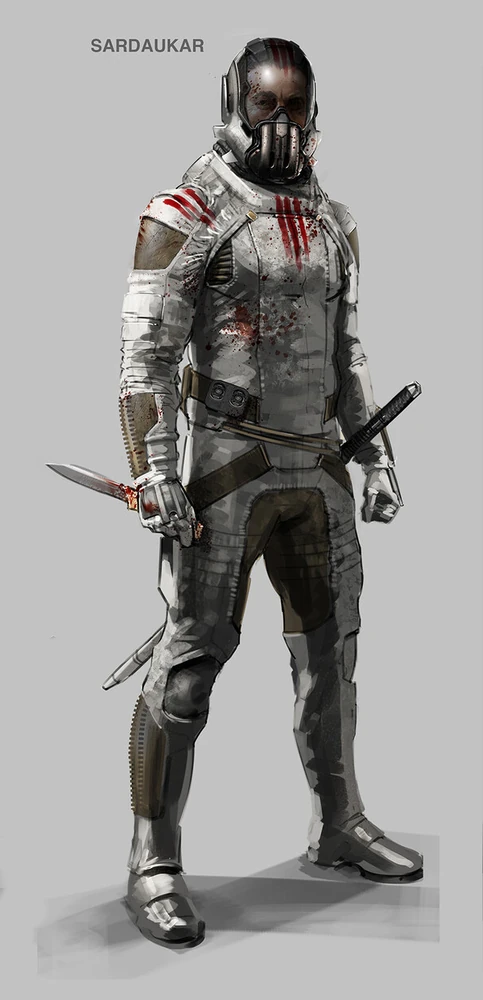
Shadow World: Dawn of the Xiosians.

I had a few messages regarding my most recent post on Earthwardens & Dragonlords, so I thought I would revisit another of my SW topics: the Xiosians. I’m reposting this from a Feb 2018 entry with some changes.

One of the more dense and information rich sections of the Shadow World Master Atlas is the timeline. By the 3rd Edition of the Master Atlas, the timeline has reached 25 pages and would be much longer if it incorporated all the local and regional timeline material found in other SW books. In any event, the timeline is a rich resource for a GM, not only offering unlimited adventure hooks but providing endless opportunities to explore Kulthea in different times. Sprinkled throughout the time though are many unanswered questions, cool hints and vague references that Terry has yet to explain or explore in detail. One of my favorite:  the Xiosians.

Xio (I. Shield) Cadre

def. A monastic warrior cult formed in the First Era by the Ka’Ta’Viir ruling families to use as loyal household guards and special forces.  The Xio combat techniques became the foundation for most other martial forms that followed.

(P. Xiosians  a.k.a. Xo, Xso, Xsosians)

The Xiosians were first mentioned in the original Master Atlas: Warrior-Priests that were servants of the Masters of Emer and rode flying magical chariots. In Emer I we got a few more pieces of the puzzle with several mentions:

Warrior-mages on huge steeds begin purging the wilds in central Emer, driving out the ubiquitous Gark and Lugrôki hordes. These knights are harbingers of the coming of the Masters.

They rule through an order of warrior-mages (the Xiosians)

It is believed that the Changramai are disenchanted Xiosians who left
the service of the Titans
(In fact, some are

I thought this sounded like another group of mysterious warriors that fly on magical steeds and purge the wilderness: The Cloudlords of Tanara.

I wanted to tie together a number of loose ends: the origins of the Changramai martial culture, ancient militant orders with ties to the Althans/Ka’ta’viir, mysterious warrior cults and the genetic origins of special warriors like the Cal-chah and Guarlu. I had an idea that tied them all back to the 1st Era.

The Althans and the Ka’ta’viir are primarily an advanced intergalactic imperial society. But there is also a strong oligarchy element of immensely wealthy merchant families. It’s not a leap to assume that both leaders and powerful “Houses” would have their own security force to provide defense, corporate espionage and personal protection. This is not an original idea. The Romans had their “Praetorian Guards“, the Emperor had his Royal Guard, and in Dune every Major House had it’s own army, formally independent from the Emperor‘s own military forces. (the Dune setting fit’s well with the Althan/Spacemaster/Kulthea dynamic).

History:

Few organizations in the Shadow World’s early history have had a greater impact on the development of Kulthean martial culture.  The Xio Cadre were the personal bodyguards of the Ka’Ta’Viir during the First Era.  Originally Althans, the Xiosans pursued aggressive eugenics programs and genetic and physical modifications to create the most adept warriors in the Althan Empire.  Too few in number to be an effective military force, the Xiosans became an extension of ruling Ka’Ta’Viir political power.  While serving primarily as bodyguards, Xiosan Cadres later became a symbol of personal wealth, extravagance and power among the ruling families.

Initially one central organization, the Xio Cadre grew into several dozen Cadre “Temples” each under the patronage of a particular Ka’Ta’Viir family.  Over time the temples reinforced patron loyalties and developed distinctive styles of dress and appearance.  While Xio warriors were adept in modern combat systems, the Ka’Ta’Viir would have their Xiosan guards attend public ceremonies in distinctive cultural garb: shining armor, swords and flying mounts that played upon Althan classical mythology and heroic memes. Xiosans warriors performed in elaborate athletic and martial performances during Ka’Ta’Viir social events and were used to mediate family or business disputes in proxy combats.  A few individual Xios became celebrities in their own right, either through martial or athletic prowess.

The Legacy of the Xiosans:

Scattered remnants of the Xio Cadre survived the First Era: either with their Ka’Ta’Viir patrons in cryogenic hibernation, or were off planet during the worst of the conflicts.  During the Interregnum, refugee Xiosans merged with indigenous cultures or established new settlements, slowly diluting their singular genetic traits. Still, interbreeding passed along many beneficial aspects of the Xio physical traits: the Zedrahin, Zor, Udahir and Shay all possess some of the size, physical characteristics and strength of the Xio warriors.  It is believed that pure Xiosans still survive in the Eastern hemisphere with their Ka’Ta’Viir Lords, but out of a dozen Cadre Temples in the West only a handful of facilities and warriors survived:

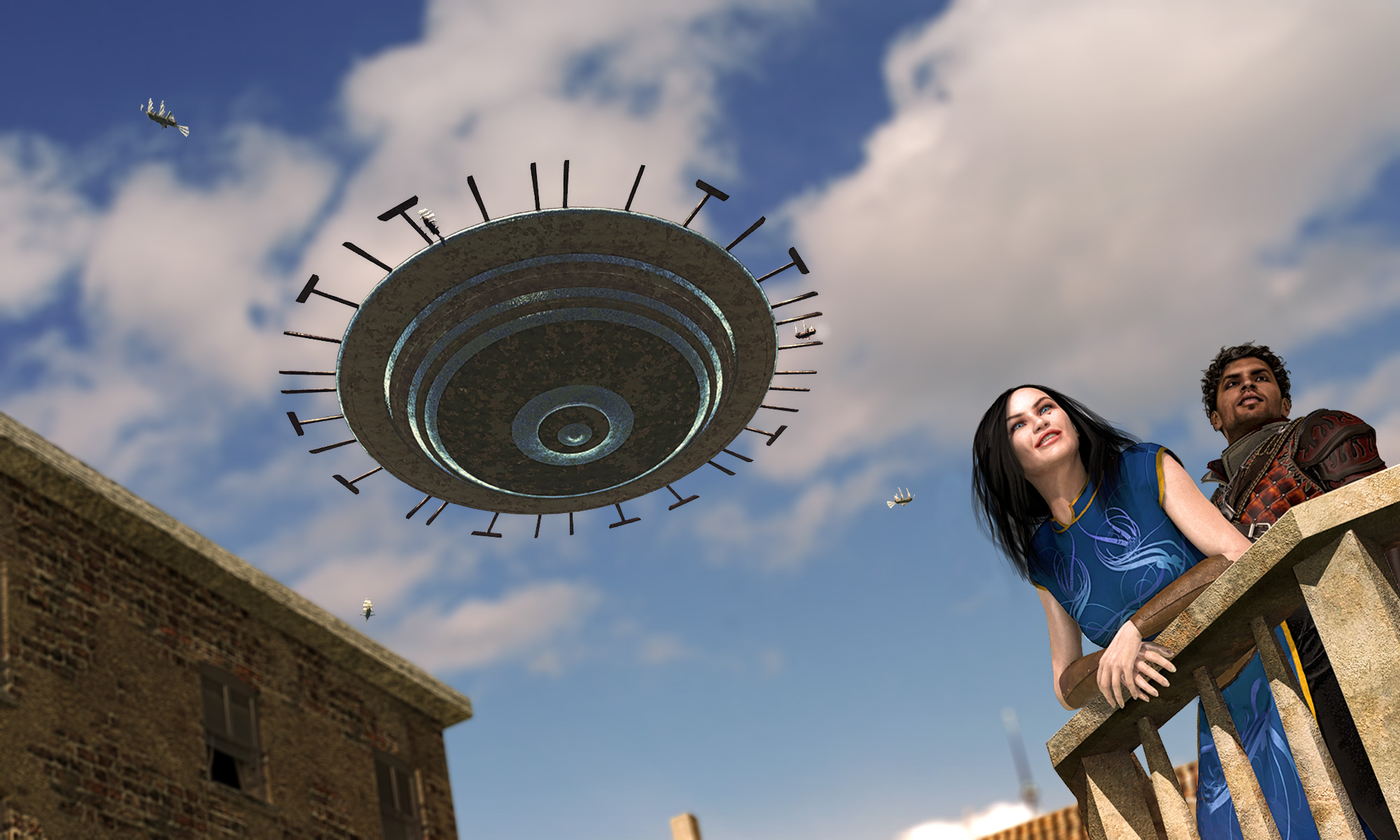
  1. Vale of the Merisia.  The abandoned Sunlords Temple in Tanara still held armor, weapons and the offspring of their Steardan mounts when it was discovered and occupied by a Rhakaan expeditionary force during the Second Era.  Using the equipment they found, the Zorians assumed the role of the mythical “Cloudlords”, emulating their Xiosan predecessors.
  2. Changramai Monastery. The Changramai monastic order was a rebirth of the Xio discipline.  The monastery was built upon the bones of a ruined Cadre temple.  The Halls are intact, but the knowledge to access the security door has been lost.  (The key is interred with Master Changramai). 
  3. Votania. Sun Cadre.  The Masters of Emer built their palaces alongside an abandoned Xiosan Cadre Temple.   The Masters repopulated the temple with their own servants. Adopting the flying chariots and weapons of the Sun Cadre.
  4. Western Thuul.  The Temple was reoccupied in early second era by a splinter group of Xiosans.  They attempted to build a new settlement on Barzu-chaa (South Eastern Thuul) but the City-State was destroyed after conflict with surrounding cultures.  The surviving Xiosans fled: some moved permanently to the Cadre Temple located in the Sullen Mountains while others fled east to the Gufu Rainforest where they are believed to be an offspring of a lost giant race.  While still large of stature, most of the surviving Xiosans are a product of mixed heritage and have lost many of their defining physical attributes.
  5. Mur Fostisur.  The Mountain Enclave of the Udahir was originally a Xio Temple. Now the Udahir and their flying mounts occupy the vast hold.

Scholars whisper of a darker chapter in the Xiosan history. It is rumored that some Xiosans were ultimately bent to the will of the Unlife and became its most feared warriors: Heralds of Night.  More chilling stories are spoken among the Loremasters: that Kadeana performed experiments on her own Imperial Cadre.  Six and sixty Xio warriors she used for her most terrifying creation: Shards.

{Note: Terry actually establishes that Kadaena created the Shards via “Elor’s Text. MA 4th Ed. p.192. It’s logical to me that she would use her “super soldier” Imperial guards in that horrifying experiment!}

The Ka’Ta’Viir were not naïve to the physical threat of the Xiosans.  Their proximity to the inner sanctums of the Ka’Ta’Viir and the Lords’ own paranoia made them cautious. Part of the genetic modifications included behavioral conditioning: Xiosans cannot attack a Ka’Ta”Viir and indeed had to submit to their will.  Additionally the Xiosans were made more susceptible to the Essence (which only the Ka’Ta’Viir controlled at that time) and they themselves were not able to tap the powers of Essence.

Xio Cadre Summary

CADRE:  Imperial (Xio-And)

PATRON:  House Kaedeana

LOCATION:  ???? 

FOCUS:  Modern Minimalist/Technology.

PHYSICAL TYPE:  Tall, muscular, black hair, dark eyes.

MOUNTS:  Lesser Black Dragons

ARMOR:  Dark red poly-steel armor and seamless visor less black helms.

WEAPONS:  Laser Pistols, Energy Swords

NOTES: Less ostentatious than the Cadres of the lesser ruling caste, the Imperial Cadre were the personal guard of the Empress Kadeana.  Their training center was a closely guarded secret and the Cadre rarely participated in ceremonial displays.  Despite Kaedenas defeat by Doenku and the Soulsword, the Imperial Cadre had already made a pact with their mistress.  In a lengthy process, the Imperial Cadre volunteers became immortal servants in a new incarnation: that of the Shards.  The Cadre Commander, Shar-Bu is now lord of the I-Lat.

CADRE:  SunLords (Xio-Kygar)

PATRON:  House Tessananta

LOCATION:  Vale of Merisia, Tanara Jaiman

FOCUS:  Althan Classic Mythology

PHYSICAL TYPE:  Tall, muscular, blond, blue-eyed.

MOUNTS:  Steardan.

ARMOR:  Golden Plate & Greaves

WEAPONS:  Hand Axes, Sunswords

NOTES: This abandoned facility still held armor, weapons and wild Steardan when it was discovered and occupied by a Rhakaan expeditionary force during the Second Era.  Using the equipment they found, the Zorians assumed the role of the mystical “Cloudlords”, emulating their Xiosan predecessors

CADRE:  Lightning (Xio-Pizik)

PATRON:  House Terra

LOCATION:  Changramai Monastarey, Choak Mnts, Emer

FOCUS:  Martial Arts, Athleticism, Adrenal Focus

PHYSICAL TYPE:  Varied.

MOUNTS:  Anti Grav Bracers

ARMOR:  Black cloaks, Black Masks w/yellow bolts.

WEAPONS:  Changa,

NOTES: The Lightning Cadre were perhaps the most dedicated to the physical arts.  Athletic ability, acrobatics and unarmed combat were the focus.  The cadre put on elaborate displays of martial prowess combined with amazing ariel feats using their anti-grav arm and leg bracers.  They could seemingly “fly” through the air.

CADRE:  Claw (Xio-Raax)

PATRON:  House Centarus (still exists as a powerful trade and banking conglomerate…)

LOCATION:  Mur Fostisyr

FOCUS:  Berserker Troops.

PHYSICAL TYPE: Large, dark-haired, and heavily muscled. Claw Cadre was feared for their combat prowess and mercurial nature.

MOUNTS:  Fire and Ice Dragons.

ARMOR:  Spiked Plate and Force Armor.

WEAPONS:  Over-sized battleswords. In modern combat they wielded heavy laser cannons and disentagrators.

NOTES: The Temple was discovered and settled by the Udahir but had been looted long before. 

CADRE:  Steel (Xio-Tok)

PATRON:  House Letrati

LOCATION:  Votania, Emer

FOCUS:  Deception, misdirection, subterfuge

PHYSICAL TYPE:  Tall, dark hair, grey eyes, light skin

MOUNTS:  Anti-Grav Chariots

ARMOR:  Grey Armor, Chamelion Cloaks

WEAPONS:  Wide leaf bladed short swords

NOTES: The Masters of Emer built their palaces alongside a Xiosan Cadre Temple. It’s not known whether any original Xio pledged service to the Masters or the Temple was repopulated by others.

CADRE:  Onyx (Xio-Uxya)

PATRON:  House Thorenian

LOCATION:  Sullen Mountains, SW Argyla

FOCUS:  Tribal, Physical Form, Animalistic

PHYSICAL TYPE:  Dark skin, silver eyes, silver/white hair

MOUNTS:  Kith

ARMOR:  Silver metallic armor, Jewelry

WEAPONS:  Black Laen Longsword & Shortsword

NOTES: The Temple was reoccupied in early second era by a splinter group of Xiosans.  They attempted to build a new settlement on Barzu-chaa (South Eastern Thuul) but the City-State was destroyed.  While still large of stature, most of the surviving Xiosans are a product of mixed heritage and have lost most of their defining physical attributes.

PC’s as Xiosans

Obviously, playing a pure Xio warrior or even a partially full blooded Xio could be unbalancing. But I incorporated 2 significant drawbacks for Xio: behavioral inhibitors against Ka’ta’viir and the inability to use Essence and an increased susceptibility to Essence effects. Of course, a player with only a small amount of Xio ancestry would have less inhibitors but conversely would have less genetic benefits as well.

CONCLUSIONS:

I like tying “current” Shadow World elements to the ancient past. Terry used the word “Legacy” a lot and much of the Shadow World story is tied to the Althans and Ka’ta’viir from the 1st Era. The Xiosians’ legacy can be found in the martial skills of the Changramai and the physical stature of many of the races found on Kulthea.

Squishing Levels

A topic came up on the ICE Discord server recently that I feel deserves some discussion: The leveling curve in Rolemaster.

As a frame of reference, the initial commentary was that a 2nd level HARP character was equal to a 9th level character in the RM framework. Without having a real knowledge of HARP, this got me thinking about other systems and the relative curve of power as characters level. Consider that D&D has historically had a system based on levels 1-18, or more recently levels 1-20. By comparison, RM has a highly bloated (at least at first glance) system of leveling from 1-50.

Before we delve further, let’s look at the advantages of such a spread out system of leveling. Bear in mind that these are generalizations:

🔸 Levels 1-10 seem to be where the most progress is made, with characters mastering their core skills. Consider that during these levels, the character is maximizing the 5/3/2/1 rank progression, and by roughly 10th level is starting to see diminishing returns on these skills.

🔸 Levels 11-20 are where we see some real diversification of skills. At this point a fighter may have some decent bonuses in skills like fighting styles and periphery combat talents (disarm, protect, etc). Spellcasters have some talents in extraneous skills like Spell Mastery, applicable lores, maybe some rituals. Semis at this point now have a chance to spread out some development since they are typically DP-starved at lower levels. Characters in general have more DP available to sink into skills like lores, trades, leadership, and the things that make them unique.

🔸 Levels 20+ is a bit of an enigma. Rank progression at this point slows to a halt in all core skills, so this really becomes the point in the game where class lines begins to blur the most. Looking at old MERP supplements, Aragorn is depicted as Level 27 at the outset of the War of the Ring, and 36 at the end. So rangers can pick up some magical expertise and leadership skills to become party leaders, mages like Gandalf develop some skill at arms, other classes distinctions are blurred since most people inclined to learn magic have picked up many of the same spell lists, and so on and so on. At the same time, this is where classes gain some of their biggest power boosts and distinctions as spells 20th level and above are typically game-changing. While a Bard may be able to cast some elemental attacks at this high a level, the mage reigns supreme with Triad Bolts and the like.

More nutrition, in a smaller package?

This notion that level 20+ is where characters can break out of their class-limitations is not a bad thing. At this level of play, characters are supposed to be special and transcend some of these limitations. However, I wonder if this is actually conducive in the long run to a good gaming system. With RMU on the horizon (somewhere… we hope…) the idea of selling this system is limited by a few of the disadvantages:

🔻So many other systems have a faster, smoother inherent progression. While GMs can certainly increase XP awards to compensate, the fact that HARP seems to scale better, and that D&D has more delineated thresholds makes these systems seem to have more tangible rewards.

🔻A slow climb seems to be the accepted fate in Rolemaster in general. A number of articles have been written here, on the forums, and in Discord about the perils of low-level gaming in RM and the grind to survivability. Consider that the RAW in RMU suggest starting characters at 3rd level or above simply so they have enough skills to make gaming fun. I don’t think this is a design flaw, so much as a design choice that I don’t necessarily agree with, but it’s an issue that many have been vocal about in discussions.

🔻High-level gaming seems like the crawl is even more profound. When a character is only learning new spells every 5th level, that has a profound effect on player investment, as does reduced rank progression.

I know that a lot of what I’ve said here has multiple perspectives, and I’m not trying to be overly critical of a system that I see as a truly enjoyable one, but perhaps there’s some ways to make RM a bit more… fluid? I have two starting suggestions:

🔹Squish levels 20 through 50 so that there isn’t a 30-level gap in power development. By retooling some of the 20+ level spells and making them available at lower levels (even if the new level “cap” was 30th) that might create a smoother progression overall. Drop some of the repetition on lower level spells and move the higher level ones down so they are available from around level 15 onward.

🔹Retool magic at the starting levels so that it functions more like cantrips. One contributor on Discord suggested making all spells from 1st-5th level cantrips that can be cast at will (with normal restrictions, just no PPs). Even if you took only 2-3 spells per list and made them cantrips, and then scaled all of the other spells down accordingly, this would make early levels more palatable, especially for magic users. I see it as giving Semis a boost since they struggle to find a role early on in the game.

Any thoughts from the elders on these concepts? The goal is not to make RM more like D&D or even HARP, but to create a system that sees a more linear progression rather than an asymptotic one. Admittedly, these are just quick thoughts about some very large, complex concepts and I’m not suggesting a full-scale redesign, but this seems like a project that might be on the horizon.

Getting Back To It.

Now that most everyone I know is vaccinated and the world is going back to normal I am able to restart my Shadow World campaign. This is less of a continuous adventure and more of a ongoing testing campaign, but my players expect, and I think welcome, random rule changes that occur almost every session (“Inter-office Rule Memos). In the past, that has meant having all of their spell lists replaced with new ones, losing skills that I deleted from my core rules, abrupt level changes and other pivots that they have learned to expect and provide feedback.

I have them running through Chapter 4 & 5 of Legends of Shadow World a few more times and then they are heading to the city of Nontataku to test out my new module. They have been to the city before, but just passed through on their way to Shade. It’s been a long time since they have done real urban adventuring and I’m looking forward to the change in environment and to stretch my DMing skills with more in-game social interactions and political intrigue. The Alliance is in town and making a play for the city!

A few years ago, I decided to focus more on blogging about content rather than rules, but I have 3 fairly major changes that I’m implementing and have been adopted in my SWARM rules. I’m going to see how it goes, and will probably blog more about them as things develop.

  1. Stats as Skills. I started working on this back in 2017, and had the players make stat checks on a few regular items: feats of strength, recall and correlation and poison/disease RRs. Over the subsequent couple of years, I’ve expanded the use of stats in the game and happy with the result. I’ve been reading some Grognardia blogs about the use of stats in D&D that coincides with some RM conversations about eliminating stats and just use bonuses. I am in the camp of increasing the use and utility of stats rather than eliminating them.
  2. Stat “Nerf”. There was some comments about the utility of low stats over on the D&D blogs: for example, a low intelligence may make the player immune to charm spells or ignore Illusions. I played around with some ideas for these types of benefits for all of the RM stats, but I admit I wasn’t completely satisfied with the results. However this led me to the conclusion that my player’s average stats in general are too high. Most have every stat above 75! So I’m trying something new: players are given 600 points to assign to the 10 stats. They still roll for Potential stats, but that’s starts them slightly above average and makes them think long and hard about stat levels. Given the increase use of the stat score for action checks and the added utility of historic “dump” skills like memory, the players really think about things. Even with a 30 or 40 stat score, they aren’t getting negative modifiers, but it does change the stat as skill roll outcomes.
  3. Magical Languages. For those that have followed the perpetually evolving Project BASiL know that I allow casters access to all of the spell “realms”. However, within some of the realms are different classes of spells: for example, Essence has Minor, Lesser and Greater “Paths”. This somewhat mimics the base list structure of RM and creates cost obstacles so players can’t learn the highest powered lists of each Realm without concerted DP allocation. To accentuate that further, I created qualifying skills, pre-requisites, that needed to be developed in tandem with the higher Paths. In the end I found this cumbersome and didn’t like to add skills that only had one purpose and no real in-game functionality. To simplify I decided to expand the magical language list and assign them to various spell lists. This had the added benefit of working well! In general, Essence lists now have a required magical language needed to cast the spells. Some lists can be cast with different languages, and some languages can add bonuses or other benefits to casting. Like rare spell lists, the casters are motivated to track down and learn other magical languages!

I’m looking forward to finalizing my Shadow World ruleset, but a part of me feels like the endless tinkering with the rule toolbox is a feature and not a distraction.

Should players have an entourage? Using followers in your Rolemaster game.

One of the features of early AD&D was the use of various types of “followers” that the PCs could obtain. Most are defined by the level of loyalty they have to the PC character; ranging from a mere hired helper to a devoted sidekick. These NPCs are often interchangeably termed as followers, hirelings, retainers and henchmen, and their use can have significant impact on gameplay. As a primer, I would suggest reading this post from the OSR perspective.

It is notable to me that early Rolemaster rules (Character Law or Campaign Law) didn’t address PC followers of any type: even the cost of hirelings is absent the early charts in Character Law and Campaign Law (did any of the Companions delve into this?)

Looking back on the 1st ED. DMG, you can find a number of pages that cover these types of NPCs:

Page 16. “Followers for Upper Level Player Characters”.

This section alludes to a powerful characters obtaining followers of one sort or another. The mechanism isn’t addressed, except for the reference to “reaching a certain level” or “building a stronghold”. So while there is no real rules around the “how”, there are certainly a lot of charts about the “what”! For instance, Clerics can obtain up to 200 men-at-arms, ranging from light infantry to heavy cavalry. Fighters will obtain a military commander/leader between 5th and 7th lvl and a company of soldiers. Rangers have one of the more interesting follower charts, and can get humans, demi-human classes, animals, mounts and special creatures including were-beasts, giants or even a copper Dragon! Thieves and Assassins will attract a dozen or so followers upon reaching “Guildmaster” status and of course the Paladin will receive a special warhorse. And that’s just the start to the topic of “followers” in the DMG!

Page 26. “Hirelings”.

This section delineates between normal Hirelings and Expert Hirelings. All are various NPCs that provide labor, low-skilled services or specialty or niche abilities but are differentiated from henchmen by being “employees”. There is extensive material on various hirelings: soldiers, mercenaries, sages, engineers and beyond; the section starts on page 26 and runs onto 3/4 of the way through page 34.

Page 34. “Henchmen”

Retainers, like Hirelings, are also employed and paid, but they function along a system of loyalty based on many modifiers. It’s also inferred that henchmen act as a secondary PC, and can be used in place of the main character.

Page 103. “Hiring NPCs to cast spells or use devices”.

Finally, later in the Guide is a section on cost of hiring specialists to cast specific spells . This should have been included under the “Hirelings” section; but as it’s been noted by many others, the original DMG is an organization wreck.

Returning to Rolemaster, there are certainly times when the group will need to hire specialists, spell-users to cast spells or pay for magical healing, but there is not real attention paid to building a posse or retinue of hirelings or loyal henchmen and retainers. Is this an important angle overlooked by Rolemaster? Do you use followers in your campaign? I’ve written about a similar situation on this blog regarding familiars–I think they are pain in the ass and a constant source of abuse by the players. But perhaps there are other reasons:

  1. RM character development allows a broader skill set among the party compared to the structured approach of D&D. There is less need to add specialists to fill ability gaps.
  2. Complexity. If every PC had a retainer, you would effectively double the party size and add a considerable work load onto the GM. Even if you allowed the player to develop the retainers personality, the GM would still need to control or direct the NPC to some degree.
  3. D&D’s foundation in wargaming was the impetus for followers and henchmen. Rolemaster doesn’t have that pedigree and thus ignored it. Alternatively, RM was influenced by LoTR and that setting had less of a medieval approach to social organization?

I’m not a lazy GM, but since I already run a human-centric (or at least an anthropomorphic) game, I’m already managing a number of NPCs. I don’t need too, or want too, keep any eye on the use of a handful of retainers or henchmen. (I can handle hirelings). But I am intrigued by the concept being built into the game system. Certainly Shadow World’s emphasis on organizations implies the need for guild like systems: mentors, trainees, followers, squires etc. It’s seems natural to have higher level characters access human resources of the organization in some form or another–whether it be a trainee or a devoted believer.

Certainly this issue might be setting specific, but it might be cool to add some follower tables for use in Rolemaster. What are your thoughts?

Low level combat in Rolemaster.

Building 1st Level Combat Encounters: SlyFlourish.com

There is a lot of discussion and criticism of the deadliness of Rolemaster’s combat system. Many times, these critiques are used in conjunction with arguments about the impotency of Level 1 characters. Unfortunately, this type of talk may turn people off from trying Rolemaster, the older versions or the upcoming RMu edition. The good news is that the deadliness of RM’s combat is probably overstated and outlier results can be easily addressed by good GMing, proper planning and some defensive strategies by the players.

For me, as a GM and player, low level adventuring is often the most rewarding. Level advancement feels like a real achievement, the stakes are high when survivability is uncertain and each new ability feels earned and appreciated.

I’ve heard descriptions that RM levels 1-5 are the frustrating “kill zone” range, 5-10th seem to be the normative gaming range, 11-15th are normal for longer run campaigns, and levels 15+ are much rarer. That’s probably as it should be, with general character ranges following a distribution curve of some form.

There is an older post from 2010 that covers some basic strategies for low level combat, and while much of it seem commonsensical, it bears review from time to time.

As a GM though, it’s relatively easy to design encounters that the group not only has a good chance of surviving, but can do so with some simple planning.

Encounter #. For me, this is the simplest approach to handling low level encounters. Having the group face a single foe has many advantages. First, it allows them to work cooperatively in a group and balance the various skills and abilities. Second, the focus of the group against one target improves upon their chance of success, and conversely reduces the random risk of a severe critical that kills a player. Rolemaster’s open-ended system is flexible, but the law of averages will create very high rolls and critical results. The more attack rolls a GM makes, the more likely an aberrant result. Having a dozen foes, even low powered ones, will make the odds of a high roll more likely.

Intel. Provide the PCs a chance to gather some intel or observation about the foe. Is there a mysterious animal attacking villagers in the night? Providing some clues about the creatures size, type of attack or similar details will allow them to plan for the encounter better.

Picking the battle map. RM allows for significant combat modifiers for terrain and cover. If the players can choose the terrain, they can tip the combat to their advantage and favor. Partial cover, bottlenecks or rear attacks against a single opponent give a group of low level characters more than a fighting chance.

Certainly, individual strategies like the use of shield, parrying and armor and weapon selection matter, but overall, it’s the GMs responsibility to provide balanced encounters, and the players responsibility to be prudent and strategic to survive! Rolemaster combat doesn’t have to be deadly, but rather dangerous and rewarding.

Summary of Miscellaneous Musings on Spell Law, BASiL and RM Magic.

53 Chaos' Magical Languages ideas | runes, book of shadows, ancient symbols

With RMu seemingly close to release, I’ve left my BASiL project on the back burner for quite some time. As I mentioned in previous posts, I’m focusing more on game content rather than rules or rule hacks. Rolemaster & Shadow World needs more game support, not more Companions or optional rules. Plus, I’ve found everyone is fairly set in their ways using their own house rules, are waiting for RMu, or I rapidly change my own house rules as I progress. In fact, my participation here on the Rolemasterblog has slowly shifted me to more “rule light” than my previous drift to rule density. I like grittiness but am pushing back on complexity.

Eladans participation here on the RMBlog and over at the Forums, has re-opened some of the broader discussions on spells, lists, base lists and spell functioning. I had some thoughts rolling around, so I thought I would excise them via a blog post! An older summary can be found HERE.

  1. Revisting Spell Law Mechanics.
  2. Essence. Mechanics. The skill bonus is the appropriate Magical Language Skill. You can read more thoughts on this HERE.
  3. Channeling. You can read some thoughts HERE, and I’ve written extensively on this blog about channeling.
  4. Mentalism. I probably tinker with Mentalism more than any other “realm”. Here are my last thoughts about this. There were some comments and concerns about the impact of concentration on gameplay. Lately, I’ve been allowing the total number of spell levels cast not to exceed the total ranks in Mental Focus. So 10 ranks of Mental Focus would allow the caster to have 10 1st level spells “running” or 2 5th lvl spells etc. It’s less complicated but still models the appeal of “partitioning” that comes from Mental Focus.
  5. Notational Magic. Eladan’s posts over on the Forums, made me revisit some of my thoughts on Notational magic. You can read my original post HERE.
  6. Investiture/Enchanting. I haven’t done a deep dive on my solutions for imbedding and creating magical items. Mostly because the spell lists are fairly simple, much of the sausage making takes place out of game time and I built a very simple system for making magic items in game time. Some thoughts can be found HERE.
  7. Rendered/Performance Magic. I haven’t written much about this at all. First I need to put a lot more time into this, it’s potentially the most complex and interesting realm and it could add a lot of new magical layers to the Spell Law system. The concept of magic as performance is not new or novel, but utilizing it in gameplay can be.

This is just a summary of a handful of relevant posts I’ve made over the last 5 years! My thoughts and views evolve, but I always enjoy other thinking “outside the box”!

Rolemaster game settings and Shadow World boxed sets.

ICE Shadow World 6100 Emer - The Great Continent | #129387579

The most recent post in Grognardia had me thinking about a number of issues around game settings, game material and the appeal of the old school box sets. The Grognardia blog was a review on a early 80’s Chaosium/Runequest box set: Borderlands. I admit that I have no experience with Runequest or this product, but the blog evoked fond memories of older game products we did use and enjoy.

First, I want to point out a quote that James is quoting in his blog (bold emphasis is mine):

Borderlands is another good example of what Chaosium did well: present a large area of Glorantha in an approachable fashion and never forgetting to make it gameable. That’s very important to me. However interesting and evocative a game’s setting may be, one must never lose sight of its purpose: to foster adventure in the game itself. Setting for setting’s sake seems to me to miss the point..”

As soon as I read this I immediately thought of Shadow World. There are lots of reviews on Shadow World products that can be found on the web, but two of the most persistent are it’s “Kitchen sink” nature and it feels so high level as to preclude useful adventuring. The first complaint I attribute to the non-canon SW modules; no matter their quality, they so varied in theme and tone that it gave SW a very generic feel. I challenge anyone to read Xa’ar or Emer material and argue that it’s a generic setting.

Beyond that though, I wonder if Shadow World is a better narrative product than a practical adventure material? As James asks:

“…a setting through adventures rather than through pages upon pages of background information, a “show, don’t tell” approach…”

Shadow World books are certainly great to read; the timeline alone is a significant piece of work product that is filled with depth and campaign ideas. But I’m reminded that many people’s favorite SW books are Quellbourne and Norek–both are foundational low level settings with generic fantasy concepts but are definitely not Terry’s writing style. So is Shadow World more inspirational than usable? Is it more cool than practical? I’m not speaking for myself; I write and use SW exclusively since I have so much time invested in the setting and not enough time to commit to other game systems or settings.

What about other settings? We used Rolemaster in some other settings:

Middle Earth. Like everyone else, we shifted from D&D to Rolemaster, but still wanted to play in Middle Earth. For us, it was mostly a campaign using The Court of Ardor, but I don’t recall ever getting to the higher level narrative. Thinking back though, I’m not sure much of the MERP books were playable in the way that James is discussing.

Midkemia Press. One of our favorites, and very reminiscent of Borderlands mentioned above and perhaps much of the early Judges Guild products were the Midkemia books. Of course a quick read of the first Midkemia novel Magician: Apprentice reveals it’s roots in a rpg game. This makes the associated game material so “useable”. We especially liked Jonril: Gateway to the Sunken Lands.

I try to be conscientious when writing SW material, and part of the process for me is adventure hooks. That’s why the Rolemasterblog 50 in 50 is such a good exercise; it forces me to continually come up with short adventure sparks that might not fill pages, but could end up using several game sessions and mutate into a significant narrative. I also want to maintain roots in those early game sessions that I played. SW may not be dungeon oriented, but my early gaming years were spent in the search of treasure!

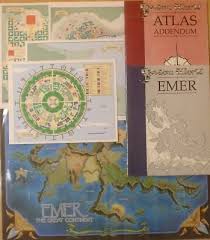
I also wanted to comment on boxed sets. SW was launched with the original box set, but honestly, it felt a little underwhelming. Emer: the Great Continent was a vast improvement–especially the darket cult aspects and the addendum material. But, like Borderlands, box sets were a feature of early gaming.

Will there ever be a future for box sets in Shadow World or for I.C.E.? In the new world of digital media and print on demand, I doubt the economies work for such a product…but let’s use our imagination. I imagine 2 box sets, a final capstone on Terry’s work that completes the 2 main continents: Jaiman & Emer.

Box 1. Jaiman.

  1. Gazetteer Jaiman. Timeline, flora and fauna and politics and power overview.
  2. Jaiman Players Guide
  3. Jaiman I, the NW.
  4. Jaiman II, the NE.
  5. Jaiman III, the SE.
  6. Jaiman IV, the SW. .
  7. City Books. Lethys, Norek, Haalkitaine.
  8. Book of Adventures. Legacy of the Sea Drake and assorted adventures.
  9. Atlas Jaiman. maps and more maps.

Box 2. Emer.

  1. Gazetteer Emer. Timeline, flora and fauna and politics and power overview and more maps!
  2. Emer Players Guide
  3. Emer I
  4. Emer II
  5. Emer III
  6. Emer IV
  7. City Books. Eidolon + 2-3 others.
  8. Book of Adventures.
  9. Atlas Emer. maps, maps and more maps. GM maps, city maps, player maps, treasure maps. etc.

Looking that over, most of the work is already done and Terry probably has little incentive for one last re-write or re-org. But imagine a kickstarter campaign that funds this work and new artwork and lots and lots of maps. Would that be of interest to anyone? Plus it would cement both continents into final organized products with a TON of material for years of play. I can’t imagine Terry tackling another continent in a comprehensive way that took decades of work for Jaiman and Emer.

As stand alone books, there is well over $100+ in print products. As a kickstarter you could offer special maps, or similar incentives to tier pledges. What would you pay for that product? Finally, if you could group fund it and raise the capital, why not stat it for RMu. Tackle the whole thing once and for all.

In summation:

  1. What are your thoughts on the playability of SW material?
  2. Besides ME, have you used SW in other settings?
  3. Do you have a favorite box set from the Golden Age or something more recent?

Hirazi. Race or Monster?

Winged Folk | Ogre Battle Saga Wiki | Fandom

I recently wrote on my blog topic “Race or Monster” and discussed the Krylites in Shadow World. Like the blog previous to that on the Neng, I wanted to explore the suitability of non PC races for use as player characters. Given that racial stats are provided for virtually all humanoid creatures, it doesn’t seem a stretch, even if playing a “monster” creates in-game social issues.

This time around I wanted to discuss an actual Shadow World race that may be ill-suited for PCs: the Hirazi. Here is some data from the Atlas:

Hírazi:

  1. No professional limitations.
  2. Large, muscular humans, with wide shoulders to support their wing structures.
  3. Their bones are hollow, their lungs are huge, and their muscles have a
    unique structure which makes them very light.
  4. This race is rather fragile.
  5. Their fabulous wings are covered with plush white feathery hairs like those of a bird—vary in color from blue to white to gold, often a shimmering combination of the above.
  6. A Híraz may fly at up to 30 mph for short periods (1 min/con pt)
  7. They may acquire skill in gliding and travel for hours on thermals.
  8. An adult Híraz can carry up to about half his/her weight for short distances at half-speed

Having a winged humanoid is interesting, but not only could it be potentially unbalancing, but the player would be severely limited in a variety of environments. In fact, when you examine their flying ability, they have some short-comings there as well. So they don’t seem very good underground, underwater, in cities, in small confined spaces and can’t really fly fast or for very long….

I’ve never used Hirazi in my SW campaigns. Not as PCs, NPCs or even as window dressing. So what’s everyone’s opinion?

Shadow World Spin Cycle. Angmar: Land of the Witch King.

For those that are not familiar with my Shadow World Spin Cycle series, I review older MERP modules in the context of using them in Shadow World. Why? Well, most of the early MERP products shared much of the same DNA as the “Loremaster” series: the artwork, the writers (Fenlon, Amthor, Britton) so re-purposing them is fairly easy and consistent with the flavor and style of SW.

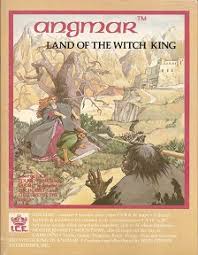
Angmar was the first MERP book released in 1982 and authored by Heiki Kubasch. Cover art was done by Gail McIntosh, and like all of her work, not only depicted a great “action” scene, but one that could be visualized in the context of role-playing. This is basically a 48 page supplement, plus 9 pages of beautiful Fenlon maps in the back. Interestingly, page 48 includes a section on “Selected Reading”. It was common in Gygax books and Golden Age role-playing to include a reference list in the back. I’ve never thought about it, but I wonder if this list was standardized or specific to Angmar or the author. I will check into this!

Like most I.C.E. regional modules the ToC is standard and familiar to Rolemaster players: Land & Climate, Flora & Fauna, Peoples & Cultures, Politics & Power, and Places of Note and finally Supplemental information and charts.

I’m going to skip the first 10 pages that consist of overview material on Rolemaster, B&W maps that are duplicated in color, map keys and Middle Earth background on the area.

Flora and Fauna. This section focuses on creatures that are very Tolkien/Hobbit: Trolls and “troll holes”, Giants and then dives into a few specific Dragons: Scorba and a lesser Drake Corlagon the red. Scorba is a major Dragon, and like Smaug, resides in a Dwarven stronghold (Zarak Dum) on a vast pile of treasure. Finally, there is a paragraph on Bears. Honestly, this isn’t much of a useful bestiary although tackling Trolls, encountering Giants and perhaps eventually battling Corlagon would make for a Hobbit like campaign. For Shadow World, there isn’t much useful so far.

Peoples and Cultures. There are 3 mannish races: Rhudaur, Rhun and Estarave who live in the cold, harsh environment. Not evil, but generally are governed by evil leadership. Populations reside in fortified villages, and social advancement comes through the path of the warrior. To me, this is close to the Syrkakar culture in the Iron Wind the and cultures of Xa’ar. Not much to take from, but it would easy to transport this material to the Northern regions of Jaiman and use this as part of the kingdom of Sulthon? (Angmar: Land of the Dragonlord)???

Politics and Power. Putting aside the Nazgul Witch-King, the real foes in this book are the military forces. Several pages detail the army and command structure, with added information on 7 Generals. The armies also have a band of 50 War Trolls and information on several special forces: the Crossbowmen, Trackers, and the hoerk which is an elite fighting group. This is all good stuff and easily added into a Shadow World campaign as an army in Ja’miil Targ or for Lorgalis in Ulor.

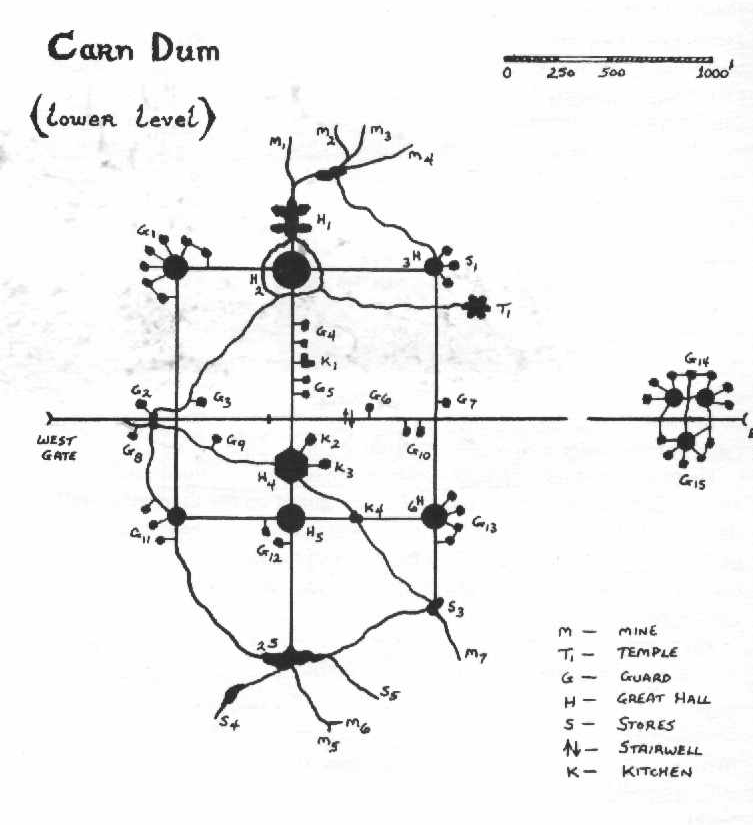
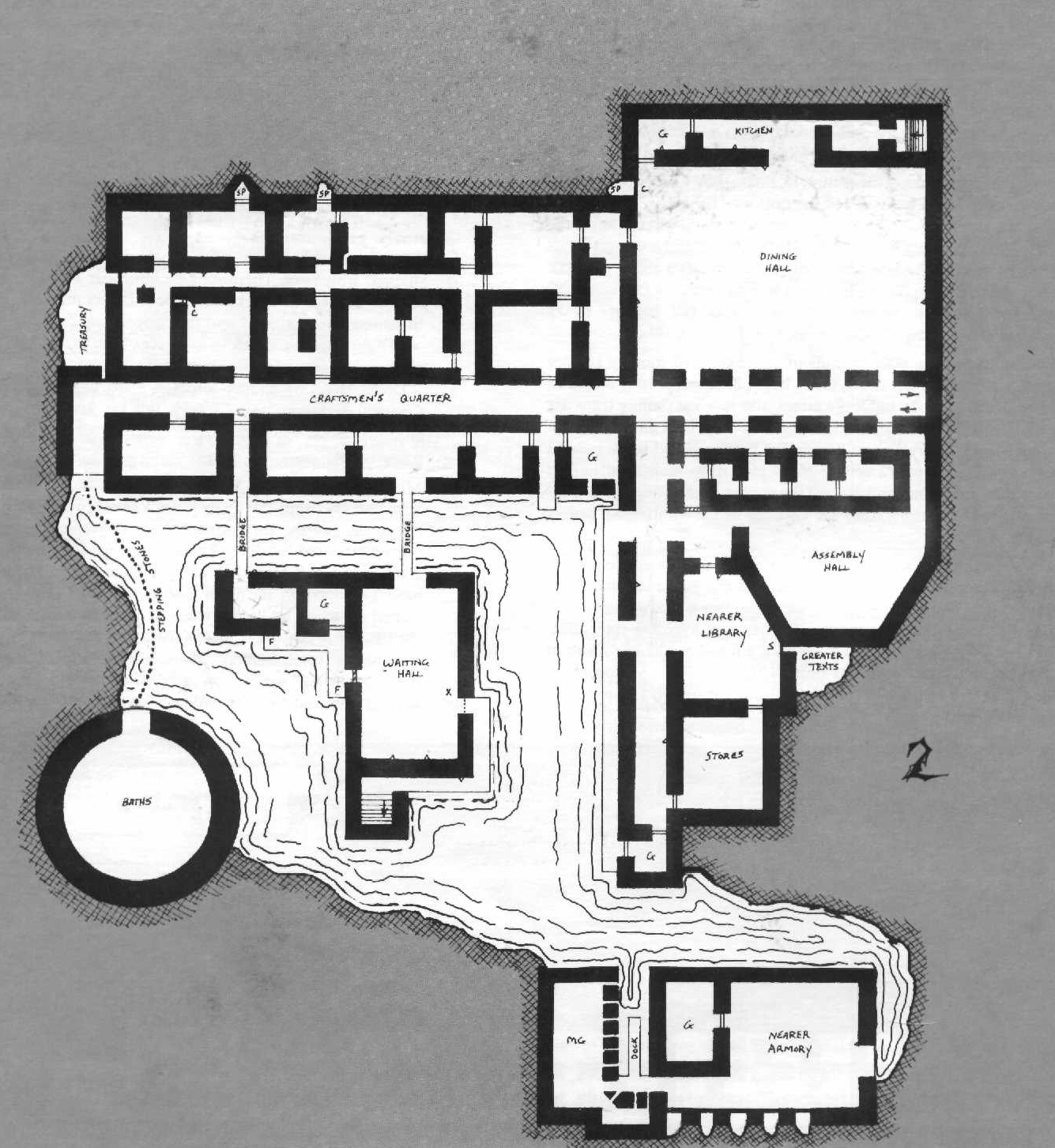
Places of Note. Most of this section covers the massive fortress of Carn Dum which is basically 2 fortresses, one built on the mountain and the vast facility underneath.

This is a great fortress layout, and easily used for any Rolemaster adventure or Shadow World stronghold. Here is just one cool level (must be by Terry):

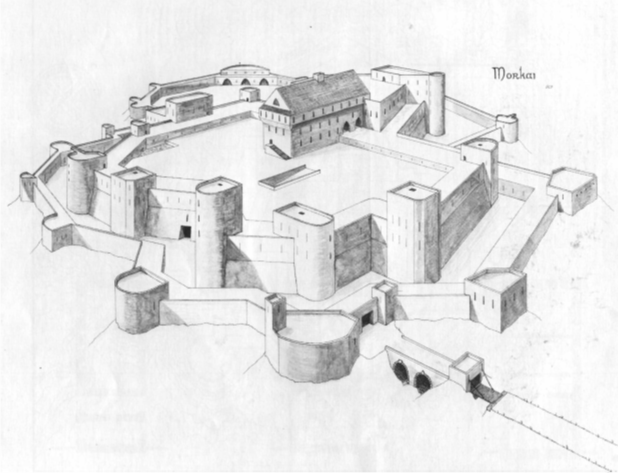
Next is the border castle of Morkai:

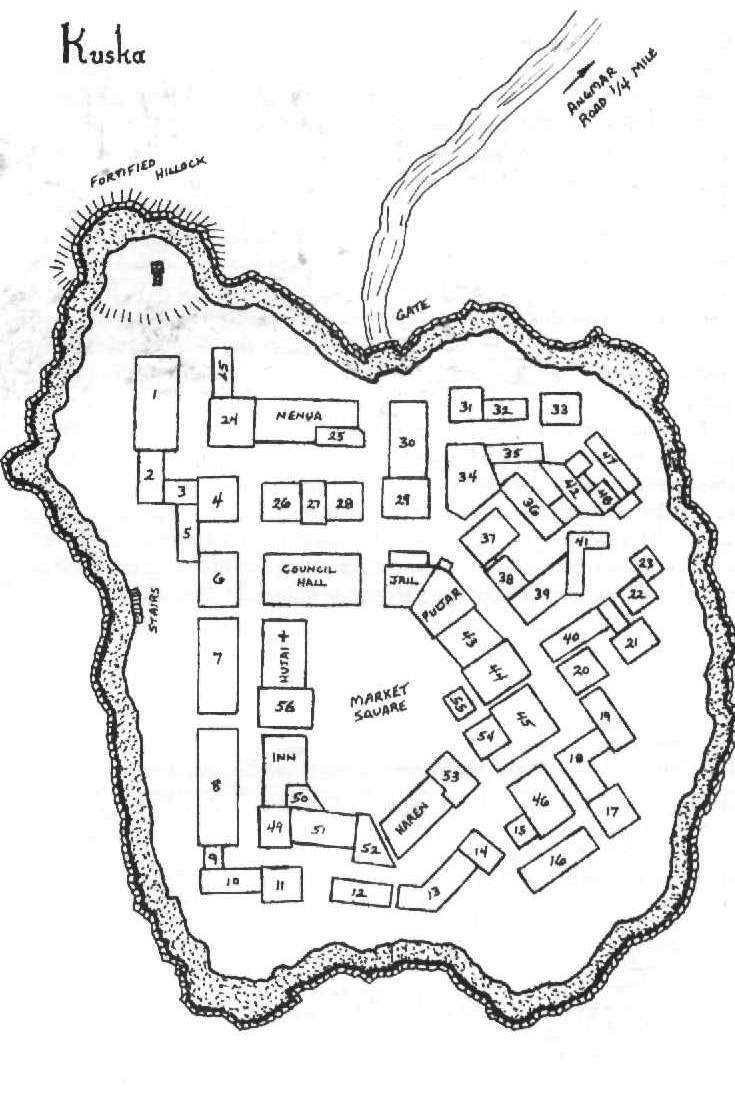
A fortified village of Kuska which has conveniently numbered buildings even though it lacks the descriptions.

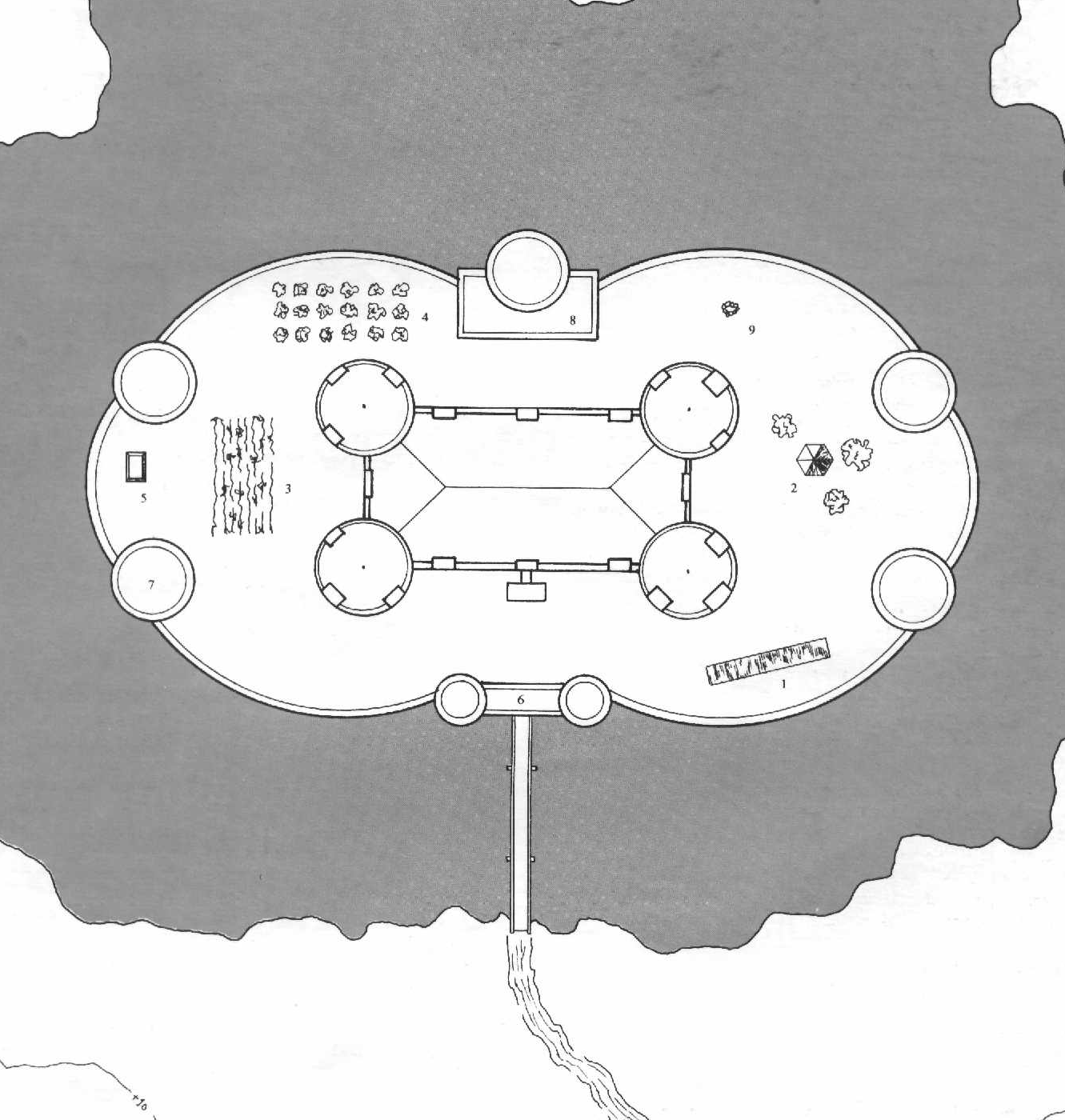
A small outpost of Cargash:

Eldanar Castle:

These are all useful layouts and great adds for you own adventure or campaign. If you are like me, designing fortresses, castle and towers is mostly the layout and design: I can add content quickly and easily; even if it’s an unexpected turn in the adventure! So having ready layouts from older MERP modules is a time saver!

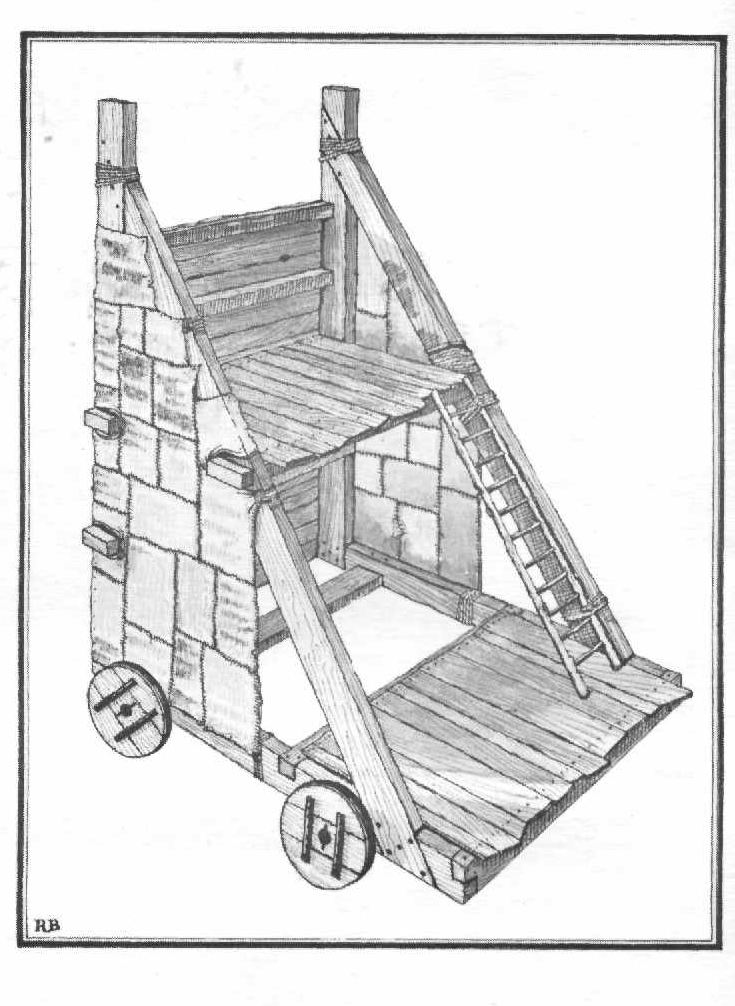
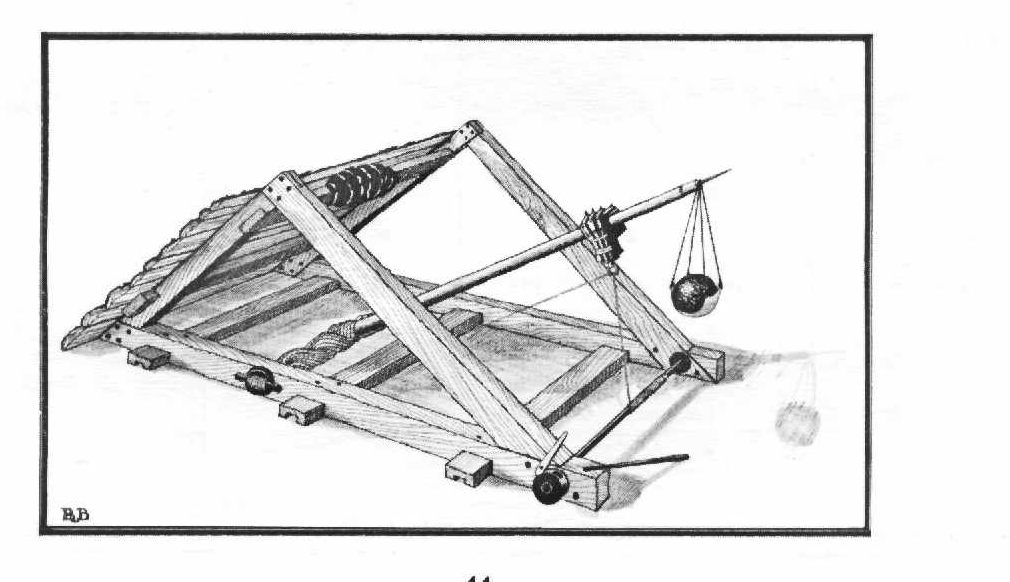
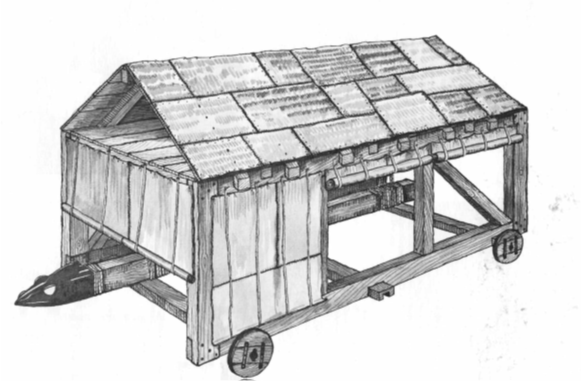
The remainder of the book has some useful but brief material: info on raids and sorties, designing an outpost or castle, a short list of herbs and drugs, the NPC table from Character Law, Master NPC and Military charts. On page 44 & 45 there is a neat summary of siege equipment:

Finally, page 46 has some brief thoughts on adventures, a small ruin layout and a troll hole map. A bit weak for adventures, but the layouts are still worth the price of this book!

Overall, Angmar is a great resource to re-purpose for Shadow World or really any Rolemaster adventure. Again, for Shadow World I see this as a good add to Ulor (use Card Dum for his fortress) or in Wuliris (although Terry is working on that area now).

Using all your senses in Rolemaster and Shadow World.

Innate Night Vision - TV Tropes

As a primer to this blog topic, I encourage you to read my 2 previous blogs related to Perception: “Inherent Ability or Skill” and “Is Perception even a Skill?”

Putting aside rule litigation, I wanted to explore the idea of perceptual capacity of PCs. My own biases with Perception gameplay is it’s either visual perception or a meta ability: i.e. a character searches for a secret door with a combination of sight, touch and perhaps intuition. A recent article on the new Mars Rover imaging cameras made me think about how small changes in a creatures “perceptual spectrum” could dramatically impact their inherent abilities. I’m not sure how some of these ideas could be integrated into gameplay, and our conception of perceptual reality perhaps limits our imagination. Early on games allowed for “infravision” and “ultravision” and Rolemaster introduced natural dark vision abilities as well. For us, we used these abilities interchangeably as “seeing in the dark” even if infra and ultra abilities connoted a more nuanced informational channel. I would refer you to this article for a better overview on AD&D style visions.

So, how many players or GMs use an expanded model of perceptual abilities? We humans tend to over rely on our visual acuity, often, other senses are better suited for situations common in roleplaying. Often these abilities, whether imparted through racial traits or spells are merely a bonus to “Perception” with a modest handwave to the mechanistic concept behind it. RMu made some progress towards developing this further, but it still lacks some depth.

There have been many article written about sight, smell, hearing, tactility, and even extra-sensory ability, and there are arguments that differentiate between Perception (sensory that you actively collect), Observation (specifically focusing sensory on a target) or Sensing (passive sensory data). There is a lot to this conversation, but I wanted to touch on a few Rolemaster and Shadow World specific concepts.

Perception With Spells. Every version of Spell Law contains spell buffs that improve perception or some sense. In RMu, this is manifest in the Ranger Base List “Beastly Ways”. (I’m referring to the Beta 1 2012 copy. some changes have been made).

3rd Lvl Wolfs Senses. This spell and it’s benefit intrigues me, since we seldom really thing about the sensory value of smell. The easy path, is to just use enhanced smell to detect “Orcs and other stinky monsters” from a distance. But smell can detect emotional states and physiological details that can determine lying, dissembling, fear or even aggressive intent. As an example in fantasy literature, Matt Cauthon in the Wheel of Time series has an: “extraordinary sense of smell, able to discern other humans’ and animals’ emotions with considerable accuracy“. We are all familiar with our own pets ability to sense their owners mental or emotional state. A sense of smell can also be used to detect illnesses or injuries, which could be helpful to Healers and Lay Healers. Perhaps for some creatures, smell is a factor of Synesthesia–and they “see” things like magic as olfactory data? That would be interesting. So, in summary, enhanced smell might be useful beyond the standard perception role/roll: it could improve bartering, detect lie, diplomacy or even sense magic or spells.

8th Lvl Hawks Sense. This spell adds +50 to visual sense and +20 to perception involving other senses. A bit confusing, but I think the goal was to minimize stacking sensory spells. While a bonus to visual is straight forward, there are possibilities around what TYPE of visual acuity is improved. Birds of prey have almost double the cone and rod receptors of a human so their have a much larger field of vision, binocular ability to see longer distances and the ability to differentiate small object within their visual field. So a spell that imparts bird vision may also provide both a telescopic AND a microscopic agility as well?

The colors of magic & essence flows. I’ll be blogging about the “colors of magic” in the next week or two, but Shadow World offers a unique aspect of the setting that could be tied into perception: the ability to see magical flows and emanations. Rather than having spells seen on the standard visual spectrum, you could have the various assigned realm colors used for magical perception. In addition, magical perception could detect intensity (power level) and spell type. Kulthea is also bathed in the Essence, and the ability to see flows and foci like winds, currents or clouds could be an interesting ability. Loremasters and Navigators have spells to that effect but standard Rolemaster spells aren’t Shadow World specific.

Racial Senses. I think there are a lot of opportunities to enhance sensory perception with races in Rolemaster and specifically Shadow World. These would be abilities beyond perception bonuses and the standard dark/low light vision. There are certainly issues around game balance, a PC with a sense of smell similar to a dog would be powerful even at low level. But is that necessarily a problem? Do heightened racial senses come with downsides?

I’m curious if anyone has utilized a more in depth sensory system in their Rolemaster or Shadow World game. What are your thoughts?