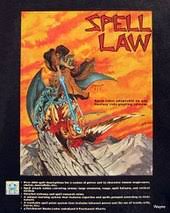
Since I’ve been spending quite a bit of my writing time on BASiL: Mentalism I’ve also been engaging with a few other writers about spell design concepts. As my blog title suggests, there are two approaches to Rolemaster Spell Lists.
Thematic. The spells within the list are unified by a concept, theme or purpose.
Mechanistic. The spells are unified by an underlying process, mechanism, or metaphysical force.
While I am firmly in the “Mechanistic” camp, there is compelling evidence that some spell lists in Rolemaster were driven by the “Thematic” approach. Why might that have occurred? I think Professions development is a top down process: you start with a professional concept, you define the skills and abilities that reinforce that concept and then you assign skill costs and spell abilities last. For instance if we want to model a Paladin profession we might then create broad spell list categories like this: “vs Undead/Evil”, “Healing”, “Buffs” and “Combat”. Then we would design and fill in spells under those thematic categories. That makes sense.
The problem is that you can end up creating spells that work on different operational principles. Good examples of this can be found in the expansion Professions in RMCI, specifically the Nightblade and Paladin lists:
Nightblade/Distractions. This list contains a number of spells that fit under the umbrella of “subterfuge” it’s a hodge podge of styles. Nightvision (a personal augmentation, Confusion (a mental effect), Smokeflash (a teleport with a elemental angle),Extinquish (cancel elemental). So the list is a bit of Magician powers and Mentalist powers all jumbled up.
Paladin/Holy Warrior. This spell list really covers three areas: self healing, buffs (Strength & Courage), and “holy auras”.
A quick review of almost any list will find at least half a dozen “outlier” spells that don’t really fit into the mechanistic’s of the spell list. I’m not suggesting that a thematic approach is wrong, and ultimately, you probably need a mix of both to create full spell lists.
When I try to create a new list (or clean up a messy Spell Law List) I start from the bottom and build the list mechanically. What is the underlying “power” of these spells? Are they similar that they support the fundamental idea of a Spell List? (Similar spells that increase in power). Sometimes I can build enough spells to form a new list to 50th level. Other times I need to include a spell that doesn’t fit well but is needed to support the list functionality. Other times I have 1 cool spell but it’s a dead end to building a full list around the idea.
While I mostly use a Mechanistic approach, it can also lead to less diverse spell lists, or ones that might be better served with a HARP scaling approach. That’s a valid criticism. For limited spell lists, like the Shadow World Messenger Lists, I used a more Thematic approach. I feel comfortable using Thematics for Channeling spell lists, given that they are arguably structured for use by a Diety/Being.
The Thematic approach appeals to my gut- it’s intuitive, it reinforces professional tropes and provides wide latitude to populating a spell list. But my mind finds the mechanistic approach a more orderly process to spell list creation. In the end, much of this will depend on your concept of a spell list.
One of my frustrations to completing ongoing projects is that I tend to jump from one work product to another. I started on my “Channeling Chronicles” but got distracted into BASiL Mentalism and then I started reworking BASiL Essence. The positive news is that I continue to create content, but I would rather finish one off, post it up and then move on to the next rather than having 5 projects going all partially complete and moving slowly. I had asked Terry about this when I did my interview with him; I wanted to get a sense for his work flow, motivation and even writers block but we didn’t dive too deep into it. From his own public comments he seemed to have a patchwork approach to his own projects: he was working on Wurilis, moved to Emer IV, stopped to do Green Gryphon Inn, etc.
Anyway, while revamping BASiL (I think I’m going to put up final, revised versions on DTRPG in d100 format) I wanted to formalize some spell casting structures that were still a little loose in all versions of Spell Laws: Power Analysis and Delayed Casting.
Power Analysis.
Broadly speaking, I’m referring to a number of spell abilities that allow casters (or “sensitives”) to interpret power and spells. This could include detecting and visualizing the “Essaence”, Auras, Power Perception, Colors of Magic, and various “Analyze” or “Detect” Spells found in Spell Law or BASiL (Power Analysis).
RM has 3 different mechanisms that can impart information about spells or power:
Passive w/ no latent ability. By allowing spellcasting emanations to be colored by Realm/aspect anyone watching a caster will be able to determine some information about the spell and/or the caster. This allows anyone, even without casting ability or magic skills to visually learn information from someone casting.
Inherent Ability. Some races have or could have the ability to see, feel or detect the Essaence. (Lords of Essaence, some magical creatures, some high Elves?)
Active Spell Ability. All the realms have Detection or Delving spells that can be used to detect the presence of power, or determine the spells effects, level, source or creation.
Like much of RM and Spell Law, it’s a bit of a hodgepodge without any underlying logical framework. Fine. I think that all works, but there is a side to this that hasn’t been fully explored: Caster Signatures. I see this as similar to the Mentalism spells around “Mind Typing”. Basically, every caster leaves a signature, their own flair or style to their casting, that can be detected, stored and analyzed. Much like a fingerprint. So higher level spells like “Spell Analysis” doesn’t automatically provide who the caster is unless the analyzing caster has encountered the target caster’s work before, has “typed” it and the target caster hasn’t hid their spell signature in any way.
This doesn’t add much for real mechanics to Spell Law, but provides a playing dynamic that can add depth to the game. Yes, new spells would include “Spell Typing” or “Store/Recall Spell Signature” and there is a need for counter spells “Hide Signature”, “Distort Signature” or even “Counterfeit Signature” that would utilize another spellcasters casting style. This also adds a clear mechanism for “Evil” casters to hide behind a facade–like Priests Arnak. Currently they are provided this cover with a simple handwave–they all possess a magic ring that hides their evil nature. Bah.
Delayed Casting.
There are a number of “Delayed” spells: Runes, Wards, Symbols, Glyphs, Store Spell and Trigger Spell. Again, I feel it’s a confusing bunch, some of which have individual mechanics that feels more like AD&D then Rolemaster. They are all just slight variations on the same idea: Delaying a spell effect until some variable is met. In BASiL these types of spells are grouped into a different “Realm” due to their similarity and the idea that their casting mechanics, use, rules are VERY different than traditional Essence/Mentalism/Channeling spellcasting. Even moving them into another realm is still confusing. What’s the difference between a Rune and Weapon Rune? Is a Glyph different than a Sigil? How/Why?
Sometimes it’s easier to create a new mental model that acts as a bedrock foundation for spell lists, powers and mechanics. I’m working now on a concept of “Shells” or “Cocoons” to represent this concept. Does it really change anything or does it just help to unify all of these types of inscribed magics? The basic spell concept is the creation of a vessel (shell or cocoon or any other name, culturally or professional) that wraps around another spell and holds it inactive. At lower levels that spell vessel may be visible, may need to be “attached” or anchored (like a rune or symbol) or at high levels float in the air (like a Glyph or Sigil). They can be triggered by simple to complex stimuli and it’s the wrap itself that holds the spell for X time–with that duration growing in spell level. Basically a Spell Bomb Shell.
With “Spell Shells” (say that 3 times fast) you can separate the soft mechanics of Imbedding, Storing and Delaying/Triggered. Right now there is some cross pollination that confuses the situation.
One other possible benefit is that it puts delayed spells back in the normal casting framework, you can stylize it to fit the peculiarities of each realm and you don’t need to have Glyphs, Runes or Symbols with any particular power, it’s the wrapped spell that provides the effect.
Alternatively, it can be just another spell list that adds variety, complexity to BASiL, either as a open or closed list.
Just a few thoughts as a modify, edit and expand upon BASiL. What’s new with you?
Some recent comments on the Forums or Discord had me collecting my thoughts on all of the predictive spells in Rolemaster. I’ve always had trouble incorporating comprehensive divination/augury in my games. My experience has been that I go one of two ways:
Make the divination result vague enough to be virtually meaningless
I have to build the spell result into my game, either by incorporating that content into the game world, or by bending the game results to meet the predicting outcome.
I find neither are good choices and I’ve also struggled with those personal biases when designing BASiL. So purposes of this blog post, I’m going to ignore various “Finding Spells” which provide information about a thing or a topic. Most of the spells are poorly designed, but ultimately those spells help provide necessary exposition; useful in a dense world build like Kulthea!
Instead, let’s delve into predictive or forward looking spells that provide information about an event. The first spells that are troublesome are found on the Astrologers Time Bridge list. I already wrote about Astrologers HERE, and since then, several others have tackled a redesign of this admittedly cool profession concept.
Guess. The first level spell just biases the players choice by 25%, perhaps a bit much for a 1st level spell and might encourage guesstimating actions, but it works well in a random rolling game system.
Intuition. Now we start down a slippery slope, with each successively higher level version looking further into the future: 2nd level peers 1 minute into the future while 15th lvl can look ahead 1 min/lvl. How should one DM that without having the “fix in”? Sure, it’s easy to match a few minutes into the future with a quickly generated answer, but isn’t this just predetermination?
Spell Anticipation. This type of spell really makes me feel constrained. First, I actually try and write out spell casting preferences for my NPC’s when designing an adventure: this was common in earlier AD&D modules (see the Slavelord series) but it’s harder to do in RM when RAW can have a spell user with 150 spells by 10th lvl! There is a lot that happens in RM combat, lots to track and NPCs and critters should be played intelligently and to the best of their ability. How can I as a GM lock a spellcaster into a particular spell they may cast in the future? And if I lock it in, how much can that tilt the balance of the combat to the PC’s favor? And is that bad?
Dreams. This is the grand daddy of railroading a party. This literally enables a GM to guide and direct the party exactly as needed: hints about which direction to go? check. Background info on a foe or item? no problem. Provide the party advice on resources and assistance? Sure, they “dreamed” that.
Thinking back, these spells are cool and I probably enjoyed and appreciated them more when I was much younger and starting out in RPG’s. And looking back at the early version of Spell Law it’s easy to see some of that influence: what D&D established, what works for a dungeon crawl, railroad vs. sandbox. But now, these spells are a real hindrance for my GM style and feel very much deux a machina.
How about you? How often do you use predictive spells in your game?
Recently there has been an uptick in discussions about Shadow World’s Navigators on both the forums and the discord server. I thought I would write a follow up to my previous blog that I wrote back in 2016, found HERE.
Navigator Cost. Given the importance of Navigators and the original concept of the Essence Flows, it makes sense that Navigator services should be affordable by the PC’s. Otherwise, what’s the point? Some people have pointed out that the published costs of Navigators (MA ed. 2) are prohibitive and when you calculate the cost for merchants and the weight of trade goods doesn’t hold up under a rational economic system. But first, let’s review the original source, The Iron Wind (not the 1st ed. parchment), where the outlines of the Navigators Guilds were germinated:
To calculate the cost of a Guild-directed trip, use as a standard unit of either one person or 501bsof cargo. Charge I gp . per mile per unit overland ; 1 gp . per 10 miles per unit by sea. An additional flat rate of 100 gp . per unit per Jump -as deemed necessary by the Navigator – is charged, with a surcharge of 10 gp . per unit per mile of Jump travel over 50 miles. (Nearly all Jumps used at the Navigator’s discretion to bypass barriers and perilous areas are less than 50 miles.)
I’m pretty sure that this price structure carried over to the Master Atlas, but do these costs even make sense given the prices for other goods and services? I would note that there is very little evidence that Terry actually GM’d in any significant way; he was a writer and creator, but may not have play tested his materials to any degree. Maybe the Navigator prices need to be adjusted?
Or perhaps we need to address what the Navigators do and don’t do.
It wouldn’t surprise me if most SW players perception of Navigators was that of high level magic users that can teleport at will, have extensive spell powers and provide passage AND safety to the group that hires them. Of course there are high level Navigators with formidable powers but the Guilds are very clear on what services they provide. In no particular order and drawn from a variety of SW books:
–They provide swift, relatively safe transport to anyone who has the money to afford their prices
–They will not transport what military personnel or items, either for the purpose of attack, espionage or sabotage
–They provide is the ability to guide people safely through the Essænce flows, and to locally influence Kulthea’s often violent weather.
–They guide ships and caravans along the safest route; they are able to teleport groups—or cargoes and even ships— across vast distances by using nearby Essænce Flows
–Direct ‘Jumps,’ , especially long ones or those involving large numbers of people, are tricky and correspondingly prohibitively expensive
–Conventional transportation—such as riding animals or sea vessels—is almost never supplied by the Guild, and in fact must be provided to the Navigator by the client. The Navigator, however, will advise the ignorant client on what mode of transport is most appropriate.
–Navigators are notoriously unsympathetic to people with no money in tight situations.
–The Navigator will not fight unless he or she is personally threatened.
–The Navigators will not communicate their knowledge to clients: transport is their trade, not information.
–The Navigator will inform a potential client if he asks to be delivered to a dangerous location.
–The official stance of the Navigators is complete neutrality.
The take away is that Navigators are primarily guides an less often are providing “Jump/Teleporation” services which are much, much more costly. But that raises a whole other issue: what powers do they really have and do they match the services they should be able to provide? There are 3 Navigator Ranks: Apprentice, Journeyman and Master that are roughly 5th lvl, 10th lvl and 20th+ level respectively. For the moment, let’s put aside any undefined abilities that the Navigator compasses may provide and just review the profession Base Lists for the Navigators, specifically: Mass Transport, Self Transport, Flow Mastery and Path Mastery.
Apprentice. (Around 5th lvl). These Navigators handle simple tasks like responding to summons via the Obelisk network and negotiate services and pricing. They may even handle simple guide services in safe areas, but they still need to teleport to the client.
Self Transport. At or around 5th lvl an Apprentice Navigator can “Jump” up to 10miles per level and Long Door up to a 1000′. So at this point, until they reach 8th lvl they can’t Teleport to a Obelisk or return to Nexus which would be the minimum requirement to handle initial requests.
Transporting Targets. Apprentices can basically do short “leaving” or “long door” with up to 3-5 targets over distances of a few hundred feet.
Weather Control. An Apprentice can control winds, perhaps calm water and predict weather.
Guidance. With Path Mastery an Apprentice has some decent skills of navigation, location and sensing hazards.
Essaence Control. Barring the ability to locate flows and foci, Apprentices are able to tap into Flows and completely replenish their PPs.
Conclusion. At just 5th level and assuming no ability to overcast, an Apprentice can’t really perform the basic duties ascribed to them. But as basic wildnerness guides they have some utility, but perhaps not more than a Druid or Ranger.
Journeyman. (Around 10th lvl). A Journeyman is allowed to lead low-risk expeditions that won’t require Jumps or high-level magical weather or Flow control. Can they do this?
Self Transport. By 10th level a Navigator can easily teleport to any Obelisk, return to Nexus and Teleport themselves up to 100m/lvl using Flows.
Transporting Targets. Journeyman can Teleport 2-3 targets 10 miles/lvl.
Weather Control. Advanced spells to calm water, control winds and call clouds.
Guidance. Journeyman gain useful spells for guidance, sensing hazards, scout ahead and create magical bridges.
Essaence Control. Slightly more advanced abilities than a Apprentice including parting a minor flow and the ability to draw power in excess of normal limitations.
Conclusion. Journeyman can probably handle most of the typical Navigators duties. At 10th level they’ll have skills and abilities based on their normal Profession (I have issue with this) so they will be competent.
Master. (Around 20th lvl). Master’s should be considered “full-fledged” Navigators with all of the abilities attested to. Let’s see:
1Self Transport. By 20th lvl a Navigator can basically transport themselves pretty much anywhere.
Transporting Targets. Have the ability to Teleport up to 20 targets 10 miles/lvl.
Weather Control. Excluding complete mastery of weather, Master’s can modify skies up to 1 mile/lvl for 1 hr/lvl.
Guidance. Slightly more advanced than a Journeyman with longer range of senses.
Essaence Control. Masters have the ability to “ride the flows” and by 25th lvl can part Major Flows.
Conclusion. Masters are basically the “full package” but don’t have the ability to move large groups and objects (like Skyships) via Teleport until 50th lvl, and even that is limited by size and range. So the reputed powers of Jumping ships to avoid danger is only held by a few of the most powerful Navigators.
Additional thoughts and comments:
The Navigator spell lists are a mess. Some of it seems like lack of editing but there are quite a few useless spells and some useful abilities are missing. I have it on my list for BASiL treatment.
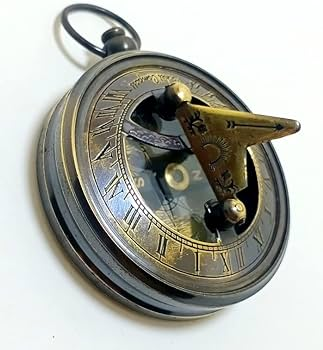
Exact powers of Compasses are never enumerated, but to address some gaps in Navigators abilities, it would easy to assume that compasses provide the ability to cast above your level–I think 10 levels over would be adequate. Apprentices are given “lesser Compasses” (of more recent fabrication). Perhaps these only allow to cast 5 levels above.
Why would Navigators spend days or weeks guiding parties when they could just Jump them quickly and be on their way? Well as written, the Nav spell lists just don’t provide that ability. Other reasons could be the risk involved, factors due to the loss of the Northern Eye, difficulty in Jumping through various Flows, Storms and Foci for longer jumps.
Why would high level Navigators even stoop themselves to such a mundane task? First, powerful Navigators would only be tasked with the most risky assignments. Second, they are probably working for powerful or wealthy entities which could provide valuable intel or insight. Third, it isn’t inexpensive and they need to keep the lights on!
How many Navigators could there possibly be? If you want Navigators to be an element in the game, they can’t just be a legend or rumor–they need to be seen and attainable. But imagine all of the trade, all of the Obelisks and the apparent need for Navigators to, at least, help bypass Essaence Barriers. Would there need to be thousands of Navigators? Tens of thousands?
How many Compasses could there be? The first batch was found in the City of the Dead, consisting of “a dozen magical wristbands”, and then more were found of various designs. All are thought to be of Ka’ta’viir construction. Are there hundred or thousands? Certainly not tens of thousands. We know that the Ka’ta’viir were a small population subset of the Althans, perhaps a few dozen families. Can they be copied? They are supposedly intelligent…by whom or what? (that could lead to an interesting adventure if compasses were corrupted or changed..)
Where did the Navigator Base lists come from? The Loremasters helped the early Nav’s to figure out the compasses, but spell lists access is controlled. Nav and Loremaster base lists are considered “Arcane”, which date back to proto realms times. Maybe the intelligent compasses themselves have the spell lists and grant their use via attunement.
As NPC’s this is mostly a thought exercise. Terry is known for bending, or ignoring, the Rolemaster ruleset to fit his world building. Certainly we can handwave away any inconsistencies. However, I think there is work that could be done to tighten up the Navigators, and I’m all for hidden knowledge escaping–why shouldn’t a player character discover these erudite lists or find a compass themselves in some unplundered tomb?
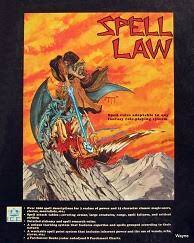
When introduced in 1980, Spell Law’s breadth and scope of spell lists was a revelation in TTRPG! Hundreds of lists, thousands of spells and spells up to 50th level. I was 13 years old when I first got my hands on Spell Law, and reading through the Alchemist, Astrologer, Monk and Mentalist lists fired my imagination.
Over the years the novelty of the original spell lists have worn off, and newer lists in the various Companions became more exotic, powerful and interesting. More importantly for me, the monolith nature of the base spells for the professions became an anchor on the system. Every Magician encountered had the same spell lists, every Cleric used the same few offensive spells despite their Diety’s aspect and my players could anticipate most of their opponents spell castings or, at the least, identify the exact spell cast based on it’s effects.
One of the appeals of Terry’s Shadow World material in the inclusion of specific organizational spell lists: Navigators, Loremasters, Steel Rain etc. I expanded on this effort with my own lists for the various Kulthean pantheons, spell lists for the Messengers of the Iron Wind among a few others.
It’s my belief that knowledge of any type, is transmitted through cultural or organization channels: communities, schools, cults, guilds and similar organized entities. In our own world, an education to become a lawyer and the knowledge and skills it imparts will be different between a student at Harvard Law and a law student at the Law School of Sao Paulo. It could be argued that the quality of the legal education may not be equal between the two schools and therefore it’s reasonable to believe that different cultures or groups may have similar but unequal spell lists of similar powers. A Fire Law list learned from the Fire Cult of “Volcano Island” may be different than the Fire Law list from a Cult of Nature worship somewhere else. Perhaps there are different spells, or similar spells but obtained at different levels–the belief that “balance” must be achieved is limiting. Fireball could be learned at a lower level by a Cleric of the Fire God than Fireball on a list of a general “Elemental Mage”.
I think this philosophy could extend to specialized skills and lores: they are only available through specific cultures and groups. Of course this doesn’t work in general with Rolemaster, but it can be incorporated into a setting like Shadow World quite easily. Obviously, Terry has already done this to some degree. I’ve been reading Cults of Prax which provides cult specific spells and runes for various sects and cults and it definitely provides another dimension to spells and lists in a specific setting. In my SW campaign I use my BASiL lists AND the original Spell Law lists to have the largest pool and variety of spell lists.
Does anyone restrict access to lists and skills in their campaign?
Now that most everyone I know is vaccinated and the world is going back to normal I am able to restart my Shadow World campaign. This is less of a continuous adventure and more of a ongoing testing campaign, but my players expect, and I think welcome, random rule changes that occur almost every session (“Inter-office Rule Memos). In the past, that has meant having all of their spell lists replaced with new ones, losing skills that I deleted from my core rules, abrupt level changes and other pivots that they have learned to expect and provide feedback.
I have them running through Chapter 4 & 5 of Legends of Shadow World a few more times and then they are heading to the city of Nontataku to test out my new module. They have been to the city before, but just passed through on their way to Shade. It’s been a long time since they have done real urban adventuring and I’m looking forward to the change in environment and to stretch my DMing skills with more in-game social interactions and political intrigue. The Alliance is in town and making a play for the city!
A few years ago, I decided to focus more on blogging about content rather than rules, but I have 3 fairly major changes that I’m implementing and have been adopted in my SWARM rules. I’m going to see how it goes, and will probably blog more about them as things develop.
Stats as Skills. I started working on this back in 2017, and had the players make stat checks on a few regular items: feats of strength, recall and correlation and poison/disease RRs. Over the subsequent couple of years, I’ve expanded the use of stats in the game and happy with the result. I’ve been reading some Grognardia blogs about the use of stats in D&D that coincides with some RM conversations about eliminating stats and just use bonuses. I am in the camp of increasing the use and utility of stats rather than eliminating them.
Stat “Nerf”. There was some comments about the utility of low stats over on the D&D blogs: for example, a low intelligence may make the player immune to charm spells or ignore Illusions. I played around with some ideas for these types of benefits for all of the RM stats, but I admit I wasn’t completely satisfied with the results. However this led me to the conclusion that my player’s average stats in general are too high. Most have every stat above 75! So I’m trying something new: players are given 600 points to assign to the 10 stats. They still roll for Potential stats, but that’s starts them slightly above average and makes them think long and hard about stat levels. Given the increase use of the stat score for action checks and the added utility of historic “dump” skills like memory, the players really think about things. Even with a 30 or 40 stat score, they aren’t getting negative modifiers, but it does change the stat as skill roll outcomes.
Magical Languages. For those that have followed the perpetually evolving Project BASiL know that I allow casters access to all of the spell “realms”. However, within some of the realms are different classes of spells: for example, Essence has Minor, Lesser and Greater “Paths”. This somewhat mimics the base list structure of RM and creates cost obstacles so players can’t learn the highest powered lists of each Realm without concerted DP allocation. To accentuate that further, I created qualifying skills, pre-requisites, that needed to be developed in tandem with the higher Paths. In the end I found this cumbersome and didn’t like to add skills that only had one purpose and no real in-game functionality. To simplify I decided to expand the magical language list and assign them to various spell lists. This had the added benefit of working well! In general, Essence lists now have a required magical language needed to cast the spells. Some lists can be cast with different languages, and some languages can add bonuses or other benefits to casting. Like rare spell lists, the casters are motivated to track down and learn other magical languages!
I’m looking forward to finalizing my Shadow World ruleset, but a part of me feels like the endless tinkering with the rule toolbox is a feature and not a distraction.
With RMu seemingly close to release, I’ve left my BASiL project on the back burner for quite some time. As I mentioned in previous posts, I’m focusing more on game content rather than rules or rule hacks. Rolemaster & Shadow World needs more game support, not more Companions or optional rules. Plus, I’ve found everyone is fairly set in their ways using their own house rules, are waiting for RMu, or I rapidly change my own house rules as I progress. In fact, my participation here on the Rolemasterblog has slowly shifted me to more “rule light” than my previous drift to rule density. I like grittiness but am pushing back on complexity.
Eladans participation here on the RMBlog and over at the Forums, has re-opened some of the broader discussions on spells, lists, base lists and spell functioning. I had some thoughts rolling around, so I thought I would excise them via a blog post! An older summary can be found HERE.
Essence. Mechanics. The skill bonus is the appropriate Magical Language Skill. You can read more thoughts on this HERE.
Channeling. You can read some thoughts HERE, and I’ve written extensively on this blog about channeling.
Mentalism. I probably tinker with Mentalism more than any other “realm”. Here are my last thoughts about this. There were some comments and concerns about the impact of concentration on gameplay. Lately, I’ve been allowing the total number of spell levels cast not to exceed the total ranks in Mental Focus. So 10 ranks of Mental Focus would allow the caster to have 10 1st level spells “running” or 2 5th lvl spells etc. It’s less complicated but still models the appeal of “partitioning” that comes from Mental Focus.
Notational Magic. Eladan’s posts over on the Forums, made me revisit some of my thoughts on Notational magic. You can read my original post HERE.
Investiture/Enchanting. I haven’t done a deep dive on my solutions for imbedding and creating magical items. Mostly because the spell lists are fairly simple, much of the sausage making takes place out of game time and I built a very simple system for making magic items in game time. Some thoughts can be found HERE.
Rendered/Performance Magic. I haven’t written much about this at all. First I need to put a lot more time into this, it’s potentially the most complex and interesting realm and it could add a lot of new magical layers to the Spell Law system. The concept of magic as performance is not new or novel, but utilizing it in gameplay can be.
This is just a summary of a handful of relevant posts I’ve made over the last 5 years! My thoughts and views evolve, but I always enjoy other thinking “outside the box”!
Now that I’m posting up some more spell lists–Mentalism primarily, I’m tracking comments and feedback on the forums and here at RMBlog. The number one issue I see is the desire for spell list reductionism, maybe build 10 spells per “list” and allow for creative scalability similar to or identical to HARP.
That is a compelling thought, but after writing a ton of spell lists I wanted to put my own thoughts in order.
Distillation. Rebuilding classic RM spell lists typically requires some trimming. Many spells within a list are redundant: not just the spells that progress as I, II, III etc, but different named spells that do similar things. Distilling the essence of a list can really reduce the total number of spells which makes a scalable spell system very appealing!
Spell scope. I’m not a fan of kitchen sink style spell lists, but do see a fundamental difference between the realms. Essence should be very tightly focused around a key aspect, Channeling should allow for much more variability based on the particular god and I see Mentalism lists following a shared mental mechanism. Using these basic rules provides different ways to build lists in different realms.
Compatibility. A major motivation to maintain the 1-50th spell lists is basic compatibility with RM and Shadow World.
Built in scalability. Many of my lists are built around 3-6 spells, that progress from I-V and maybe include a mass effect. If each spell repeats every 5 levels that takes up a chunk of the list, but also gives a repetitive appearance that seem suitable for scaling. However, the spell versions don’t just scale progressively, but change in target size, AoE, Range and other aspects that provide “more bang for the buck”. General scaling assumes increased power point cost/expansion of range, area, damage etc. So from an efficiency standpoint, higher versions of the spells in BASiL provide a better impact/PP than just linear scaling. “Spell II” isn’t just 2x better than “Spell I”, it can be 3x better or have expanded efficacy or powers as well.
Opportunity and tactical cost. By having built in scaling, players can use higher or lower level spells based on the target, PP consumption and risk/reward calculations. Of course, that’s also one argument for Scaling spells, but the PP usage will be much different per #4 above.
Level assignment. One of the more difficult aspects of designing a spell list is deciding what level to make a spell. Part of me wants to calculate an estimated “power cost”, while other times I’m thinking of utility and game balance. For instance, the big three: Charm, Fly and Invisibility can be very unbalancing to the game, but perhaps shouldn’t be based on “power needed” or some other arbitrary assessment. Some lists just can’t be distilled into 10 spells with scaling options. Some spells need to be higher level to reflect their real power and also make them unavailable to lower level players.
Vertical versus horizontal acquisition. RM (and probably RMU) is build around horizontal model of spell acquisition. Generally players will know more spell lists than overall spell levels. For instance, a 5th lvl caster may have access to 5-10 lists but can only effectively cast to 5th level without risk of failure. In BASiL, it’s the opposite. I use a levelless system so players generally know a few spell lists to higher level. That gives them more powerful, niche abilities. It’s just the way I like my game to run–hard specialization versus the generalization of RAW.
Keystone spells. I still like cool spells that can be found at 10th, 20th and certainly 50th level. I try to add something unique or interesting at these levels for players to look forward too, or to give the list a “bump”!
I guess sticking with RM I wanted to improve on the originally 35+ year old Spell Law and incorporate spell ideas and powers introduced since then. But if I were to start over, I would take a hard look at a HARP scalable system. Or maybe just use HARP rules?
Many of you also build your own spell lists. Do you have build guidelines, mechanistic philosophies or other design criteria that help you in the process?
RM Spellcaster Professions are defined by 2 game design factors: skill costs and base list. Skill costs are only significant for levels 1-8th (due to declining rank bonuses and professional rank bonsues), while Base Lists have since taken on a disproportionate share of Profession identity and ability.
I have two issues with Base Lists: the “forced-learned” aspect and the “all-profession” trend that started with the Rolemaster Companions. (further explanations forthcoming..)
First lets consider the “force-learned” angle of Base Lists. It’s argued that Professions, and their associated skill costs, model aptitudes of learning. While I don’t particular buy that argument, I at least understand it. But how does one’s aptitudes apply to spell lists? Isn’t any education/learning dictated by what’s available to learn? Whether that’s through books, tutors, mentorship, institutions or guilds, education (skills) should be driven by availability and access. So yes, I can see that a character may have an aptitude for spell casting in general, and even maybe an aptitude for a specific spell realm, but I can’t get my head around the idea that by merely selecting a Profession then mandates a specific set of 6 spells lists they are inclined to learn. Of course the larger argument is that game design requires that a Profession template drives skills and spells, and in return skills and spells reinforce the template. A virtuous loop.
My second issue with Base lists is the “all-profession” trend that I feel has crept into the design process. What do I mean by that? It feels that new Base list builds are driven by the desire to balance all aspects of the character–regardless of traditional non/pure/semi trade-offs. In other words, many newer spellcasters have a mixture of offense, defense and utility spells that make the Profession independent of group balance-they basically have no “flaws” or shortcomings! Starting in RMC I, this idea has been wholly adopted without a second thought. What are some examples:
The inclusion of a “Self-Healing” spell list. What’s better than not having to rely on a Healer, Cleric or Lay Healer!
The addition of a elemental spell list with major attack spells. Everyone wants at least one directed spell or AoE elemental spell.
Use of spell lists and spells that just give significant bonuses to skills or actions. Instantaneous spells that give +25 to the next melee attack? Very nice.
“Potpourri” spell lists that are a grab bag of the most useful or effective spells in category spell lists. Why bother with 2, 3, or even 4 Open or Closed lists when all the best spells are distilled into a single Base list!
I think there are many reasons for this:
“Power Creep”. Many new classes were designed to improve upon original RM professions that were deemed too weak or game ineffective.
Blank slots. If you have older spell lists with lots of empty slots it makes sense to fill them in. Making new spells is NOT that easy–so it’s a quick solution to just drop in spells that replace core skills OR spell abilities that flesh out the profession.
“Balance”. For some, each Profession should be internally balanced: have a mixture of skills, abilities, combat effectiveness and defensive capabilities that make them balanced.
Rolemaster already allows Professions to build non-core abilities, at a cost, through the skill system. My concern is that there is an easier path to just build Base lists that replicate expensive skills or abilities without the associated costs or skill ranks.
In the end, a lot will come down to the GM’s perceptions on “balance”, but when reviewing new Profession base lists let’s ask ourselves if the Base Lists are supporting the Profession theme, filling in the traditional weaknesses of a given class or just making an “uber class”.
I was busy writing a Spell Law related blog but we are powering along discussing professions so here we go with Druids!
First off, Peter covered all the bases with his overview of Druid spells in his last POST. I was going to go over the various RMC spells he discussed, but I’m sure I did it back in the day when working on BASiL and it sounds like he hit the nail on the head. For the most part, the first few RM Companions seemed like an attempt to power up various RM professions: Animists into Druids, Warrior Monks became High Warrior Monks, Mages became Archmages, semi spellusers expanded to include Beastmasters, Paladins and Warrior Mages etc.
Per recent blogs here on on the RM Forums, I think it’s clear that the real differentiation between professions is: the general classification of Non, Full or Semi; and the “base” lists of each class. There has been lots of debate and parsing of profession skill costs but in reality it doesn’t much matter after 6-8th level. By then, most core skills have peaked out their contribution bonus and stats, magic and professional level bonuses carry the weight. So let’s take each of these in turn:
General Classification of a Druid. One argument someone could make for a more martial animist is just to make the Druid a semi-spell user. That way you avoid the seeming duplication of the Animist-Druid dynamic and bestow better combat abilities on the Druid. By doing so you don’t have lean so heavily on overpowered/unbalanced combat spell lists to bridge the gap. Of course, this might depend on your vision of a Druid (we’ll get to that), and it steers very close to the Beastmaster and Ranger but it’s clear that much of the RM communities loves lots of Professions, no matter how similar they might be.
Base Lists of the Druid. Looking at the lists from the companions it’s hard to justify playing a regular animist! Peter has pointed out some problems with the Druid spells, and Hurin will be suggesting his own versions but for me the problem is not the lack of offensive/combat spells for the Animist–it’s that most Animist spells basically suck in general.
So what might a Druid look like? Perhaps the most well known fictional Druid from early RPG is Allanon from the Elf-Stones of Shannara. Allanon was a Druid more in the line of Gandalf, with wizardly power, understanding of Old Magic (technology) and Lore. If you compare Allanon to our western mythology, “Druid” is more of a title and not a class trope. Allanon is basically a Loremaster with lost knowledge and power.
Another concept for a Druid is a spellcaster that specializes in natural magic–this could also include elemental magic. So really there is no reason why a RM Magician can’t be called, or be part of organization, that calls themselves “Druids”. Magician spells of Wind and Water contain plenty of spells to affect weather or the natural world around them. From the outside, this could seem very “Druidic”. I see no issues with a Druid that is an Essence user.
A third way to look at the Druid is it’s professional realm designation. Druids are Channelers. By definition that implies that Druids powers come from or are granted by a God or pantheon. A Druid isn’t going to be granted offensive spells and combat acumen by a god that is a pacifist. If your vision of a Druid is a “combat nature priest” then their God should reflect that. Do you really need to parse out skill costs for all of these slightly different “Nature Channelers”: Clerics (of a nature god), Animist, Druid, Beastmaster, Ranger, Shaman and maybe even a Witch?
I take a diametric view of this situation–each profession isn’t a different set of skill costs and base lists; as Channelers, each represents a servant/priest of a specific God or type of God:
Cleric/Priest (nature aspected God). A general priest with a mixture of general Cleric lists and Animist/outdoor lists.
Animist: A Priest of a very nature oriented god or a local god. Spells focused on Flora And Fauna.
Druid: A Priest of a Elemental God or temperamental god of nature. Spells of Wind, Air, Weather and perhaps Earth.
Beastmaster: A Priest of a Animal God or Totem style god. Animal Control and Bonding.
Ranger: A “Holy Warrior” type of a nature god, or an outdoors man that has loyalty to a nature god. Survival and Weather spells.
Shaman/Witch: like Hedge Wizards they may serve a local god or ancient elemental god. Grab bag of spell lists.
I see variations of Druids that are Essence users, semi-spell users and even just “re-badged” Rangers! If a GM is willing to be flexible with spell lists, it’s easy to create a Druid that meets your concept or setting.